2026-09-03
Considering Middle-Aged Eye Surgery? The Difference Between Upper Blepharoplasty, Lower Blepharoplasty, and Facelift
Explore the differences between upper blepharoplasty, lower blepharoplasty, and facelifts for middle-aged eye concerns. Learn which procedure is right for you based on the extent of aging and specific needs.
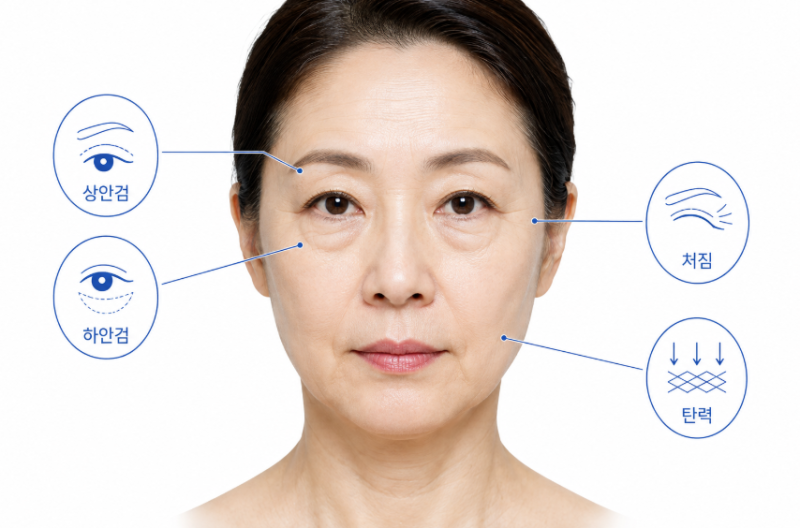
※ This article is intended to provide medical information.
It is not subject to deliberation under Article 56, Paragraph 2 and Article 57 of the Medical Act,
and is not an advertisement unrelated to the content of deliberation.
Hello,
I am Dr. Park Jung-geun,
Director of Face Plus Plastic Surgery Clinic.

As we age, one of the first areas to show changes
is around the eyes.
Drooping upper eyelids can make eyes appear smaller,
while sagging under-eye fat and skin can create a tired impression.
Due to these changes, many people look into middle-aged eye surgery,
but they often wonder whether upper or lower blepharoplasty is needed,
or if a facelift should be considered if there is overall facial sagging.
The important thing is not to decide on a surgical method
based solely on age.
Even within the same middle-aged group, the degree of eyelid sagging,
fat location, skin elasticity, and overall facial aging patterns
can differ.

Today, we will explore the differences between upper blepharoplasty, lower blepharoplasty, and facelifts,
which are often compared when considering middle-aged eye surgery.
Table of Contents | ||
1. When Middle-Aged Eye Surgery is Needed 2. When is Upper Blepharoplasty Performed? 3. How is Lower Blepharoplasty Different? 4. When to Consider a Facelift |
1. When Middle-Aged Eye Surgery is Needed
Middle-aged eye surgery is not simply
a procedure aimed at making the eyes appear larger.
It should focus on examining the eye area structures that have changed due to aging
and improving any current discomfort or concerns.
A typical change is the sagging of the upper eyelid skin.
If the sagging is severe, the double eyelid line may be hidden,
or the outer corner of the eye may droop,
creating a heavy and tired impression.
Conversely, below the eyes, reduced skin elasticity can lead to
more fine wrinkles, and under-eye fat may protrude,
making the area look puffy.
If shadows appear due to hollowing below the protruding fat,
it can make one look more tired or exhausted
than their actual age.
Therefore, when planning middle-aged eye surgery,
it is crucial to meticulously examine the condition of both the upper and lower eyelids.
If not only the eye area but also the cheeks and jawline are sagging,
it is necessary to assess the overall extent of facial aging as well.
2. When is Upper Blepharoplasty Performed?
Upper blepharoplasty is one of the middle-aged eye surgery methods
that primarily addresses sagging skin and tissue of the upper eyelid.
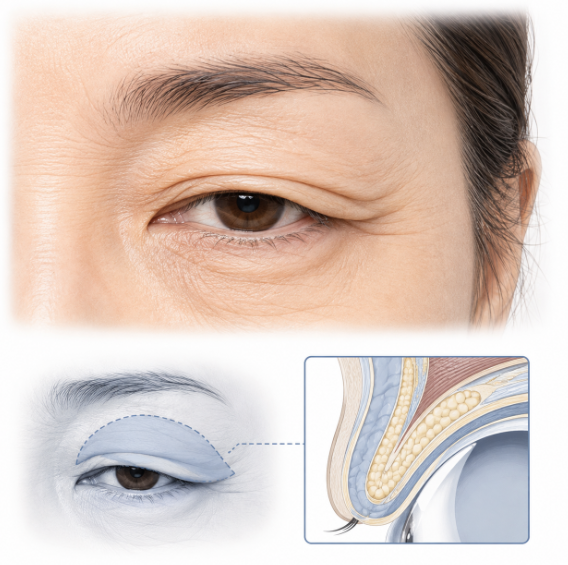
Upper blepharoplasty may be considered when the upper eyelid droops
and covers the eye or affects vision as one ages.
There are also cases where the existing double eyelid line is almost invisible due to skin sagging,
or the skin at the outer corner of the eye overlaps, creating a heavy impression.
However, simply removing a lot of sagging skin
does not necessarily lead to natural results.
If the correction is excessive without sufficient consideration of the skin and fat around the eyes,
and eyebrow position, the eye shape may feel unnatural.
Especially if the eyebrows themselves have descended,
it is important to distinguish whether the issue is solely with the eyelid skin
or influenced by the eyebrow position.
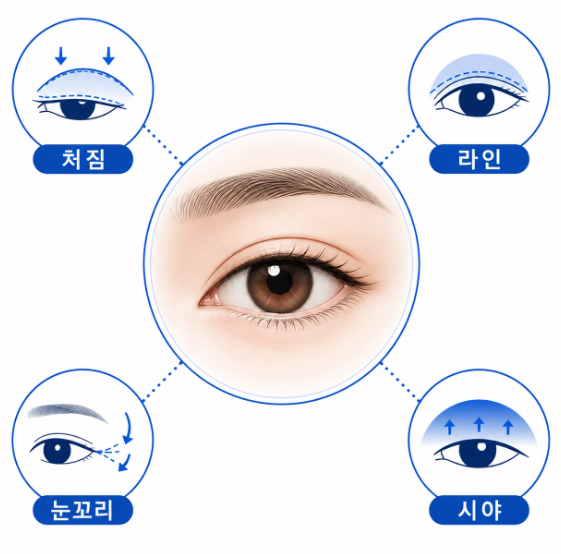
If considering upper blepharoplasty for middle-aged eye surgery,
the process of planning the extent of correction within a range that suits the current eye shape and face is crucial.
3. How is Lower Blepharoplasty Different?
While upper blepharoplasty addresses the upper eyelid,
lower blepharoplasty primarily improves aging changes that appear under the eyes.
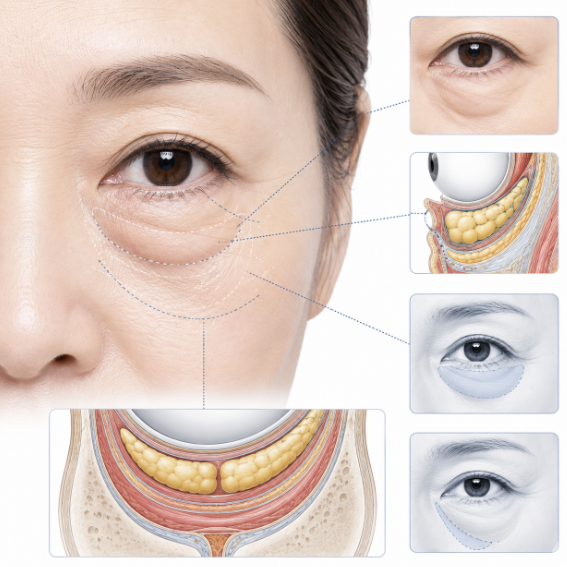
Lower blepharoplasty may be considered when under-eye fat protrudes prominently
or when skin and muscles sag, making wrinkles more noticeable.
Under-eye concerns in middle-aged individuals are not simply
due to an abundance of fat.
Reduced skin elasticity and weakened structures supporting the fat
can also make the under-eye area appear uneven.
If hollows or depressions appear below the protruding under-eye fat,
shadows can look even darker.
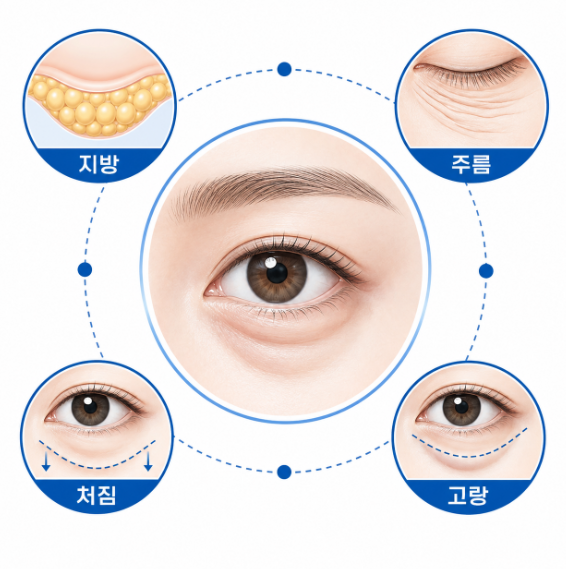
Therefore, in lower blepharoplasty, it is important to comprehensively consider
protruding fat, sagging skin, and under-eye hollows.
If necessary, methods such as fat repositioning or
simultaneously addressing sagging skin and tissue can be considered.
Middle-aged eye surgery does not necessarily mean that upper and lower blepharoplasty
must be performed simultaneously.
Since the degree of aging in the upper and lower eyelids can differ,
it is important to plan for the specific areas that need attention.
4. When to Consider a Facelift
If sagging has progressed not only around the eyes but also in the cheeks, nasolabial folds, mouth area, and jawline,
it may be difficult to achieve the desired changes with middle-aged eye surgery alone.
Upper and lower blepharoplasty primarily focus on improving aging around the eyes,
so they differ from surgeries that directly improve sagging in the lower face, such as the cheeks or jawline.
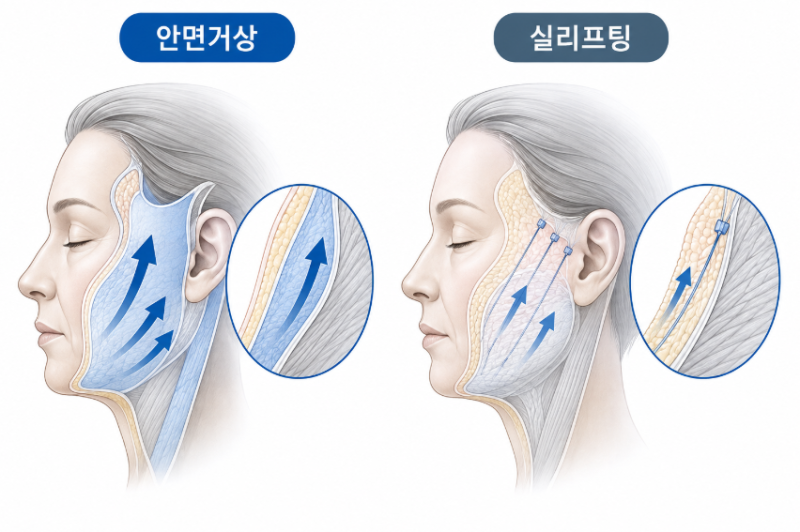
If there is overall sagging of the facial skin and soft tissues, a facelift can be considered as well.
A facelift involves dissecting, lifting, and repositioning sagging facial tissues, and the scope and method of surgery vary depending on the individual's condition.
For relatively mild sagging,
methods like thread lifting may be considered, but
since thread lifting and facelifts differ in their scope and method,
rather than expecting the same effect, it's important to first assess the current degree of sagging.
Ultimately, what is important in middle-aged eye surgery
is not to unconditionally choose a specific procedure among
upper blepharoplasty, lower blepharoplasty, or a facelift.
It is necessary to consider the condition of the skin above and below the eyes, fat distribution,
eyebrow position, and overall facial elasticity and sagging.
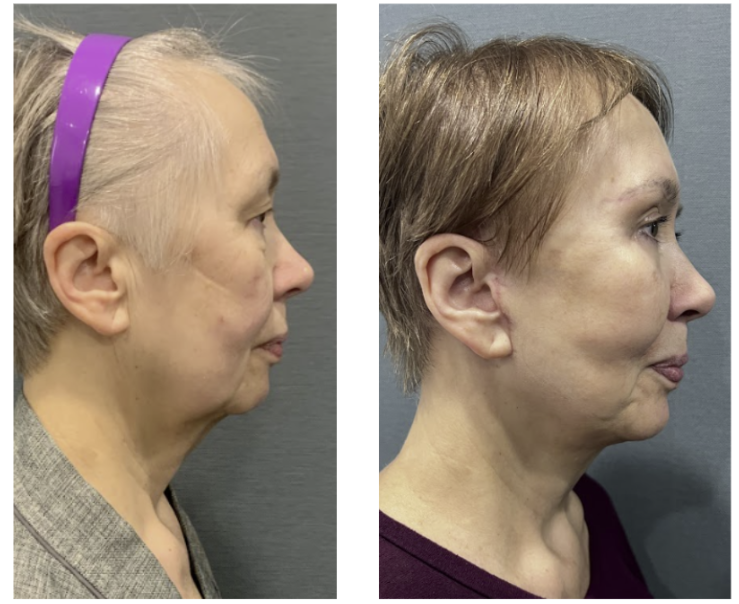
If you are considering middle-aged eye surgery,
it is important to first identify which area concerns you the most,
and whether aging is concentrated around the eyes or extends to the entire face,
then plan a method that suits your individual condition.
-Operating Hours-
Weekdays 9:00 ~ 18:00 Saturdays 9:00 ~ 16:00 Public Holidays / Sundays Regular Closure |
-Contact Us-
Face Plus Plastic Surgery Clinic | ||
Consultation Phone: 02-541-8500 Inquiries: KakaoTalk Inquiry |
-Directions-
Frequently Asked Questions
When is middle-aged eye surgery necessary?
Middle-aged eye surgery is necessary when the upper eyelids droop due to aging, obstructing vision or creating a tired appearance, or when under-eye fat protrudes or fine wrinkles are abundant, making one look fatigued. The focus is on improving discomfort rather than simply making the eyes appear larger.
When should upper blepharoplasty be considered?
Upper blepharoplasty is primarily considered when the upper eyelid skin sags, covering the double eyelid line or causing the skin at the outer corner of the eye to overlap, creating a heavy impression. It is important to plan the extent of correction within a range that suits the individual's eye shape and face, especially if eyebrow ptosis is also present.
How does lower blepharoplasty differ from upper blepharoplasty?
Unlike upper blepharoplasty, lower blepharoplasty primarily improves aging changes that appear under the eyes. It is considered when under-eye fat protrudes prominently or when wrinkles are noticeable due to reduced skin elasticity. It can comprehensively improve under-eye hollows through fat repositioning or sagging skin removal.
What surgery should be considered if the entire face is sagging, not just the eye area?
If sagging has progressed not only around the eyes but also in the cheeks, nasolabial folds, mouth area, and jawline, a facelift can be considered. Upper and lower blepharoplasty focus on improving the eye area, so overall facial sagging can be improved through a facelift, which involves lifting and repositioning sagging tissues.
What is the most important factor when choosing a middle-aged eye surgery method?
The most important factor when choosing a middle-aged eye surgery method is not to unconditionally select a specific procedure, but to comprehensively examine the condition of the skin above and below the eyes, fat distribution, eyebrow position, and overall facial elasticity and sagging, then plan a method that suits the individual.