2026-07-09
Considerations for Double Eyelid Surgery at Nonhyeon Station Plastic Surgery
Before considering double eyelid surgery, it's crucial to analyze your current eye condition, including eyelid thickness, fat, skin laxity, and muscle strength, rather than just focusing on the desired line.

Considerations for Double Eyelid Surgery at Nonhyeon Station Plastic Surgery
There was something to check before the double eyelid line.
Many people considering double eyelid surgery often start by thinking about which line will suit them best.
However, in reality, the process of analyzing the current eye condition should come before considering the line shape.
This is because the appropriate surgical method can vary depending on the thickness of the eyelid, the amount of fat, skin laxity, and the strength of the eye-opening muscles.
Therefore, at Nonhyeon Station Plastic Surgery, rather than just reflecting the desired design,
it is important to first check the current eye structure.
Wanting a defined eye shape does not automatically mean that a high double eyelid line will suit you.
To achieve a more natural impression, the distance between the eyebrows and eyes, the length and size of the eyes, and the face shape must all be considered together.
An excessively high line can create an unnatural impression over time, and conversely, a line that is too low may not provide the desired change.
Therefore, at Nonhyeon Station Plastic Surgery, we emphasize the process of planning the height and shape of the line by considering the overall facial proportions.
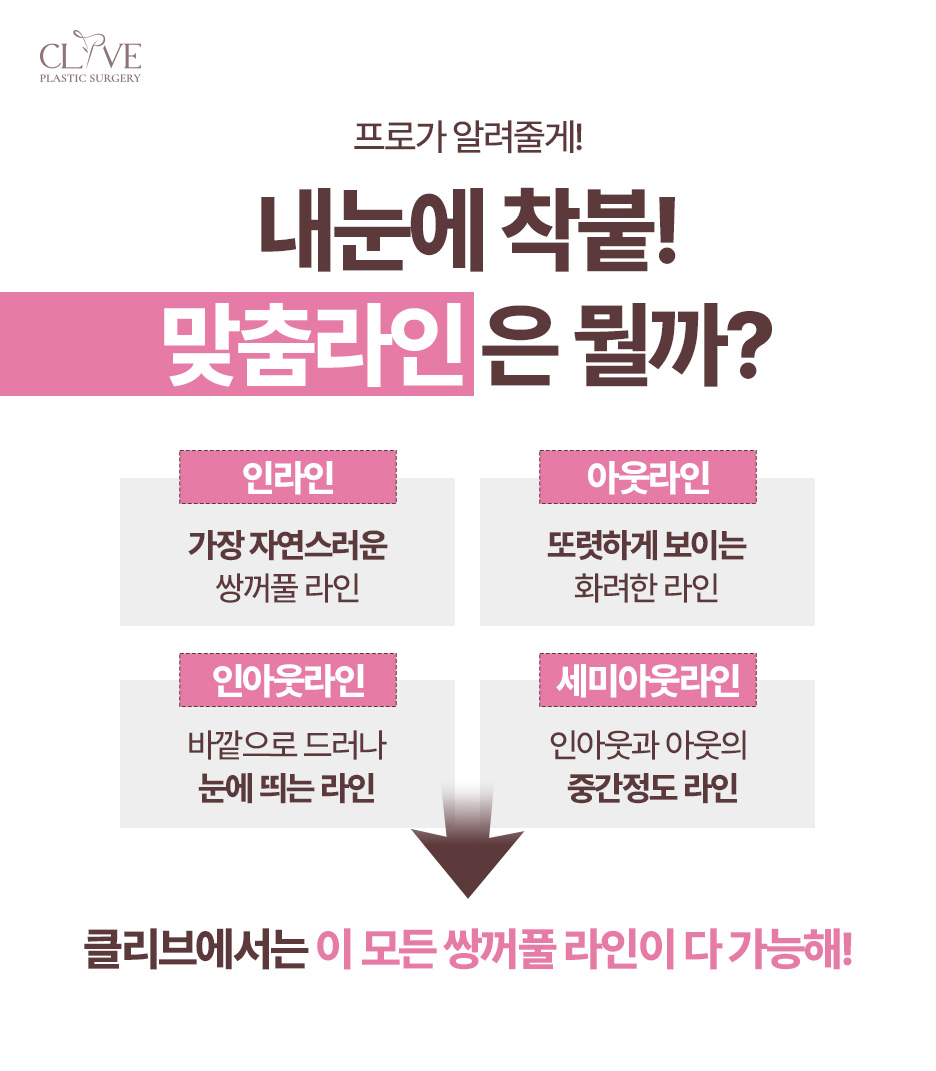
In double eyelid surgery, line design was as important as the surgical method.
In-line | Considered when the starting point of the double eyelid naturally connects to the inner corner of the eye, preferring a soft impression. |
In-out line | When the front part starts naturally and the line becomes more prominent towards the outer corner, expecting both definition and naturalness. |
Semi-out line | A hybrid form between in-out line and out-line, considered when wanting to maintain a glamorous look while reducing the burden. |
Out-line | When the line is relatively clear from start to finish, desiring a defined and glamorous image. |
It was important to determine which line was suitable by comprehensively considering the length of the eye, eyebrow position, face shape, and the proportion of facial features, rather than just following trends.
At Nonhyeon Station Plastic Surgery, a process of thoroughly analyzing the current eye structure and the overall harmony of the face, then planning a line that suits the individual, was necessary.
Everyone has different eyelid thickness and fat amounts.
Approaching cases with thin skin and little fat, versus thick skin and a lot of fat, with the same method can be difficult.
Additionally, if skin laxity is present, skin tightening may be necessary.
Therefore, at Nonhyeon Station Plastic Surgery, it is important to determine the surgical direction by analyzing the condition of the skin and fat, not just reflecting the desired line.

There were also cases where ptosis correction was needed.
While creating a double eyelid line is sufficient in some cases,
there are instances where ptosis correction is considered together if the eye-opening strength is weak.
This is because if the function of the eye-opening muscle is insufficient, even with a double eyelid line, a tired or sleepy impression may remain.
Therefore, at Nonhyeon Station Plastic Surgery, we don't just focus on creating a line, but also check the eye-opening function,
and if necessary, plan ptosis correction together.
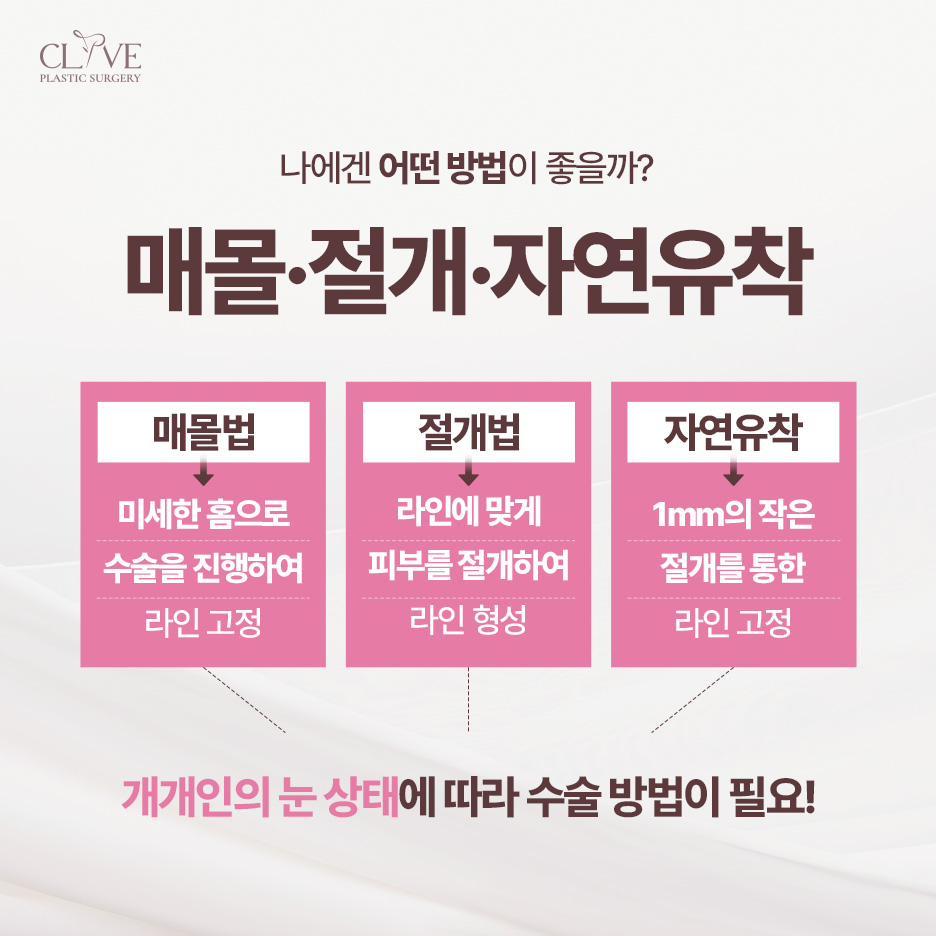
The surgical method also varied depending on the eye condition.
Double eyelid surgery was broadly planned using natural adhesion, non-incisional (suture), or incisional methods.
Non-incisional (Suture) Method | A method of creating a double eyelid line using sutures without skin incision, considered when the skin is thin and there is not much laxity. |
Incisional Method | Considered when the eyelid skin is thick, there is a lot of fat, skin laxity is present, or when more definite correction is needed. |
Natural Adhesion Method | A non-incisional method that uses sutures to induce natural adhesion of the eyelid tissue. Considered when a more natural line is desired. |
It was not possible to definitively say which method was better. At Nonhyeon Station Plastic Surgery, it was important to comprehensively analyze skin thickness, fat amount,
eye-opening strength, and eyelid laxity to determine the appropriate surgical method for each individual.
The overall balance of the face must also be considered.
Double eyelid surgery was not just a surgery that changed the eyes.
Various factors such as the distance between the eyes and eyebrows, the width of the glabella, the nose and face shape, and left-right balance
all combined to create the overall impression.
Since the same line could appear with a completely different atmosphere depending on the face shape,
at Nonhyeon Station Plastic Surgery, the process of planning the design by considering the overall facial proportions, not just the eyes, was important.

Post-operative care can also affect the results.
The process is not complete once the surgery is over.
During the initial recovery period, it is advisable to avoid rubbing the eyes vigorously or engaging in strenuous exercise, and it is important to fully adhere to lifestyle guidelines.
Also, swelling and bruising that appear during the recovery process can vary from person to person, so rather than simply comparing with others,
it is necessary to monitor one's own recovery progress.
This management process is also one of the factors that must be considered when planning double eyelid surgery at Nonhyeon Station Plastic Surgery.
What's important is a surgical plan tailored to you.
When considering double eyelid surgery at Nonhyeon Station Plastic Surgery, rather than just comparing popular lines or specific surgical methods,
analyzing the current eye condition should be prioritized. The thickness of the eyelid, the amount of fat, the strength of the eye-opening muscles,
and the proportions of the face shape and facial features all differ from person to person, so the same method may not be suitable for everyone.
Therefore, understanding one's own eye structure through sufficient consultation,
and planning the appropriate surgical method and design can be an important criterion for expecting satisfactory results.