2025-05-22
Breast Ptosis Surgery: Considerations and Solutions
This article details the medical causes of breast ptosis (sagging breasts) and explores various surgical solutions, including considerations for different degrees of sagging, surgical techniques, and important factors to evaluate before undergoing surgery.
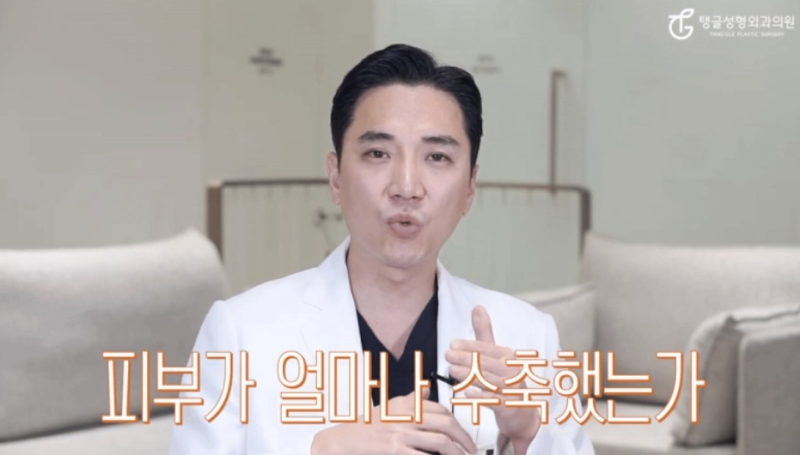
Today, we will delve into the issue of breast ptosis,
a concern for many women,
explaining it in detail from a medical perspective.
Changes in breast shape due to childbirth, weight fluctuations, and aging are natural phenomena,
but many individuals experience psychological distress because of them.
Based on medical evidence,
we will systematically explore the causes and solutions.
1. Medical Causes of Breast Ptosis
Breast ptosis occurs due to various
physiological factors.
First, in younger individuals,
macromastia is a primary cause of sagging.
Medically, macromastia refers to cases where the breast weight exceeds 600g,
and this weight naturally leads to ptosis due to the effects of gravity.
Rapid changes in body weight are also a significant factor.
Especially after substantial weight loss,
elastic fibers in the skin can be damaged,
preventing it from returning to its original state.
In the medical community, this is referred to as 'skin laxity' after weight loss.
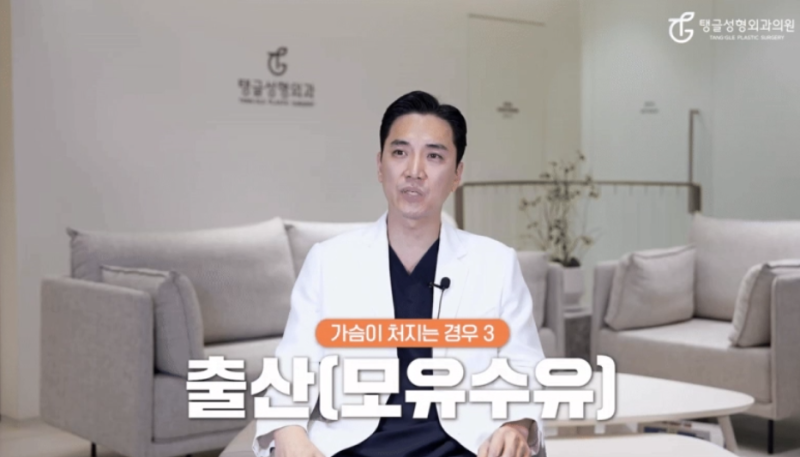
Changes in breast shape also occur during pregnancy and lactation.
During pregnancy, hormonal changes cause the glandular tissue to expand,
and during lactation, there is repeated expansion and contraction of the milk ducts.
After lactation ceases, the glandular tissue atrophies, leaving the stretched skin,
which results in sagging.
Finally, during the natural aging process,
the production of collagen and elastin decreases, leading to reduced elasticity.
This, along with the weakening of Cooper's ligaments that support the breasts,
gradually leads to ptosis.
2. Limitations of Improvement and Considerations for Breast Ptosis Surgery
Many people wonder if breast sagging can be improved through exercise.
Medically speaking,
it is difficult to restore already sagging breasts to their original position with breast muscle exercises alone.
This is because breasts are primarily composed of fatty tissue and glandular tissue,
and the proportion of muscle tissue, like the pectoralis major,
is relatively small.
While muscle exercises can strengthen the muscles supporting the breasts and improve the overall contour,
they cannot correct already stretched skin or the sagging glandular tissue itself.
This is due to the fundamentally different anatomical structure compared to areas like the buttocks or arms,
which are composed of large muscle masses.
Breast ptosis surgery is one medical method that can overcome these anatomical limitations.
However, surgical treatment always requires a careful evaluation of the individual's condition and thorough consideration.
3. Medical Approaches to Breast Ptosis Surgery
Breast ptosis surgery is approached in various ways depending on the patient's condition.
Medically, the degree of breast sagging is classified into Grade 1, Grade 2, and Grade 3,
based on how far the nipple has descended below the inframammary fold.
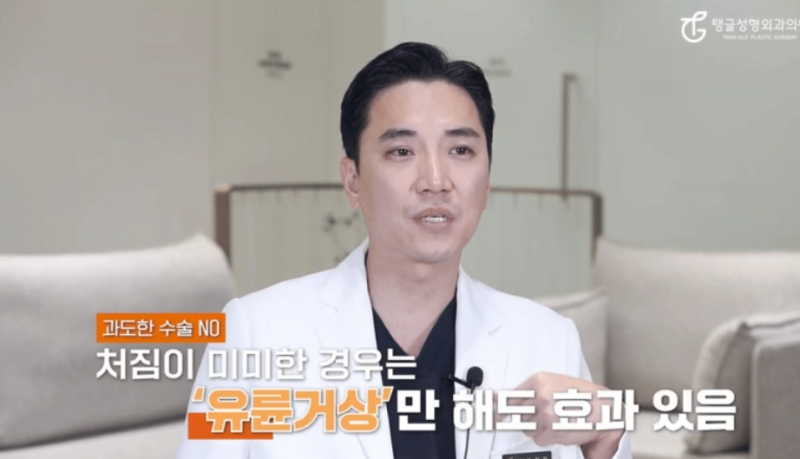
In cases of mild sagging,
correction can be achieved with augmentation using implants alone.
This applies when the distance between the nipple and the inframammary fold is within 2cm.
For moderate to severe sagging,
various incision methods are used.
These include periareolar incision, vertical incision, and anchor-shaped incision,
and each method is chosen considering the degree of sagging, breast size, and patient expectations.
In cases of large breast size,
a mastopexy (breast lift) can be performed using only autologous tissue without implants.
This method involves removing excess skin and tissue
and repositioning the remaining tissue to create a natural shape.
4. Factors to Consider Before Deciding on Breast Ptosis Surgery
Before considering breast ptosis surgery,
there are essential factors that must be evaluated.
First, it is important to understand an individual's tendency for scar formation.
If there is a history of keloids or hypertrophic scars,
scar management after surgery needs careful attention.
After surgery, a scar of a certain size is inevitable.
The location and length of the incision vary depending on the method,
and the final appearance of the scar is determined by individual skin characteristics and post-operative care.
If there are plans for pregnancy,
the timing of the surgery should be carefully decided.
This is because hormonal changes due to pregnancy and lactation can affect the outcome.
Medically, it is advisable to clearly evaluate the indications and contraindications for surgery,
and to make a decision considering the individual's health status, expectations, and lifestyle.
If the physical and psychological discomfort caused by breast sagging significantly interferes with daily life,
it is recommended to consult with a specialist to find the most suitable method for you.
With clear information based on medical evidence and personalized consultation,
you can achieve the best possible results.