2026-07-09
Apgujeong Eye Reoperation: Trendy Lines and Representative Cases
Discover the latest trends in Apgujeong eye reoperation, focusing on natural, harmonious lines over overly dramatic ones. Learn about common reoperation cases and the importance of personalized consultation for optimal results.
Apgujeong Eye Reoperation: Trendy Lines and Representative Cases
Hello. This is Clyve Plastic Surgery.
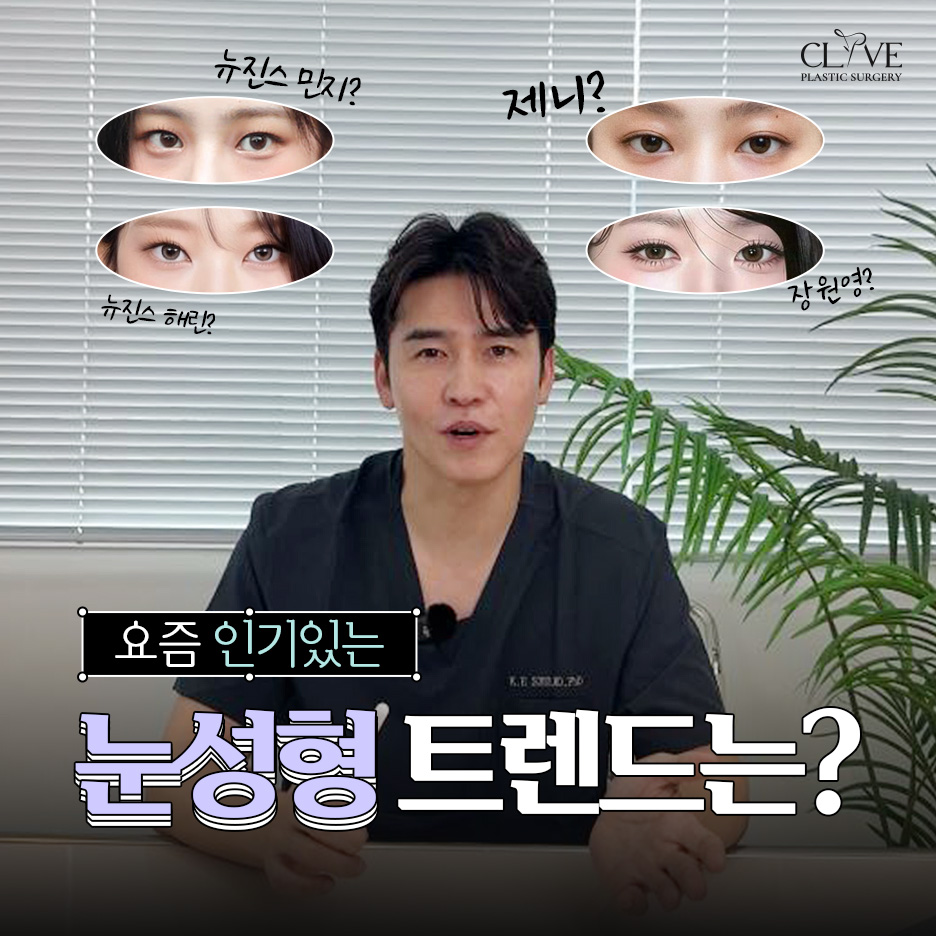
While eye surgery is known as a relatively common procedure, many individuals consider reoperation over time due to lines loosening, unnatural thickness remaining, or designs that no longer suit their overall facial aesthetic. Recently, there's been a growing preference for natural lines that harmonize with the entire face, rather than just distinct eyes. In the past, bold and high lines were favored, but now, detailed designs that consider the strength of eyelid opening, skin thickness, and even the distance between the eyes and eyebrows are considered crucial.
Amidst these changes, many people exploring Apgujeong eye reoperation are not just looking to recreate a line, but are increasingly focused on first identifying the root cause of their current eye condition. Today, we will examine how trendy eye lines are evolving and discuss some of the most common cases brought up during reoperation consultations.
Why Natural Proportions are More Important Than Just High Lines
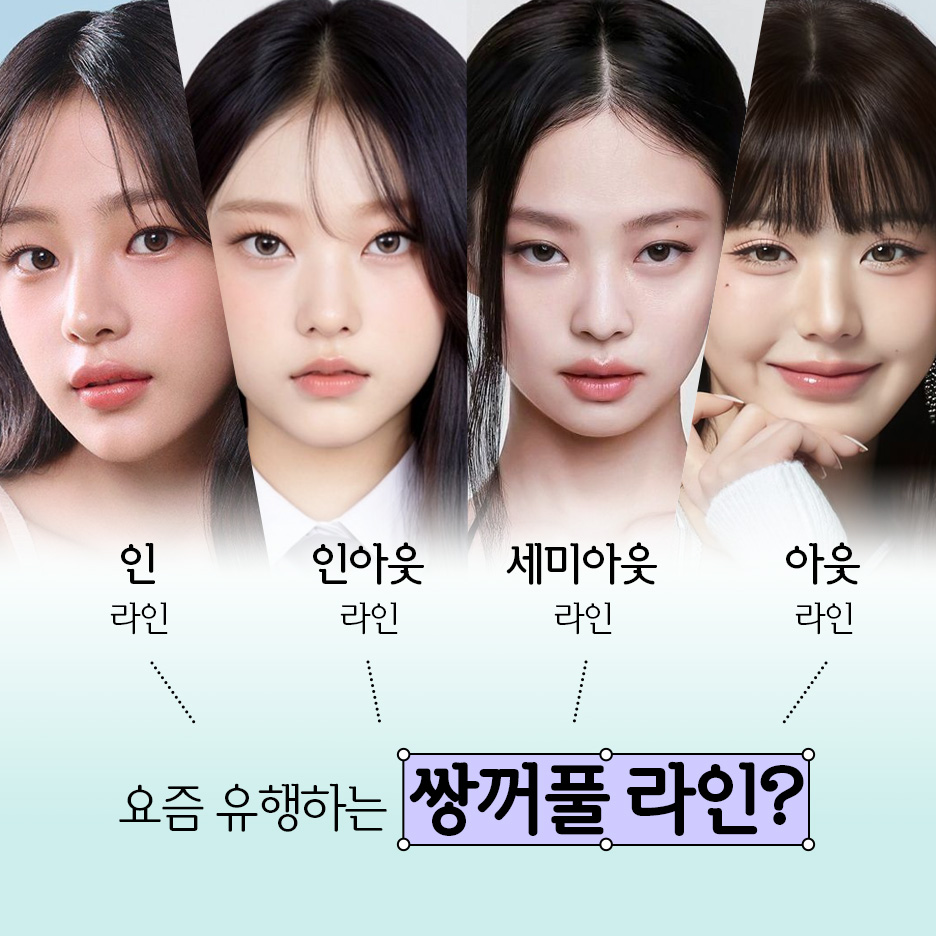
In the past, eye surgery often focused on making the eyes appear larger. This sometimes resulted in excessively high or thick lines, which over time could lead to unnatural-looking cases, often referred to as ‘sausage eyes’.
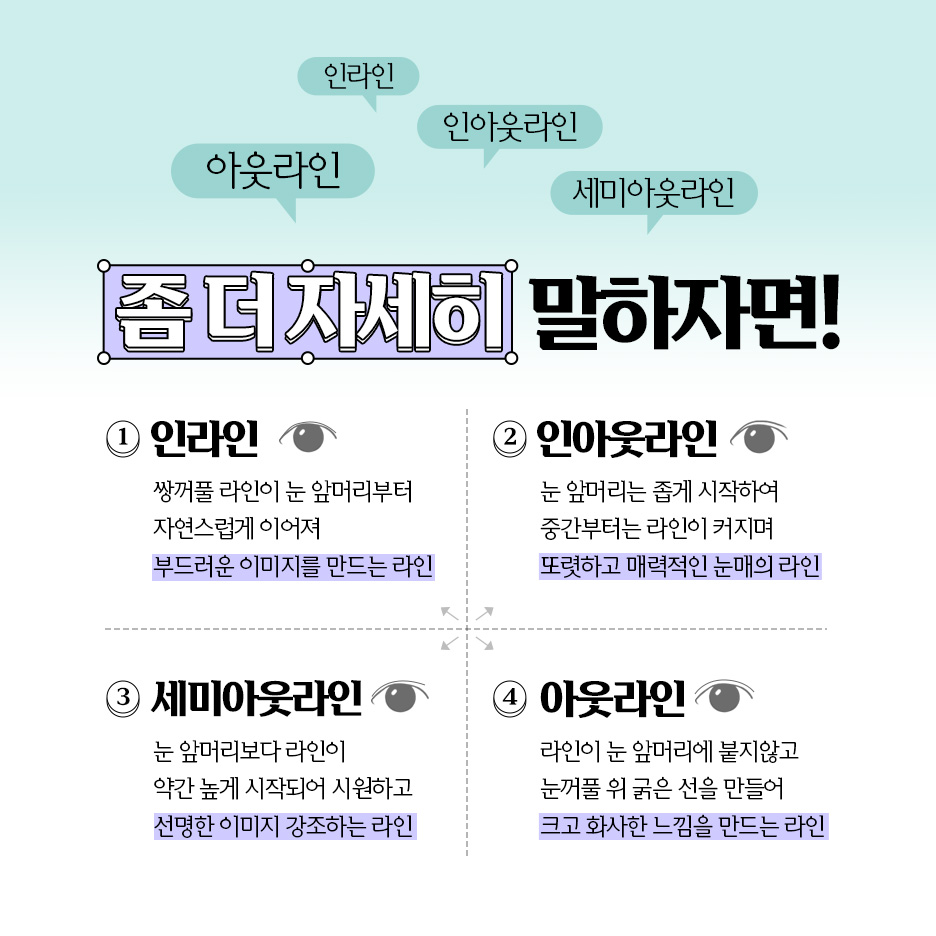
However, in recent Apgujeong eye reoperation consultations, many patients express a desire for results that are ‘undetectable’ or ‘as natural as my original eyes’. Softly connected shapes, such as in-out lines or semi-out lines that complement the facial aesthetic, are particularly preferred.
It is crucial to consider not just following a popular trend, but also what design can be most stably maintained given the current eye structure. The appropriate approach can vary depending on whether the skin is thick, if there is a lot of fat, or if the eyelid-lifting strength is weak.
During the Apgujeong eye reoperation process, the existing adhesion status and scar tissue are also examined. Depending on the tissue condition formed during the initial surgery, it may be necessary to lower or release the line, or conversely, to redefine a faded line.
Representative Cases Frequently Discussed in Apgujeong Eye Reoperation
One of the most common cases mentioned in reoperation consultations is a loosened line. This often manifests as one side becoming thinner or folding into multiple layers over time. In such cases, the approach is not simply to re-tie the line, but to assess the current tissue condition and adjust the method accordingly.
Another common case is an excessively high line. There were instances where the line appeared overly prominent when the eyes were closed, or remained unnaturally thick even when the eyes were open. In these situations, releasing the existing adhesion and readjusting to an appropriate height can be crucial.
Conversely, some individuals consider Apgujeong eye reoperation to improve eyes that appear too thin or faded. Especially as one ages and skin elasticity changes, leading to drooping eyelids, the impression can differ from that of the initial surgery. In these cases, it was often necessary to consider not just line correction, but also the strength of eyelid opening and the degree of skin sagging.
A notable characteristic recently is that the consultation trend has shifted from simply making ‘larger lines’ to balancing the overall eye shape.
Trendy Eyes Prioritize ‘Harmony’ Over ‘Glamour’
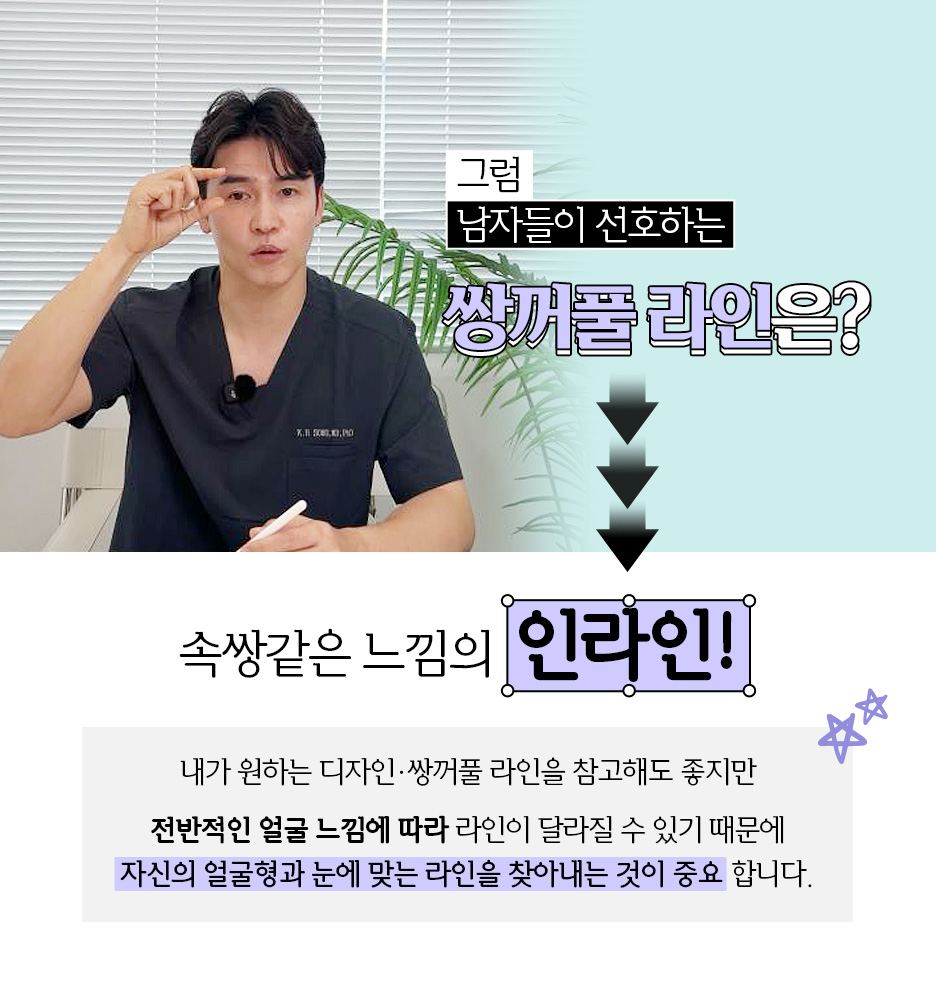
The most important aspect discussed in recent eye reoperation trends is overall facial proportion. There is a strong preference for eye shapes that naturally connect with the forehead, nose, and face shape, rather than eyes that are overly emphasized.
Specifically, in Apgujeong eye reoperation consultations, there's a trend towards adjusting only the necessary parts based on the current eye condition, rather than unconditionally performing epicanthoplasty or ptosis correction together. The emphasis is on maintaining a natural look rather than making excessive changes.
For example, if the distance between the eyes and eyebrows is close, creating an excessively high line could make the eyes appear stuffy. Conversely, if the eyelid-lifting strength is weak, a simple double eyelid might not achieve the desired clarity.
Thus, recent trends are shifting towards reflecting individual structural characteristics rather than simply applying popular designs. Therefore, thorough consultation and analysis of the current state are considered crucial in the Apgujeong eye reoperation process.
Unlike First Surgery, Tissue Understanding is Crucial for Reoperation
Reoperation requires a different approach than the initial surgery. Tissues that have undergone surgery once or more often have adhesions or scars. As changes in skin thickness and the condition of internal tissues must also be considered, a more meticulous plan can be crucial.
Specifically, in Apgujeong eye reoperation, the existing incision line, direction of adhesion, and skin laxity are all examined. Expecting natural results requires considering the feasible range given the current eye condition, rather than simply reflecting the desired design.
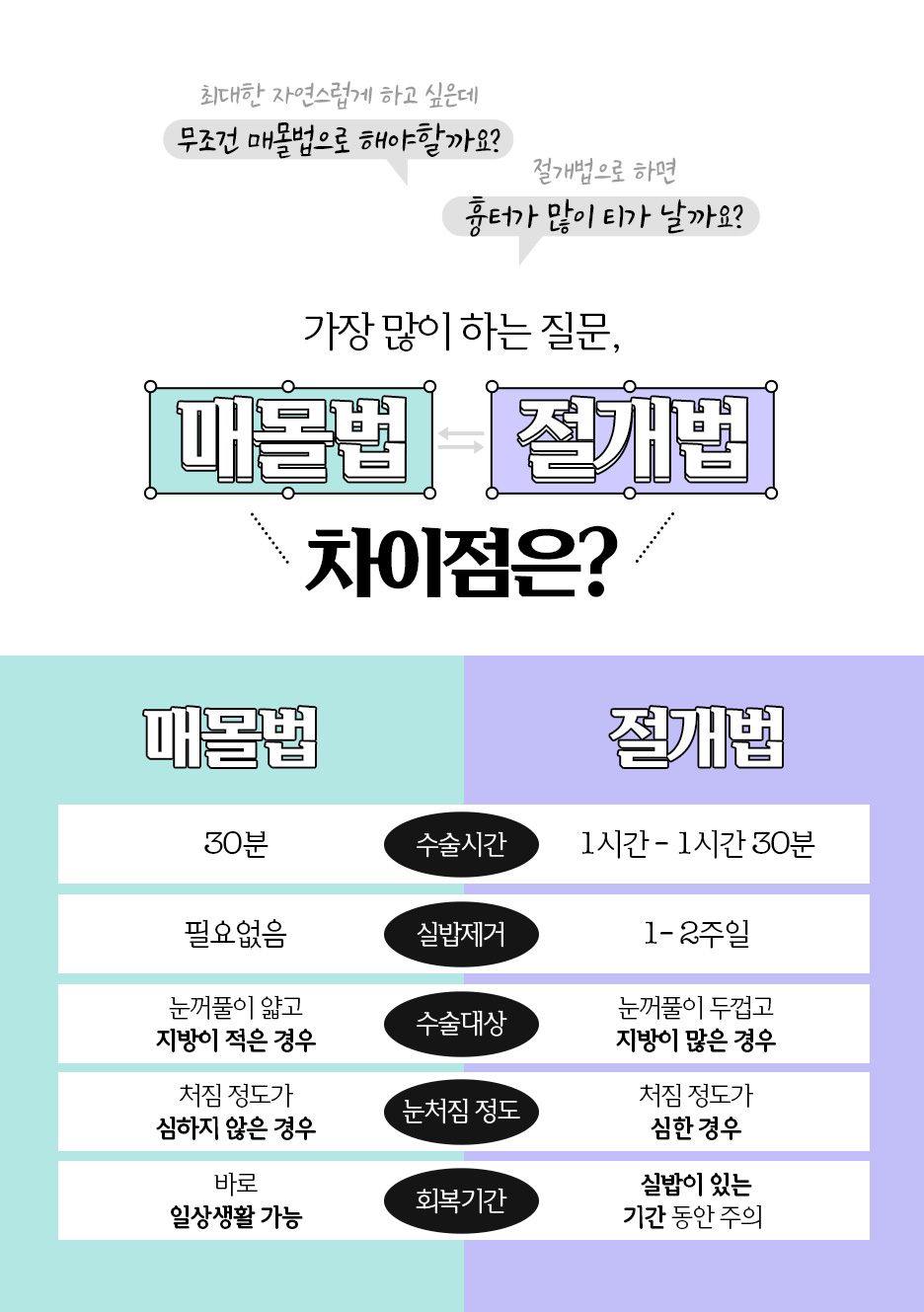
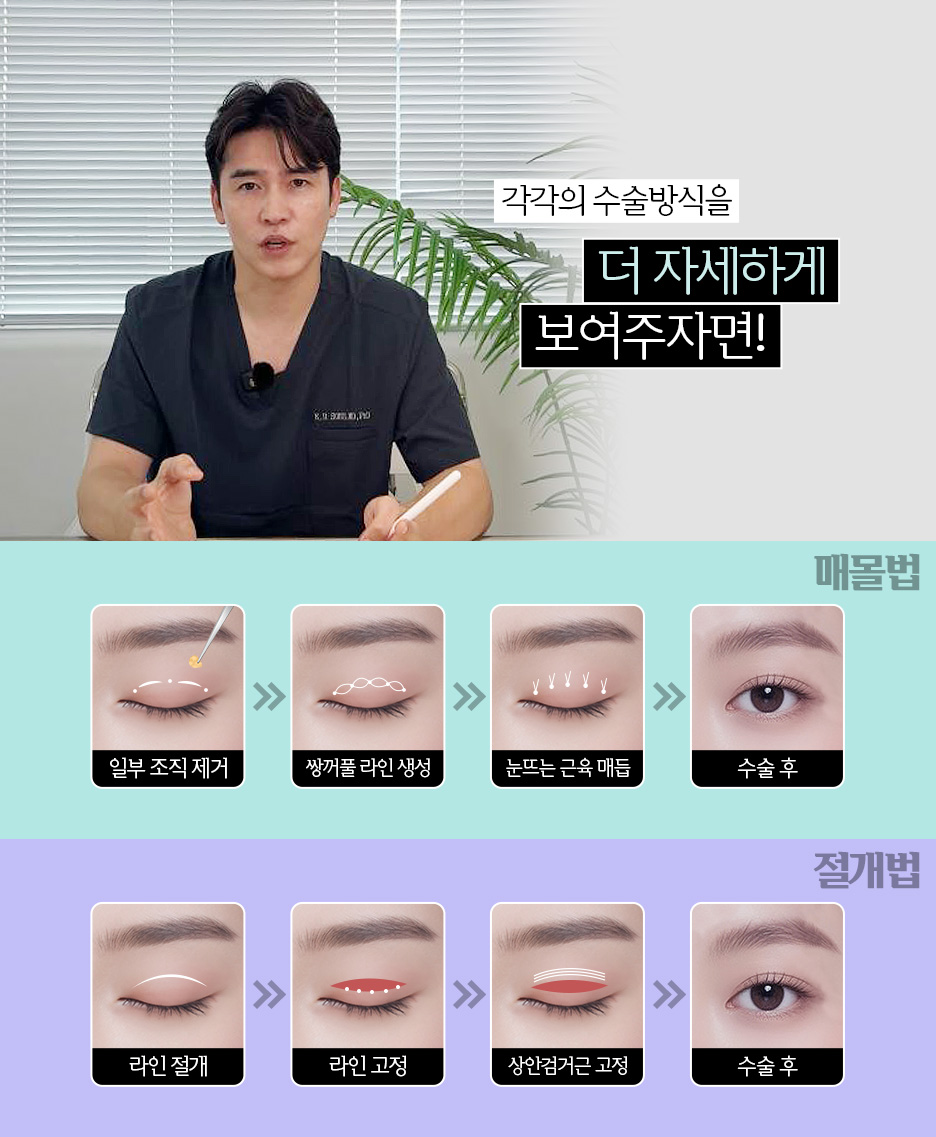
Furthermore, the approach can differ depending on whether the previous surgery method was non-incisional (suture) or incisional. In the case of the non-incisional method, the state of the suture fixation often needs to be checked, while for the incisional method, scar tissue and adhesion status are considered together.
It was important to adjust in a way that suits the current tissue condition rather than attempting overly drastic changes. Therefore, Apgujeong eye reoperation often considers not only the design but also the functional aspects of the eyes.
Points to Check During the Recovery Process After Reoperation
After eye reoperation, initial swelling or bruising may appear. However, recovery speed can vary depending on individual skin condition and the scope of the surgery. Especially since reoperation involves re-handling existing tissues, swelling can sometimes last longer than after the first surgery.
Initially, it is important to avoid rubbing the eyes or applying strong stimulation, and sufficient rest and lifestyle management can also affect the recovery process. The timing for wearing contact lenses or applying makeup is often adjusted based on the current recovery status.
After Apgujeong eye reoperation, it can be important to observe the progress over time rather than judging the results based solely on initial swelling. Since the process of the line settling varies individually, sufficient recovery time needs to be considered.
Recently, as more people prioritize natural stabilization over rapid changes, the consultation trend also includes considering the recovery process.
The More Natural the Change, the More Important the Analysis of the Current Eye Condition

Eye reoperation is not simply about doing it again because the previous surgery was unsatisfactory. It often leads to a trend of adjusting more naturally to the changed facial aesthetic over time or the current eye condition.
Specifically, the recent Apgujeong eye reoperation trend is shifting towards prioritizing harmonious and stable eye shapes over overly glamorous lines. Since even small differences in eye shape can change the overall impression, an approach that considers both the current tissue condition and facial proportions can be crucial.
Finding an appropriate direction for one's eye structure, rather than unconditionally following popular designs, can lead to more satisfying results. At Clyve Plastic Surgery, we thoroughly consult on the direction of natural change, examining both the current eye condition and existing tissue structure.




Apgujeong Eye Reoperation: Trendy Lines and Representative Cases