2026-07-09
Absolute Priority to Avoid Double Failure in Double Eyelid Revision Surgery
Many are distressed by unsatisfactory lines, sausage eyes, asymmetry, or unexpected loosening after their first eye surgery. This article from Clyve Plastic Surgery outlines key criteria for successful double eyelid revision surgery, emphasizing the critical importance of surgical timing and personalized solutions to prevent repeat failures.

Many people are distressed by unsatisfactory lines, ‘sausage eyes’, asymmetry, or unexpected loosening after their first eye surgery. The stress of looking in the mirror can make you eager to undergo surgery again immediately.
However, double eyelid revision surgery is more complex and involves greater tissue damage than the initial surgery, so it should never be decided hastily based on emotion.
Only by analyzing your condition based on accurate facts and approaching it at the ‘right time’ can the revision surgery be your last.
Today, Clyve Plastic Surgery, which specializes in eye revision surgery, will outline the key criteria you must know for successful double eyelid revision surgery without failure.
For double eyelid revision surgery, it is crucial to consider various conditions and plan accordingly. It is also necessary to identify the problems of the previous surgery to prevent recurrence. Among these, the most important factor is determining whether now is the appropriate time for surgery.
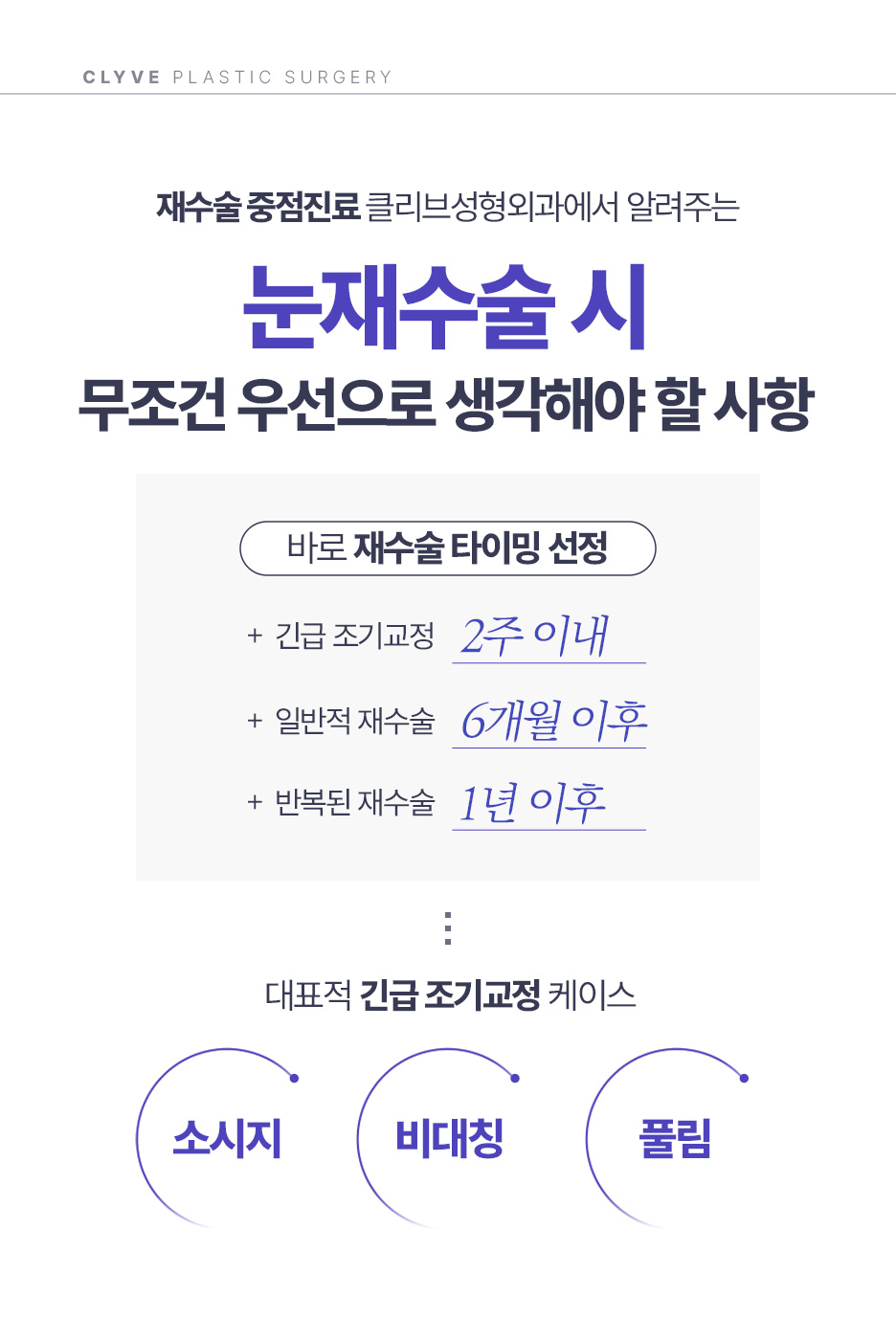
Some may wonder why ‘surgical timing’ is the absolute priority for successful eye revision surgery. This is because the approach varies completely depending on the symptoms and the time elapsed since the previous surgery.
Let's look at each type and timing in more detail:
Within 2 weeks (Early Correction)
If the line after surgery resulted in an absurdly high ‘sausage eye’, severe asymmetry, or if the line loosened prematurely, early correction should be performed within the ‘golden time’ of ‘2 weeks’ before the tissues fully adhere.
After 6 months (General Revision Surgery)
For simple dissatisfaction with the design, scar reduction, or line correction, it is safer to wait approximately ‘6 months’ for the redness in the surgical area to subside and for the internal tissues to harden and then soften again.
After 1 year (Repeated Revision Surgery)
If revision surgery has already been repeated 4-5 times or more, resulting in severe damage to the tissues around the eyes and hardened scars, it is necessary to wait at least 1 year for the tissues to stabilize sufficiently before proceeding with a precise diagnosis.
Since the causes of failure and eye conditions differ for each person, double eyelid revision surgery solutions must also be individualized.
First, for problematic eyes resulting from an improperly set line height, the appropriate height and starting position of the line must be re-established considering the skin thickness, and measures to prevent recurrence by addressing the root cause must also be prepared.
For problematic eyes that often require early correction, the skin thickness and excess skin must be precisely considered. It is essential to adopt a systematic 3-step approach: not simply pulling and tying, but clearly diagnosing the cause-solving procedure of the previous surgery, removing scars from the appropriate line, and re-correcting the height.
On the other hand, in cases of general double eyelid revision surgery, i.e., when revision surgery is desired due to dissatisfaction with the design, it is first necessary to understand the client's needs and provide a clear answer as to why they were not met. If it is determined that the existing tissues have not recovered sufficiently or that further observation is needed, it is important to consider the best timing rather than hastily scheduling the double eyelid revision surgery.
In some cases, the existing line may be completely removed and a new line created. However, if a full revision surgery is burdensome or only specific parts of the design are unsatisfactory, a partial solution can restore a natural and sophisticated eye shape by subtly correcting the unsatisfactory parts or improving multiple folds.
If desired results are achieved through repeated surgeries, there is no problem. However, if new problems arise each time or the same problems recur, endless revision surgeries may be necessary. This type includes those who undergo revision surgery 4-5 times, which is already a lot even once or twice.
Repeated eye revision surgeries cause fatigue to the skin and various tissues, and the skin tissue gradually loses its elasticity due to incisions, which inevitably leads to a gradual decrease in satisfaction with the results. Therefore, it is crucial to be very careful when choosing a medical institution for successful eye revision surgery, including double eyelid revision surgery.

Eye revision surgery is an area that requires advanced techniques and extensive clinical experience. Here are four checklists you must confirm when choosing a hospital for safe and satisfactory results:
① Dedicated medical staff with extensive clinical experience, including highly complex revision surgeries
You must confirm that the surgery is performed directly by medical staff who have a complete understanding of the anatomical structure of the eye and possess skilled techniques through numerous eye revision surgeries. Accurately identifying the cause is essential to prevent re-failure.
② Transparent system for peace of mind (Operating room CCTV)
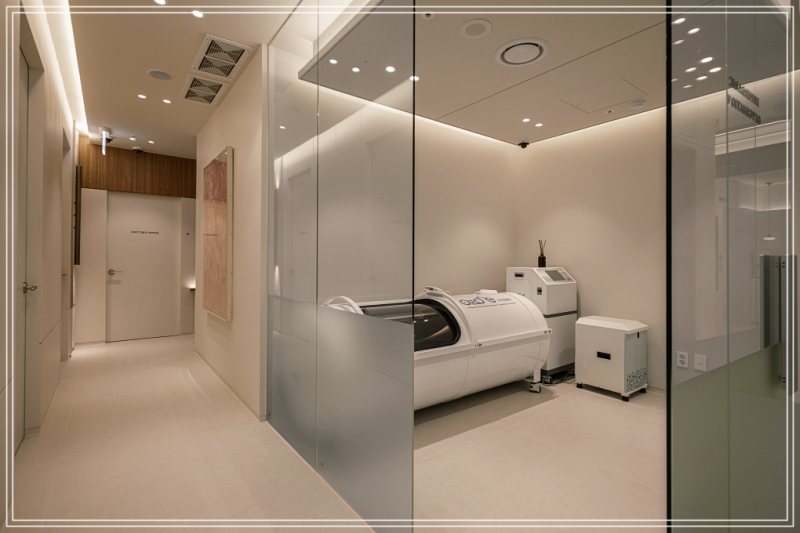
It is important to ascertain whether the hospital has a transparent system with real-time CCTV in the operating room to alleviate concerns about proxy or ghost surgeries, and whether a specialized space and safety equipment (revision surgery specialized center) are established specifically for revision surgery.
③ Thorough personalized aftercare
Revision surgery may result in longer-lasting swelling and bruising than the initial surgery, and tissue stabilization tends to be slower. After the surgery, check if thorough revision care programs tailored to individual recovery speeds are provided to quickly reduce swelling and aid tissue adhesion.

As with all medical surgeries, especially revision surgery, you should not judge based solely on price, hospital size, or fame. The only way to prevent re-failure is to clearly analyze the cause of the first surgery's failure and meet with a skilled specialist at the ‘exact timing’ appropriate for your eye condition.
Eye revision surgery requires personalized diagnosis based on the cause and condition of the problem. Consideration for scar tissue that may arise from repeated surgeries is also necessary. If you are currently unhappy with the shape after eye surgery or are concerned about side effects, do not hesitate to seek answers at Clyve Plastic Surgery, where you can receive a precise 1:1 consultation with experienced medical staff to get a plan tailored specifically for you, without missing the golden time by worrying alone.




TEL : 02-6212-8080

<Explore Clyve Plastic Surgery>