2025-12-19
#27 Revision Rhinoplasty Review: What Has Changed? Understanding Support Structures for Tip Surgery, Implant Replacement, and Scar Tissue Removal
This article explains why 'restoring support structures' and 'soft tissue management' are crucial in revision rhinoplasty, using a real case of implant replacement, tip plasty, scar tissue removal, alar reduction, septal reconstruction, and nostril lowering. It details changes one month post-op and highlights easily overlooked points in revision surgery.
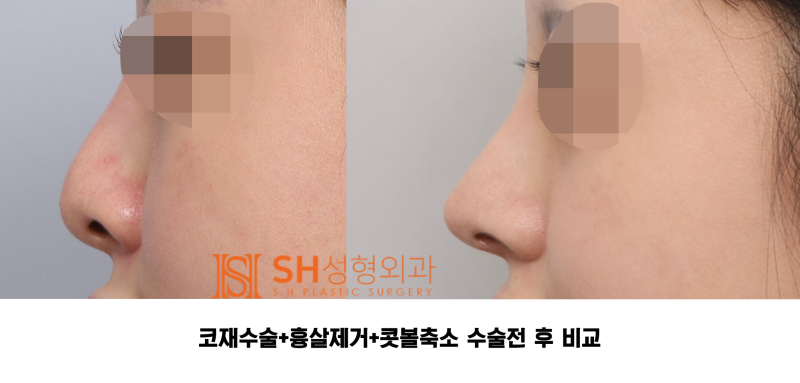
Revision rhinoplasty is not simply a procedure to replace an implant. This article explains, with academic evidence, why ‘restoring support structures’ and ‘soft tissue management’ are key in revision rhinoplasty. It uses a real case of a patient who was concerned about instability of the nasal tip and scar tissue issues after a previous implant surgery, and underwent implant replacement + tip plasty (donated costal cartilage + ear cartilage) + scar tissue removal + alar reduction + septal reconstruction + nostril lowering. We summarize the changes one month after surgery, along with points often overlooked in revision surgery. Dr. Kim Sung-hoon, SH Plastic Surgery, The Face Designer.
Hello, I am Kim Sung-hoon, a board-certified plastic surgeon and The Face Designer.
The case I will introduce this time is about a patient who came for a follow-up one month after revision rhinoplasty.
She had already undergone implant surgery in December 2021,
and the core concern of this consultation was simple:
‘Should I change the implant, or is the tip the problem?’
Upon examination, a significant number of revision rhinoplasty patients often have issues with both the tip's support structure and scar tissue (fibrotic tissue), rather than just the implant.
This patient was also a typical revision case falling into the same pattern.
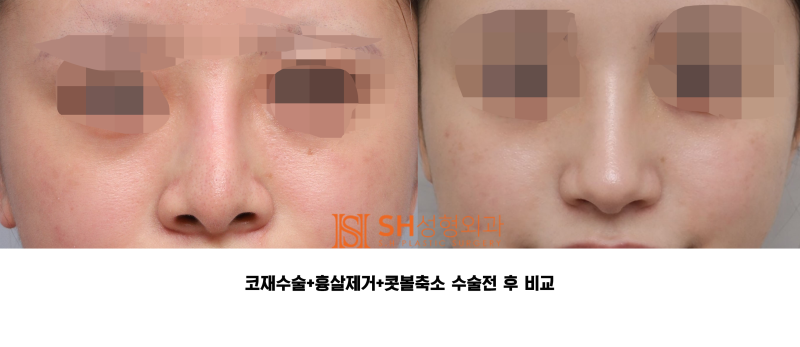
Patient Basic Information
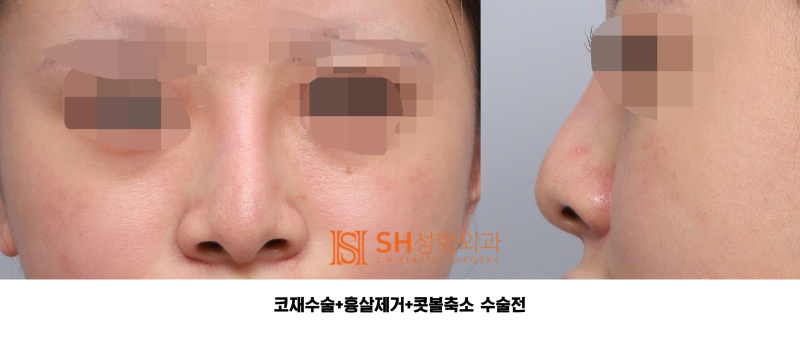
Procedure Name: Implant Replacement + Tip Plasty (Donated Costal Cartilage + Ear Cartilage) + Scar Tissue Removal + Alar Reduction + Septal Reconstruction
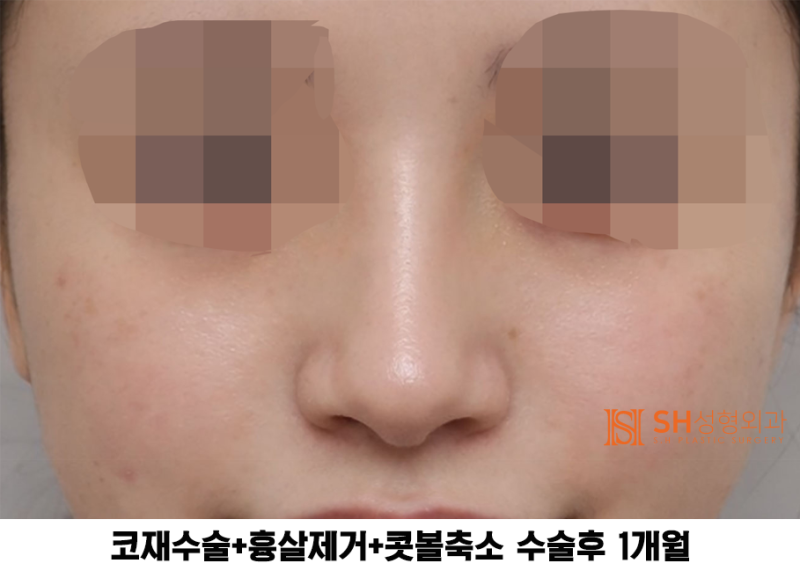
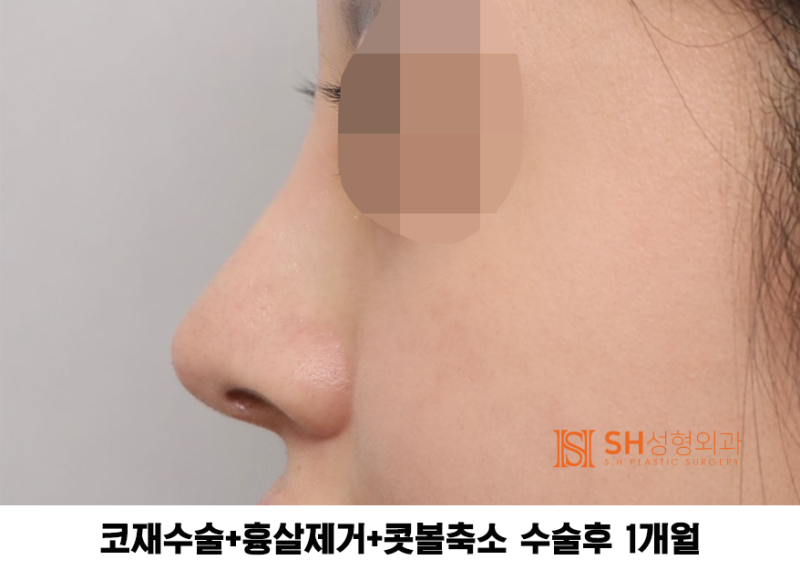
Progress: 1 month post-surgery
Main Concerns: Decision on implant replacement, shape of the nasal tip
Surgical History: December 2021, rhinoplasty using silicone implant and septal cartilage for tip plasty
Medications: None
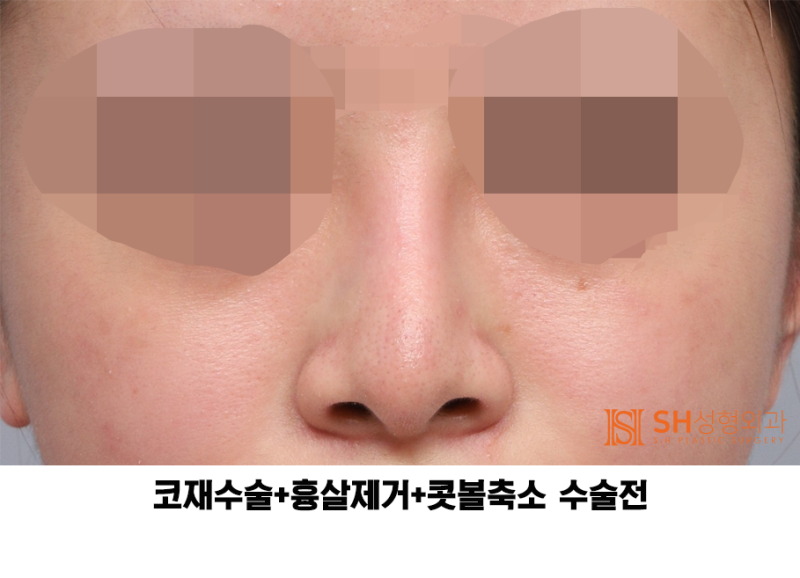
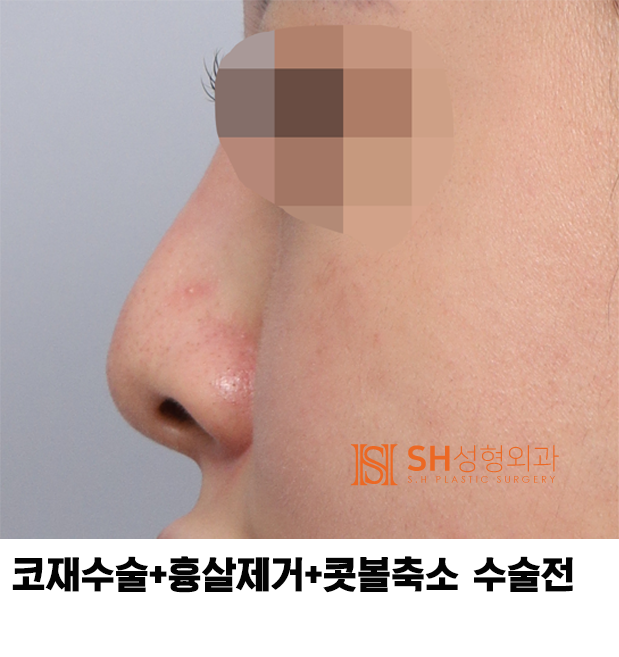
Problem Analysis
|Why it wasn't just a simple implant replacement
The most common misconception in revision rhinoplasty is the idea that ‘if the bridge is the problem, just changing the implant will fix it.’
However, in this case,
decreased tip support,
septal instability,
scar tissue formation below the tip,
and asymmetry of the alar tissue
were observed simultaneously.
Surgical Strategy Summary
1. Septal Reconstruction using Donated Costal Cartilage
Realignment of weakened/deformed existing septum
Restoration of the central support axis for the tip and bridge
Ensuring stability, which is most crucial in revision surgery
Academic Evidence: Byrd HS et al. Septal extension grafts in rhinoplasty. → Septal reconstruction is key to long-term stability of the nasal tip.
2. Tip Plasty (Septal + Ear Cartilage)
Formation of a basic support structure with septal cartilage
Fine-tuning tip volume and curve with ear cartilage
Natural tip design without excessive heightening
3. Scar Tissue Removal
In revision rhinoplasty, scar tissue can
make the tip firm,
hinder shape changes, and
cause clumping again over time.
In this case,
the fibrotic tissue below the tip and around the cartilage was removed
to first create an environment where the cartilage could move properly.
Academic Evidence: Daniel RK. Secondary rhinoplasty and soft tissue management. → Predicting revision surgery results is difficult without scar tissue removal.
3. Alar Reduction
Minimal excision of remaining soft tissue after structural improvement
Refinement of alar-tip ratio
Excessive alar reduction is prohibited in revision rhinoplasty
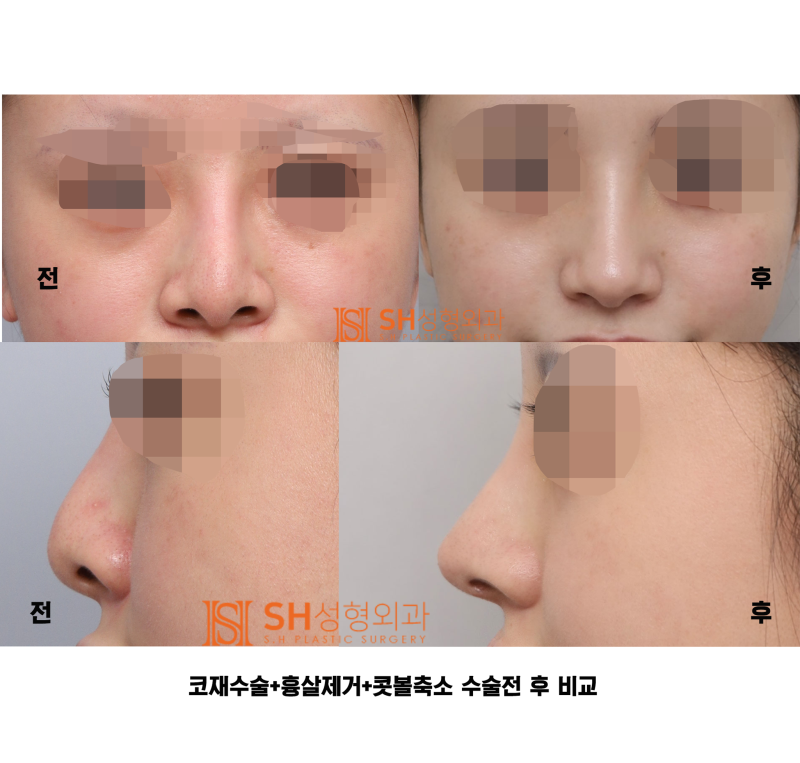
Key Changes One Month Post-Surgery
Decreased firmness of the nasal tip
Alleviation of clumping due to scar tissue
Improved left-right balance of the tip line
Refined impression due to reduced tension in the alar base
※ One month post-surgery is the initial stabilization phase,
the final texture and shape of the nasal tip will become softer over 3–6 months.
Dr. Kim Sung-hoon's Reflection, The Face Designer
‘The core of this case
was not ‘whether or not to change the implant.’
What is truly important in revision surgery
is to create a structure that the nose can rely on again.
Only when the septum is stable,
the tip gains support,
and scar tissue is managed,
does the design then hold meaning.
Revision rhinoplasty is not about ‘making it pretty again’
but about ‘making it not collapse again.’

FAQ
Q1. Why is it difficult to predict the outcome of revision rhinoplasty?
Due to scar tissue, cartilage damage, and differences in previous surgical methods.
Q2. Is ear cartilage always necessary?
It is a very useful material for controlling tip volume and curve.
Q3. Is the result complete at one month?
No. The nasal tip typically takes at least 3–6 months to fully settle.
Q4. Is alar reduction risky in revision surgery?
It is safe when performed minimally after structural stabilization.
#RevisionRhinoplasty