2026-07-14
2026 Rhinoplasty Trend Prediction: The Era of Considering Everything from Bridge to Tip, and Even Nostrils
Rhinoplasty trends are evolving beyond just the bridge and tip, with patients now focusing on columella and even nostril shape for a natural, detailed frontal appearance.


Rhinoplasty has continuously evolved.
Initially, the focus was on the nasal bridge,
then the nasal tip,
and recently, there has been a definite increase in patients who also consider the columella to be important.
Now, as we approach 2026,
the standards for rhinoplasty are expanding even further.
The trend is towards ‘frontal detail’, which now includes the shape of the nostrils.
1️⃣ The era of only looking at the nasal bridge is long gone

In the past, rhinoplasty was primarily evaluated by
‘how much the nasal bridge was raised’.
However, a nose that only emphasized the bridge often
looked artificial from the front
or had an awkward connection to the nasal tip,
making it obvious that surgery had been performed.
As these experiences accumulated,
patients’ interest naturally shifted to the next stage.
2️⃣ Nasal tip design determines the outcome
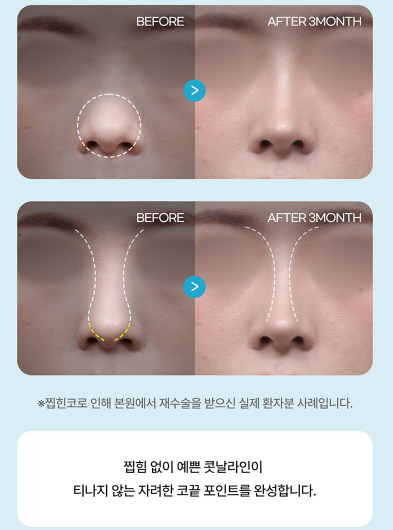
No matter how beautiful the nasal bridge is,
the overall nasal line is not complete without a supportive nasal tip.
Whether the nasal tip appears spread out
whether it looks sharp from the front
whether it looks awkward when smiling or talking
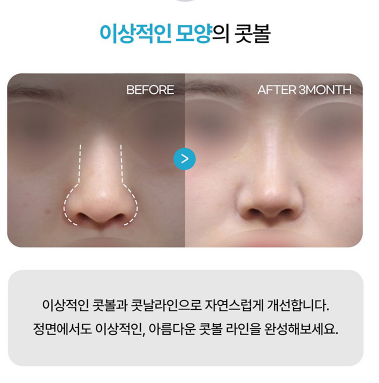
The nasal tip has now become an element that must be designed as a ‘necessity’, not an ‘option’.
3️⃣ The columella: a recently emerging key point

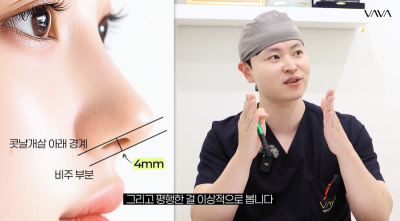
Recently, there has been a noticeable increase in questions during consultations about
the columella.
Though small, the columella directly affects:
✔ The completeness of the nasal line in profile
✔ The degree of nostril exposure from the front
✔ The impression of the nasal tip appearing upturned or pressed down
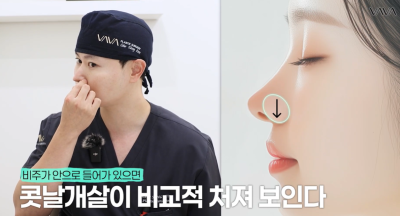

If the columella is too retracted,
the alar wings can appear relatively spread out,
and the nasal tip may look lower.
4️⃣ 2026: The next stage is ‘nostril shape’
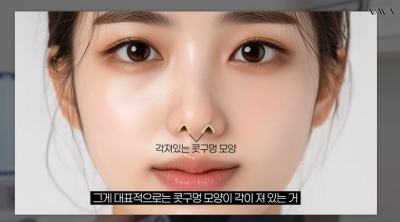

In the rhinoplasty trend for 2026,
the most notable change is nostril design.
Some patients are already precisely addressing concerns about frontal details, such as:
‘My nostrils show too much from the front’
‘My nostrils look asymmetrical’
‘My nostrils appear emphasized in photos’
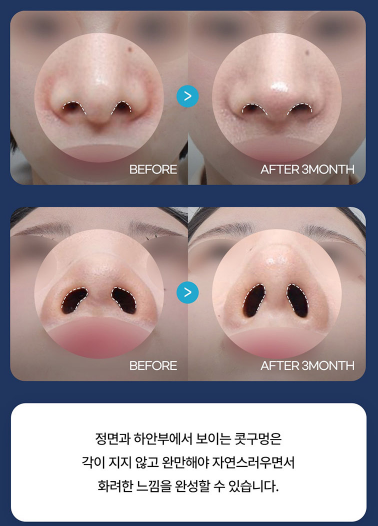
This is a sign that the focus of rhinoplasty is shifting from
primarily profile-oriented → to frontal completeness.
5️⃣ Why are we now looking at the nostrils?
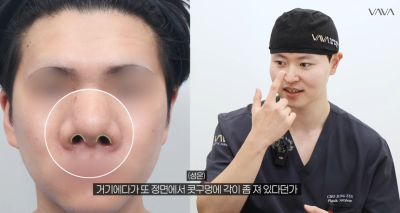
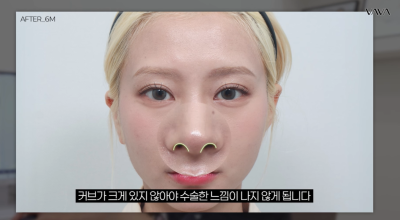
There are clear reasons for this change.
First, it’s the era of frontal photos.
From video calls, selfies, and social media to ID photos,
we see our faces from the front much more often than in the past.
In these instances, the nostrils become a surprisingly noticeable point.
Even if the nasal bridge and tip are beautiful,
if the nostrils appear angular from the front
or if asymmetry is perceived,
the overall impression can be instantly compromised.
Second, the standard for ‘naturalness’ has risen.
If in the past, ‘looking taller was a success’,
now, ‘not looking like you had surgery is a success’.
The nostrils are:
✔ The first part where an artificial surgical look becomes apparent
✔ An area where even a slight excess immediately feels awkward.
Therefore, patients who are sensitive to results
will look at every last detail.
Third, there’s a desire to maintain rhinoplasty results for a long time.
Over time,
the nasal tip can droop,
and columella and nostril exposure can also change.

If the nostril shape is not considered from the beginning,
a few years later, from the front,
the nose might appear ‘stuffy’
or the ‘nasal tip might look bulky’.
6️⃣ 2026 Rhinoplasty’s key keyword: ‘Frontal Completeness’

Rhinoplasty is no longer
✔ A surgery judged by a single profile shot.
From the front,
whether the connection between the nasal bridge and tip is natural
whether the columella is neither excessive nor insufficient
whether the nostrils are soft and symmetrical
All these elements must harmonize together
to be considered a ‘successful nose’.
Especially for the nostrils,
the trend is shifting from making them smaller
to designing them to look unangular, not excessive, and natural.
7️⃣ How future rhinoplasty consultations will change

In future consultations,
there will likely be more questions like these than ‘How much will my nasal bridge be raised?’:
How much will my nostrils show from the front?
Will my nostril shape be okay when I smile?
Will my nose look more gathered or spread out in photos?
These questions are not a sign of being overly sensitive,
but rather a sign of accurately understanding the current trends.
Conclusion

Rhinoplasty is no longer
a surgery that only beautifies one part.
Nasal bridge → Nasal tip → Columella → and now even the nostrils
The direction of rhinoplasty for 2026 is clear:
‘Naturalness in profile, frontal view, and even the smallest details.’
Changing the nose means
designing the center of the face.
Indeed, we have now entered an era where
every tiny detail is considered.