My Experience Having Rhinoplasty After Nose Bridge Filler

A patient with an 'avatar nose' from nose bridge filler injected a decade earlier visits Wonderful Plastic Surgery for filler removal and revision rhinoplasty, achieving a refined straight-nose profile.
Hello.
This is Wonderful Plastic Surgery.
The vague sense of fear that comes with the word 'surgery' —
anyone who has ever considered rhinoplasty has likely felt it at least once.
That is why so many people, especially when they were younger, chose nose bridge filler with the lighthearted thought:
'If I don't like it, I can just dissolve it — so why not give it a try?'
Of course, there are cases where the filler settles beautifully and holds its shape over time.
But because filler is fundamentally a liquid substance,
there is always a risk that it will spread as time goes on.
A nose bridge that looked sharp and elegant at first
can gradually become lumpy and uneven,
or the filler can migrate sideways so that only the glabella region ends up bulging outward — a phenomenon commonly known as the 'avatar nose.'
When the avatar-nose effect develops, it not only ruins the nose's natural line but also disrupts the central balance of the face, making the overall appearance look heavy and blunt.

The patient we are introducing today came to our clinic with exactly this concern!
'An Avatar Nose' Created by Filler Injected Ten Years Ago
This patient, just as described above,
had previously received nose bridge filler to raise her dorsum.
However, the filler solution did not hold its shape neatly —
instead, it spread bluntly to both sides of the nose dorsum.


The result was a classic avatar nose — a dorsum that was excessively wide and raised —
and it was in that condition that she came to us.
'Pre-Surgery Consultation'
During the consultation, we carefully assessed the patient's condition.
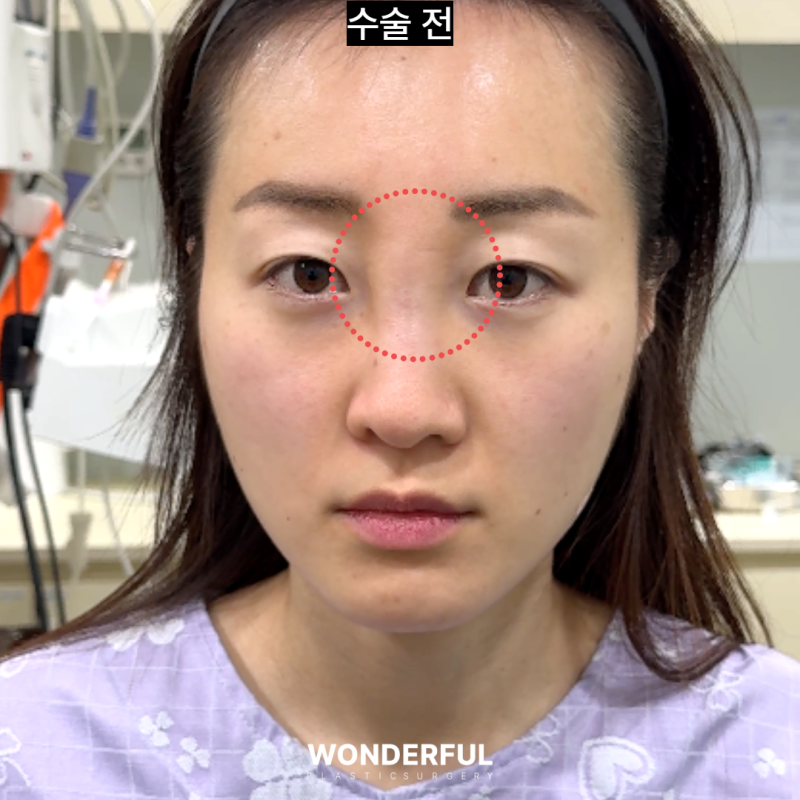
Time of filler injection: approximately 10 years ago
Type of filler: the patient herself was not certain which product had been used
Fillers fall broadly into two categories: 'dissolvable fillers (hyaluronic acid)' and 'non-dissolvable fillers.'
If the product used in the past was a non-dissolvable filler,
removing it surgically is by no means a straightforward process.
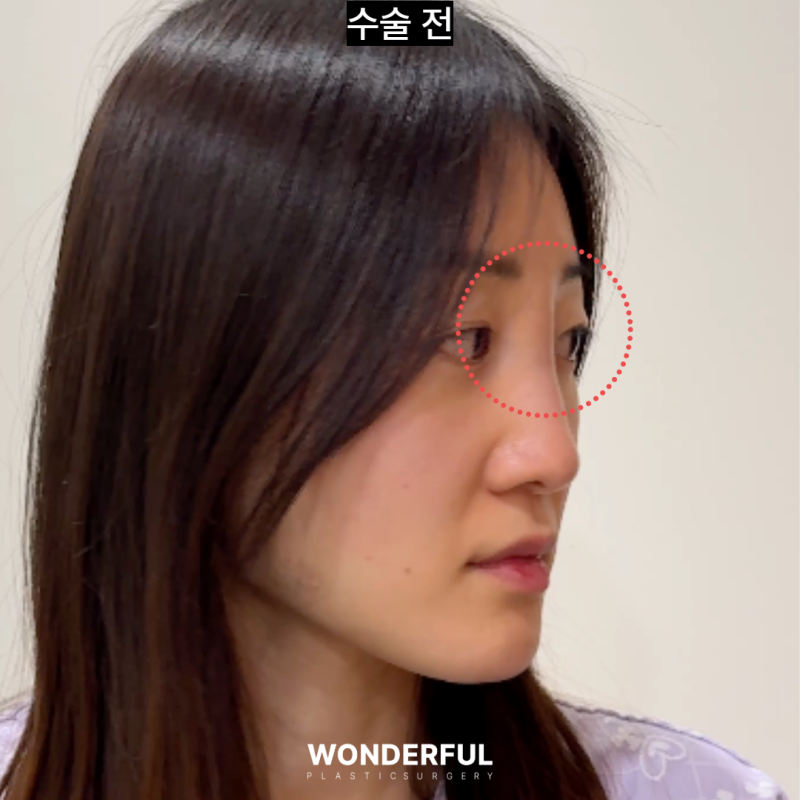
The patient's nose profile had completely collapsed due to the abnormally spread filler,
and the excessive volume had caused the glabella to rise unnaturally.
Moreover, when viewed from below, the nasal tip was noticeably asymmetric,
making it urgent to correct the asymmetry while lifting and defining the tip.
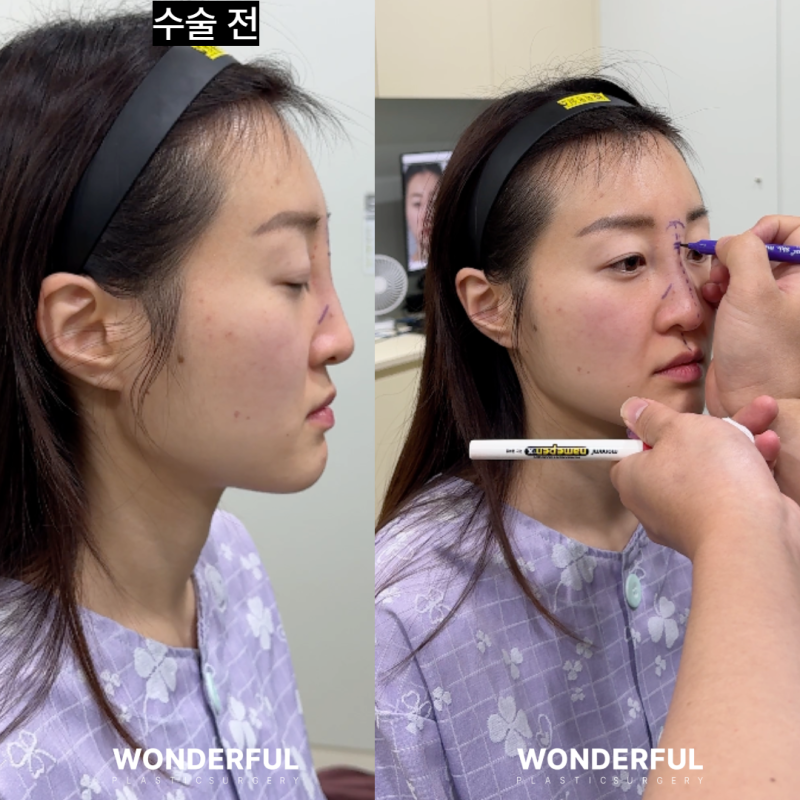
We made sure to explain the realistic limitations to the patient clearly.
'Even if we remove as much of the existing filler as possible before the rhinoplasty, it has been integrated with the surrounding tissue for such a long time that the skin surface may remain somewhat uneven afterward. This is something to be prepared for.'
The patient's aesthetic goal was a 'straight nose' that would complement her facial structure naturally.
With her wishes in mind, we promised to achieve the smoothest, most refined line possible within those limitations —
and proceeded with surgery.
Progress at One Week Post-Op

The surgery was every bit as challenging as anticipated.
After ten long years, a considerable amount of filler had accumulated deep inside the nose,
and the process of scraping away the foreign material took far longer than a standard rhinoplasty.
After thorough filler removal,
we sculpted the straight-nose profile the patient had requested
and corrected the asymmetric nasal tip.
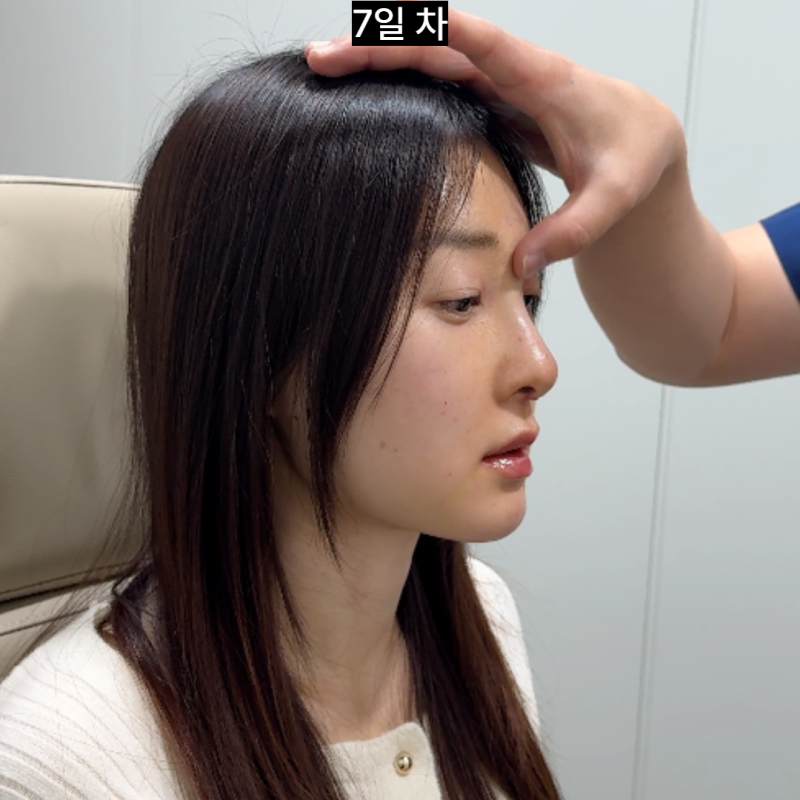
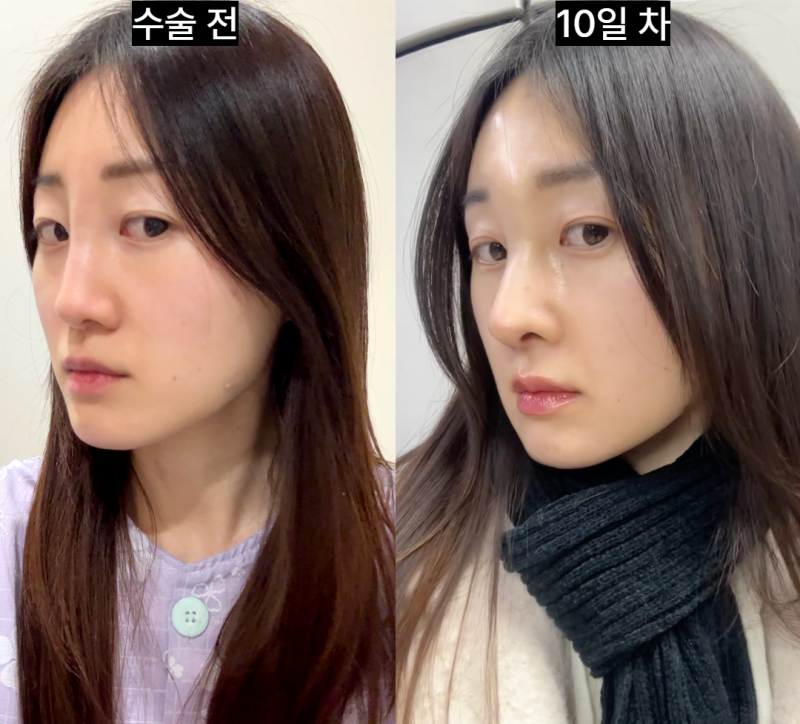
This is her appearance at one week post-op.
Even with residual swelling still present,
the avatar-nose look — where only the glabella region protruded prominently — has disappeared,
and a refined, straight-nose line suited to her facial proportions is gradually coming into view.
The patient was extremely pleased to find that the heavy, overfilled dorsum now felt clean and resolved.
'Two Things to Remember'
As medical professionals who encounter a great many post-filler rhinoplasty revision cases,
there are just two pieces of advice we would like to share with you.
Always remember what filler you received.
Before any procedure, make a point to confirm — and write down — the exact ingredient and brand of filler your clinic will be using.
This becomes the single most important piece of information should you ever experience side effects or need the filler removed in the future.
If you are considering rhinoplasty down the road, avoid nose filler.
Nose filler cannot serve as a complete substitute for rhinoplasty.
In fact, repeated filler injections stretch the skin tissue and generate scar tissue,
which is likely to become a significant obstacle when you eventually want to undergo actual rhinoplasty.

If you have concerns about the shape of your nose,
we strongly encourage you to consult thoroughly with a specialist — thinking long-term rather than prioritizing immediate convenience — to find the safest and most suitable approach for you.