2026-05-25
Top 5 Reasons for Rhinoplasty Revision!
Discover the top 5 reasons for rhinoplasty revision, from aesthetic dissatisfaction to functional issues like contracture, and how to achieve your ideal nose.

Hello.
This is VIBE Plastic Surgery.
In the case of rhinoplasty, there are many instances where patients experience side effects due to hasty decisions or poor planning during the initial surgery.
Furthermore, there is even a rumor that ‘you only get satisfied after three nose surgeries,’ indicating that revision rhinoplasty is quite common.
Let’s take a look at the actual reasons why people undergo revision rhinoplasty.
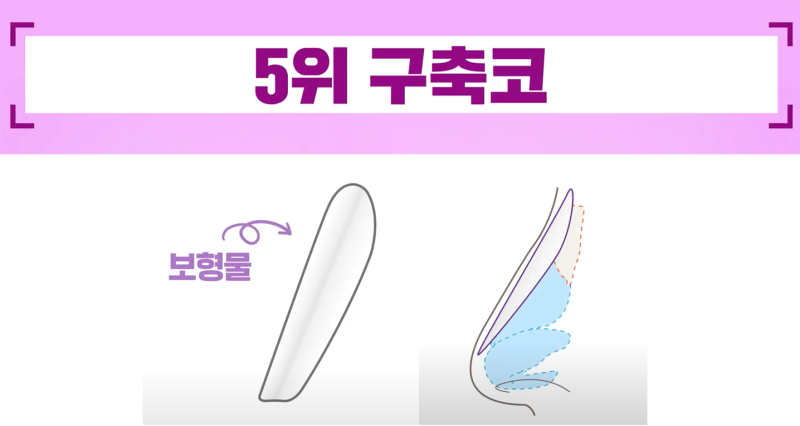
The 5th most common reason is a contracted nose.
When an implant is placed in our body, it is a foreign substance, which triggers an immune response.
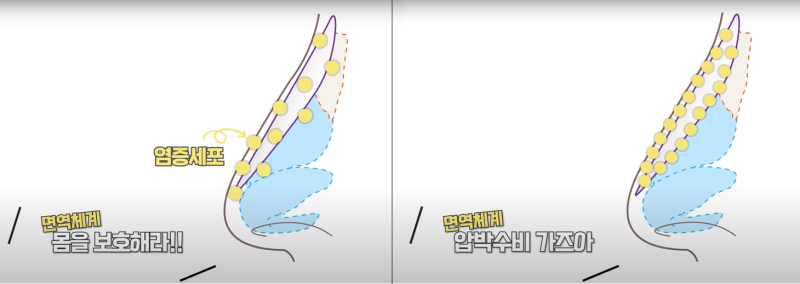
As the body reacts to the foreign object, inflammatory cells gather around the implant. Over time, this can cause pain, and the immune response from these inflammatory cells can lead to a shrinking or tightening reaction.
This phenomenon is called contracture.
Contracture literally refers to symptoms where the tissue becomes hard and shrinks.
If inflammation occurs around the implant and a thick capsule forms, it compresses the silicone, triggering the contracture phenomenon.
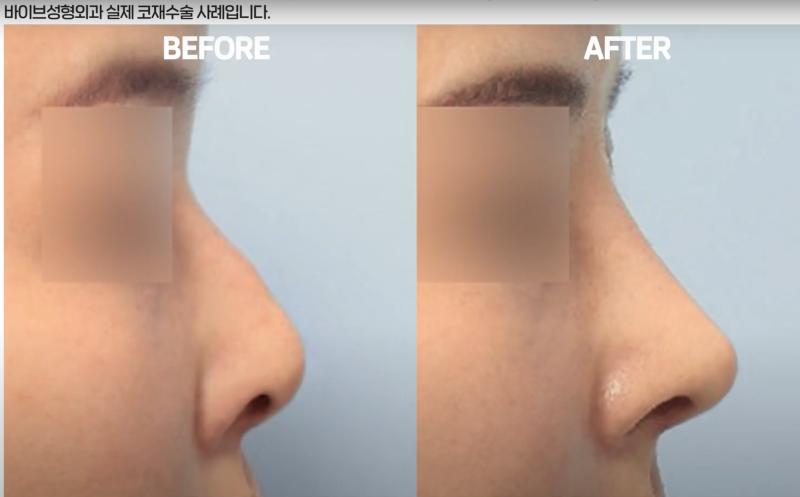
In the early stages, it can be treated with antibiotics, but if time passes and contracture develops, replacement or removal of the implant may be necessary.
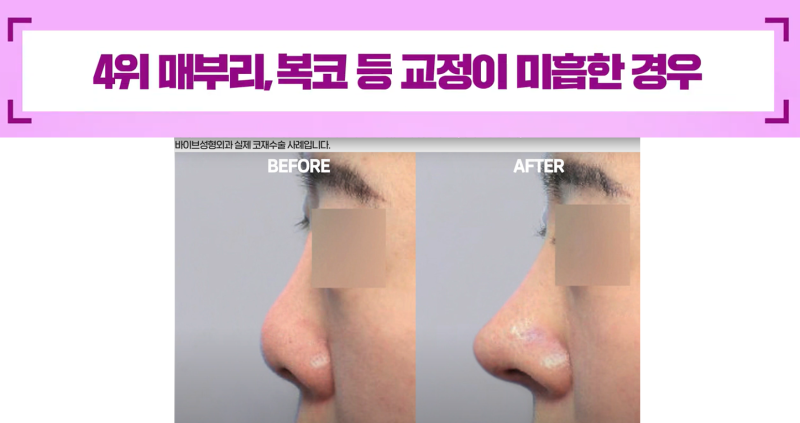
Ranked 4th are hump nose and bulbous nose surgeries, which are considered some of the more difficult types of rhinoplasty.
These are cases where someone underwent surgery for a blunt nose tip or a hump, but the hump returned after surgery, or the nose tip remains blunt because the correction was insufficient.
For a hump nose,
satisfaction is often higher when the hump is moderately trimmed within a possible range, and then an implant or autologous cartilage is used to fill the depressed areas.
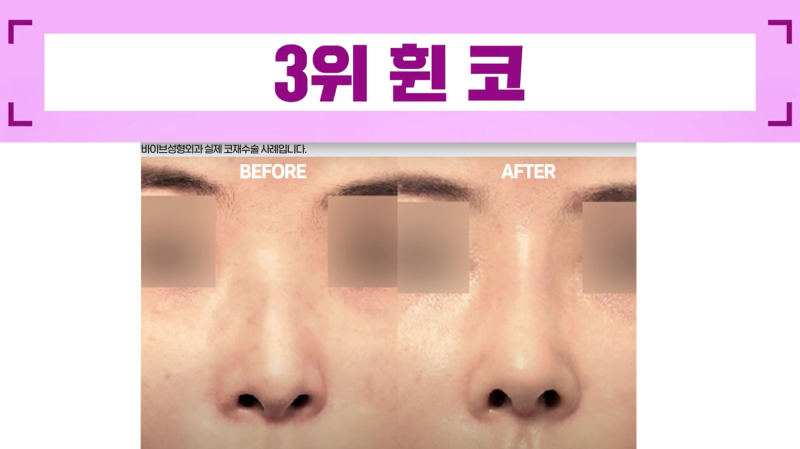
Many patients visit due to asymmetry or a crooked nose.
Everyone has some degree of facial asymmetry.
The slope of the nasal bones, the axis, and the height of the nostrils are all slightly different on each side.
However, people often don’t notice this asymmetry in daily life.
But when the bridge is raised through plastic surgery, the crooked parts or the differences between the two sides can become more noticeable.
While it is difficult to perfectly correct these minute differences through surgery,
if the implant has moved and appears crooked or if the axis is significantly tilted after surgery, it can be corrected through revision surgery.
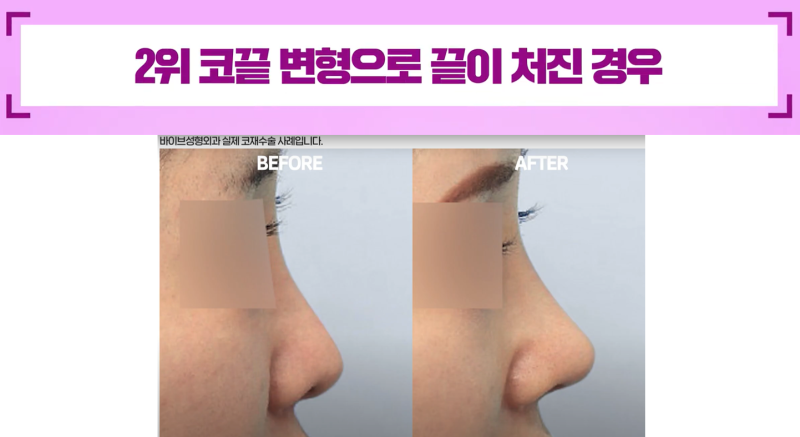
In rhinoplasty, the tip of the nose is usually raised using autologous cartilage.
There are many cases where patients feel their nose has become lower because the skin is too thick or because the skin itself exerts downward pressure.
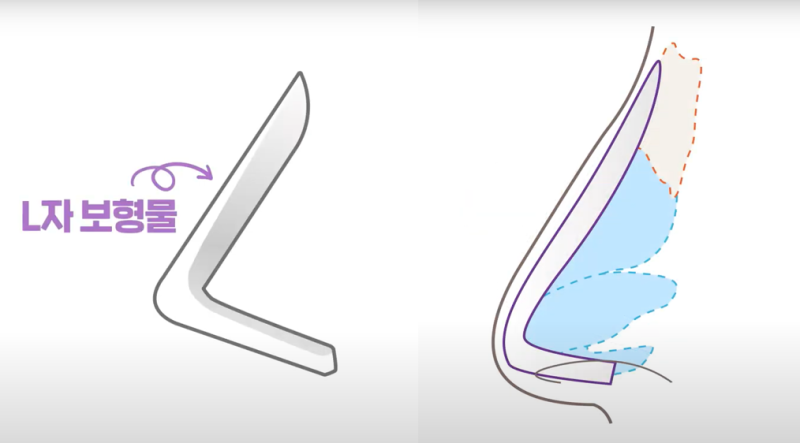
Also, although not used much recently, there are cases where L-shaped implants were used.
If an L-shaped implant is inserted from the bridge to the tip, it looks very unnatural, and the pressure on the support can actually make the tip look more blunt.
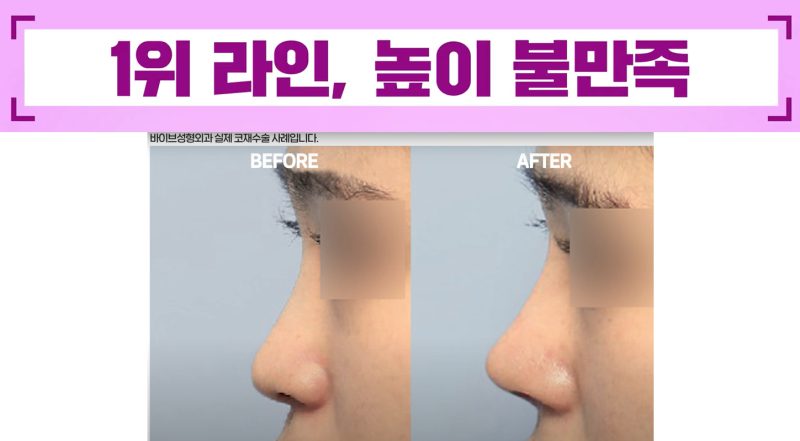
The most common reason for revision rhinoplasty is simple dissatisfaction.
There are many cases where patients complain that there is no significant difference in height compared to before the surgery, or conversely, that the nose became too high, making them look like an ‘Avatar.’
Just as a high nose isn’t always a beautiful nose, the ideal line is different for everyone.
It is most important to consider the harmony of the entire face—from the forehead to the degree of mouth protrusion—rather than just looking at the nose in isolation.
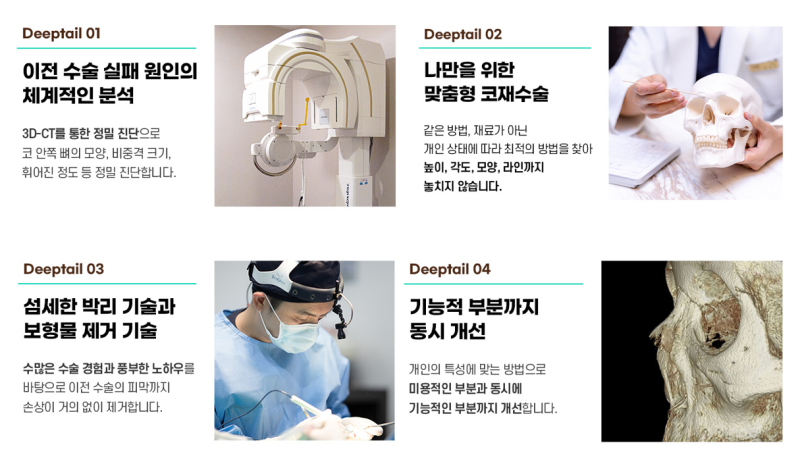
What is the ideal nose shape for you, and what points do you want to improve during revision surgery?
At VIBE Plastic Surgery, we systematically analyze the causes of previous surgical failures using 3D-CT to improve both aesthetic and functional aspects.