2026-05-18
Rib Cartilage in Rhinoplasty: Why Use It? Complete Guide to Benefits and When It's Needed
Rib cartilage, frequently mentioned as a rhinoplasty material, is cartilage harvested from the ribs, offering strong support and sufficient quantity to create a defined line from the nasal tip to the bridge. In cases where septal or auricular cartilage is thin or lacks adequate support, or when significant changes are desired, rib cartilage can be an excellent alternative. The choice should be made carefully based on your individual nasal structure.

Hello, this is Vibe Plastic Surgery :)
👃🏻 When you start exploring rhinoplasty options,
you've probably heard the term 'rib cartilage' at least once.
While the name sounds familiar, many people wonder
exactly what it is. Although it's frequently mentioned
as a rhinoplasty material, many don't fully understand
when and why it's used.
That's why today, we'll explain
what rib cartilage is in rhinoplasty,
and when it's utilized at Vibe Plastic Surgery Seoul
in detail :) 📝
🦴 What is rib cartilage used as a rhinoplasty material?
So what is rib cartilage?
Rib cartilage is, as the name suggests, the cartilage in your ribs.
It plays a role in protecting vital organs like the lungs and heart.
The center consists of soft cartilage,
and it becomes harder bone towards the outside.
In rhinoplasty, we mainly harvest cartilage from the front 6-8 ribs,
and at Vibe Plastic Surgery, we perform
'rib cartilage rhinoplasty' using this material.
On the other hand, some patients find using autologous rib cartilage burdensome,
as it can leave a scar of approximately 2.5-3cm.
For those concerned about scarring, we can also use
'allograft rib cartilage'—cartilage harvested from a donor,
processed for immune tolerance, and then applied.
❓ Why is rib cartilage used?

Rib cartilage, as you can feel when you touch it,
has the advantage of being firm and providing excellent support.
Additionally, because it's relatively large,
we can obtain sufficient quantity as needed.
When patients undergo rhinoplasty, many desire
a natural, sharply defined line from the nasal tip
to the bridge. To maintain this shape stably,
the strength and support of the material are crucial,
and rib cartilage is considered advantageous in this regard.
At Vibe Plastic Surgery, we use rib cartilage
to firmly structure the nose and create a more defined line.
In this way, rib cartilage—with its firmness, sufficient size,
and excellent shape retention—is a material that helps
achieve superior rhinoplasty outcomes.
💡 Do surgeons also prefer rib cartilage rhinoplasty?

In rhinoplasty, the primary materials considered are
septal cartilage and auricular cartilage,
because harvesting cartilage from within the surgical site
is less burdensome and offers advantages in pain and recovery.
At Vibe Plastic Surgery, when possible,
we prioritize using septal or auricular cartilage.
"However, this cannot be applied in all cases."
When septal or auricular cartilage is too thin
or lacks adequate support,
or if it has already been used in a previous surgery,
creating sufficient structure becomes difficult.
In these cases, using rib cartilage—which provides
stronger support and sufficient quantity—becomes
necessary, making it a good alternative :)
👃🏻 When is rib cartilage the first choice in rhinoplasty?
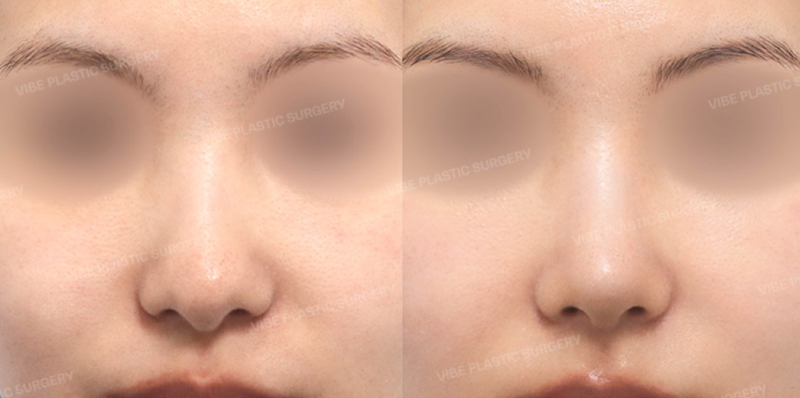
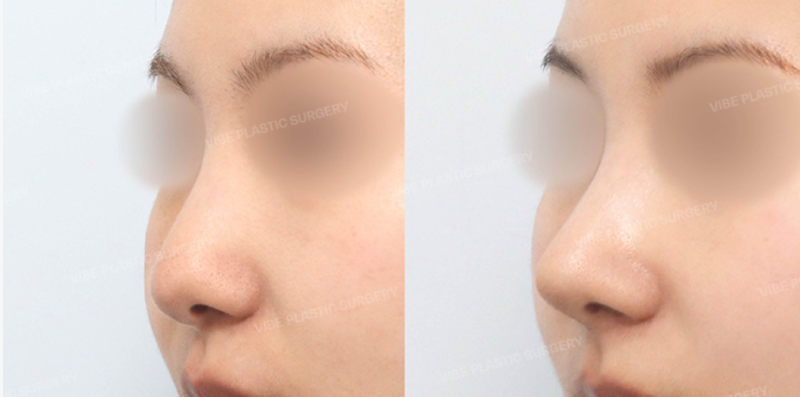
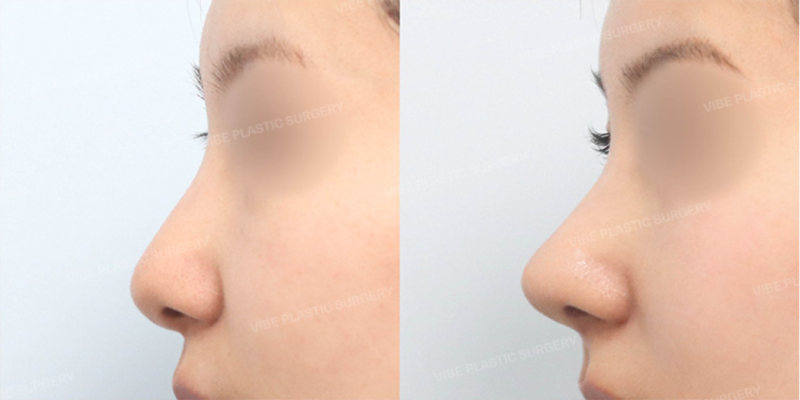
When the nose is small and blunt with poor support,
or when patients desire a high, sharply defined nose with a straight profile line,
significant changes are needed. In such cases,
standard cartilage alone may struggle to maintain the shape,
so rib cartilage with excellent support is often prioritized.
At Vibe Plastic Surgery, in these cases,
we use rib cartilage to create sufficient structure.
Additionally, many patients prefer rib cartilage
before their visit and inquire about it during consultation :)
📝 Is rib cartilage the right choice for me?

Today we've explored rib cartilage.
Rather than simply judging it as good or bad,
rib cartilage is a material whose selection varies
based on your individual nasal structure and desired changes.
At Vibe Plastic Surgery, considering these factors,
we use rib cartilage only when necessary.
Therefore, it's important to fully understand
whether your case requires rib cartilage, what potential issues
may arise from its use, and then carefully decide
through consultation with our specialists at Vibe Plastic Surgery.
"When rib cartilage is appropriately used when needed,
it can be an excellent choice."
Since selecting the right material for your nose is crucial,
we hope you'll find the most suitable approach
through thorough consultation at Vibe Plastic Surgery :)




Frequently Asked Questions
What is rib cartilage in rhinoplasty?
Rib cartilage is cartilage from the ribs that plays a role in protecting vital organs like the lungs and heart. In rhinoplasty, we mainly harvest cartilage from the front 6-8 ribs and use it as a material to structure the nose.
What's the difference between autologous and allograft rib cartilage?
Autologous rib cartilage is harvested from your own ribs but can leave a scar of approximately 2.5-3cm. When scarring is a concern, we may use allograft rib cartilage—cartilage harvested from a donor, processed for immune tolerance, and then applied.
Why is rib cartilage used as a rhinoplasty material?
Rib cartilage is firm and provides excellent support, and because it's relatively large, we can obtain sufficient quantity as needed. It's considered an advantageous material for stably maintaining a natural, sharply defined line from the nasal tip to the bridge.
When is rib cartilage considered a first choice?
When the nose is small and blunt with poor support, or when patients desire a high, sharply defined nose with a straight profile line, significant changes may be needed. In such cases, standard cartilage alone may struggle to maintain the shape, making rib cartilage with excellent support often a first consideration.
What cartilage is primarily considered in rhinoplasty?
The primary materials considered in rhinoplasty are septal cartilage and auricular cartilage. Because they're harvested from within the surgical site, they're less burdensome and offer advantages in pain and recovery.
Is rib cartilage used for everyone?
Rather than simply judging rib cartilage as good or bad, it's a material whose selection varies based on individual nasal structure and desired changes. It's important to carefully decide whether to use it through thorough consultation with a specialist.