2026-09-07
Yaksu Station Dental Clinic: What Treatment is Needed for Cervical Abrasion? (Causes and Solutions for Sensitive Teeth)
Learn about cervical abrasion, a common cause of sensitive teeth, and its treatment options at Yaksu Station Dental Clinic. We discuss G.I. and resin fillings to protect your teeth.
Hello^^
I'm Dr. Kim Tae-young, director of Bareunyoung Dental Clinic at Yaksu Station.
The weather has been getting incredibly hot lately.
As the sweltering heat continues, it seems like summer has arrived, bringing with it a lot of cold ice water and even ice chewing.
Around this time of year, we often see patients who complain of tooth sensitivity when drinking cold water or when cold air enters their mouths.
There are three main causes of sensitive teeth:
The first is when the gums are swollen and teeth are loose, which can cause sensitivity.
-> In such cases, the problem is resolved by making the periodontium healthy through gum treatment.
The second is hypersensitivity due to cervical abrasion caused by tooth erosion, wear, or fracture.
The third is when a deep cavity forms, which can also cause sensitivity.
Today's topic will focus on the second cause:
Cervical abrasion, which occurs when the outer layer of the tooth is worn away.
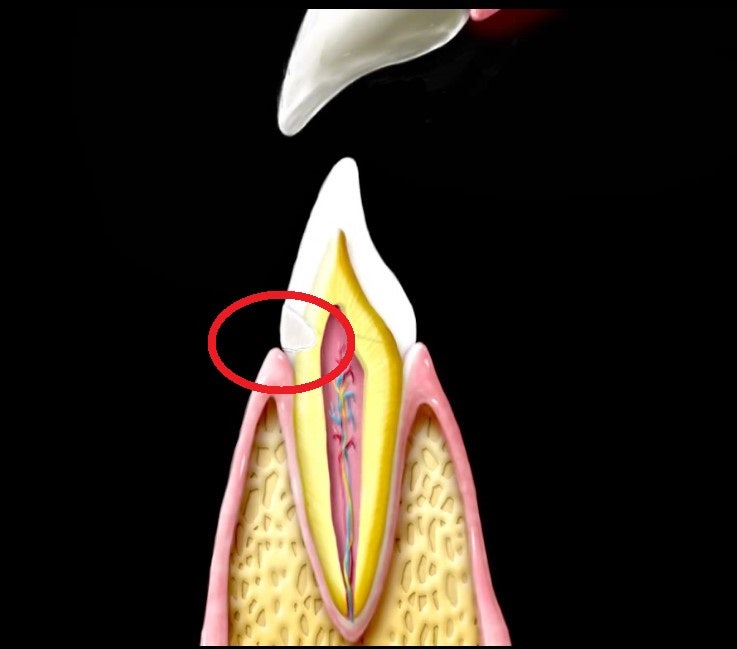
The 'cervical area' refers to the neck of the tooth.
Its location in our oral cavity is the boundary between the tooth and the gum.
The cervical area is prone to damage from external forces.
Excessive brushing, excessive biting force, consumption of carbonated drinks, and habits like frequently eating tough and hard foods can cause the outer layer of the tooth to wear away, leading to external stimuli being transmitted to the nerves and causing sensitivity.
Additionally, sensitivity can occur when the gums recede, exposing the tooth root.
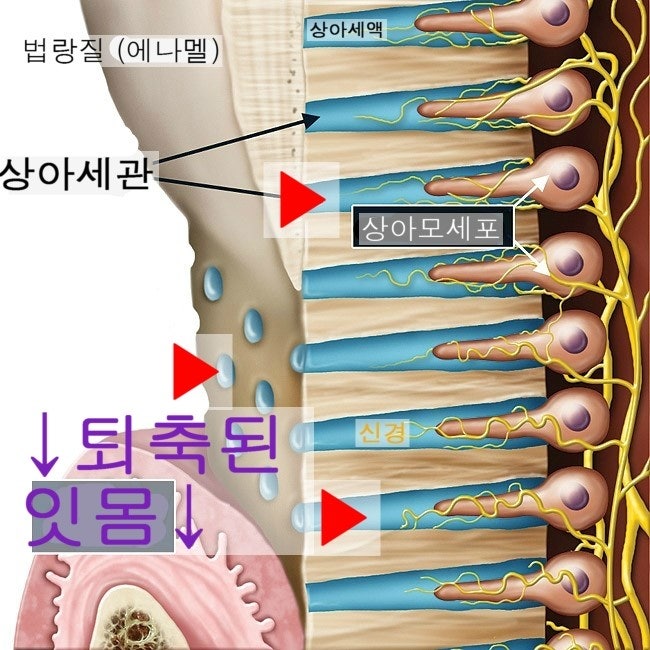
To help you understand easily, let's explain with an illustration:
Due to receding gums or tooth wear, the pathway to the nerve is exposed to the outside,
External stimuli are transmitted to the nerve, causing sensitive symptoms.
Thus, the solution is to cover the exposed area.
There are two types of materials used for treatment: G.I. and resin.
Comparing G.I. and resin relatively:
Characteristics of G.I.:
It has advantages such as being covered by insurance, a simple procedure, and good workability.
However, it has the disadvantage of being weaker than resin in terms of physical properties, strength, and aesthetics.
Characteristics of resin:
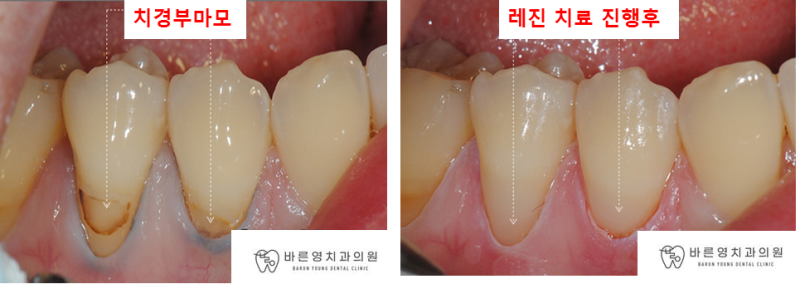
It offers good aesthetics, high strength, and a relatively lower chance of detachment compared to G.I.
However, since it is not covered by insurance, it can be a disadvantage in terms of cost.
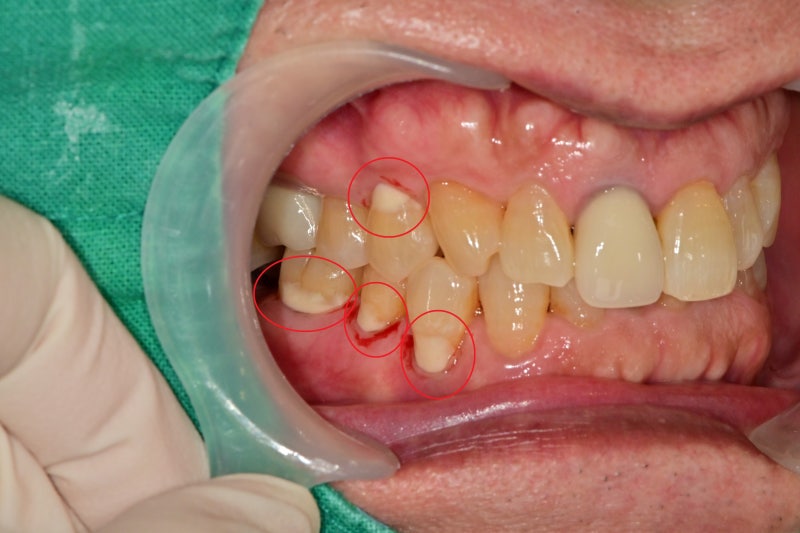
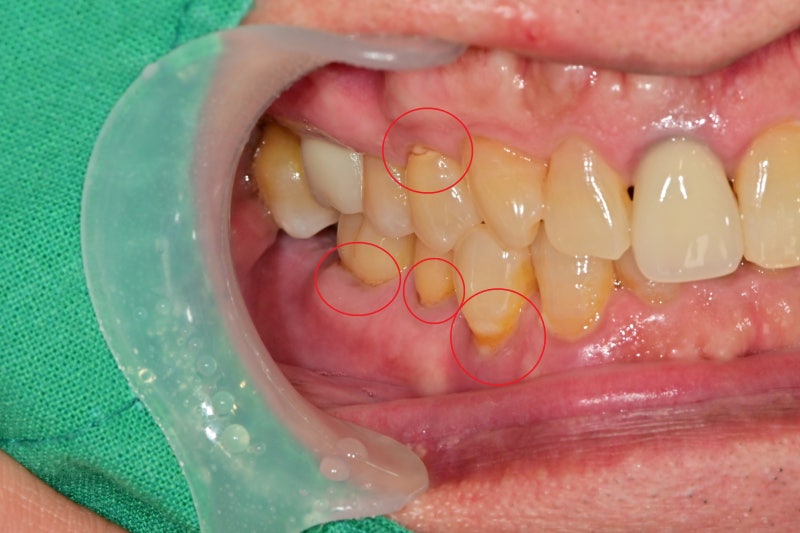
The worn-away parts of the four teeth on the left were treated with G.I., an insurance-covered material.
Since the cervical area borders the gums, slight gum bleeding may occur immediately after treatment to smoothly trim the material.
Although it was trimmed as cleanly as possible, the tooth color is yellowish,
So, aesthetically, the color is bound to be noticeable.
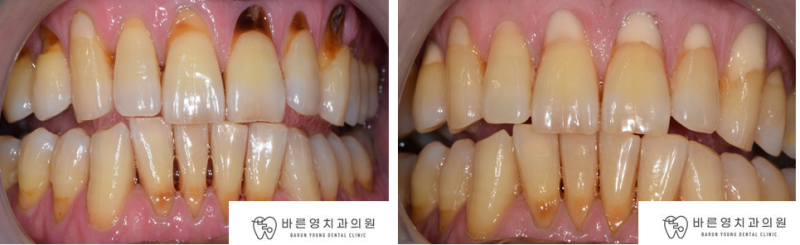
This time, it's a case where both resin and G.I. were used on one patient.
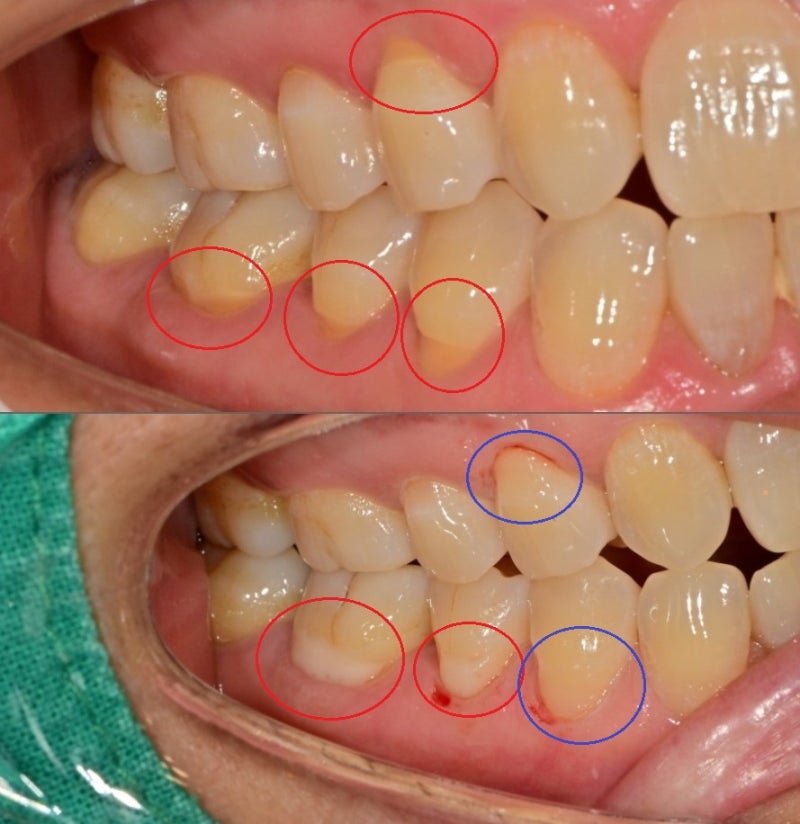
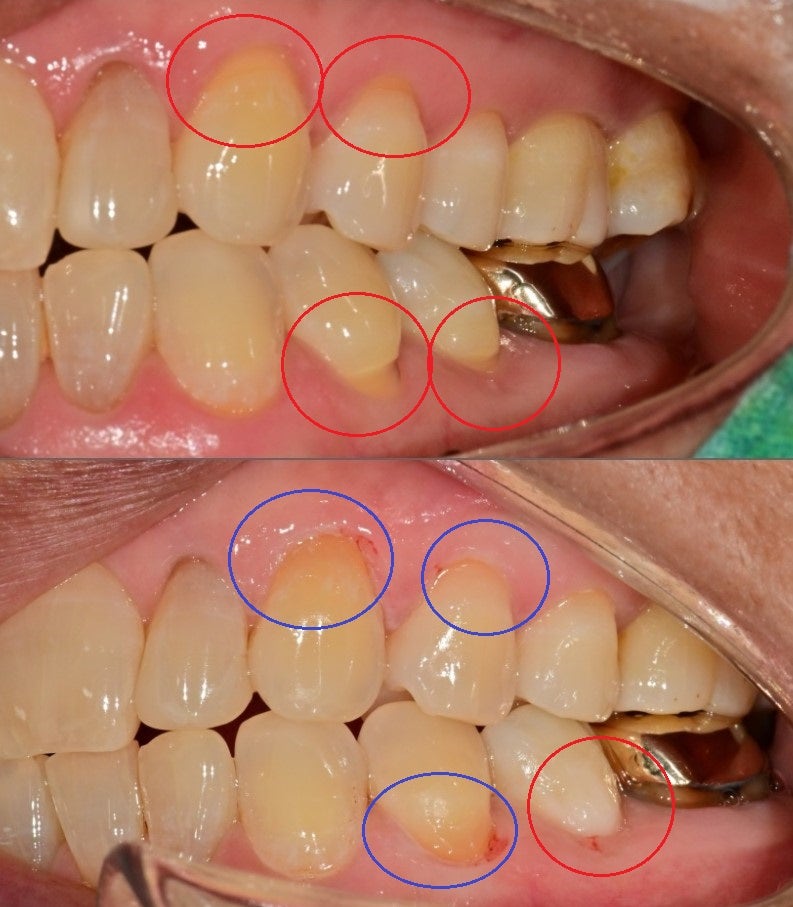
The top photo is before treatment, and the bottom photo is after treatment and trimming.
In the post-treatment photo, the red circle indicates the insurance-covered G.I., and the blue indicates resin treatment.
Resin can be treated naturally as it can be matched to a similar color for each tooth.
In this patient's case, since the tooth tone is white,
Even with insurance treatment, the color doesn't stand out much.
When cervical abrasion continues to worsen, it doesn't end with such restorative treatments.
If the nerve is exposed, root canal treatment + crown treatment may be necessary, or in severe cases, the tooth may even break.
I tell patients that treating cervical abrasion acts as a bumper to protect the tooth.
Rather than one of these two materials being inherently better or worse, it seems best to use them appropriately according to the situation.^^
Frequently Asked Questions
What are the main causes of sensitive teeth?
There are three main causes of sensitive teeth. First, when the gums are swollen and teeth are loose. Second, cervical abrasion due to tooth erosion, wear, or fracture. Third, when a deep cavity forms. Among these, cervical abrasion occurs when the outer layer of the tooth is worn away, exposing the nerve.
Why does cervical abrasion occur?
Cervical abrasion occurs when the neck of the tooth is worn away by external forces such as excessive brushing, excessive biting force, consumption of carbonated drinks, and habits like frequently eating tough and hard foods. Additionally, sensitivity can occur when the gums recede, exposing the tooth root.
What materials are used for cervical abrasion treatment?
Mainly two materials are used for cervical abrasion treatment: G.I. (glass ionomer) and resin. G.I. is covered by insurance, involves a simple procedure, and has good workability, while resin offers superior aesthetics and strength, and has a relatively lower chance of detachment.
What is the difference between G.I. and resin treatment?
G.I. is covered by insurance, making it more affordable, and the procedure is simple, but its aesthetics and strength are weaker than resin. On the other hand, resin offers excellent aesthetics, allowing for treatment that matches the tooth color, and has high strength, but it is not covered by insurance, so the cost may be higher.
What happens if cervical abrasion treatment is delayed?
If cervical abrasion treatment is delayed, the symptoms can worsen, potentially exposing the nerve. In such cases, root canal treatment and crown treatment may be necessary, and in severe cases, the tooth may even break, so early treatment is crucial.
Can gum bleeding occur after cervical abrasion treatment?
Yes, slight gum bleeding may occur immediately after treatment. Since the cervical area borders the gums, temporary irritation to the gums during the process of smoothly trimming the material can cause bleeding, but this usually resolves naturally.