2026-09-07
Yaksu Station Dental Clinic: Treating Deep Cavities (Using MTA)
Dr. Kim Tae-young of Bareunyoung Dental Clinic at Yaksu Station discusses treating deep cavities, especially when the nerve is exposed. He explains the use of MTA (Mineral Trioxide Aggregates) to protect the nerve and potentially avoid root canal treatment, illustrating with patient cases where MTA was both successful and unsuccessful.
Hello!!
I'm Dr. Kim Tae-young from Bareunyoung Dental Clinic at Yaksu Station^^
Today, I'd like to talk about what happens when we treat deep cavities.
When treating cavities, we encounter many variables.
Cavities that are difficult to find on the inner adjacent surfaces of teeth,
Cases where secondary cavities have progressed inside after removing old fillings,
Cases where cavities have progressed to a deep extent through fissures on the tooth surface,
In such cases, we first remove the cavity and then perform appropriate restorative treatment depending on the extent.
When removing deep cavities, the tooth's nerve is often exposed.
Also, even if it's not exposed, if it's very close to the nerve, root canal treatment may be necessary.
When treating deep cavities, I always place a nerve-protecting material and explain it to the patient.
It's fortunate if the nerve stabilizes with this material and root canal treatment isn't needed, but often that's not the case.
The material used in such situations is called MTA.
MTA (Mineral Trioxide Aggregates)
It was originally developed as a material for endodontic treatment (root canal treatment),
Known for its excellent sealing ability and biocompatibility, it's a widely used material.
Although used for various purposes,
It also shows excellent performance in stabilizing nerves.
However, it cannot be used in all cases, so the tooth's healing ability is also an important factor.
I think my tooth is broken.
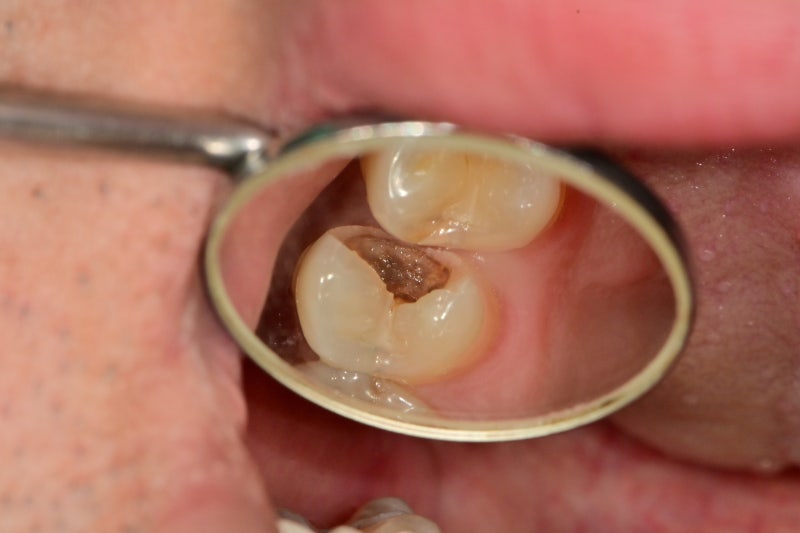
The patient visited us, saying, ‘I think my tooth is broken.’
A cavity formed, weakening the area, and then it broke.
After removing the cavity, an adjacent surface cavity was also found on the opposite side of the tooth, so we planned for crown treatment.
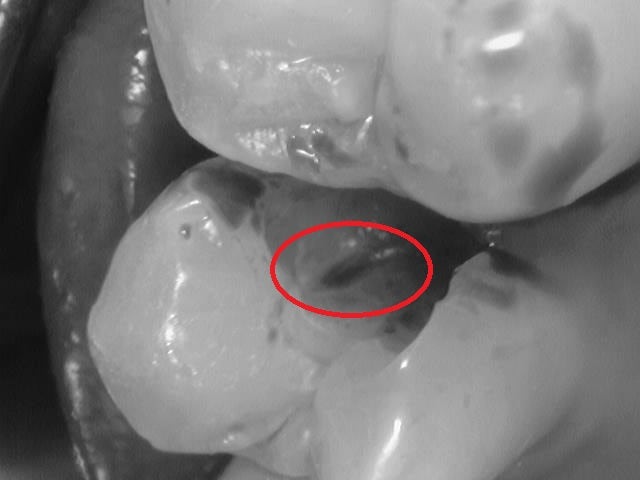
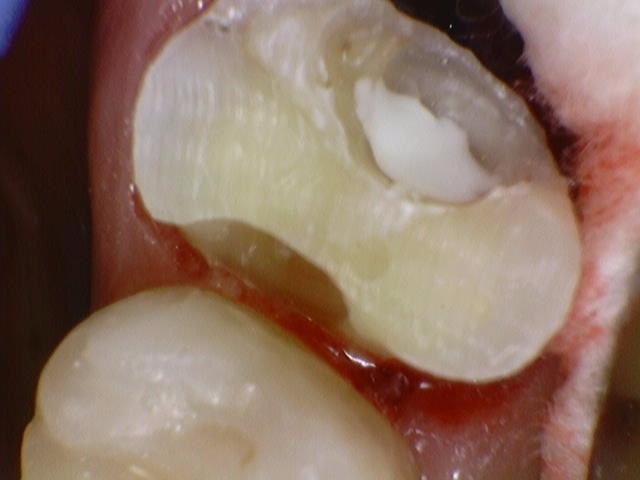
While removing the cavity, do you see the red circle on the left?
You'll see a round hole, which is the exposed entrance to the nerve canal.
The patient had no symptoms, and the area was small, so I explained it to them.
We sealed the nerve canal entrance with MTA, shaped the tooth, and observed it with a temporary crown.
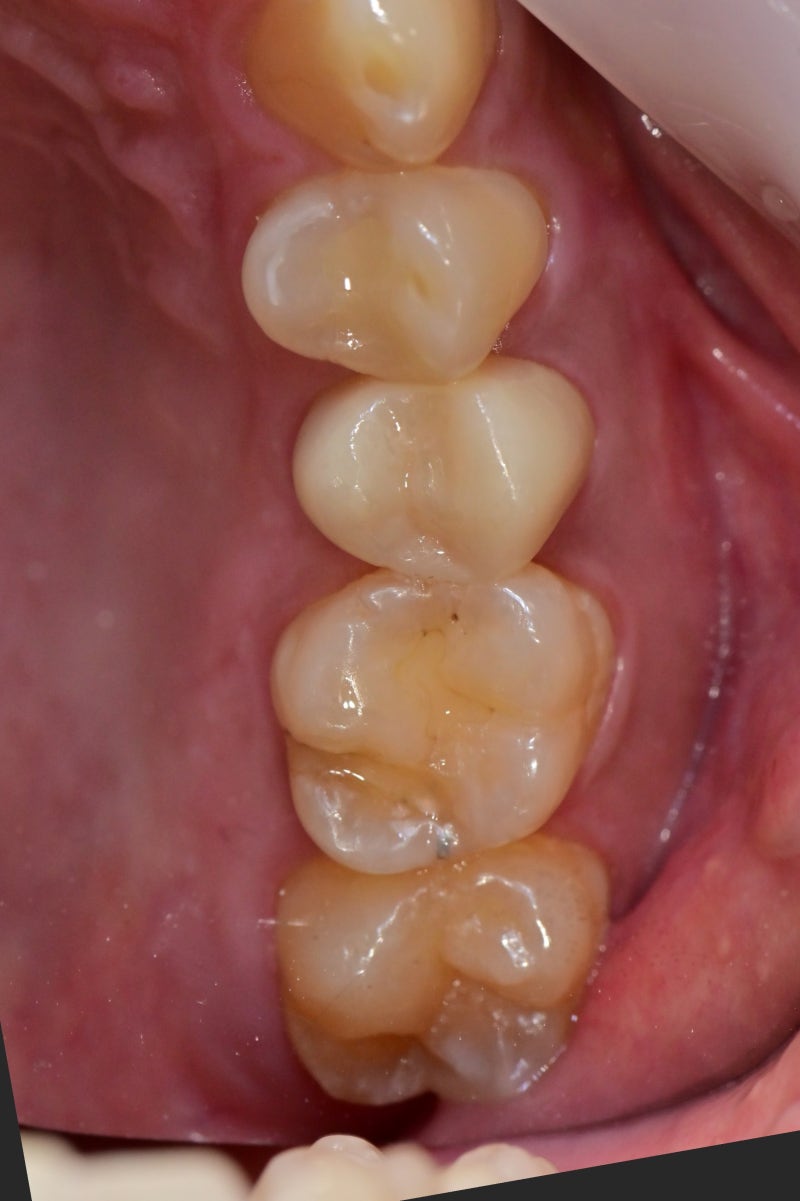
Fortunately, there were no cold sensitivity or pain symptoms, so we completed the prosthetic treatment without root canal treatment.
As I mentioned earlier, it doesn't apply to all cases,
There are also cases where the nerve doesn't stabilize.
I think my old filling fell out. It aches when I chew.
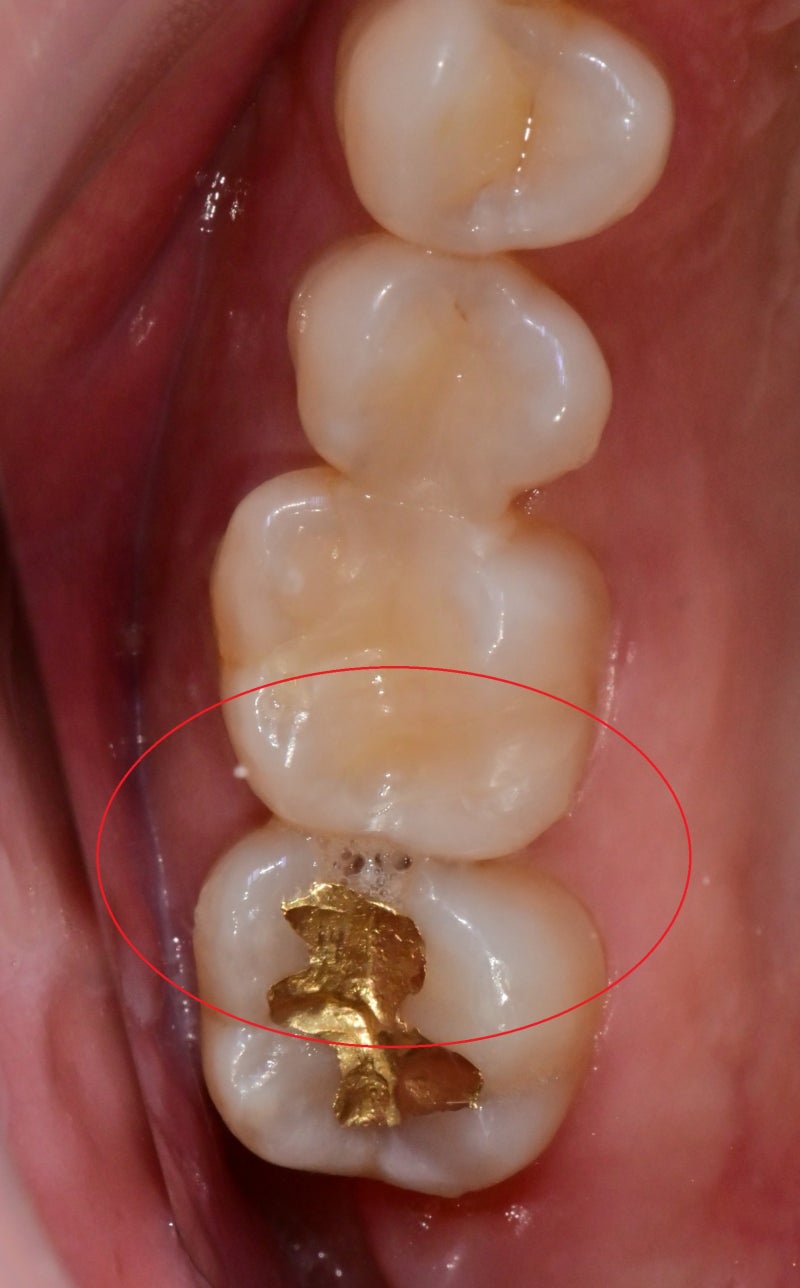
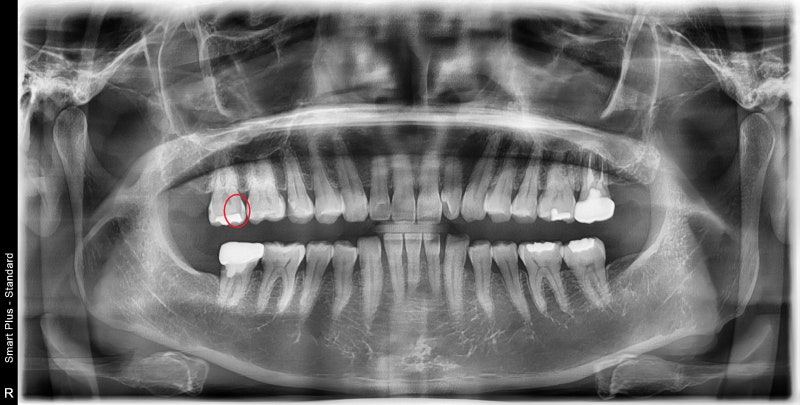
There's a cavity on the adjacent surface of the rightmost molar, and the tooth is broken.
We removed the old gold inlay along with the cavity.
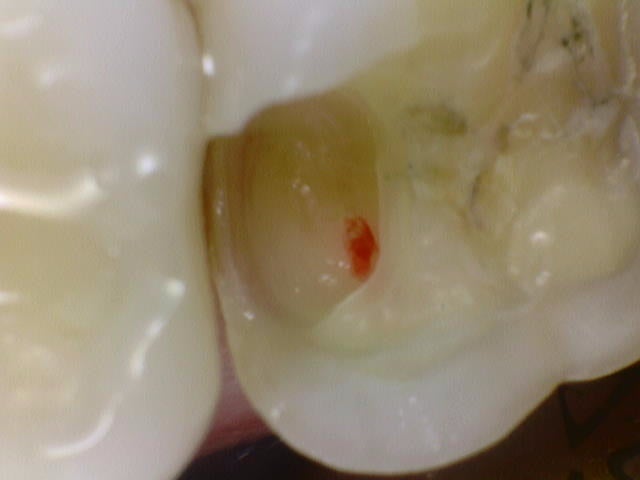
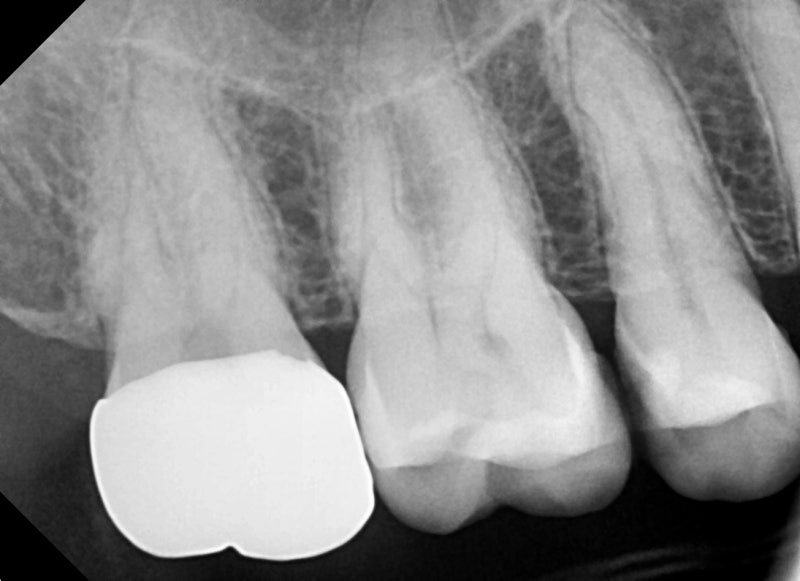
The red area on the left shows slight nerve exposure.
It was a tiny pinpoint exposure, so we applied MTA and placed a crown, but...
The cold sensitivity didn't improve, and intermittent pain persisted, so we proceeded with root canal treatment.
It seemed fine when observing the symptoms, but it seems pulpitis was likely progressing.
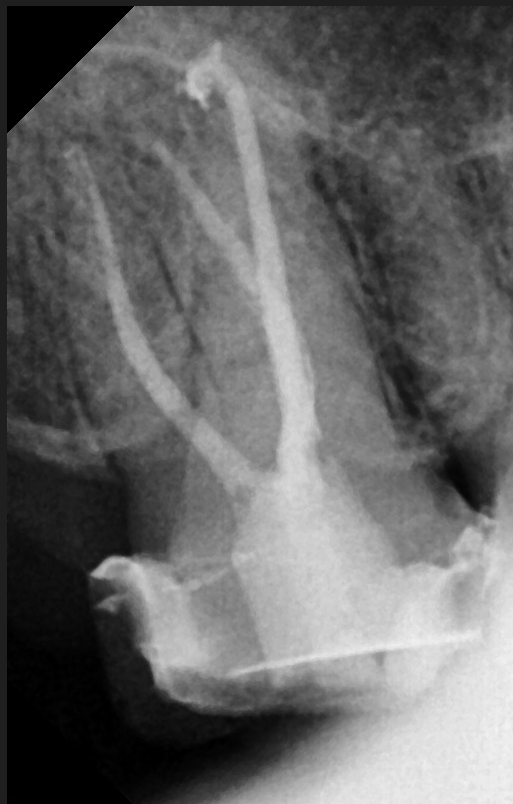
After completing the root canal treatment, we decided to observe it again with a temporary crown.
Fortunately, the pain decreased during the root canal treatment, and we planned for prosthetic treatment.
While we don't always use this material for treatment, for applicable cases, we carefully attempt it before root canal treatment.
Thus, it's good if we can avoid root canal treatment, but it doesn't mean root canal treatment is always bad.
In necessary cases, there's no choice but to do it.
When treatment plans change midway like this, rather than being a clear-cut treatment,
I explain it to the patient through dialogue as we proceed,
So sometimes it's difficult to say that all treatments are predetermined like this^^;
Thank you^^
Frequently Asked Questions
Can the nerve be exposed during deep cavity treatment?
Yes, when removing deep cavities, it's common for the tooth's nerve to be exposed or to come very close to the nerve. In such cases, nerve protection treatment may be necessary.
What is MTA and how is it used in deep cavity treatment?
MTA (Mineral Trioxide Aggregates) is a material originally used in endodontic treatment, known for its excellent sealing ability and biocompatibility. When the nerve is exposed due to a deep cavity, it helps seal the nerve canal entrance to stabilize the nerve and potentially avoid root canal treatment.
Does MTA treatment always guarantee avoiding root canal treatment?
No, MTA treatment is not successful in all cases for avoiding root canal treatment. Depending on the tooth's healing ability and the patient's symptoms, nerve stabilization may not occur, ultimately requiring root canal treatment.
What happens if pain persists after MTA treatment?
If cold sensitivity or pain persists after MTA treatment, it's possible that pulpitis is progressing, and root canal treatment may be necessary. The treatment plan will be adjusted based on a close observation of the patient's symptoms.
Is MTA applicable to all deep cavities?
No, MTA cannot be applied to all deep cavity cases. Its applicability is determined by considering various factors such as the tooth's condition and healing ability, and consultation with the dental professional is important.