2026-09-03
Facelift Revision Surgery: Why It Requires More Caution Than the First Surgery
Facelift revision surgery is more complex than the initial procedure due to changes in facial tissues. This article explains why it requires greater caution and what factors are crucial for a successful outcome.
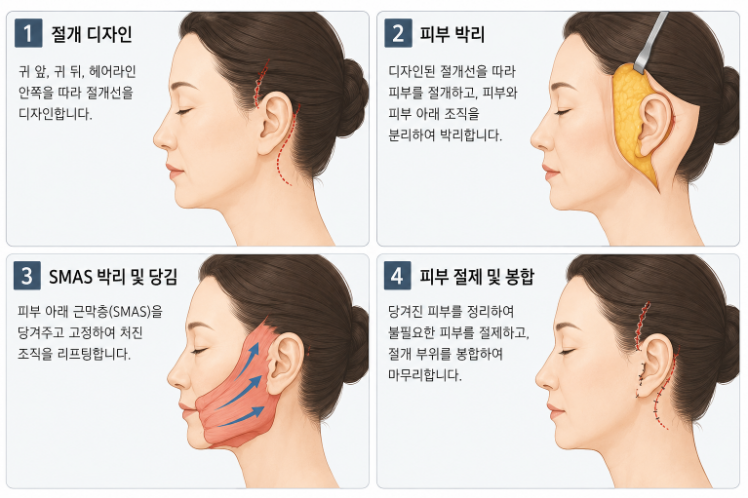
※ This article is written for the purpose of providing medical information.
It is not subject to deliberation under Article 56, Paragraph 2 and Article 57 of the Medical Service Act,
and we inform you that it is not an advertisement unrelated to the deliberation content.
Hello,
I am Dr. Park Jung-geun,
Director of Faceplus Plastic Surgery Clinic.

When I listen to the stories of those who come for
facelift revision surgery consultations,
there is a common sentiment they express:
‘My face looks more awkward than after the first surgery.’
‘I feel a strong pulling sensation when I smile.’
‘My nasolabial folds remain, but only the area in front of my ears feels tight.’
The reason revision surgery is much more difficult than the first surgery is
because it involves re-operating on tissues that have already undergone
dissection and incision.

It’s not just a surgery that looks at the skin condition;
stable results are achieved only when considering
the condition of adhered tissues, remaining retaining ligaments,
the direction of the SMAS layer, and the location of scar tissue.
In particular, if facelift revision surgery is approached with the concept of
‘pulling harder again,’
the face will look unnatural.
Today, I will explain why facelift revision surgery
requires more caution than the first surgery.
Table of Contents | ||
Why is revision surgery more difficult? What changes occur in facial tissues after the first surgery? The most important aspect of facelift revision surgery Checkpoints to confirm before revision surgery |
1. Why is revision surgery more difficult?
The first surgery is performed on a relatively
normal anatomical structure.
However, the situation is different for revision surgery.
The skin has already been dissected,
tissue adhesion has occurred, and
the SMAS layer itself is often thinned.
Especially in cases where only the skin was excessively pulled,
there is often excessive skin tension
in front of the ears.
If the skin is pulled again in this state,
the mouth may appear stretched,

facial expressions may become awkward when smiling, or
the shape of the ears may be deformed.
Therefore, for facelift revision surgery,
the key is not how much the skin is pulled,
but which layer is reorganized and how.
2. What changes occur in facial tissues after the first surgery?
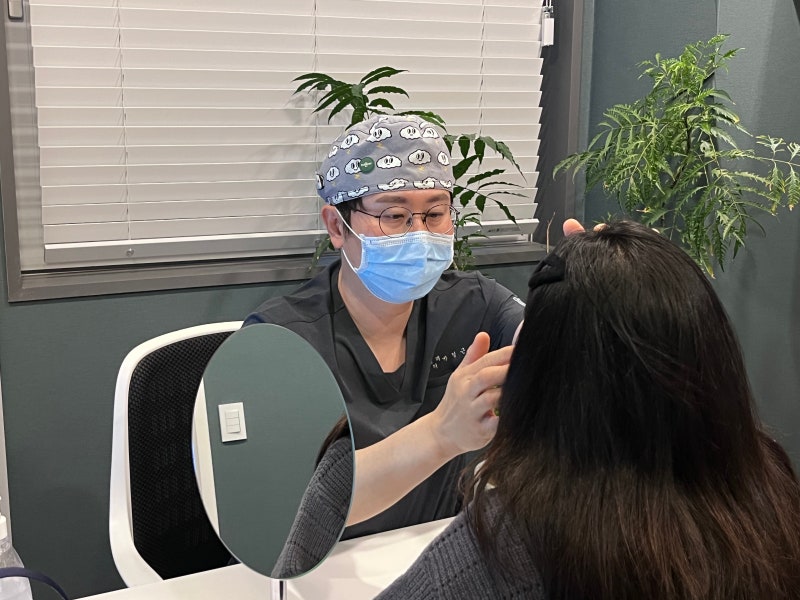
After a facelift, it’s not just the skin that changes over time.
Scar tissue forms between the dissected layers,
and adhesion occurs,
altering the original tissue movement.
Especially in cases of redrooping,
it’s often not the skin that has sagged,
but the deep supporting structures
that have descended again.
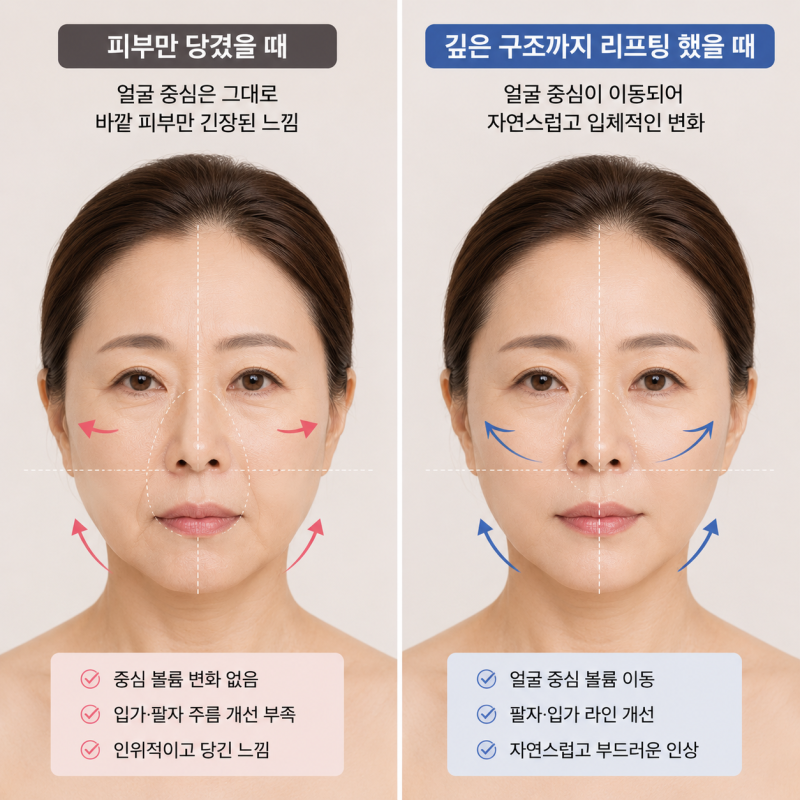
If only the skin is pulled tight again at this point,
the center of the face remains the same,
but only the outer skin feels tense.
In fact, many revision surgery patients
have remaining nasolabial folds
but an excessively tight facial appearance
in front of the ears.
For a natural facelift revision,
the difference in results becomes clear only when
the sagging structure itself is reorganized,
not just the skin surface.
3. The most important aspect of facelift revision surgery
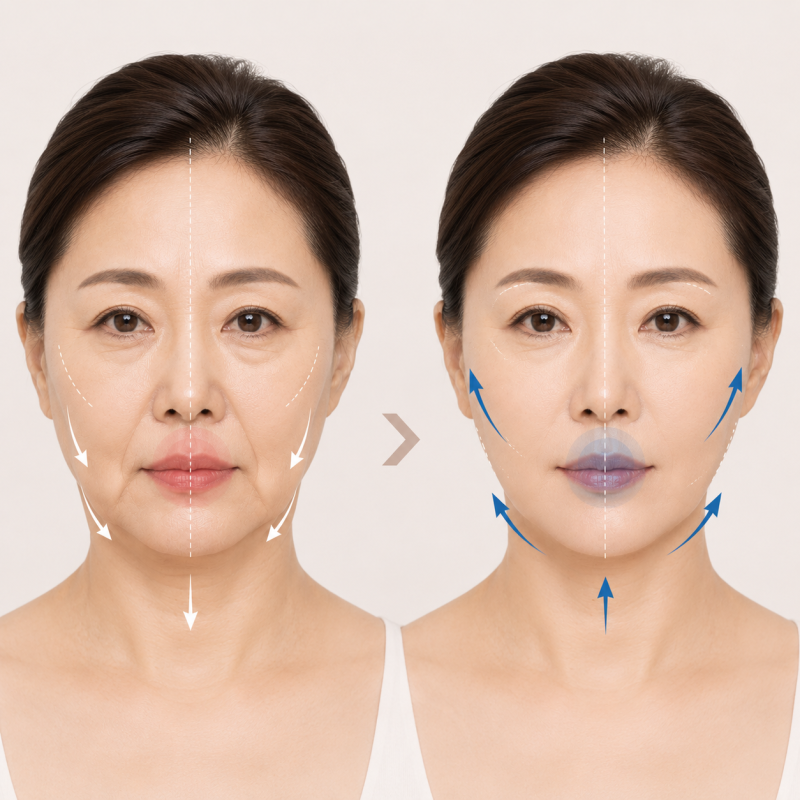
The most important aspect of revision surgery is
‘midface repositioning.’
The impression can change significantly depending on
how the midface and deep buccal fat pad are moved.
If the skin is pulled strongly horizontally,
the corners of the mouth may look awkward when smiling,
the under-eye area may appear flat, and
the face may feel elongated.
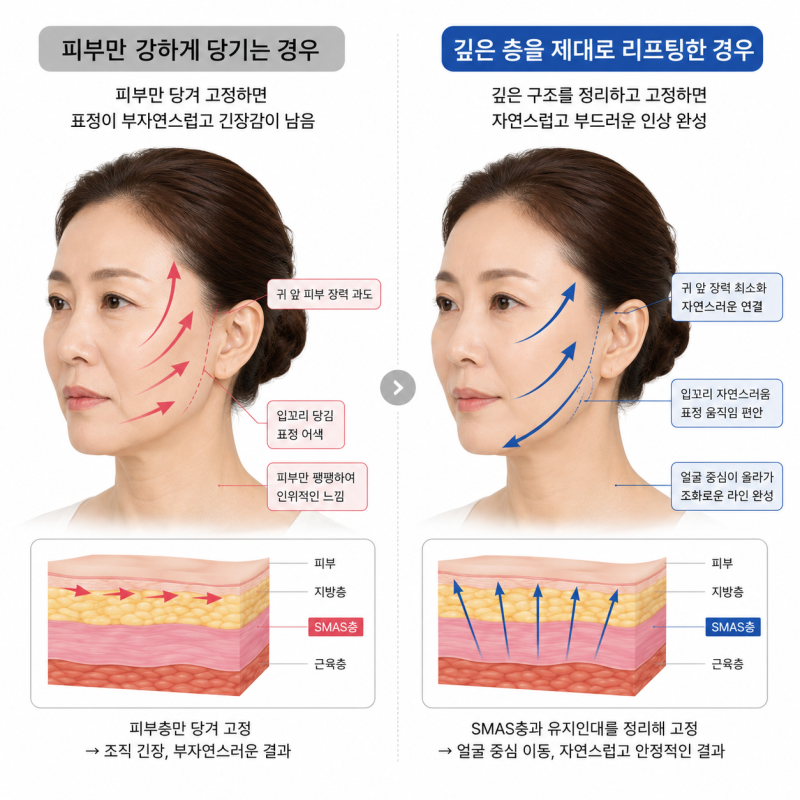
Conversely, if the deep layers are stably fixed,
volume naturally lifts, creating
a refined central facial impression.
Therefore, for facelift revision surgery, the dissection range, SMAS layer management, fixation direction,
and whether retaining ligaments are released are much more important than the incision location.
How the internal structures are rearranged,
rather than the visible incision line,
determines the outcome.
4. Checkpoints to confirm before revision surgery
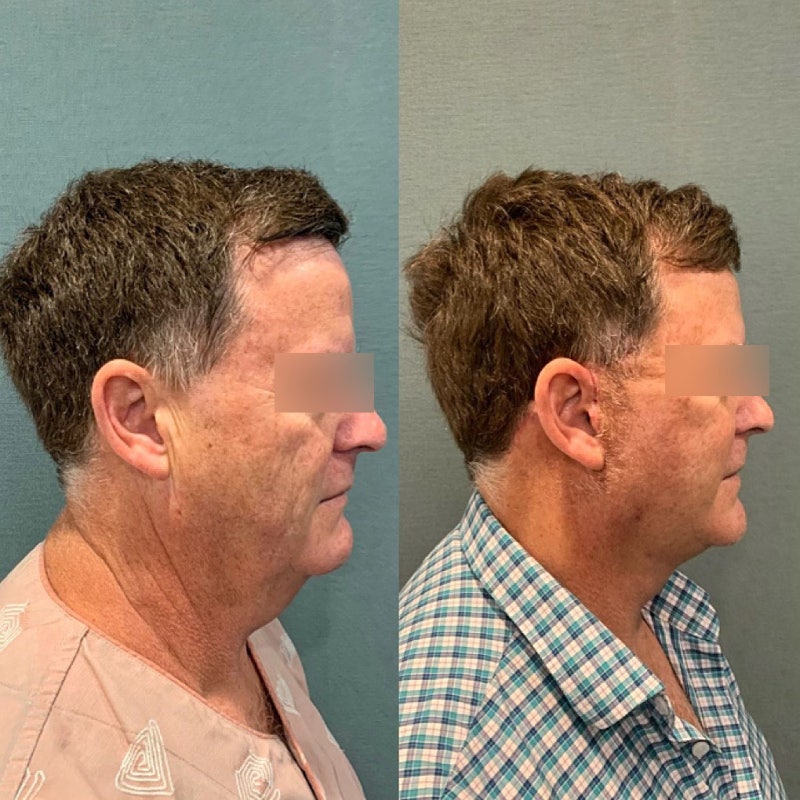
For facelift revision surgery,
confirming the history of the first surgery is crucial.
It’s necessary to check
which layers were dissected,
whether thread lifting or fat grafting was performed concurrently,
the condition of scars in front of the ears, and
the extent of adhesion.
Especially if facial movements are unnatural after the first surgery,
or if a specific area is strongly pulled when smiling,
a process of accurately analyzing the current tissue tension
is required.

Revision surgery is not
the concept of ‘lifting again.’
It’s closer to the process of stably restoring
already deformed structures.
Therefore, a much more detailed plan is needed than the first time,
and approaching it with an accurate understanding of the tissue condition
can lead to natural results in terms of
expressions, lines, and scars.
-Operating Hours-
Weekdays 9:00 ~ 18:00 Saturdays 9:00 ~ 16:00 Public Holidays / Sundays Regular closure |
-Contact Us-
Faceplus Plastic Surgery Clinic | ||
Consultation Phone: 02-541-8500 Inquiries: KakaoTalk Inquiry |
-Directions-
Frequently Asked Questions
Why is facelift revision surgery more difficult than the first surgery?
Yes, facelift revision surgery is more challenging than the first surgery. Tissues that have already undergone dissection and incision develop adhesions and the SMAS layer thins, making it much more difficult to re-operate on them.
What changes occur in facial tissues after the first surgery?
After the first surgery, scar tissue forms between the dissected layers over time, and adhesions develop, altering the original tissue movement. In cases of redrooping, the deep supporting structures have often descended again.
What is the most important aspect of facelift revision surgery?
The most important aspect of facelift revision surgery is ‘midface repositioning.’ The impression can change significantly depending on how the midface and deep buccal fat pad are moved, and stably fixing the deep layers is key.
What are the essential checkpoints to confirm before revision surgery?
Before revision surgery, confirming the history of the first surgery is crucial. It’s necessary to check which layers were dissected, whether thread lifting or fat grafting was performed, the condition of scars in front of the ears, and the extent of adhesion, to accurately analyze the current tissue condition.
Is it natural to strongly pull only the skin during revision surgery?
No, if the skin is strongly pulled horizontally during revision surgery, it can lead to unnatural results such as awkward mouth corners when smiling, a flattened under-eye area, and an elongated facial appearance. Reorganizing the deeper layers is more important than just the skin.