2026-09-07
Sindang Station Implant: Periodontal Disease, Treatment Sequence for Severe Periodontitis at the Dental Clinic
This article explains the treatment sequence for severe periodontal disease, including implant surgery and bone grafting, for patients experiencing tooth mobility.
Hello,
I am Dr. Kim Tae-young, the head director of Bareunyoung Dental Clinic at Sindang Station, where I personally explain cases I have treated.
Patients who have suffered from what is commonly known as ‘gum disease,’ or periodontitis, for a long time sometimes visit the dental clinic because their condition can no longer be improved with treatment.
In such cases, the gums are already significantly swollen due to inflammation, and the teeth, lacking support from the periodontal tissues, are very loose.
Periodontal disease often appears silently, so it is crucial to maintain oral health through regular gum treatments.
Today, I will introduce the case of a patient who visited us from a rural area due to tooth mobility.
My teeth are loose and my gums hurt.
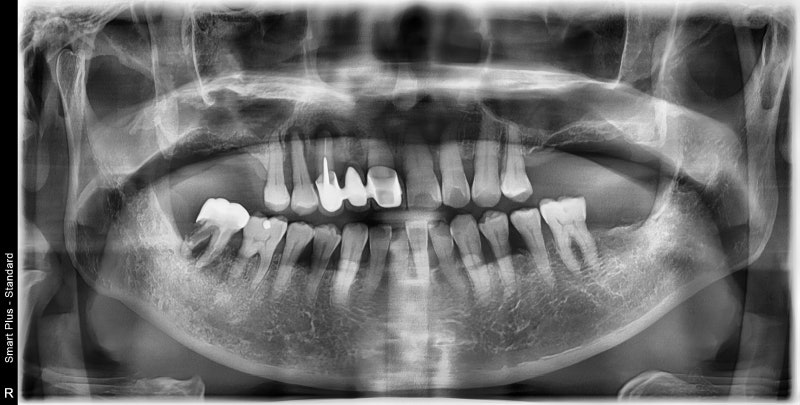
This patient, residing in a rural area, visited us for treatment.
Overall, many molars in the upper jaw were missing, and signs of inflammation were visible around the remaining teeth.
While the lower teeth were fine, the upper teeth were loose and the gums were swollen, so the patient requested an explanation about implant treatment.
Causes of Loose Teeth
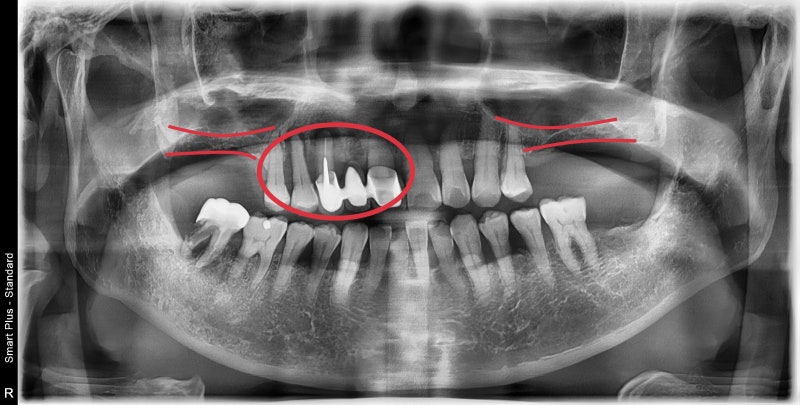
To explain the causes of loose teeth first, we can point to the loss of molars.
Large molars play a significant role in supporting occlusal forces, so their loss inevitably places strong occlusal forces on the remaining premolars and front teeth.
As a result, if excessive force is applied, weakened teeth become loose due to inflammation around the roots.
We established a treatment plan that involved extracting teeth already compromised by inflammation around the bone.
When I examined the bridge area of the front teeth, both of the two front teeth supporting the bridge were loose.
However, the very front incisor did not have severe mobility, and we expected the looseness to stabilize once the molars were completed, so we opted for a treatment approach that would extract as few teeth as possible.
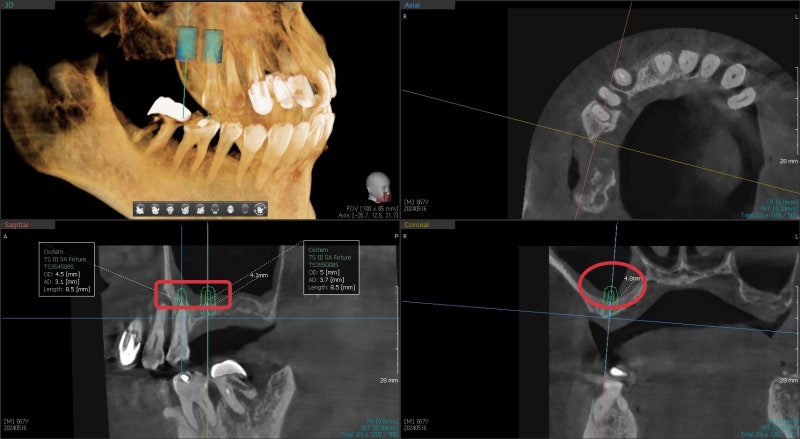
This is the diagnostic result from a 3D CT scan.
The bone thickness in the molar area was too thin, so for implant surgery, it was necessary to create space for implant support in the maxillary sinus, also known as the paranasal sinus.
This is why an additional procedure called sinus lift surgery is required.
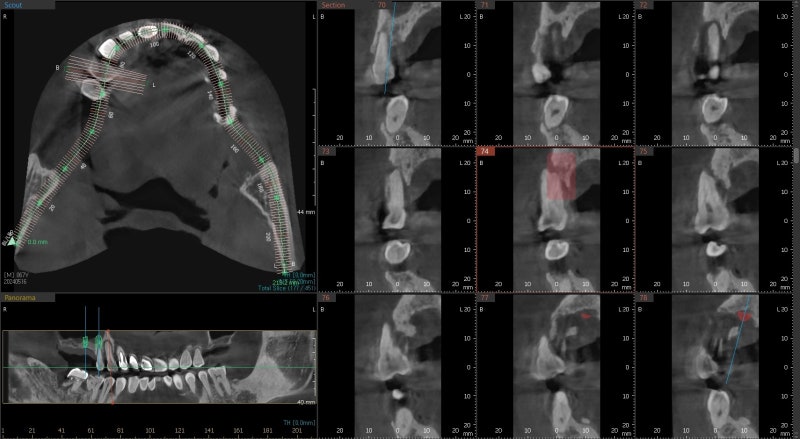
This is the area of the tooth with the most severe periodontitis in the middle.
The red-marked area indicates where bone is needed for surgery, but even with bone grafting, immediate surgery was not possible.
Although it was difficult for the patient to make time to travel from a rural area, we decided to perform the surgery in two stages to ensure a safe and strong outcome.
First Surgery
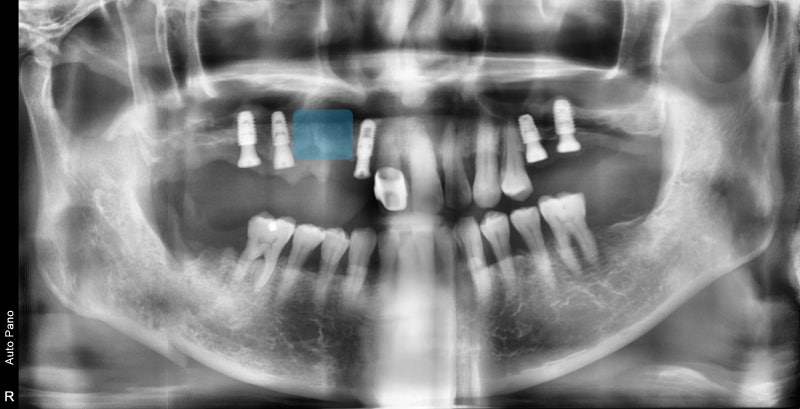
The marked area in the photo showed extensive inflammation, making immediate implant surgery difficult.
We planned to perform bone grafting first for future surgery.
Previously, we secured space for the implants to be placed in both molars using a procedure called sinus lift surgery.
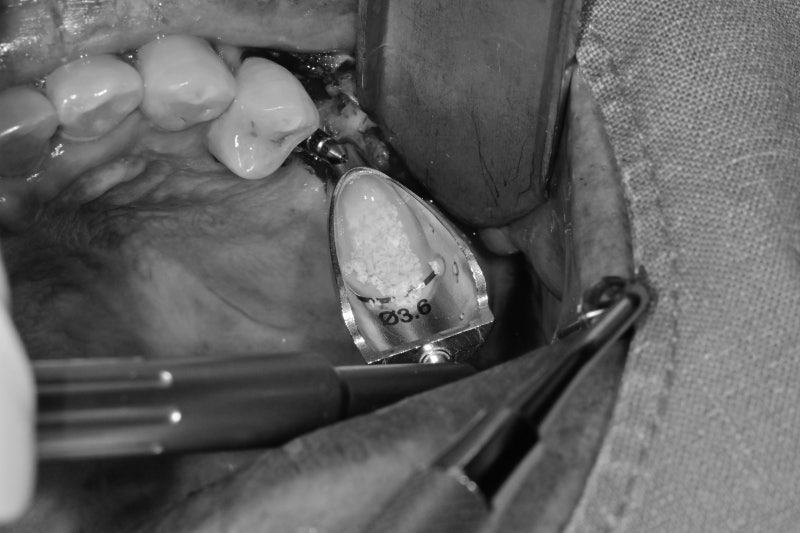
As shown in the photo, alveolar bone grafting was performed vertically to the necessary extent.
Since the patient traveled from a rural area, we had to ensure thorough treatment during their visit.
Approximately 4 months after the surgery,
the fixation of the molar implants improved, and as teeth were gradually placed, the loose front teeth could also be used without extraction.
Second Surgery
The implants from the first surgery had achieved higher bone fixation, so we started using temporary teeth.
At the same time, since the inflammation was too deep to operate on previously, we decided to perform surgery on that area during this visit.
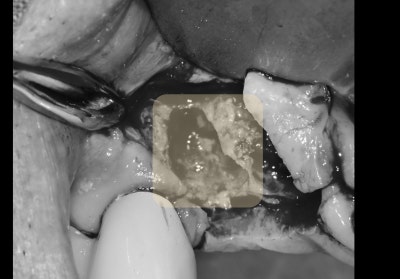
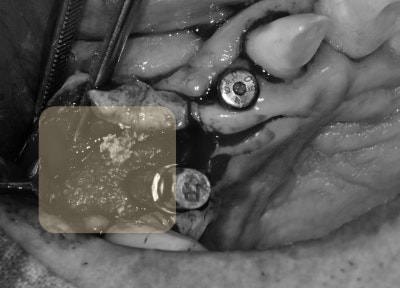
This is the corresponding space on the left.
During the initial first surgery, the extraction site and surrounding areas were treated, but despite the waiting period, additional alveolar bone grafting was needed.
Fortunately, the patient's existing bone had recovered, so additional bone grafting was performed simultaneously with the implant surgery.
The initial fixation after surgery was not bad, and since the surrounding implants had already secured a certain degree of fixation,
we were concerned that the patient would have to live without teeth for too long, so we completed the temporary teeth immediately after surgery.
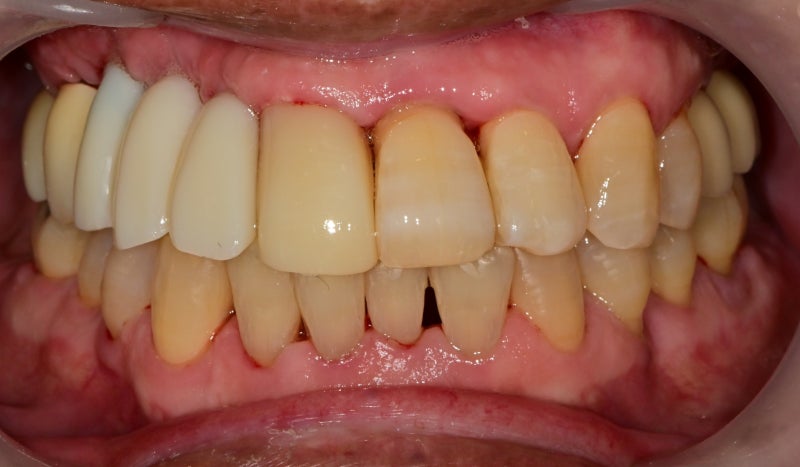
Since these are temporary teeth made quickly and not the final prosthetics,
their shape and color may be rough, but they will be usable without awkwardness until the final prosthetics are completed.
The reasons for using temporary teeth are not only to cover the empty space but also to confirm and incorporate any necessary adjustments in tooth shape, color, and length when fabricating the final prosthetics.
Currently, since the patient has lived without molars for a long time, there is an adaptation period for the temporomandibular joint, and we are checking it during occasional visits to Seoul.
After a few months, once the fixation of the recently placed implants improves, only the final prosthetics will need to be proceeded with.
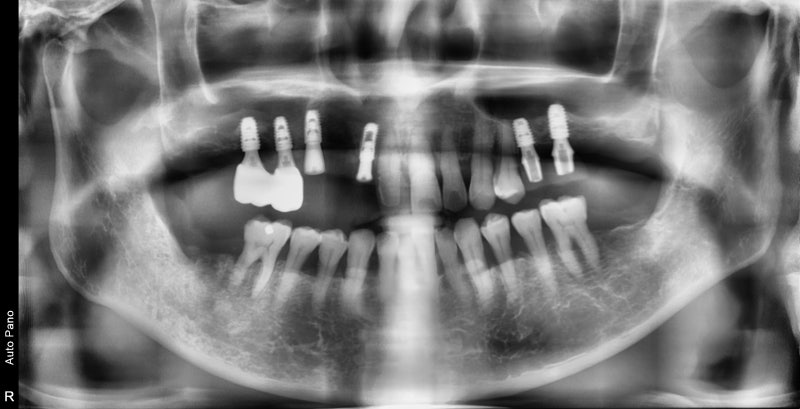
This is an X-ray image after the second surgery.
Although the final prosthetics have not yet been completed,
in patients with severe periodontitis, it is often difficult to perform implant surgery on the same day as extraction.
While it is more convenient for both me and the patient to perform surgery on the same day under anesthesia, choosing stability over rushing the process is much better in the long run.
I will take the time to explain this case again once the prosthetics are completed.^^
The best and most effective way to treat periodontal disease
is neither implants nor extractions.
It is through regular check-ups and maintenance.
I believe that managing the progression of periodontitis as much as possible through preventive and gum treatments, and maintaining the existing healthy state, is the best treatment.
December marks the end of a busy year.
Although you may be busy, if you take a moment to receive check-ups and scaling,
you will be able to maintain healthy oral health.
Today, we discussed the treatment methods and duration when tooth mobility leads to extraction.
If you experience similar discomfort at Sindang Station Dental Clinic,
we recommend visiting a nearby dental clinic for a check-up.
Thank you.^^
▼ Related cases to read
We believe that proper treatment leads to proper results.My desired dental clinic is one that makes all those who visit with worries leave with peace of mind, a trustworthy dental clinic.― Bareunyoung Dental Clinic
Directions179 Dongho-ro, JYJ Building, 2nd floorRight in front of Exit 6 of Yaksu Station, towards Yaksu MarketVillage Bus 5 (Yaksu Station)Village Bus 12 (Namsan Town, Yaksu Police Station)Bus stop (Yaksu Heights, Sindang Social Welfare Center, Gaon Library, Geumho Tunnel Entrance)From YuYu Pharmaceutical towards Geumho Station
This post was written directly by Bareunyoung Dental Clinic for the purpose of providing medical information and hospital advertising (in compliance with Article 56, Paragraph 1 of the Medical Service Act). The photos are of the same patient, and individual results, as well as side effects (prosthetic detachment, pain), may vary after surgery/procedure, so please consult sufficiently with the attending medical staff before making a decision.
Frequently Asked Questions
What are the main causes of loose teeth?
The main causes of loose teeth are occlusal force imbalance due to molar loss and gum inflammation caused by periodontal disease. When molars are lost, excessive force is applied to the front teeth or premolars, leading to inflammation around the tooth roots and causing the teeth to loosen.
When is sinus lift surgery necessary?
Sinus lift surgery is necessary when the bone thickness in the upper jaw molar area is too thin, and there is insufficient space for implant placement. It is an additional bone grafting procedure performed to secure space for implant support in the paranasal sinus (maxillary sinus).
Is immediate implant surgery possible for patients with severe periodontitis?
No, for patients with severe periodontitis, immediate implant surgery on the day of extraction is often difficult. If the bone condition is poor due to extensive inflammation, it is better for long-term stability to first restore the bone through bone grafting and then proceed with implant surgery.
Why are temporary teeth used after implant surgery?
Temporary teeth are used after implant surgery to cover the empty space for aesthetic purposes and to pre-confirm and incorporate any necessary adjustments in tooth shape, color, and length when fabricating the final prosthetics. This allows for the creation of the most suitable final prosthetics for the patient.
What is the best way to prevent and manage periodontal disease?
The best and most effective way to prevent and manage periodontal disease is through regular check-ups and maintenance. It is important to consistently receive preventive and gum treatments to minimize the progression of periodontitis and maintain a healthy oral state.