2026-09-07
Buhyeotgogae Station Dental Clinic: Treatment for Front Tooth Trauma (My Tooth Broke After a Fall)
Learn about treatment options for front tooth trauma after a fall, from minor fractures to nerve damage and complete avulsion. Early diagnosis is crucial.
Buhyeotgogae Station Dental Clinic: Front Tooth Trauma and Fractures
Hello.
I am Dr. Kim Tae-young, the head director of Bareunyoung Dental Clinic at Buhyeotgogae, where I personally explain cases I have treated.
In winter, when the weather suddenly turns cold like it is now,
we tend to hunch our bodies due to the cold.
The frozen ground makes walking slippery, so we must be careful of accidents on icy roads.
Recently, perhaps due to the cold winter weather, we have seen an increase in trauma patients.
Due to the cold weather, people often slip with their hands in their pockets, unable to brace themselves properly,
making them vulnerable to arm or facial trauma.
When we fall forward, the most vulnerable part of the face is the teeth.
No matter how strong teeth are,
they can fracture due to trauma from a fall,
and often cause injuries to the surrounding lips and soft tissues.
Dental trauma can be classified in various ways depending on its severity.
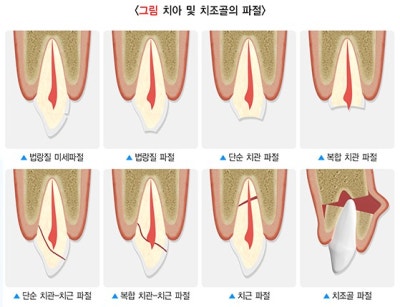
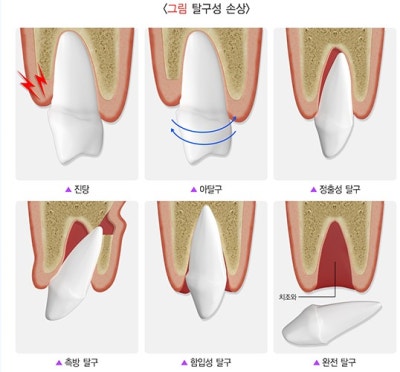
The pattern of tooth fracture varies depending on the extent of the trauma, and not only tooth fracture but also various symptoms such as tooth mobility, displacement, and complete avulsion can occur.
Today, I will discuss treatment methods for dental trauma based on its severity when you fall.
In cases of tooth fracture without tooth mobility
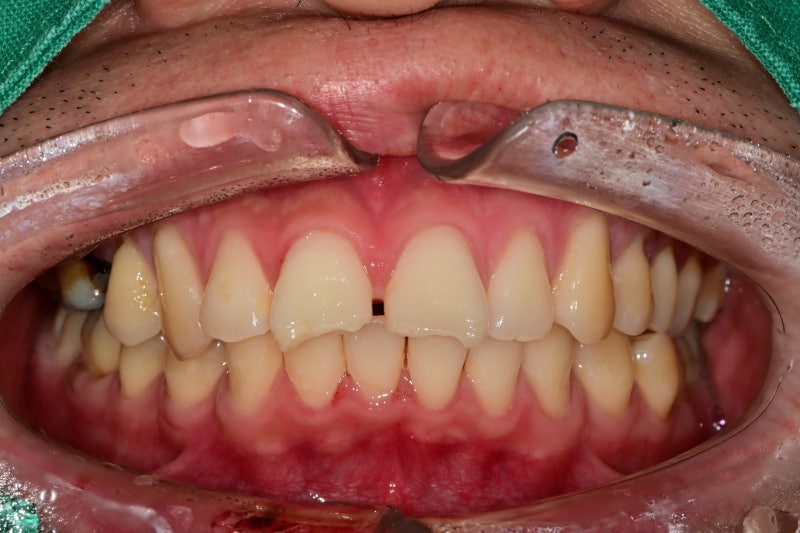
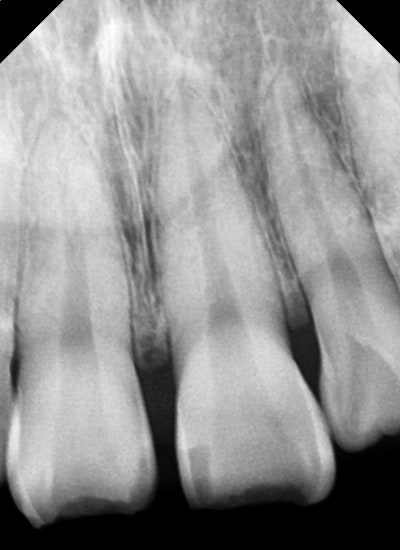
The first patient visited us with a fracture of the central incisor, accompanied by a laceration on the lower lip, after a fall.
There was slight pain due to the impact on the tooth, but no fracture line or mobility was observed on the X-ray.
However, there are cases where inflammation of the tooth nerve leads to slow nerve necrosis, which needs to be monitored for 2-4 weeks, and occasionally appears even later.
During the observation period, resin treatment was performed to fill the fractured area.
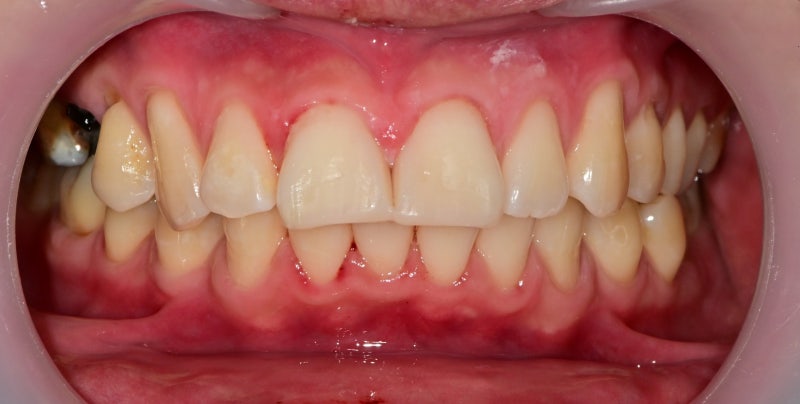
The gap between the teeth was originally present, but it was treated along with the fractured part.
Since only urgent treatment was performed on the first day, nerve necrosis or future pain was to be checked, and the treatment was completed relatively simply.
In the future, prosthetics such as laminates or crowns may be needed to restore the tooth's shape,
but since the current resin is sufficient, it was decided to refine it aesthetically during check-ups.
Tooth mobility, necrosis due to impact on the tooth nerve
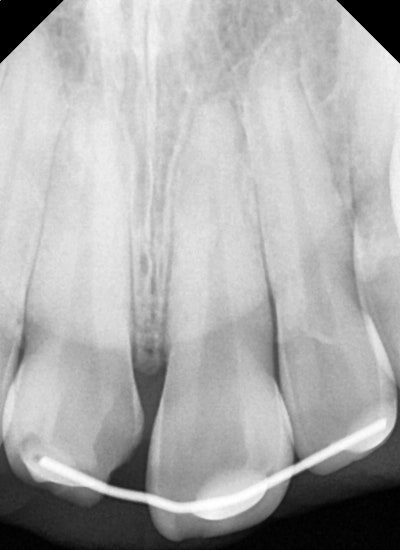
The second patient also visited with similar symptoms.
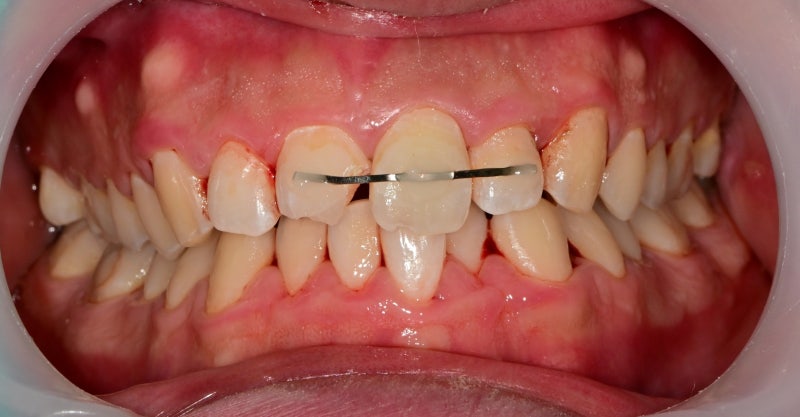
Unlike the first patient, this person also showed tooth mobility, so temporary interdental splinting was performed to stabilize the tooth, as shown in the picture.
The duration of the splint may vary depending on the degree of tooth mobility, but generally, it is not recommended for more than 2-4 weeks.
No additional tooth fracture was observed on the X-ray, so after stabilizing the mobile tooth, we checked it after 2 weeks to evaluate the vitality of the fractured tooth area and the tooth nerve.
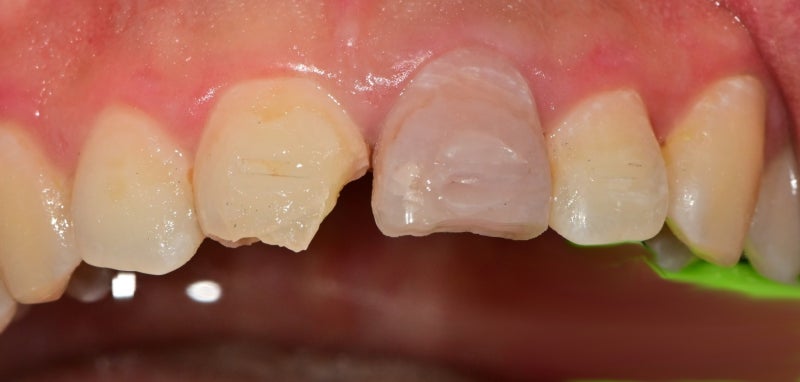
We checked after 2 weeks.
Although this is a photo taken during treatment after removing the splint,
the tooth mobility has now stabilized,
but the color of the central fixed tooth has darkened.
Generally, when the tooth nerve, or pulp, undergoes necrosis, the tooth darkens.
Since it had already lost its vitality, root canal treatment followed by crown treatment was decided for this tooth. The adjacent tooth also had a large fracture fragment and many surrounding cracked tooth fragments, but the nerve vitality was alive, so it was decided to complete the treatment with a crown without root canal treatment.
Thus, depending on the extent of dental trauma, even if there is no fracture, if the pulp vitality is lost,
the treatment method may vary depending on the situation.
Although not mentioned in today's case, if a tooth comes out completely after a fall, it is best to store the tooth in saline solution and visit a nearby dental clinic as soon as possible.
Early diagnosis and treatment are most important for dental trauma, so we recommend visiting a dental clinic for treatment immediately after an injury.
At Buhyeotgogae Station Dental Clinic, we have learned about treatment methods based on the severity of dental trauma today.
We hope you stay safe during this winter season, when icy road accidents are frequent.
We hope your questions have been answered,
and we will see you next time with another case.
Thank you^^
▼Related cases you might find helpful
We believe that proper treatment leads to proper results.My ideal dental clinic is one that makes all patients who visit with worries leave with peace of mind, a trustworthy dental clinic.― Bareunyoung Dental Clinic
Directions2nd floor, JYJ Building, 179 Dongho-roRight in front of Exit 6 of Yaksu Station, towards Yaksu MarketVillage Bus 5 (Yaksu Station)Village Bus 12 (Namsan Town, Yaksu Police Station)Bus stop (Yaksu Heights, Sindang Social Welfare Center, Gaon Library, Kumho Tunnel Entrance)From YuYu Pharmaceutical towards Kumho Station
This post was written directly by Bareunyoung Dental Clinic for the purpose of providing medical information and hospital advertising (in compliance with Article 56, Paragraph 1 of the Medical Act).The photos are taken from individual patients, and results, side effects (prosthetic detachment, pain) may vary depending on the individual after surgery/procedure, so please consult sufficiently with the medical staff in charge before making a decision.
Frequently Asked Questions
What should I do if my front tooth breaks after a fall?
Yes, if your tooth is broken, it is important to visit a dental clinic for diagnosis at the time of the injury. The treatment method varies depending on the extent of the trauma, and early diagnosis and treatment are most crucial. You should check for nerve damage and receive appropriate treatment.
What kind of treatment can I receive if my front tooth is broken?
Yes, the treatment method varies depending on the extent of the tooth fracture. If there is only a fracture and no tooth mobility, the broken part can be filled with resin treatment. In the future, prosthetic treatments such as laminates or crowns may be necessary for aesthetic restoration.
How is a mobile tooth treated after trauma?
Yes, if a tooth is mobile, temporary interdental splinting can be performed to stabilize the tooth. The duration of the splint varies depending on the degree of mobility, but generally, it is not recommended for more than 2-4 weeks. Afterwards, the vitality of the tooth nerve is evaluated to determine further treatment.
When can nerve necrosis be detected after dental trauma?
Yes, slow nerve necrosis due to inflammation of the tooth nerve needs to be monitored for about 2-4 weeks, and occasionally appears even later. A darkening of the tooth color is a common sign of nerve necrosis.
What should I do if my tooth is completely knocked out after a fall?
Yes, if a tooth is completely knocked out, it is best to store the tooth in saline solution and visit a nearby dental clinic as soon as possible. Early diagnosis and treatment are most important, so prompt treatment can help save the tooth.
Why does the tooth color change after dental trauma?
Yes, generally, when the tooth nerve, or pulp, undergoes necrosis, the tooth can darken. This means that the tooth has already lost its vitality, and in this case, root canal treatment followed by crown treatment may be considered.