2025-04-24
Diet-Related Skin Sagging: A Must-Read Before Surgery!
Learn why skin sagging occurs after weight loss and how to minimize or improve it through gradual weight loss, strength training, proper nutrition, and skincare.
Are you determined to lose weight
but worried that your skin might sag
after you shed the pounds?
Diet-related skin sagging is a natural phenomenon
that many people experience
during their weight loss journey.
Today, we will explore why this sagging occurs
and how you can minimize or improve it.
1. Why Does Diet-Related Skin Sagging Occur?
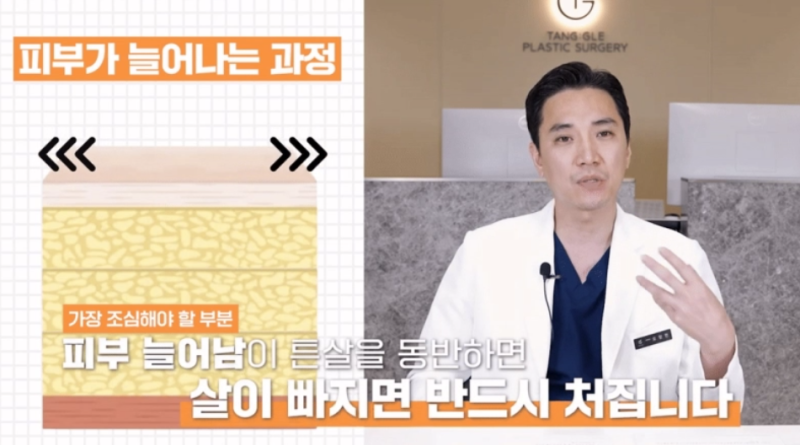
Our skin possesses elasticity,
allowing it to stretch within a certain
range and then return to its original state.
However, if you remain overweight for an extended period,
your skin stretches, and when you subsequently lose weight,
it may not fully return to its original state.
This is the fundamental principle behind diet-related skin sagging.
Skin elasticity is maintained by proteins
called collagen and elastin.
As we age, the production of these proteins decreases,
and rapid weight changes can damage
these protein structures.

Especially if you have stretch marks,
the elastic fibers in the deeper layers of your skin
are already damaged, which can make
skin sagging more pronounced after weight loss.
2. How to Minimize Diet-Related Skin Sagging
1) Gradual Weight Loss
Rapid weight loss is a major factor
that exacerbates diet-related skin sagging.
Your skin needs time to adapt to your new body shape,
so you should aim for a moderate weight loss of about
0.5 to 1 kg per week.
This allows your skin to slowly contract,
minimizing diet-related skin sagging.
2) Incorporate Strength Training
To prevent diet-related skin sagging,
it is important to combine cardiovascular exercise
with strength training.
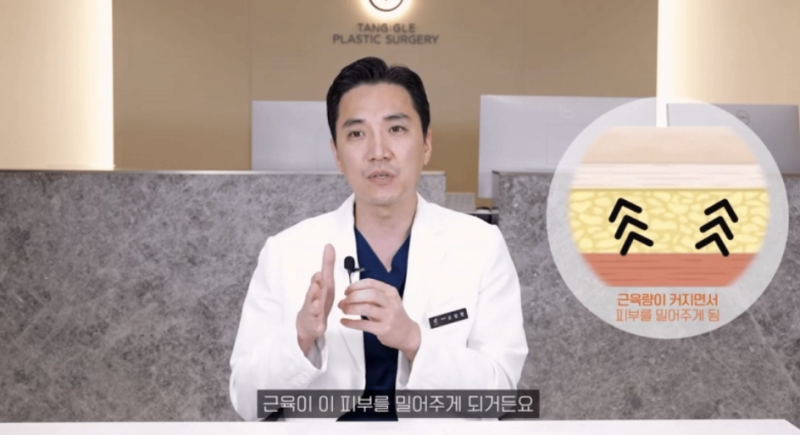
As you lose weight and fat decreases,
filling those areas with muscle can reduce
the phenomenon of skin sagging.
It is particularly helpful to consistently perform
strength exercises for areas prone to sagging,
such as the abdomen, arms, and thighs.
3) Hydration and Nutrient Intake
Adequate hydration is essential
for maintaining skin health.
It is recommended to drink about 2 liters of water per day.
It is also important to consume nutrients
such as protein, vitamin C, vitamin E, and zinc,
which are necessary for maintaining elasticity.
Consuming foods that help produce collagen
can also aid in managing diet-related skin sagging.
4) Skincare
Regular skincare can also help
alleviate diet-related skin sagging.
It is advisable to exfoliate 1-2 times a week
and consistently apply moisturizing cream.
Massaging to promote blood circulation
can help improve elasticity.
3. Managing Existing Diet-Related Skin Sagging
Even if diet-related skin sagging has already occurred,
consistently applying the methods mentioned above
can lead to some improvement.
In particular, increasing muscle mass through strength training
and regular skincare are important.
However, if the sagging is severe,
natural methods alone may have limitations.
In such cases,
it is advisable to visit a medical institution
for a consultation.
This is because the appropriate management method
may vary depending on your skin condition and the degree of sagging.
Through consultation with medical professionals,
you can find a management plan suitable for you.
Diet-related skin sagging is a phenomenon
that can naturally occur during the weight loss process,
but it can be minimized or improved
with appropriate management.
It is important to avoid rapid weight loss,
consistently engage in strength training,
and consume sufficient water and nutrients.
Please remember that managing your weight
in a healthy way is crucial.
May you achieve a confident appearance
through a healthy diet!