2026-05-03
Lower Eyelid Fat Repositioning & Lower Blepharoplasty Surgery: Everything You Need to Know
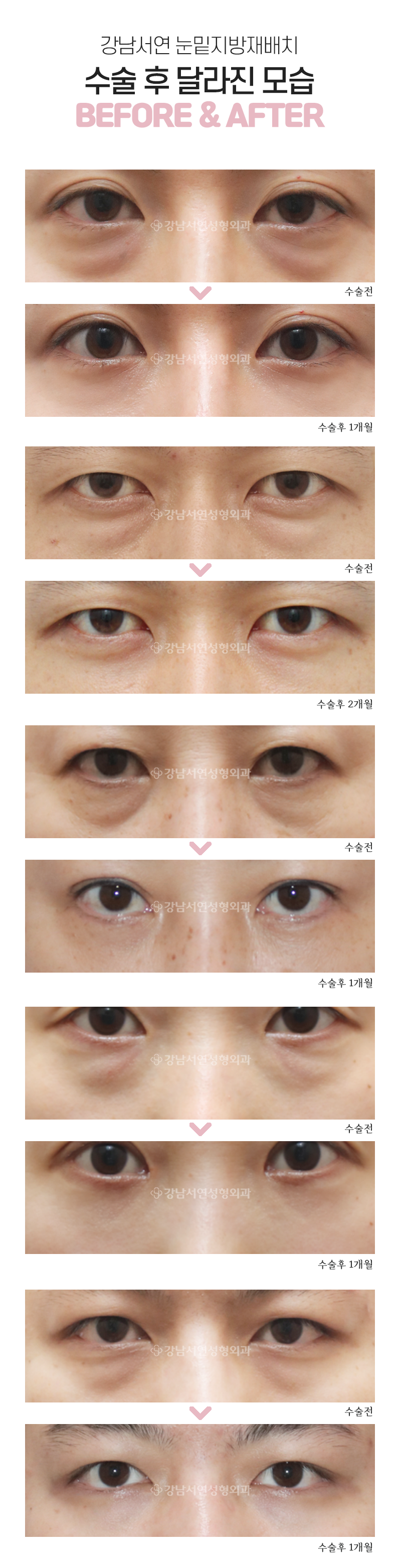
Lower eyelid fat repositioning corrects protruding or sagging under-eye fat to create a brighter, more youthful look. It helps improve tired, aged appearances caused by under-eye bulges or dark circles, restoring a refreshed and lively impression through proper fat repositioning techniques.

What is lower eyelid fat repositioning?

Lower eyelid fat repositioning (under-eye repositioning) is a method that corrects protruding or sagging under-eyes caused by fat, creating a brighter and more youthful-looking eye area.
Under-eye fat often makes a person look older,
causing puffiness beneath the eyes, and in some cases, pigmentation may make dark circles appear more severe.
When under-eye fat causes you to look sick or tired, lower eyelid fat repositioning can brighten the under-eye area and restore a fresh, lively impression.
Lower Eyelid Fat Repositioning Surgical Methods
The surgical method for lower eyelid fat repositioning varies depending on the degree of skin sagging.
|
1. When the skin is not sagging |
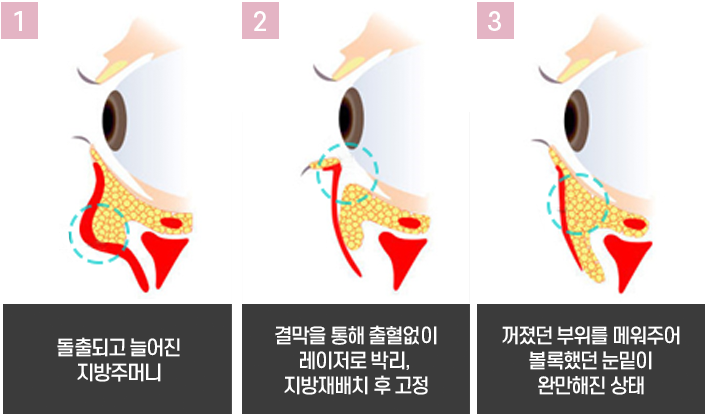
When the skin is not sagging,
(typically the case for younger patients,)
the surgery is performed through the conjunctiva so no scars are visible externally,
and in most cases, only the fat is removed.
If the fat appears as a distinct bulge,
the under-eye fat may be repositioned,
and if necessary, when the area appears hollow,
fat grafting may also be performed.
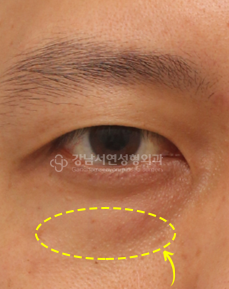
The area marked in yellow in the photo above is where the tear trough ligament is released and the fat is repositioned.
After releasing the tear trough ligament to soften the demarcation, the fat is appropriately repositioned.
|
2. When the skin is sagging (when there is skin sagging along with simple fat protrusion) |
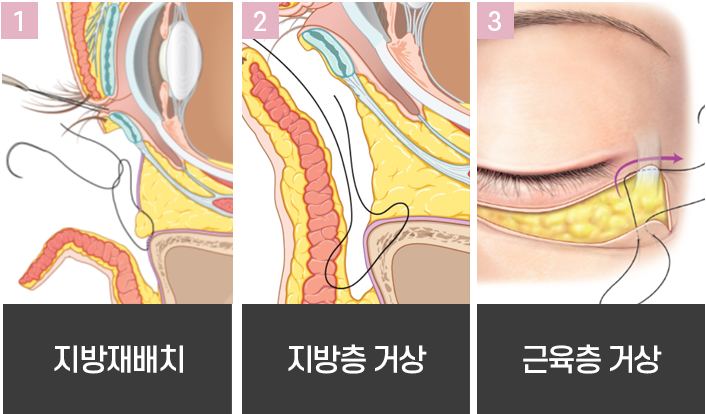
When the skin is sagging and only the fat is protruding,
after repositioning or removing the fat,
the excess skin is trimmed and sutured.
The surgery is not highly complex,
but if the fat protrusion is accompanied by a severely shadowed and hollow appearance in the groove below,
fat grafting may also be performed alongside the lower eyelid fat repositioning.
Additionally, a SOOF lift (sub-orbicularis oculi fat lift — a part of midface lifting)
may be performed.
In other words, in this case, lower eyelid fat repositioning requires a step-by-step surgical approach.
Limitations of the Surgery
(1) Even when an external incision is made, scars become barely visible after some time, so we make every effort to preserve any existing aegyo-sal (under-eye charm fat).
However, if pre-existing aegyo-sal was asymmetrical or absent, asymmetry may remain. Fine wrinkles may also persist.
(2) If too much skin is excised, the eye may appear ectropic (turned outward), so caution is required. Excessive scarring or severed nerves can worsen this ectropion, so precise surgery is essential.
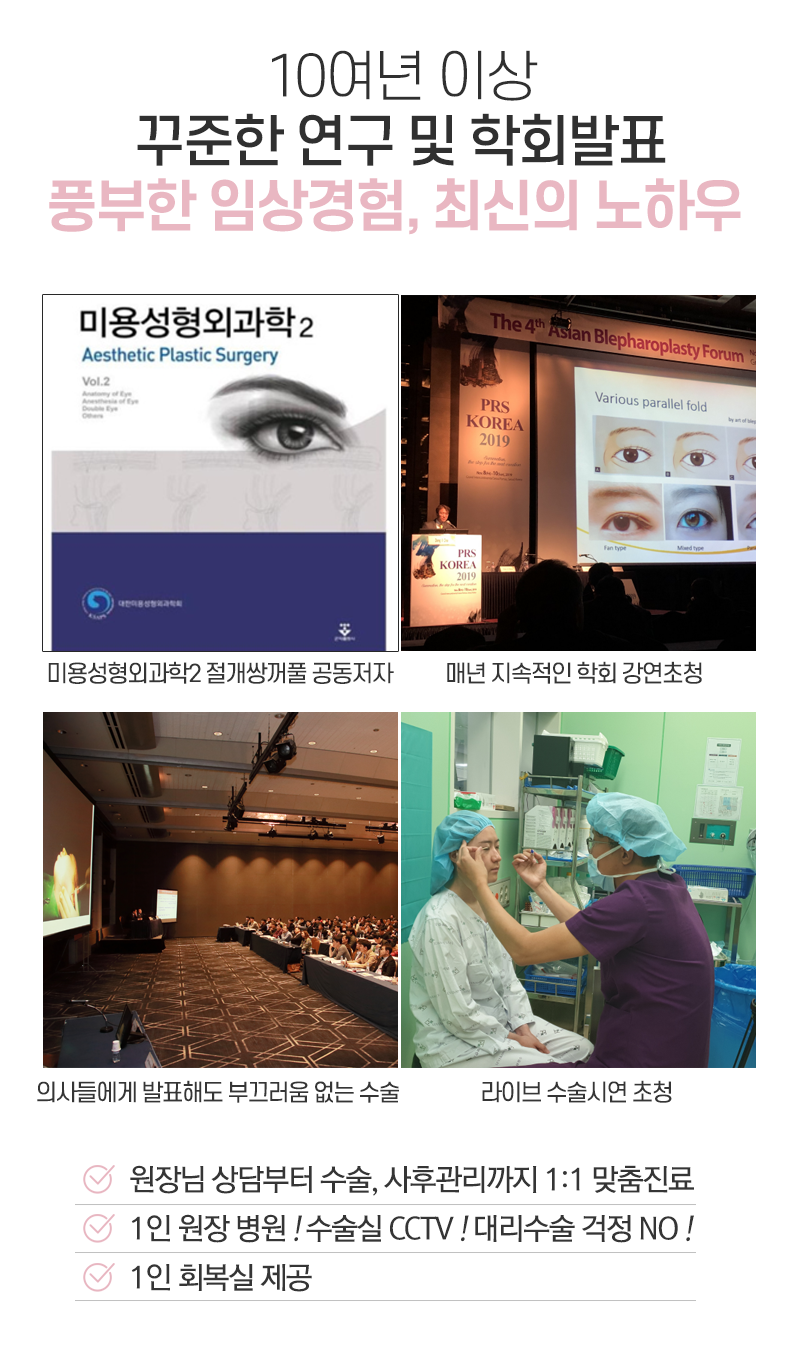
Therefore, it is strongly recommended to undergo surgery with a board-certified plastic surgeon who has extensive surgical experience.
Candidates for Lower Eyelid Fat Repositioning / Lower Eyelid Surgery
- Those with protruding fat in the under-eye aegyo-sal area
- Those whose dark circles give a dark, tired impression
- Those with hollow, shadowed under-eyes
- Those whose fine under-eye wrinkles make them look prematurely aged
- Those who look older due to under-eye fat
Surgery Time & Cost Information
The surgery typically takes about 1 hour, and no longer than 1 hour and 30 minutes at most.
Initial swelling subsides mostly within 1-2 weeks, and scars are barely visible.
The cost of lower eyelid fat repositioning (dark circle) surgery varies widely from clinic to clinic.
The transconjunctival approach generally ranges from 1 to 2 million KRW, while external incision surgery ranges from 1.2 to 3.5 million KRW.
Revision surgery for lower eyelid fat repositioning may cost more, so please contact the clinic for inquiries.





Frequently Asked Questions
What kind of surgery is lower eyelid fat repositioning?
It is a procedure that corrects protruding or sagging fat under the eyes to create a brighter, more youthful-looking eye area. It helps improve a tired appearance caused by under-eye puffiness or severe dark circles.
Does the surgical method differ depending on whether the skin is sagging?
Yes. When the skin is not sagging, the fat is removed or repositioned through the conjunctiva. When the skin is sagging, the procedure is performed using the lower blepharoplasty method, in which excess skin is excised and sutured after fat treatment.
Who is a candidate for lower eyelid fat repositioning surgery?
Candidates include those with protruding under-eye fat, those whose dark circles give a dark and tired impression, those with hollow and shadowed under-eyes, those whose fine wrinkles make them look prematurely aged, and those who look older due to under-eye fat.
How long do the surgery and recovery take?
The surgery usually takes about 1 hour and no longer than 1 hour and 30 minutes. Initial swelling mostly subsides within 1-2 weeks, and scars become barely visible over time.
How much does the surgery cost?
Costs vary by clinic, but the transconjunctival approach is approximately 1 to 2 million KRW, while the external incision method ranges from about 1.2 to 3.5 million KRW. Revision surgery may cost more, so please contact the clinic directly for inquiries.
Are there any limitations or precautions to consider?
Asymmetry of existing aegyo-sal or fine wrinkles may remain, and excessive skin excision can cause the eye to appear ectropic. Therefore, it is important to have the procedure performed precisely by a board-certified plastic surgeon with extensive surgical experience.