2026-05-18
Complete Guide to Lower Eyelid Fat Repositioning and Lower Eyelid Surgery: Methods and Costs
Lower eyelid fat repositioning and lower eyelid surgery methods vary based on skin laxity. Younger patients typically undergo conjunctival incision-free procedures for fat removal or repositioning, while those with sagging skin require external incision with excess skin excision and suturing. Fat grafting or mid-face lift (SOOF lift) may be combined as needed with a staged approach. This guide covers surgery duration, recovery timeline, and cost ranges.

What is Lower Eyelid Fat Repositioning?

#Lower eyelid fat repositioning
#Lower eyelid fat removal, #Under-eye dark circles,
#Under-eye wrinkle removal, #Lower eyelid contouring, etc.
These are various terms used.
Lower eyelid fat repositioning surgery varies depending on whether the skin is laxid.
Surgical approach differs between those with and without skin laxity.
These are the candidates for surgery.
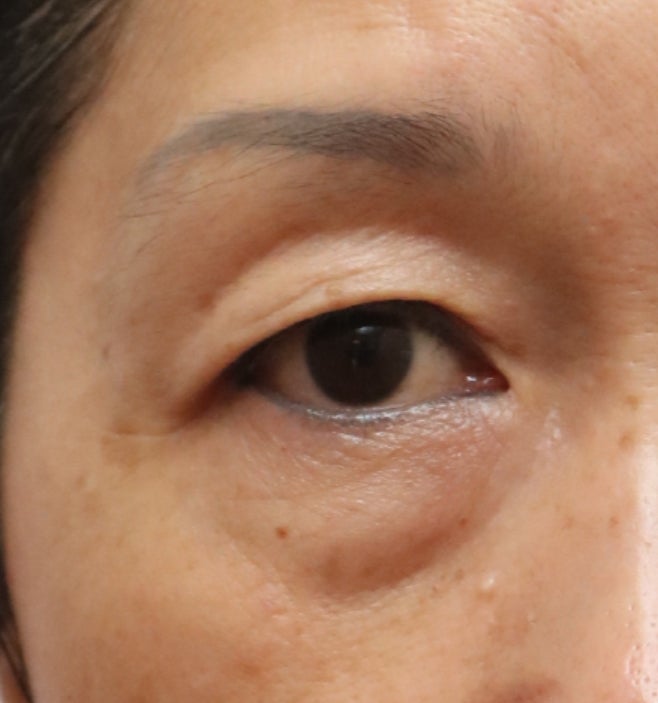
1) When Skin Has No Laxity (Younger Patients)
When skin has no laxity,
(typically in younger patients)
surgery is performed through the conjunctiva.
Conjunctival surgery leaves no visible external scarring and typically involves fat removal only.
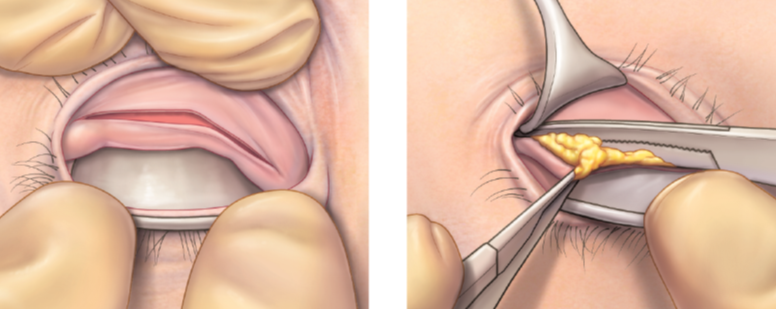
Lower Eyelid Fat Repositioning: Simple Fat Removal Method
While fat removal alone is sometimes sufficient, when fat appears demarcated, fat repositioning is performed instead, and when volume is needed, fat grafting may be added.
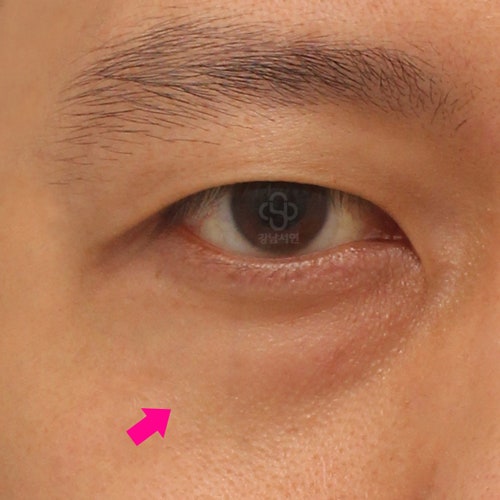
The arrow indicates the area where the tear trough ligament is released for fat repositioning.
By releasing the tear trough ligament, the demarcated fat boundaries are loosened and fat is repositioned appropriately.
The septum is reinforced to prevent recurrence.
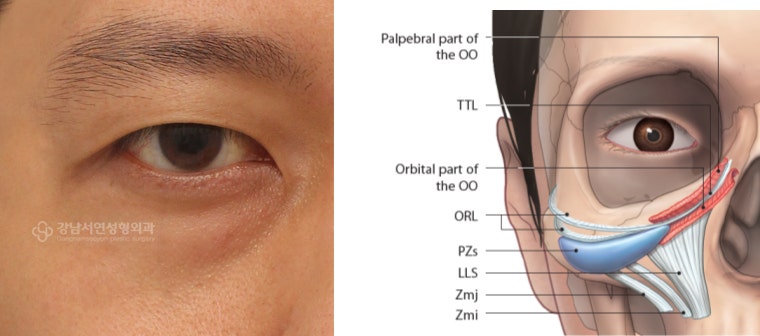
Under-eye fat can make you appear older, and pigmentation can intensify #dark circles.
Under-eye fat can make eyes appear puffy, tired, or worn.

2) When Skin is Laxid – Fat Protrusion Without Excess Skin
When skin is laxid with fat protrusion, fat is repositioned or removed, and excess skin is excised and sutured.
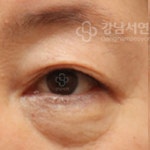
The procedure is simpler, but in cases where fat protrudes alongside deepened troughs and volume loss, fat repositioning is followed by fat grafting in some cases, or orbital fat lift (SOOF lift—part of mid-face lift) may be performed.
In summary, lower eyelid fat repositioning is a staged surgical approach.
Stage 1: Fat Repositioning
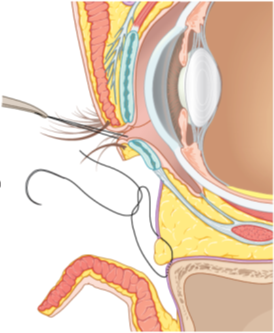
Stage 2: Fat Layer Lift
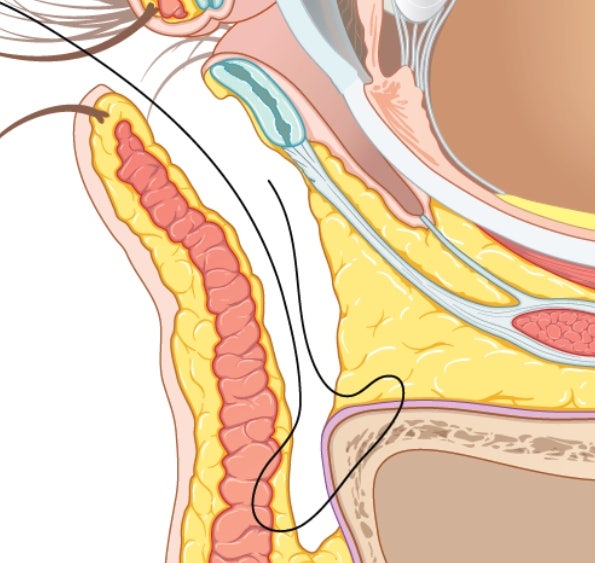
Stage 3: Muscle Layer Lift
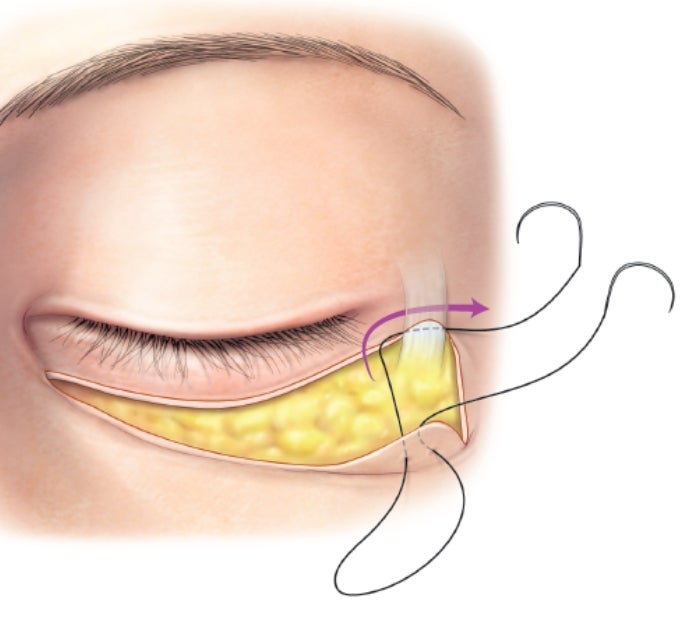
Surgical Limitations
While external incisions fade over time, existing under-eye contours are preserved when possible.
However, if pre-existing asymmetry in under-eye contours was present or if none existed, asymmetry may persist. Fine lines may also remain.
Excessive skin excision can cause eyelid eversion, requiring careful technique, and excessive scarring or nerve injury can worsen eversion, making precision crucial.
Therefore, surgery by an experienced plastic surgeon is strongly recommended.
Surgery typically takes about 1 hour, and no more than 1.5 hours.
Initial swelling subsides within 1–2 weeks, and scars become nearly invisible.
Lower eyelid fat repositioning (dark circle) surgery costs vary across facilities: conjunctival approach approximately $1,000–2,000 USD equivalent, and external incision $1,200–3,500 USD equivalent.
.jpg?type=w800)
.jpg?type=w800)
.jpg?type=w800)
.jpg?type=w800)
Frequently Asked Questions
How long does lower eyelid fat repositioning surgery take?
Typically 1 hour; no more than 1.5 hours. Duration varies with surgical extent and skin laxity.
When does swelling subside after surgery?
Initial swelling typically resolves within 1–2 weeks. Scars fade and become nearly invisible with time.
What's the difference between conjunctival and skin incisions?
Conjunctival incisions suit younger patients without skin laxity, leaving no visible scars. For sagging skin, external incisions allow excess skin removal and suturing.
What does lower eyelid fat repositioning cost?
Costs vary by facility: conjunctival approach $1,000–2,000 USD equivalent; external incision $1,200–3,500 USD equivalent.
Can asymmetry or fine lines remain after surgery?
Yes, they can. Pre-existing asymmetry or absence of under-eye contours may result in persistent asymmetry, and fine lines may remain.
What stages does lower eyelid fat repositioning involve?
The procedure is staged: Stage 1 is fat repositioning, Stage 2 is fat layer lift, Stage 3 is muscle layer lift. Stages applied depend on individual patient anatomy.