2026-09-07
Geumho Station Dental Clinic: The Transition from Full Dentures to Full Implants (The Importance of Selecting the Placement Position)
This article discusses the transition from full dentures to full implants, emphasizing the critical role of precise implant placement, especially when bone loss has occurred due to long-term denture use.
Hello.
I am Dr. Kim Tae-young, director of Bareunyoung Dental Clinic.^^
As I have introduced before,
when dentures are used for a long time,
the alveolar bone of our jaw,
where teeth are missing, recedes and becomes thin.
In such cases, implant surgery accompanied by alveolar bone grafting is performed,
but considering the degree and width of alveolar bone recession and the implant placement angle,
it is very important to determine the ideal implant placement position through simulation.
Although the cases may be similar, the number and position of implants can vary.
Many patients visit us these days because they are uncomfortable using dentures
and wish to proceed with implant surgery.
So, today I will post about a similar case!
I have diabetes and use full dentures. Is implant surgery possible?
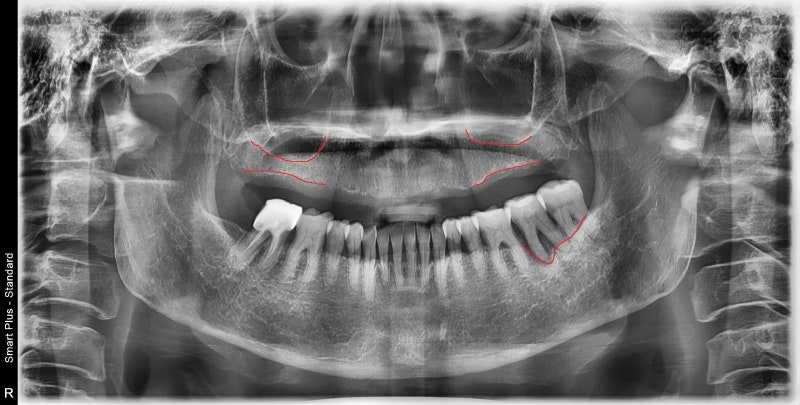
This is the initial X-ray image.
The maxilla is edentulous,
and the very last molar in the mandible has advanced periodontal disease.
Due to the space called the maxillary sinus (=paranasal sinus) in the maxilla,
the height of the alveolar bone appears insufficient.
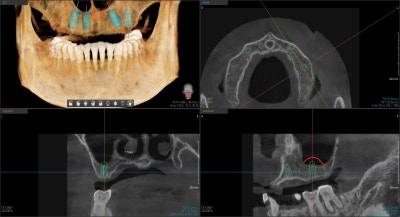
For a more accurate diagnosis, we took a 3D CT scan and performed a simulation.
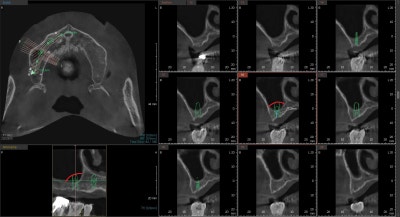
Simulating the shape and approach of the maxillary sinus,
we planned alveolar bone grafting up to the red line,
and after several consultations, considering the patient's situation,
we determined where implant placement would be ideal,
the number of teeth, and the type of prosthesis.
In this patient's case, since there was an insured implant in the middle,
we decided to proceed with a prosthesis called PFM.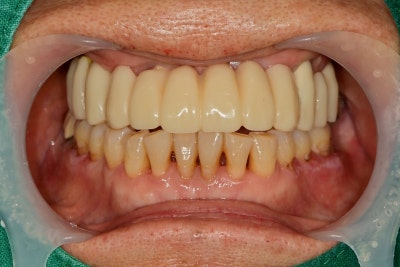
For the mandibular molar, alveolar bone grafting was performed first,
followed by staged surgery with the insured implant.
After surgery, temporary teeth were placed,
and the patient is currently undergoing an adaptation period of about 2-3 months
to stabilize the occlusion.
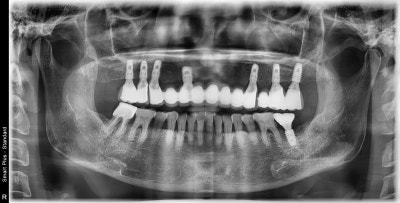
The X-ray image on the right shows the final prosthesis in place.
Since the bone in the anterior region was as thin as paper,
we implanted within the maximum allowable bone volume
and designed a structure that also receives support from the premolars.
The long period of treatment has come to an end.
After treatment, the patient says that chewing has improved significantly.
Although the treatment is complete,
the more important management starts now!
We will provide regular check-ups for implant maintenance
so that you can enjoy delicious food for a long, long time.^^
Frequently Asked Questions
What effect does long-term denture use have on the jawbone?
Yes, long-term use of dentures can cause the jawbone (alveolar bone) in edentulous areas to recede and become thin. In such cases, alveolar bone grafting may be necessary during implant placement.
Is implant surgery possible even with insufficient alveolar bone?
Yes, it is possible. Implant surgery accompanied by alveolar bone grafting can be performed, considering the degree and width of alveolar bone recession and the implant placement angle. It is crucial to determine the ideal placement position through 3D CT simulation.
Can diabetic patients undergo full implant surgery?
Yes, they can. The article presents a case where a diabetic patient using full dentures underwent implant surgery. The treatment plan is determined through multiple consultations, considering the patient's specific situation.
How is the implant placement position determined?
The implant placement position is determined by taking a 3D CT scan to simulate the shape and approach of the maxillary sinus, planning alveolar bone grafting, and considering the patient's situation to identify the ideal area for implant placement.
How long is the adaptation period after implant surgery?
Typically, there is an adaptation period of about 2-3 months. After surgery, temporary teeth are placed, and this period is necessary for the occlusion to stabilize.
How should implants be managed after surgery?
Even after treatment is completed, regular check-ups are very important for implant maintenance. Consistent management allows you to use your implants for a long time and enjoy delicious food.