2026-05-25
👃🏻 Alar Rim Lowering: Which Nose Types Need This Surgery? | Explained by VIBE Plastic Surgery
Learn about Alar Rim Lowering (Dragon Nose surgery) at VIBE Plastic Surgery. Discover how to correct exposed nostrils and pinched nose shapes for a balanced look.

Hello from VIBE Plastic Surgery, a renowned destination for aesthetic excellence!
When looking in the mirror or taking photos, do you ever feel like your impression looks different from the front, or that your nose looks short or somewhat stifled? Often, the degree of nostril (alar rim) exposure visible from the front significantly impacts one’s overall impression.
Particularly, if your nostrils stand out prominently when you laugh or speak, it is worth examining the position and shape of the alar rim. For those with these concerns, today we will take a closer look at ‘Alar Rim Lowering’! 📝
What is Alar Rim Lowering?
👃🏻 Simply put, the alar rim refers to the edge of the nostril. When we think of a ‘upturned nose,’ we usually imagine a shape where the nostrils are highly visible from the front and the tip of the nose is tilted upward.
The term ‘Dragon Nose,’ frequently mentioned in the context of alar rim lowering, is also a type of nose where the nostrils are highly exposed from the front. If you think of a dragon’s face in a cartoon, you can easily recall nostrils that are large and clearly emphasized; this is why the expression ‘Dragon Nose’ (Yong-ko) is used. 🐲
Even if the tip of the nose isn't particularly upturned or drooping, a Dragon Nose is characterized by the alar rims (the sides of the nose) curling upward, making the nostrils stand out from the front. Alar rim lowering, or Dragon Nose surgery, is the method used to improve this appearance.
How is the Alar Rim Lowering procedure performed?
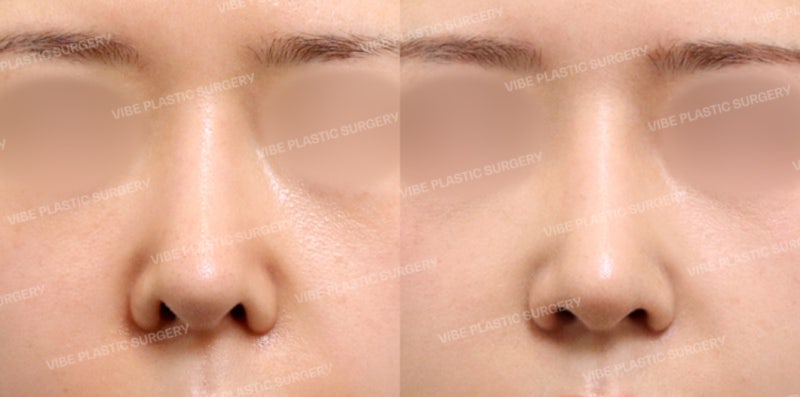
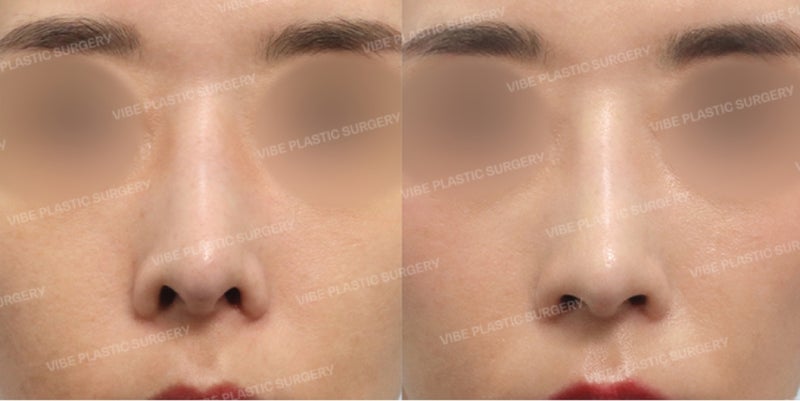
If the nostrils look upturned or the alar rims appear folded, it may be because the alar cartilage is underdeveloped or was damaged following a previous rhinoplasty. Many patients visit us initially thinking they need alar reduction or bulbous nose surgery for this.
If there is sufficient alar cartilage, we improve the shape by 🦴👃🏻 repositioning the cartilage to its normal location. If the cartilage is insufficient, we supplement the shape by grafting cartilage from other areas.
The surgery is performed using either an ‘open’ method (incising the columella) or a ‘closed’ method (incising inside the nostrils), and the most suitable method is selected based on the individual’s nasal structure. We recommend visiting VIBE Plastic Surgery for an accurate consultation and diagnosis before making a decision. :)
Who are the candidates for Alar Rim Lowering?
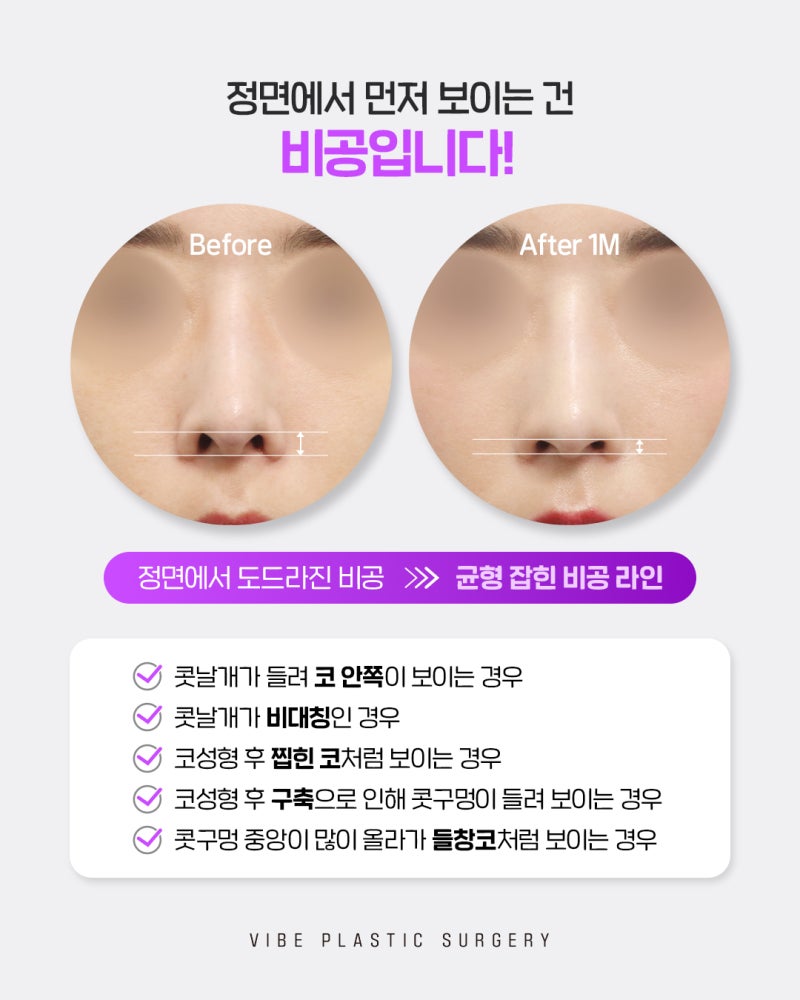
Alar rim lowering is performed not only for congenital Dragon Nose correction but also when the alar rims look ‘pinched’ after nose surgery or when 👃🏻 the nostrils are asymmetrical. If the position of the tip cartilage was shifted during a previous surgery or if the 🦴👃🏻 cartilage was tied too tightly, one or both nostrils may appear pinched.
While a congenital Dragon Nose typically has nostrils that are round or oval, a ‘pinched nose’ resulting from surgery often features nostrils that look sharp or pointed. If the issue is caused by overly tightened cartilage, we correct it by 🪡 loosening the tied area. If nostril exposure is severe, we supplement the deficiency by grafting 🦴 cartilage or skin.
Because the surgical method varies depending on the condition and cause of the alar rim issue, it is vital to receive a thorough consultation at VIBE Plastic Surgery. ✨📒
The VIBE Point: Making the Difference in Alar Rim Lowering

Composite Graft
(Skin + Ear Cartilage)
At VIBE Plastic Surgery, alar rim lowering is approached with a customized method based on the individual’s degree of exposure and nasal structure. Our clinic primarily uses ear cartilage for this procedure. In cases where exposure is mild, a natural and satisfying improvement can often be achieved through an alar graft using only cartilage.
Conversely, if the Dragon Nose condition is severe, we may apply a 👂🏻🦴 ‘composite graft’ involving both ear cartilage and skin. This method involves grafting the harvested cartilage and skin inside the nostril to stably lower the position of the alar rim.
The most important factor is not ‘how much’ it is lowered, but designing it precisely to match the individual’s facial balance and nasal structure.
Limitations to Consider for Alar Rim Lowering
☑️ 100% symmetry is difficult to achieve.
Because the thickness of the alar rim and the elasticity of soft tissues vary from person to person, slight differences between the left and right sides may remain after surgery. This is a natural individual variation.
☑️ Fine scars may remain at the ear cartilage harvest site.
Ear cartilage is usually harvested from the front of the ear. While most scars are barely noticeable after suturing, a fine line-shaped scar may be visible upon close inspection.
☑️ Absorption rates of grafted tissue vary.
Over time, some of the grafted cartilage and skin may be naturally absorbed, and the degree of retention depends on the individual’s tissue condition. :)
Since alar rim lowering can create a significant change in impression with even a small adjustment, it is important to plan according to your personal structure while fully understanding the expected results and limitations. For more satisfying results, we encourage you to visit VIBE Plastic Surgery for an accurate diagnosis and detailed consultation. ☺️