2026-05-18
Early Revision of Ptosis Correction and Upper Eyelid Fat Grafting: A Case Study
A revision case for a patient who experienced tightness and pressure after undergoing ptosis correction and upper eyelid fat grafting at another clinic. The procedure involved removing all sutures, adhesions, and unnecessary fat, returning the eyes to a pre-ptosis-correction state. One week post-surgery, the patient reported significantly easier eye opening and major symptom improvement. If double eyelid asymmetry remains, additional correction may be needed after 6 months.
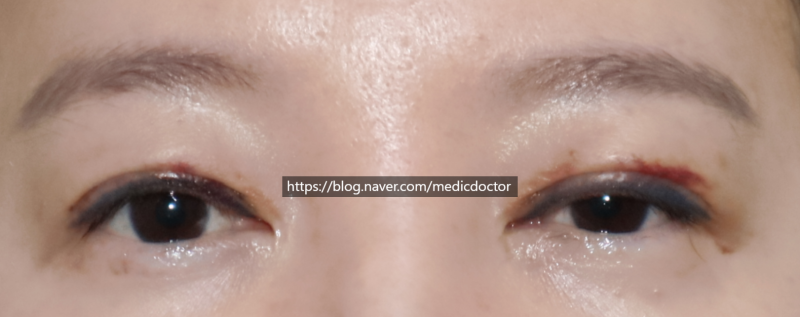
Today's post covers the following topic.
Early Revision of Ptosis Correction (Early Revision of Upper Eyelid Fat Grafting)
This patient had previously undergone ptosis correction and fat grafting at another clinic.
In particular, the right eye appears noticeably drowsy in the photo.
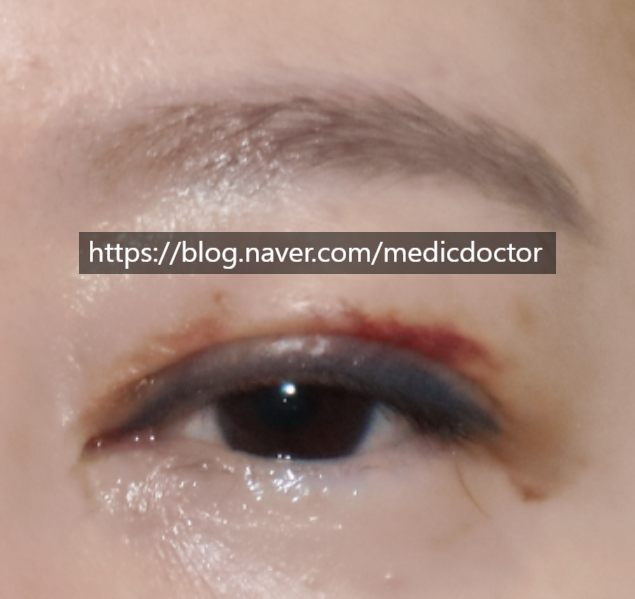
The symptoms the patient described are as follows.
After the ptosis correction surgery, she experienced tightness and a sense of pressure around the eyes.
The surgery is typically performed as follows.
All sutures are removed, adhesions are released, and the eyes are restored to the state before ptosis correction was performed.
If there is any tissue damage, we restore it to the greatest extent possible.
However, whether functional side effects will improve, worsen, or remain unchanged cannot be predicted with certainty.
That said, in most cases, properly returning the structures to their original position leads to significant improvement — although this cannot be guaranteed.
If double eyelid asymmetry remains, a corrective procedure is performed after 6 months.
This is because the incision line itself cannot be altered.
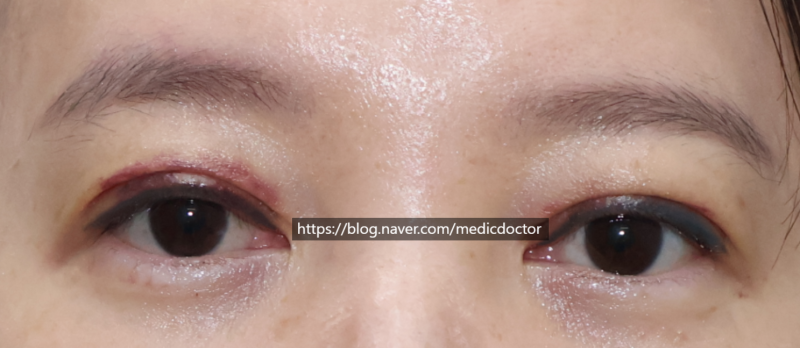
This is the appearance one week after surgery. The patient reported that opening her eyes was much easier and that her symptoms had improved significantly.
Even I found myself wondering why ptosis correction had been performed in the original surgery in the first place.
The patient was also very satisfied, which was gratifying.
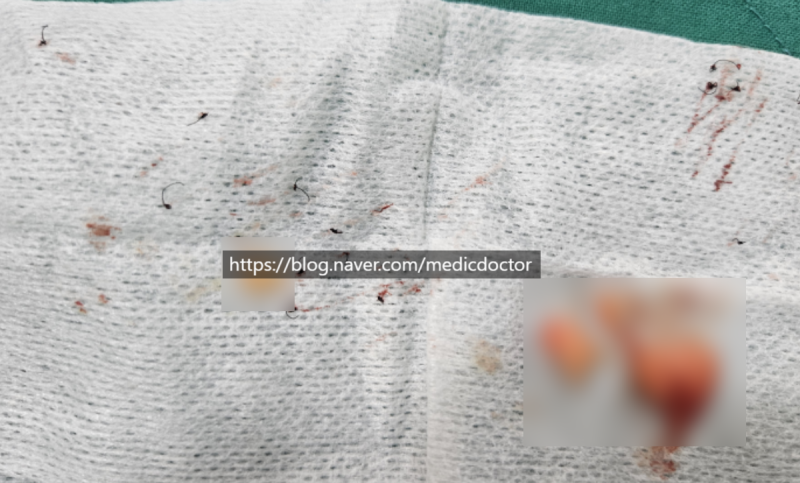
The removed sutures and the unnecessarily placed fat were taken out. When unnecessary tissue is present in the structures surrounding the eye that govern movement, it can cause adhesions, leading to discomfort when opening the eyes.
Before surgery.
Frequently Asked Questions
How is early revision of ptosis correction performed?
All sutures are removed and adhesions are released, returning the eyes to their pre–ptosis correction state. If there is any tissue damage, we restore it as much as possible, and any unnecessarily placed fat is also removed at the same time.
Why do tightness and pressure occur after ptosis correction?
If unnecessary tissue remains in the structures surrounding the eye that control its movement, adhesions can develop. This may cause uncomfortable symptoms such as tightness or pressure when opening the eyes.
Will functional side effects always improve after early revision?
In most cases, properly restoring the structures to their original position leads to improvement. However, whether the condition will improve, worsen, or remain unchanged cannot be known for certain, and results cannot be guaranteed.
When can double eyelid asymmetry be corrected again?
Because the incision line itself cannot be altered, any remaining double eyelid asymmetry must wait at least 6 months before additional corrective surgery can be performed.
How long does recovery take after the revision surgery?
In this case, the patient reported with satisfaction that by one week after surgery, opening her eyes had become much easier and that symptoms such as pressure had significantly improved.