2026-05-25
Bulbous Nose Revision Rhinoplasty, No-Implant Method
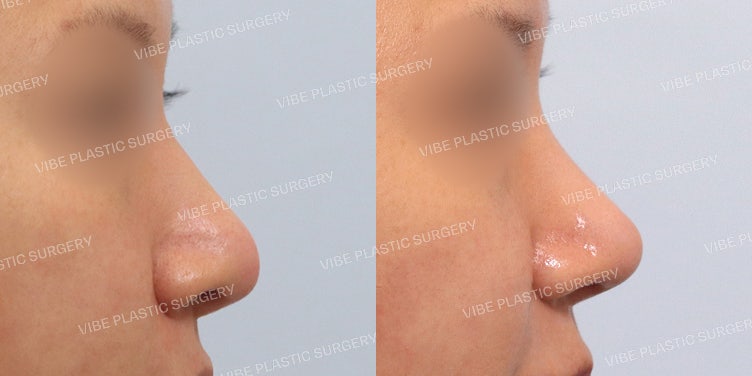
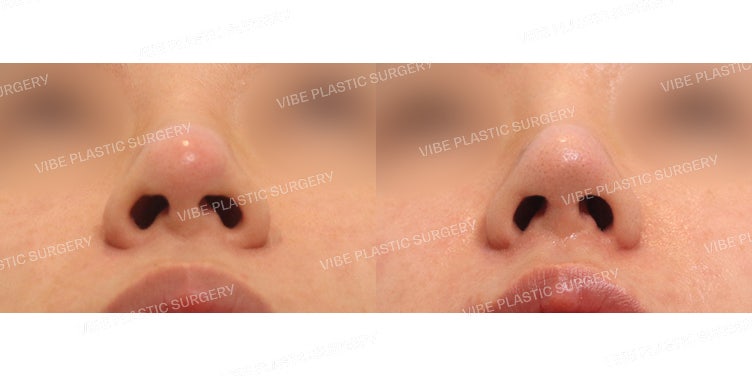
A case study of a 20s female patient undergoing bulbous nose revision without implants to correct a drooping tip and redness caused by previous mesh usage.
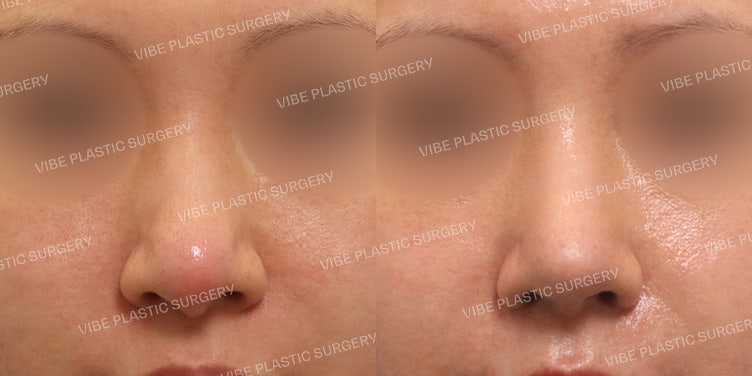
* Basic Information
# Female in her 20s
# Medical History: Surgery performed several years ago using ear cartilage and mesh
# Primary Concerns: The nasal tip still looks large, blunt, and droopy.
* Consultation
# The patient mentioned that her nose was originally a large and blunt ‘bulbous nose’. Her biggest stress was that the tip did not improve much after the first surgery and appeared to be drooping.
# We planned to correct the bulbous nose further through revision rhinoplasty to make it more defined and sleek.
# Additionally, since the tip of her nose was inexplicably red, we decided to investigate this during the procedure.
# As she did not want to use any implants, we decided to proceed with a no-implant rhinoplasty.
* Surgical Plan
# Bridge Rhinoplasty
- Osteotomy
# Tip Rhinoplasty
- Bulbous nose correction (Revision)
- Alar reduction
* Post-operative Progress
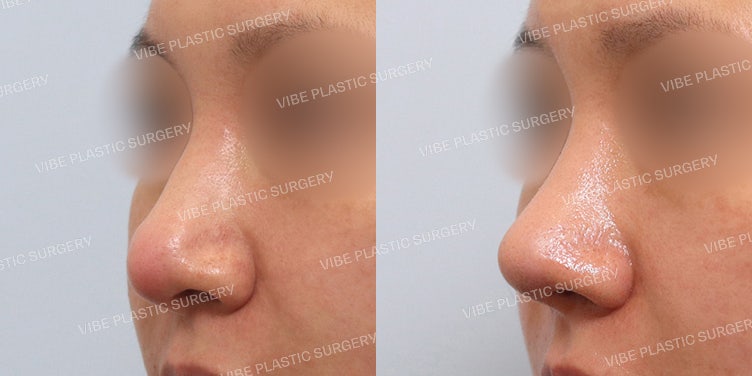
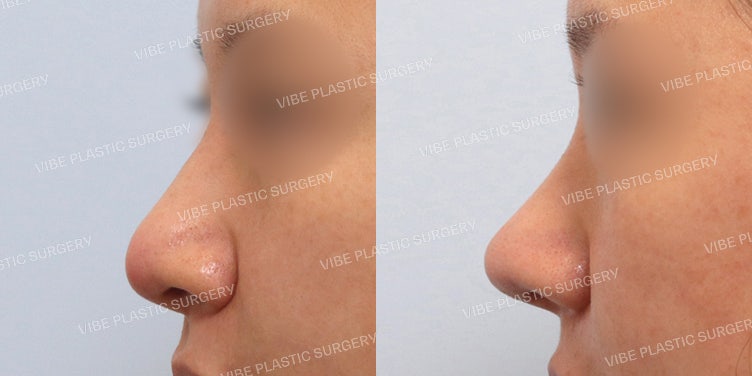
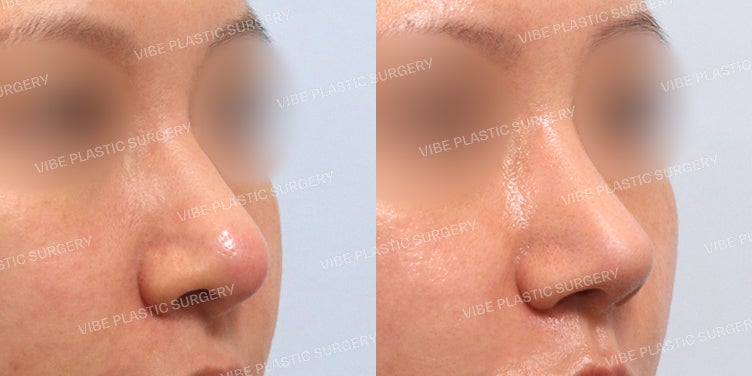
1. During the surgery, we found mesh implanted in the nasal tip and removed it. Mesh is a material used supplementally to raise the nasal tip; while it generally does not cause issues, it can sometimes lead to inflammation or other problems, causing redness at the tip. It is unclear if it was solely due to the mesh removal, but the redness at the tip has been resolved.
2. Bulbous nose surgery, especially in cases like this where the skin is thick and it is a revision surgery, has its limitations. However, it is a procedure with high patient satisfaction when tissues are reduced as much as possible and the nasal line is improved.
3. If the nasal bridge is sufficiently high, a natural nasal line can be created without using implants!!
Consultations and surgeries should be performed by a board-certified plastic surgeon!
VIBE that comes from rich experience
Dr. Yoo Young-moon, Representative Director of VIBE Plastic Surgery
Complications and side effects such as bleeding, inflammation, infection, and asymmetry may occur after surgery depending on the individual, and caution is required.