Why Your Legs Swell: A Must-Read If You Sit More Than 8 Hours a Day

Persistent leg swelling after long hours of sitting may signal varicose veins. Learn the causes, symptoms, diagnosis, and treatment options.
Supporting healthy legs and a healthy life for everyone in our community —
this is Dr. Kim Byung-jun at Ledas Thoracic Surgery.
Have you ever come home at the end of a long day to find deep sock marks pressed into your ankles, or noticed that shoes that fit just fine in the morning had become uncomfortably tight by evening? Most people chalk this up to simple fatigue and move on, but if these symptoms keep recurring, they may be warning signs of an underlying vascular problem.
There are many reasons why legs swell, but spending long hours sitting is one of the primary triggers for varicose veins. Today, I'd like to take a closer look at varicose veins — a condition worth considering when persistent leg swelling is present — and how to manage it.

Why Your Legs Swell: Varicose Veins
If your legs are persistently swollen, varicose veins may be the cause.
Varicose veins develop when the valves inside the leg veins become damaged or the vessel walls weaken, causing blood that should travel upward toward the heart to flow back down in the wrong direction.
This causes blood to pool in the lower legs, leading to abnormal dilation of the veins. These enlarged veins may bulge visibly on the surface of the legs; even when not visible to the eye, the condition can produce a range of symptoms including leg pain, a sensation of heaviness, nighttime muscle cramps, swelling, and general leg fatigue.
Varicose veins can be triggered by family history, aging, pregnancy, obesity, poor lifestyle habits, and certain occupational environments — particularly the habit of sitting for prolonged periods. In recent years, changing lifestyle patterns have led to a gradual rise in varicose vein incidence even among younger age groups.
Symptoms That Worsen as the Day Goes On
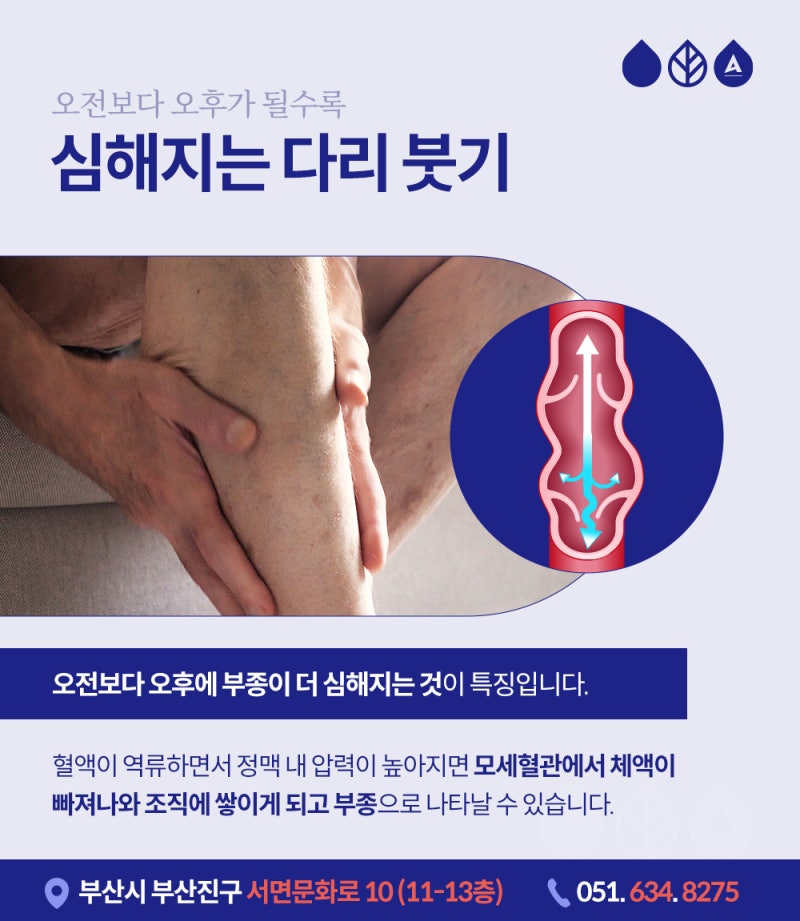
Those who sit for more than 8 hours a day will often notice their legs swelling as the day progresses. Varicose veins are one possible reason why legs swell under these circumstances.
Whether sitting or standing, blood in the leg veins must work against gravity to travel upward to the heart, making it more prone to flowing backward or pooling. When blood cannot circulate properly, varicose veins can develop and worsen over time.
The calf muscles act as a pump that pushes blood back toward the heart. When you remain in the same position for an extended period without moving, this pumping action diminishes, further impairing circulation — another key factor in the progression of varicose veins.
Prolonged standing is particularly problematic, as it places greater pressure on the legs and makes blood more likely to pool in the lower extremities, raising the risk of varicose veins even further.
As blood flows backward and venous pressure rises, fluid seeps out of the capillaries and accumulates in the surrounding tissue, resulting in swelling (edema). A hallmark of this condition is that swelling is noticeably worse in the afternoon than in the morning.

What to Do If Leg Swelling and Discomfort Persist
Varicose veins do not cause leg swelling alone. As blood pools and venous pressure rises, the vessels dilate, leaving legs feeling numb and heavy. Many people also experience nighttime leg cramps that interfere with restful sleep.
Beyond this, generalized leg fatigue and tingling can make daily activities uncomfortable. On closer inspection, bluish veins or red spider veins may become visible, and rope-like, bulging veins may be apparent on the skin's surface.
If you notice any of these symptoms or changes, seeking a proper diagnosis to thoroughly evaluate your condition is an important next step.
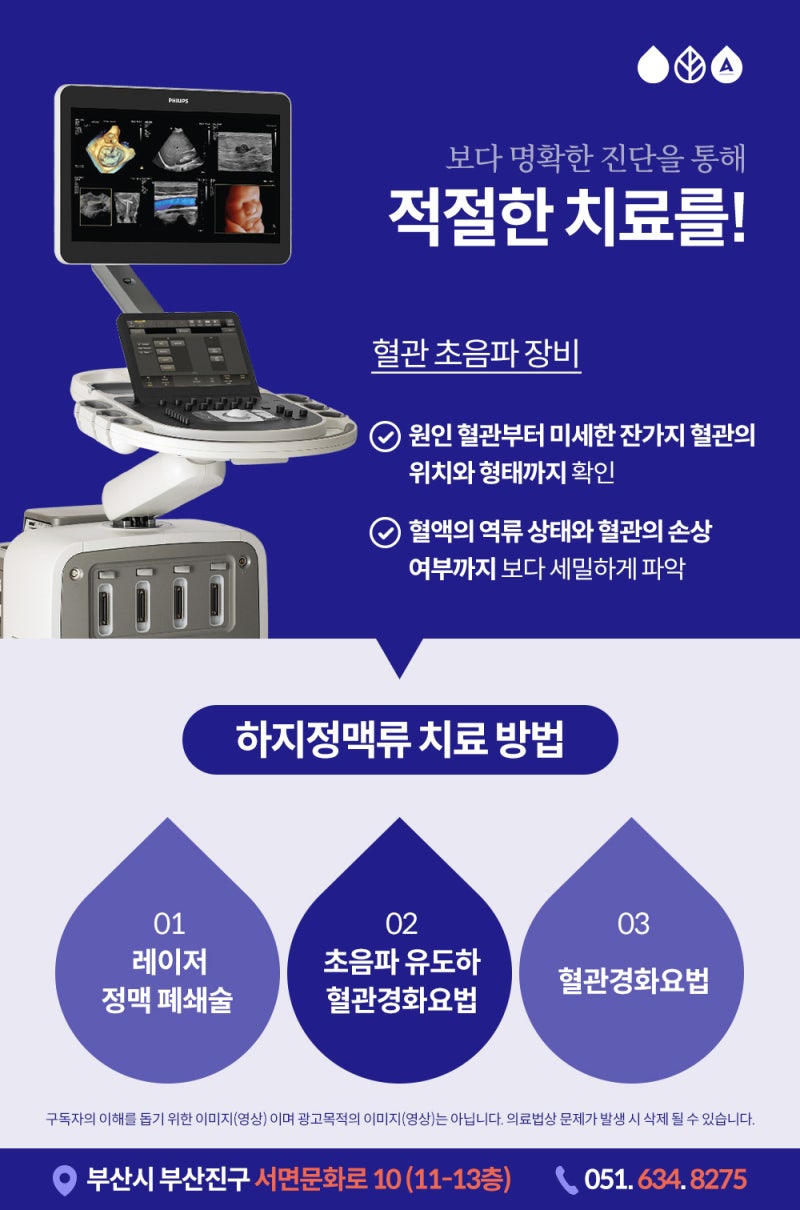
To diagnose varicose veins as the cause of leg swelling, a vascular ultrasound examination is performed to precisely measure blood flow and reflux duration. If blood reflux time is measured at 0.5 seconds or more, the venous valves are deemed to be functioning inadequately, and a diagnosis of varicose veins is made.
At that point, treatment to close the affected vessels — allowing blood to circulate freely through healthy veins — should be considered. The main treatment options are endovenous laser ablation and ultrasound-guided sclerotherapy; depending on which vessels need to be addressed, the two approaches can be combined for a greater synergistic effect.
If immediate treatment is not feasible, a consultation with your physician can lead to a prescription for venotonic medications or medical-grade compression stockings, both of which can help relieve symptoms and slow the progression of varicose veins.
It is also worth noting that varicose veins require ongoing management even after treatment. Because recurrence is possible, regular leg check-ups every one to three years following treatment are recommended to help detect and prevent relapse early.
Those whose jobs involve prolonged sitting or standing are considered high-risk for varicose veins.
Rather than dismissing recurring leg swelling as an inevitable consequence of a long day on your feet — or in your seat — it is far better to treat it as a signal calling for closer attention to your leg health.
With small, consistent everyday habits and timely care, I hope you enjoy healthy, comfortable legs for many years to come.