2026-05-25
Cases Requiring Ptosis Correction and Common Questions Answered
Learn about ptosis correction methods (incisional vs. non-incisional), Hering’s Law for single-eye surgery, and identifying if you need the procedure.

Hello.
This is Vibe Plastic Surgery.
While many factors contribute to a bright and clear impression,
the appearance of the eyes has the most significant impact.
That is why many people choose eye surgery to improve a sleepy or tired-looking appearance.
In such cases, ptosis correction is a procedure worth considering.
[What is Ptosis Correction?]
It is a method to improve sleepy and stuffy-looking eyes caused by drooping eyelids, making them appear more distinct.
It is also applicable for cases of blepharoptosis (ptosis), where the muscles used to open the eyes are stretched or weak, often leading to the use of forehead muscles to lift the lids.
[Ptosis Correction Surgical Methods]
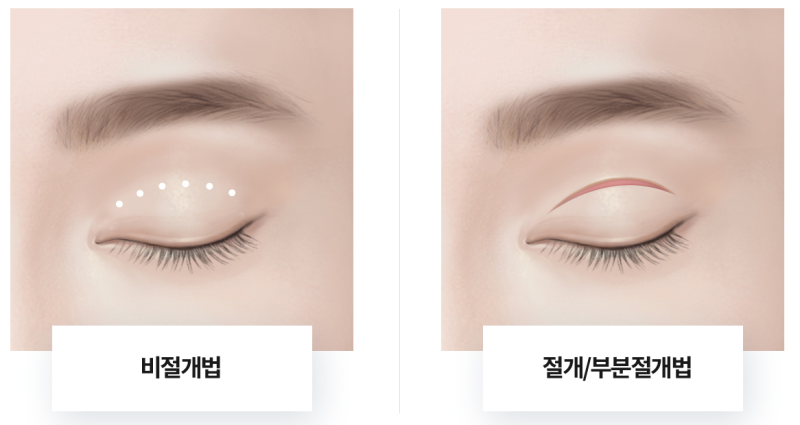
Ptosis correction methods are largely divided into incisional and non-incisional techniques.
The incisional method involves making an incision in the skin to remove unnecessary fat tissue and adjusting the eye-opening muscles so the eyes can open clearly.
This is suitable for those with significant eye fat, thick skin, or severe ptosis.
The non-incisional method involves creating small holes without a full incision and using sutures to adjust the eye-opening muscles for a clear look.
This is suitable for those with little eye fat, thin skin, or mild ptosis.
[Is Ptosis Correction Possible for Only One Eye?]
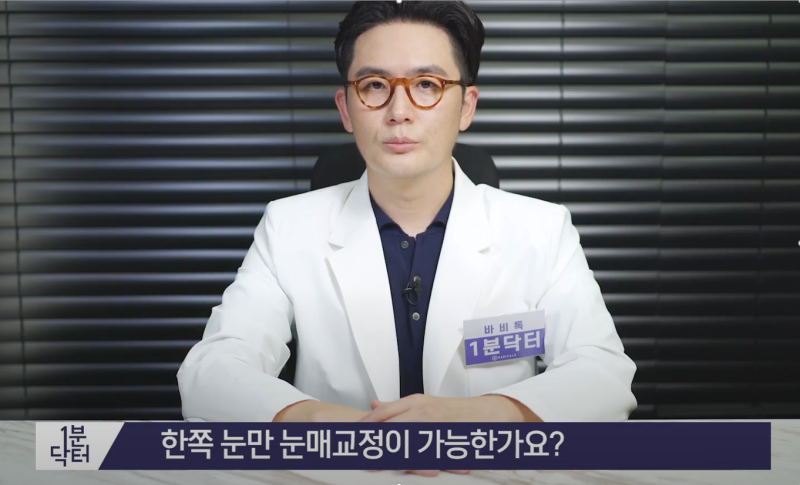
Both eyes receive signals from the brain to open simultaneously.
For example, if one eye does not open well, the brain sends a strong ‘Open your eyes now’ signal to both eyes.
However, after performing ptosis correction on only one eye, the opposite eye—which previously seemed fine or opened well—may suddenly appear to droop.
This happens because the eye that couldn’t open well can now open easily after surgery, causing the brain to significantly reduce the strength of the signal it sends to open the eyes.
This is known as Hering’s Law.
Therefore, if this principle is properly utilized during the procedure, it is possible to perform surgery on just one eye.
[Cases Where Ptosis Correction is Needed]
- If you have a sleepy-looking impression
- If your forehead tenses up when you try to open your eyes wide
- If forehead wrinkles form because you use forehead strength to open your eyes
- If your eyes look unfocused or blurry
- If you need correction for blepharoptosis
- If you want large and distinct-looking eyes
Not just eye surgery, but all plastic surgery must be performed in a way that suits your specific face shape and structure.
If you have more questions about ptosis correction, please visit Vibe Plastic Surgery, where we have extensive clinical experience and know-how, and we will provide you with a kind consultation.




