2026-05-25
L-Shaped Implant Case (4)
A case study of a patient in her 30s requiring revision rhinoplasty due to thinning skin and potential perforation caused by a large L-shaped silicone implant.
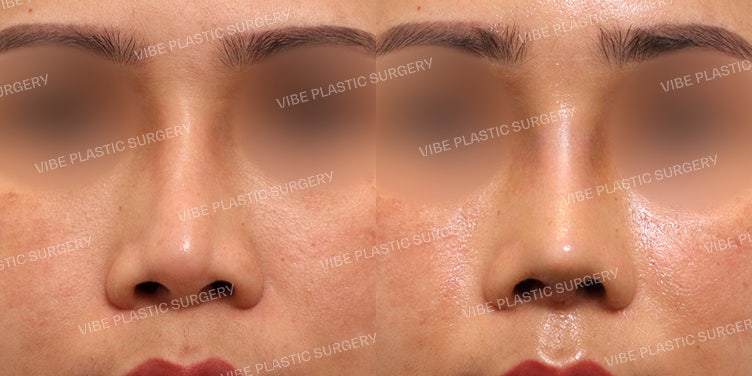
* Basic Information
# Female in her 30s
# The skin at the tip of the nose became extremely thin after receiving an L-shaped silicone implant several years ago.
* Consultation
# In the pre-operative CT scan, the L-shaped implant was so large that the nasal tip skin wasn’t just thinning; it was on the verge of perforation.
# After thoroughly explaining the risk that the skin could potentially tear during surgery, I recommended immediate removal. Simultaneously, we planned to reinforce the skin thickness in the thinned areas using soft tissue and dermis.
* Surgical Plan
# Nasal tip surgery (reinforcing thinned skin, septal extension graft)
# Bridge surgery (implant replacement)
* Intraoperative Findings
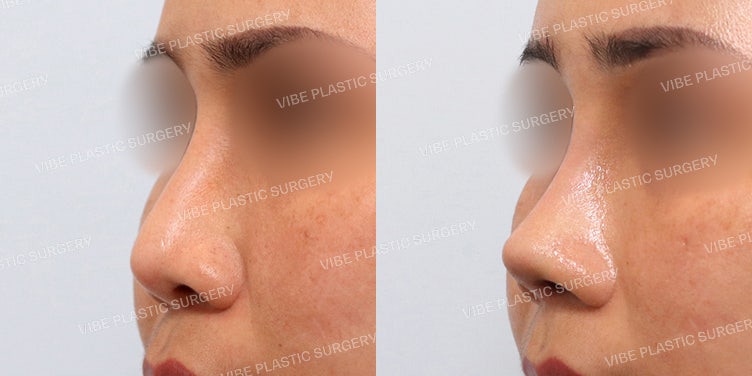
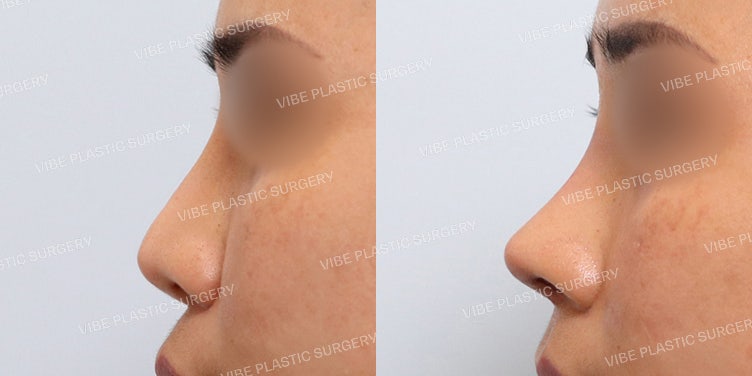
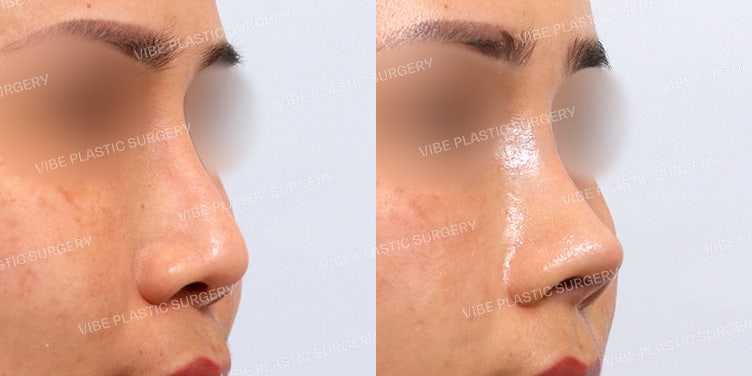
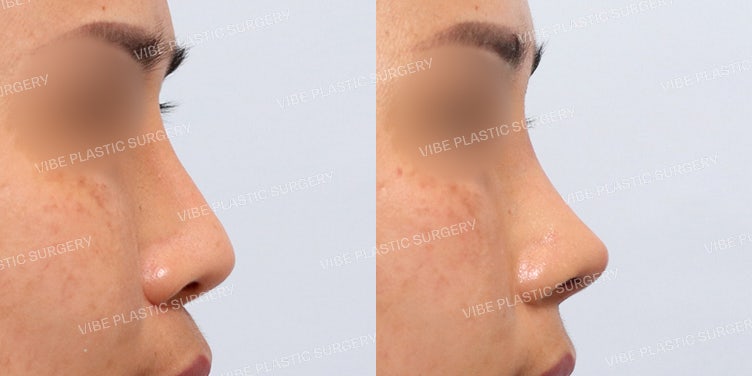
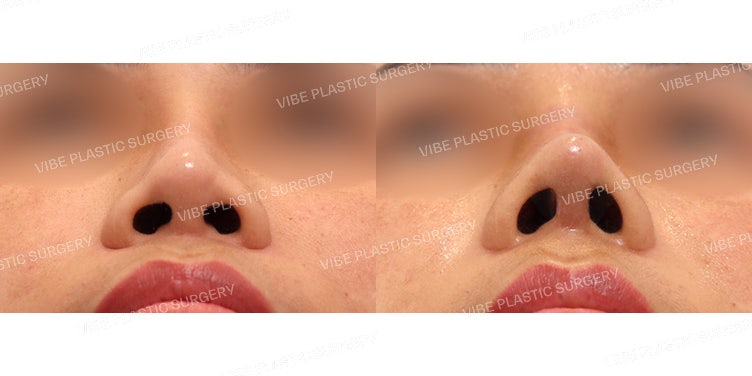
# Notice how bright red the nasal tip is before surgery? Because the L-shaped implant was too large and extended all the way to the tip, the skin was in a state of extreme thinning—nearly about to burst through.
# While preserving as much skin as possible, the implant was removed, and the thinned skin was reinforced with cartilage and soft tissue.
* Postoperative Findings
# While the redness of the nasal tip skin cannot disappear entirely, you can see it has returned significantly to a natural skin tone compared to before surgery. By layering cartilage and soft tissue under the thinned area, the recovery looks very successful.
# When performing revision surgery, it is crucial to establish a perfect plan and prepare thoroughly beforehand. One must consider various variables in advance to respond flexibly to unexpected situations that may arise during surgery!
Consultations and surgeries should be performed by a board-certified plastic surgeon!
Wishing you both health and beauty today :)
Right Mind, Right Plastic Surgery – Dr. Yu Young-moon
Complications and side effects such as bleeding, inflammation, infection, and asymmetry may occur after surgery depending on the individual, and caution is required.