2026-09-03
What's the Difference Between Upper Blepharoplasty and Double Eyelid Surgery for People in Their 50s?
Learn the key differences between upper blepharoplasty and double eyelid surgery, especially for individuals in their 50s experiencing age-related eyelid sagging.
※ This article is for the purpose of providing medical information.
It is not subject to deliberation under Article 56, Paragraph 2 and Article 57 of the Medical Act,
and is not an advertisement unrelated to the content of deliberation.
Hello,
I am Dr. Park Jeong-geun,
Director of Faceplus Plastic Surgery Clinic.
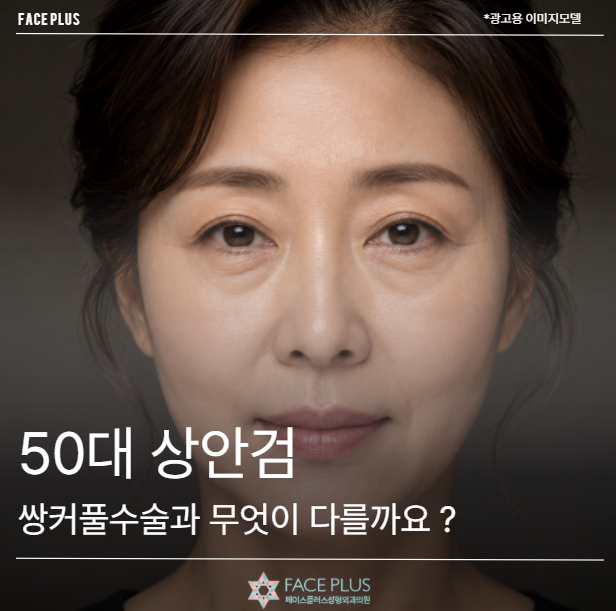
Many people feel that as they age, their eyelids droop
and their eyes appear smaller than before.
Especially as one enters their 50s, the changes go beyond simply a faded double eyelid line,
with sagging skin covering part of the pupil or even drooping to the outer corners of the eyes.
At this point, many people wonder which method is more suitable:
upper blepharoplasty for those in their 50s or general double eyelid surgery.
Both surgeries involve the upper eyelid, but there are differences in the reasons for considering surgery and the areas they aim to improve.

Today, we will delve into these differences.
Table of Contents | ||
1. What changes occur in the eyelids of people in their 50s? 2. Differences between upper blepharoplasty and double eyelid surgery 3. When is upper blepharoplasty necessary for people in their 50s? 4. What to check for natural results |
1. What changes occur in the eyelids of people in their 50s?
The skin around the eyes is thinner than other areas,
and it is also an area that undergoes repeated opening and closing movements.
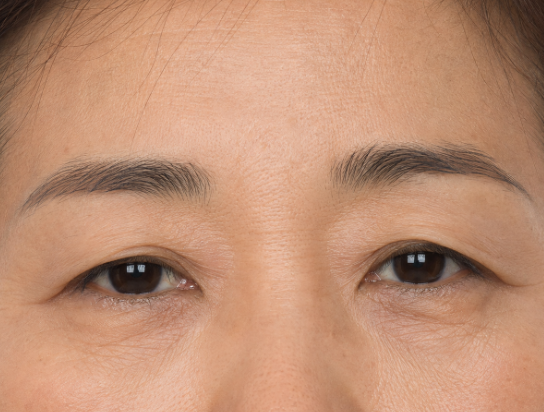
As one ages, skin elasticity decreases,
and the upper eyelids can gradually sag downwards.
Existing double eyelid lines may be hidden by sagging skin,
and the outer corners of the eyes may also droop.
When these changes occur, the eyes may appear smaller than before
or give a tired and heavy impression.
In cases of severe sagging, people may unconsciously strain their eyebrows or forehead
to open their eyes comfortably.
Therefore, when considering upper blepharoplasty for those in their 50s,
one should not simply look at the double eyelid line.
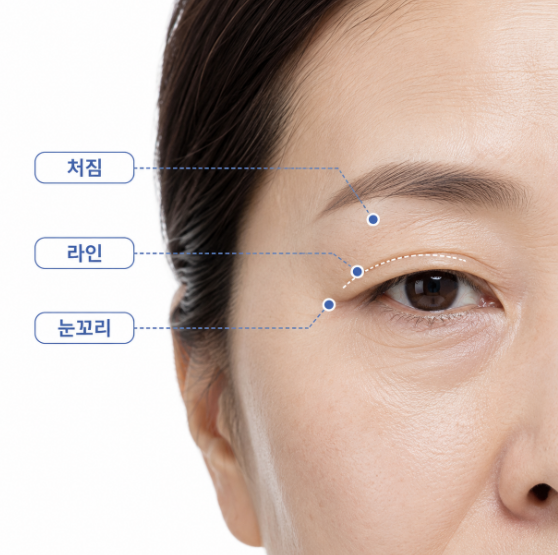
It is necessary to check how much the skin has sagged,
the position of the eyebrows, and whether there are any problems with eye-opening function.
2. Differences between upper blepharoplasty and double eyelid surgery
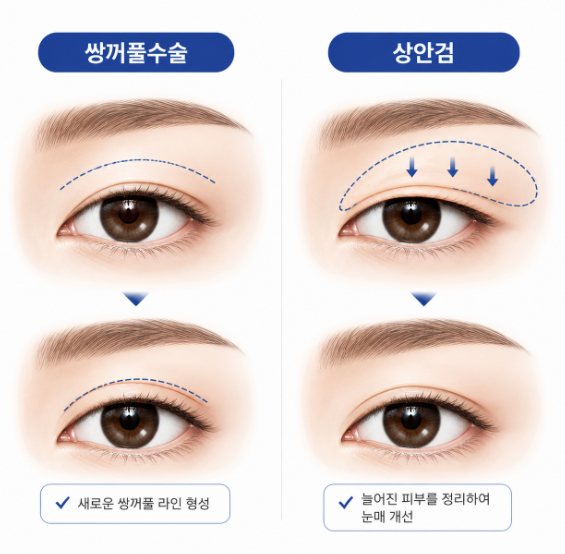
General double eyelid surgery focuses on creating a new double eyelid line
or making an existing line more defined.
On the other hand, upper blepharoplasty for those in their 50s is a surgery that refines the eye shape
by considering the upper eyelid skin and surrounding tissues that have sagged due to aging.
If necessary, it appropriately removes sagging skin
and is designed considering the existing double eyelid line and eyelid structure.
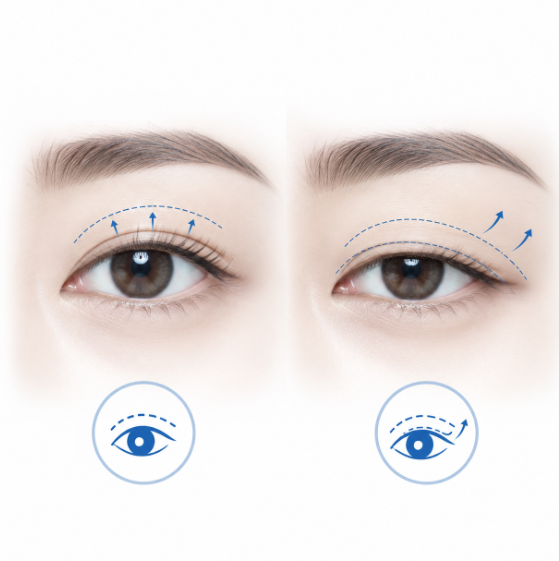
In other words, while the main purpose of double eyelid surgery is to create a line,
upper blepharoplasty places more emphasis on improving sagging.
Even when the same incision method is used,
the surgical plan can vary depending on age and skin condition.
Especially for those in their 50s, it is important to plan the surgery to harmonize with the existing eye shape
rather than simply creating a high double eyelid.
3. When is upper blepharoplasty necessary for people in their 50s?
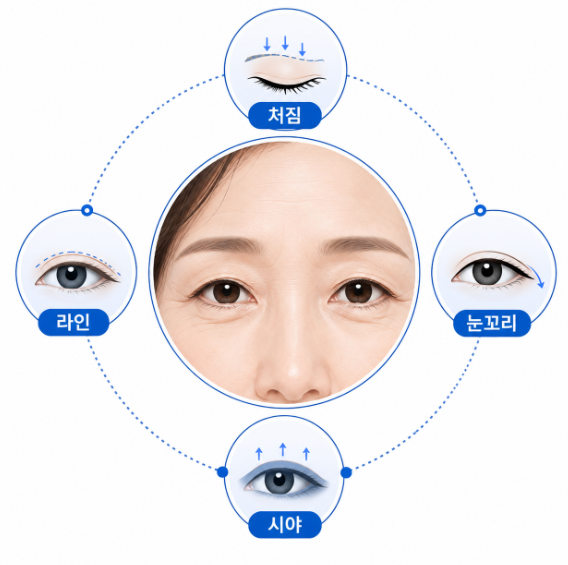
It can be considered when the upper eyelid skin has sagged so much that the double eyelid line is not clearly visible,
or when the skin at the outer corner of the eye has drooped.
The same applies when the eyes appear smaller than before due to the eyelids,
or when there is a heavy and stuffy feeling when opening the eyes.
However, not everyone in their 50s needs upper blepharoplasty.
This is because the condition of the area around the eyes, such as the degree of skin sagging, fat amount, eyebrow position, and double eyelid shape,
differs from person to person.
For example, there is a difference between cases where the eyelid skin itself has sagged a lot
and cases where the eyelids appear saggy due to the eyebrows lowering.
Therefore, when planning upper blepharoplasty for those in their 50s,
it is important to first identify where the current sagging originated.
If only the skin is addressed without confirming this,
the result may differ from the desired eye shape.
4. What to check for natural results

In middle-aged eye surgery, removing a lot of sagging skin
does not necessarily lead to a more natural and defined eye shape.
Excessive skin removal can cause discomfort when opening and closing the eyes
or make the double eyelid line appear excessively high.
Conversely, if the current sagging is not sufficiently considered,
a stuffy feeling may remain even after surgery.
Therefore, upper blepharoplasty for those in their 50s should consider not only the excess skin
but also fat, muscles, and eyebrow position.
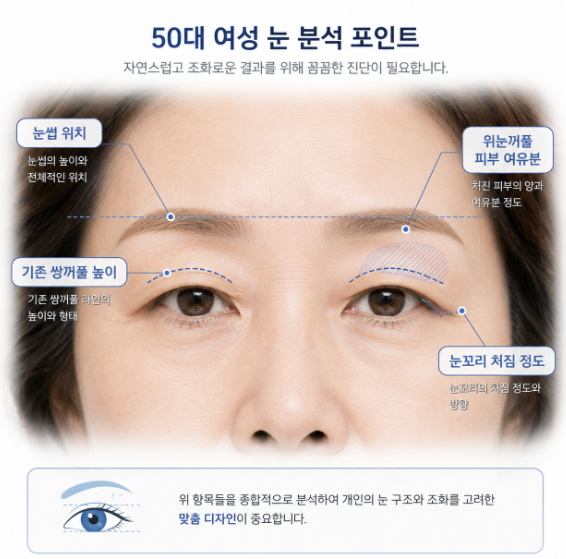
It is important to meticulously check the height and shape of the existing double eyelid and the degree of drooping at the outer corner of the eye before determining the scope of the surgery.
Especially if you want to maintain your usual natural impression,
you should not focus solely on creating a defined line.
Upper blepharoplasty for those in their 50s and general double eyelid surgery may seem similar
in that they both involve the upper eyelid.
However, there is a clear difference in the purpose and design of the surgery
as it considers skin sagging due to aging and the surrounding eye structure.
Therefore, it is crucial to accurately identify the degree and cause of current eyelid sagging
and determine the method that suits the individual's eye shape.
-Operating Hours-
Weekdays 9:00 ~ 18:00 Saturdays 9:00 ~ 16:00 Public Holidays / Sundays Regular closure |
-Contact Us-
Faceplus Plastic Surgery Clinic | ||
Consultation Phone: 02-541-8500 Inquiries: KakaoTalk Inquiry |
-Directions-
Frequently Asked Questions
What changes occur in the eyelids of people in their 50s?
Yes, as people reach their 50s, their eyelids may droop, existing double eyelid lines may become hidden, and the outer corners of their eyes may sag. This can make the eyes appear smaller or give a tired and heavy impression. In severe cases, people may even strain their forehead to open their eyes.
How do upper blepharoplasty and double eyelid surgery differ?
Upper blepharoplasty focuses on improving sagging by considering the upper eyelid skin and surrounding tissues that have loosened due to aging. In contrast, the primary goal of general double eyelid surgery is to create a new line or make an existing line more defined.
When is upper blepharoplasty necessary for people in their 50s?
It can be considered when the upper eyelid skin has sagged, making the double eyelid line less visible, or when the skin at the outer corner of the eye has drooped. It's also an option if the eyes appear smaller or feel heavy and uncomfortable when opening. However, the necessity varies depending on the individual's eye condition.
What is important for natural results in upper blepharoplasty for people in their 50s?
For natural results, it's essential to consider not only the excess skin but also fat, muscles, and eyebrow position. Excessive skin removal can lead to unnatural outcomes, so a detailed surgical plan that harmonizes with the existing eye shape is crucial.
Does everyone in their 50s need upper blepharoplasty?
No. Not everyone in their 50s needs upper blepharoplasty. The condition of the area around the eyes, including the degree of skin sagging, fat amount, eyebrow position, and double eyelid shape, varies from person to person. Therefore, accurately identifying the cause of the current sagging is important.