2026-05-25
3. Types and Methods of Double Eyelid Surgery
Learn about the different types of double eyelid shapes (In-fold, Out-fold, In-out fold) and surgical methods (Buried, Partial Incision, Full Incision) from a plastic surgeon.
Hello.
I am Dr. Yoo Young-moon, a board-certified plastic surgeon.
Spring is now in full bloom.
While there are many frustrating days due to fine dust,
spring is still spring. ^_____^
The flowers are blooming, and the weather is perfect for outings.
Today, we are going to look into the types and methods of double eyelid surgery. Since you can find a wealth of information and photos with just a quick internet search these days, I assume many of you already know quite a bit.
However, the basics are always important, right?
I will briefly explain the factors I consider when choosing a surgical method, so please use this as a reference.
Q. What is double eyelid surgery?
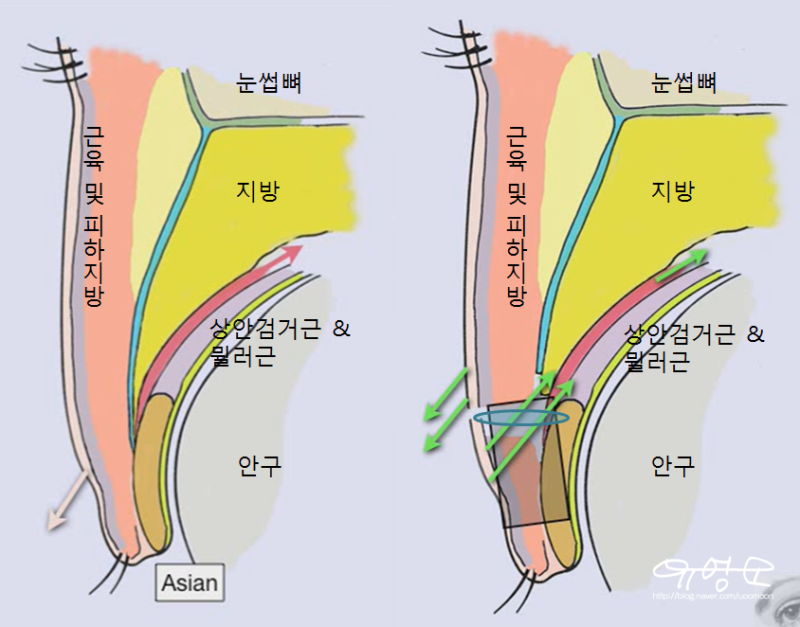
A. ‘A surgery that creates a fibrotic adhesion between the skin and the muscle that opens the eye (levator palpebrae superioris).’
When the eye opens due to the action of the levator muscle, the connected skin is lifted along with it, creating a double eyelid line at that spot.
Q. Classification by double eyelid shape?
A. They can be broadly classified into three types.
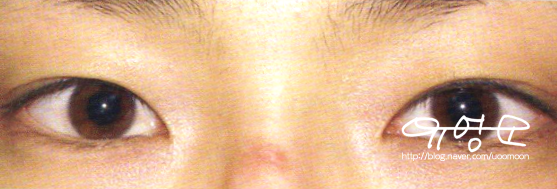
1. In-fold: The double eyelid line starts from the inside of the Mongolian fold. This is often referred to as a ‘hidden double eyelid’ and is a very natural-looking line.
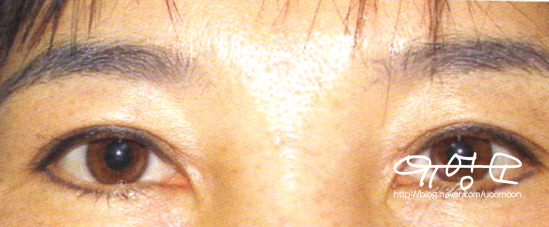
2. Out-fold: The double eyelid line starts above the Mongolian fold. While it can look refreshing and Westernized, it may appear artificial, like a ‘sausage’ shape, if the skin is thick.
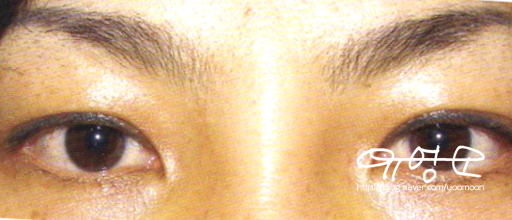
3. In-out fold: This is a shape somewhere between the in-fold and out-fold. Because the double eyelid line converges very narrowly toward the innermost corner, it can look both natural and refreshing. (This is currently the most preferred shape among Korean women.)
Q. Methods of double eyelid surgery?
A. You might be confused because the names of the surgeries used by each clinic vary slightly, but they are generally classified into the following three types.
1. Buried Suture Method (Natural Adhesion, Non-incisional Double Eyelid, etc., all mean the same thing)
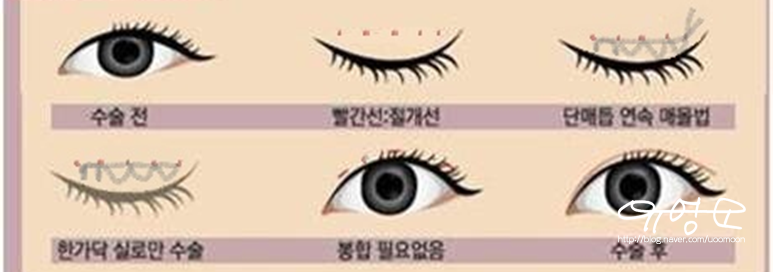
This is a method of creating a line using thread through non-incisional means (i.e., using only small holes). Many people think it is easy because the surgery is relatively simple and finishes quickly, but from the surgeon’s perspective, there are many details to consider.
We must consider whether the line will remain well-maintained without loosening or unraveling, and whether left-right symmetry will be achieved, based on factors such as the degree of eye protrusion, presence of ptosis, skin thickness, and whether it is a revision surgery.
2. Partial Incision Method
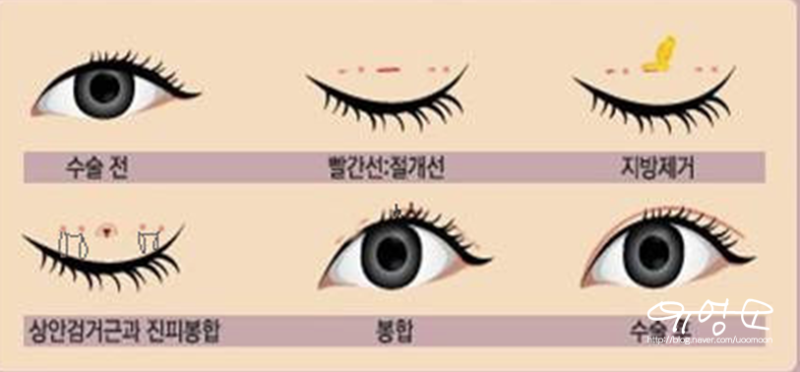
As an intermediate form between the incision and buried methods, this technique involves creating a small incision slightly longer than a hole (hence the name ‘partial incision’) and then connecting the levator muscle to the dermal layer of the skin. This method allows for an extra tie through the partial incision to prevent the line from unraveling, and fat can also be removed if there is an excess.
The surgery time, scarring, effectiveness, and recovery period are all somewhere between the incision and buried methods.
3. Full Incision Method
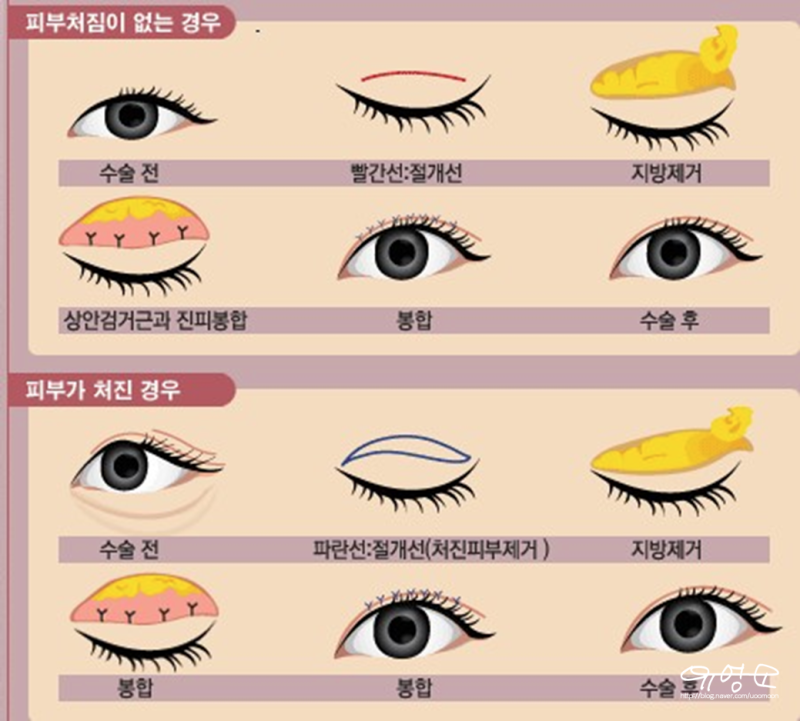
This is performed when the skin and soft tissue are very thick and have a high chance of unraveling, when the skin is sagging or in poor condition due to long-term use of double eyelid tape/glue, when the skin has thickened due to atopic dermatitis, when sagging skin needs to be removed, or when hollow eyelids need to be addressed using fat repositioning.
While the buried and partial incision methods create a ‘line’ type of adhesion, the full incision method creates a ‘surface’ type of adhesion, allowing for stronger bonding and reducing the phenomenon of the line unraveling.
We have looked into the types and methods of double eyelid surgery.
What matters is not ‘what method my friend used,’ but choosing the surgical method that is right for you. That way, you can have natural and long-lasting double eyelids. ^^
Next time, I will talk about ptosis.
What exactly is ptosis? What is ptosis correction?
Do I have ptosis?
What are the methods for ptosis correction?
What are the possible side effects after ptosis correction?
I will cover these topics and more.
Right Thinking, Right Plastic Surgery – Yoo Young-moon