2026-05-25
2. Preoperative Planning
Learn the essential steps of preoperative planning for rhinoplasty, from evaluating bone structure and cartilage to assessing skin thickness and aesthetic preferences.
Hello.
I am Dr. Young-moon Yoo, the Chief Director of VIBE Plastic Surgery.
Last time, we looked into the anatomy of the nose.
(If you are curious, please click below)
Today, I will discuss what I look for first when I meet patients for a consultation and how I establish a surgical plan.
1. Bone and Skeleton: Asymmetry, deviation, or presence of a hump 2. Cartilage: Thickness and strength 3. Skin: Thickness and elasticity 4. Revision Status: Types of implants or cartilage previously used 5. Preferred Line
1. Bone and Skeletal Evaluation
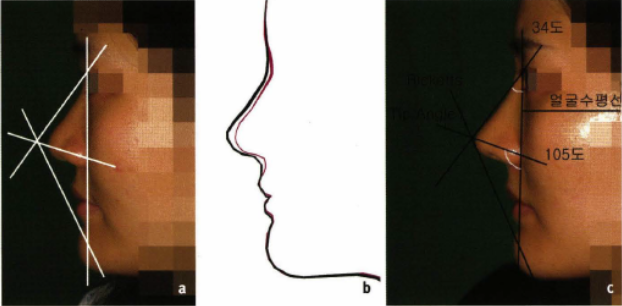
- I examine the nose from the front, 45-degree angle, and side.
- I evaluate whether there is skeletal asymmetry, if the axis is straight (or deviated diagonally), and if the nasal bridge is uneven due to a hump.
- No one in the world has a perfectly symmetrical nose as if drawn with a ruler. The slope and thickness of the nasal bones on both sides differ based on the central axis.
- It is crucial to meticulously check for these asymmetries before surgery, and both the patient and the surgeon must be aware of them together.
- For an accurate diagnosis, it is essential to directly check the skeletal structure through 3D CT imaging.
2. Cartilage Evaluation
(1) Septum
- First, I press firmly on the tip of the nose. This is the easiest way to gauge the strength of the septum. I assess whether it has good supporting strength or if it collapses easily under finger pressure.
- To accurately evaluate the size and degree of deviation of the septum, we use 3D CT and endoscopy. Checking the size and deviation in advance and planning the surgery accordingly is a vital process to increase surgical precision!
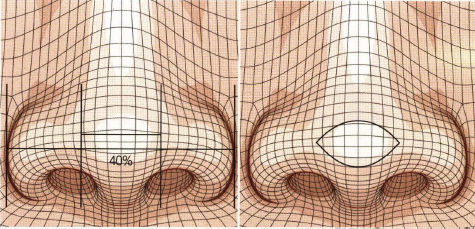
(2) Alar Cartilage (The part forming the nostrils)
: I evaluate the strength and thickness of the cartilage.
: If the nostrils appear severely ‘pinched,’ we must create a beautiful nostril shape through alar rim lowering.
: Since the shapes of the left and right cartilages differ, explaining this part is also very important.
(3) Ear Cartilage
- I evaluate the size, thickness, and strength of the ear cartilage in case it needs to be used.
- In the case of revision surgery, I must check if it has already been harvested.
- For those with many piercings, I plan how to make the incision and harvest the cartilage while avoiding those areas.
3. Skin
- I evaluate the thickness, elasticity, and amount of available skin.
- This is a particularly crucial step in diagnosing ‘bulbous nose’ surgery. Since there may be limitations for those with very thick skin, an explanation regarding this is mandatory.
- In revision cases or when a significant increase in tip height is desired, checking for sufficient skin laxity is vital.
- In relation to this, smoking status must be confirmed. Since smoking is the biggest factor in skin necrosis of the nasal tip, you must quit smoking for at least 2 weeks before and 2 weeks after surgery! It would be even better to quit entirely this time, right?
4. Revision Surgery Status
- For revision cases, I must identify why and for what specific reasons the patient wants surgery again.
- Whether the implant has shifted, the height is unsatisfactory, or it is due to the shape and angle of the tip... the reasons for seeking revision are incredibly diverse!
- Among these, I believe the most important thing is to evaluate ‘whether revision surgery is truly necessary.’ We should not recklessly perform surgery on a nose that doesn't need it! If it is unnecessary, I must persuasively explain why it should not be done.
5. Preferred Nose Shape and Line
- I check preferred lines such as straight-semi-basal, semi-basal, or straight lines. Since everyone's desired shape is different—whether they want a sharp tip or a naturally rounded one—it is very important to find each individual’s unique charm and beauty.
- Referring to photos of celebrities or influencers is also helpful.
- If you don't have a specific line in mind or are unsure, it is essential for me to recommend a line and coordinate our opinions together.
Click the following to see various rhinoplasty cases.
Today, we looked at what points to consider when performing rhinoplasty...
Specifically, ‘Preoperative Planning.’
I imagine many of you already knew much of this, while for others, it was very helpful information.
In the next episode, I will explain various rhinoplasty methods in an easy-to-understand way.
See you next time!
Right Thinking, Right Surgery – Young-moon Yoo