2025-11-08
#16 Double Eyelid Surgery Swelling: How Long Does It Last and How to Manage It?
Dr. Kim Sung-hoon of Facial Designer SH Plastic Surgery explains the anatomical reasons for swelling after double eyelid surgery and provides a practical guide for patients and clinics to manage it, from daily care to professional treatments.
Swelling after double eyelid surgery is the most common concern for patients during recovery. Dr. Kim Sung-hoon of Facial Designer SH Plastic Surgery explains the anatomical reasons for swelling and specific methods that patients and clinics should use for management. From daily care like cold compresses, sleep posture, exercise, alcohol, and smoking, to professional treatments like hyaluronidase, steroids, LLLT (light therapy), and taping — this is a practical guide to minimize swelling and accelerate recovery after surgery. This article goes beyond simply asking ‘When will the swelling go down?’ by detailing the physiological causes of swelling and the recovery process, offering both ‘reassurance’ and ‘evidence’ to all patients considering double eyelid surgery. Dr. Kim Sung-hoon, Facial Designer SH Plastic Surgery.
Hello, I am Dr. Kim Sung-hoon from Facial Designer SH Plastic Surgery.
Today, we will discuss swelling after double eyelid surgery.
Actually, the term ‘붓기’ (butgi) is an incorrect expression, and ‘부기’ (bugi) is the correct term.
From now on, I will use the correct term ‘부기’ (bugi) in my explanation. ^^
When does facial swelling subside?
This is a question I hear multiple times a day in the consultation room.
‘Doctor, how long does the swelling last?’
‘When can I meet people again?’
Each time, I answer like this:
‘Swelling is not a matter of time, but a result of management.’
Swelling is not just simple puffiness.
It is a physiological reaction that occurs during the tissue recovery process.
It is a natural phenomenon that occurs as inflammation develops after surgery, blood vessels dilate, and tissues settle into their new positions.
The anatomical reason for ‘swelling’
The eyelids have the thinnest skin on the face and are densely packed with blood vessels and fat layers.
When microvessels are damaged through incision or non-incision methods,
plasma components seep into the tissues, causing temporary edema.
The reasons why swelling can persist for a long time are as follows:
The thin skin around the eyes makes edema easily visible.
It is not significantly affected by gravity, allowing fluid to linger.
The abundance of microvessels leads to an active inflammatory response.
In other words, swelling is not ‘abnormal’ but a ‘sign of recovery.’
The challenge is how quickly and evenly it subsides.
‘How long does swelling last?’
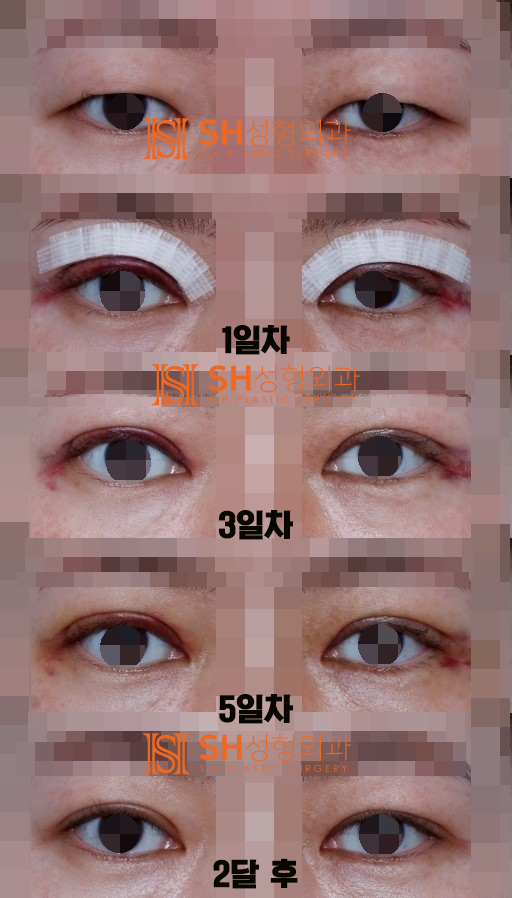
I will explain the phased recovery process using the table below.
Category | Period | Change | Perceived Appearance |
Initial Swelling | Immediately after surgery ~ 3 days | Inflammatory edema, skin tightness | Eyelids appear thickly swollen |
Mid-term Recovery | 4 days ~ 2 weeks | Swelling reduction, bruise absorption begins | Difficult for others to tell if surgery was performed |
Full Recovery | After 2 months | Tissue remodeling complete | Even the patient forgets their pre-surgery appearance |
Conclusion: If there are no special side effects, ① most swelling subsides in 1 week, ② appearance is natural in 2 weeks, and ③ full recovery is achieved in 2 months.
Swelling management that patients can do themselves
So, is there anything patients can do themselves to manage swelling?
Yes, while you cannot eliminate swelling immediately,
you can prevent it from getting worse,
or relatively speed up the time it takes for swelling to subside.
1. Compresses — Cold compress → Warm compress
Immediately after surgery: Use a cold compress to suppress inflammation and prevent blood vessel dilation.
After 3 days: Switch to a warm compress to promote circulation and aid in waste removal.
💧 Cold compress vs. Warm compress management summary table
Category | Cold Compress | Warm Compress |
Timing | Immediately after surgery ~ Day 2 | Day 3 ~ 1 month |
Mechanism | Suppresses immediate post-surgery swelling and edema | Promotes absorption of existing swelling and edema |
Appropriate Temperature | 5 ~ 10 °C (Beware of frostbite) | 40 ~ 45 °C (Beware of burns) |
Frequency | As often as possible (short, repeated sessions) | 3 ~ 5 times a day (10-15 minutes each) |
The recovery speed of those who diligently apply compresses and those who do not is markedly different.
2. Sleep posture
Keeping your head elevated above your heart helps reduce swelling with the aid of gravity.
Pillows that are too low can cause blood to pool, prolonging swelling.
3. Exercise
Avoid strenuous exercise for 2 weeks.
Squatting or lifting heavy objects increases abdominal pressure, worsening swelling.
After 2 weeks, light walks and brisk walking can help promote recovery.
4. Alcohol and smoking
Alcohol dilates peripheral blood vessels and increases inflammation.
Smoking reduces blood flow and lowers tissue oxygen supply, worsening swelling.
Abstinence from alcohol and smoking for at least 2-3 weeks is the rule.
5. Posture
Frequently bending your head or prolonged smartphone use
also increases facial blood flow, exacerbating swelling.
Professional management performed at the clinic
Now, let's discuss the professional post-operative care provided at the clinic.
How professionally, quickly, and effectively the swelling is managed is crucial.
Professional management includes the following:
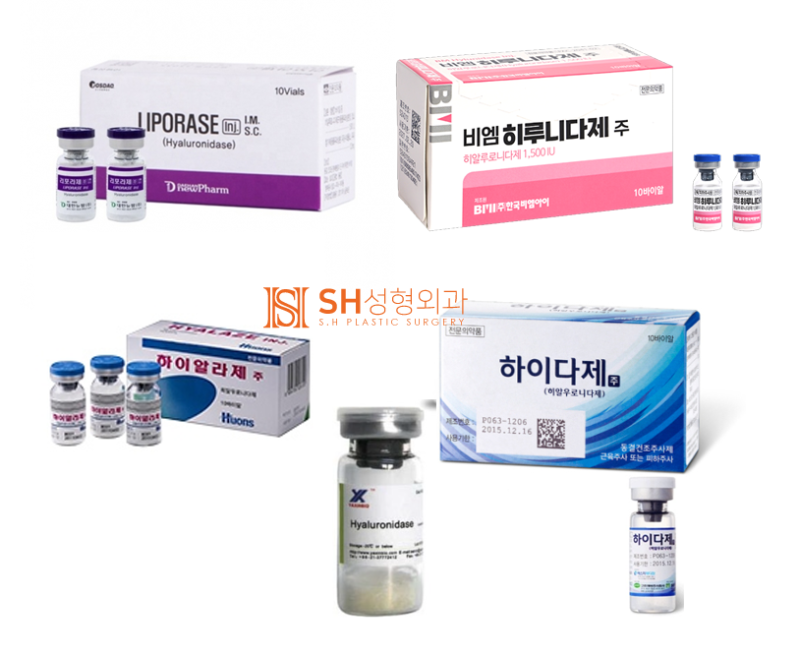
1. Hyaluronidase
An enzyme that regulates hyaluronic acid bonds in tissues to reduce water retention.
It is used as a swelling-controlling enzyme, not just a ‘filler-dissolving injection.’
2. Dexamethasone
A corticosteroid that has anti-inflammatory and blood vessel stabilizing effects.
3. Aminophylline
Although a bronchodilator, it aids in removing body fluid through its diuretic action.
4. Oral medications
Venoruton, Traumeel, etc., help stabilize capillaries and improve microcirculation.
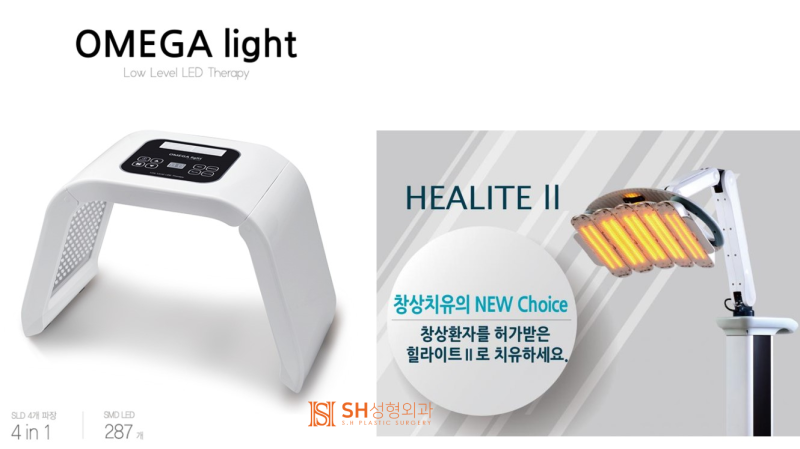
5. LLLT (Low-Level Light Therapy)
Uses LED light to promote blood flow, cell regeneration, and alleviate bruising.
6. Taping therapy
Gently compresses the area above the incision to physically suppress subcutaneous edema.
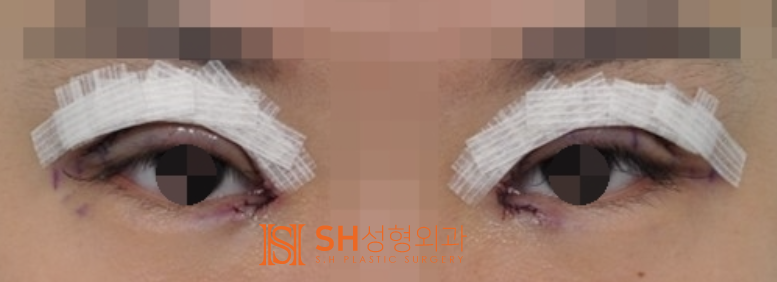
Even light compression taping for 3-5 days after surgery makes a big difference in swelling.
Dr. Kim Sung-hoon's Reflection, Facial Designer
‘It's perfectly natural to worry about swelling after double eyelid surgery.
However, what's important is not ‘how quickly it will subside,’ but
‘how healthily you recover.’
Swelling is not just simple puffiness; it's a sign of recovery.
Understanding its progression and assisting with its rhythm
ultimately determines the completeness of the result.
Double eyelid surgery is not a surgery to ‘make eyes bigger,’ but
a surgery to ‘restore the impression of the eyes.’
A natural recovery process creates the most reliable aesthetic results.’
FAQ
Q1. Is there a body type that experiences prolonged swelling?
Individuals with thin skin, many blood vessels, or allergic skin may experience relatively longer swelling.
Q2. Is there a significant difference in swelling between the non-incisional and incisional methods?
The incisional method involves more tissue manipulation, leading to greater initial swelling, but higher stability of results after recovery.
Q3. How often should I apply a cold compress?
For the first 48 hours immediately after surgery, it is recommended to apply it for 10-15 minutes every hour, at least 5 times a day.
Q4. When should I switch to a warm compress?
It is best to switch after 3-4 days post-surgery, when bruising appears or the feeling of stiffness decreases.
Q5. Are there any supplements or foods that help reduce swelling?
Vitamin C, protein, and water intake are important; avoid salt and caffeine.
Q6. What should I do if I have both swelling and bruising?
Bruising is quickly absorbed with light therapy (LLLT) or warm compresses. Both swelling and bruising can be managed concurrently.
SH Plastic Surgery Clinic
#DoubleEyelidSurgery Glamorous VS Natural: What's Your Choice?! #EyeSurgery [Gangnam Sinnonhyeon Station Kim Sung-hoon Plastic Surgery]