2026-09-03
Lower Blepharoplasty Core: Natural, Rejuvenating Methods with Fat Repositioning, Fat Removal, and Septal Tightening
Lower blepharoplasty involves fat repositioning, fat removal, and septal tightening to correct under-eye issues like sagging skin, fat protrusion, and tear troughs, ensuring natural, long-lasting rejuvenation.
Lower blepharoplasty is not merely a procedure to excise sagging skin beneath the eyes.
As we age, under-eye skin sagging, fat protrusion, and tear troughs often appear together, necessitating a balanced correction of the entire under-eye structure.
Specifically, the manipulation of under-eye fat is crucial in lower blepharoplasty. The three core techniques for managing this under-eye fat—
① fat repositioning, ② fat removal, and ③ septal tightening—are extremely important factors that directly influence the naturalness and longevity of the results.
Why Lower Blepharoplasty is Needed
As we age, a combination of the following changes occurs:
Thinning and sagging of under-eye skin
Under-eye fat pushing forward, creating a ‘bulge’
Deepening of tear troughs, worsening dark circles
Midface (cheekbone) sagging, leading to Indian bands, etc.
These combined changes result in a tired and aged appearance.
Lower blepharoplasty is a procedure that resolves these issues, creating bright and youthful under-eyes.
If performed well, it can achieve natural results where one’s impression suddenly improves, even if people can’t pinpoint ‘what procedure was done.’
Reasons for High Satisfaction with Lower Blepharoplasty
✔ Suture removal: Approximately 7 days
✔ Recovery: Almost no visible signs after 10 days to 2 weeks
✔ No new crease line like with double eyelid surgery
✔ Subtle and natural changes
✔ A natural rejuvenating effect that makes people wonder, ‘What exactly changed?’
For these reasons, lower blepharoplasty is a highly satisfying and representative anti-aging surgery.
Core of Lower Blepharoplasty: Fat Repositioning, Fat Removal, and Septal Tightening
Lower blepharoplasty may seem similar, but there are surprisingly various methods.
The current trend is a conservative approach.
That is,
Minimizing skin excision
Minimizing fat removal
Minimizing dissection area
Maximizing tissue preservation
Adhering to these principles leads to natural and safe results.
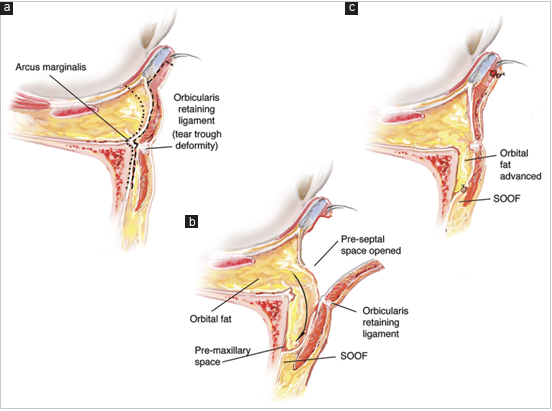
1) Fat Repositioning
When deep tear troughs create ‘shadows,’ fat is repositioned downwards to create a natural transition from the under-eye to the cheekbone area.
Advantages
Improvement of under-eye troughs
Correction of sunken cheekbones
A younger and more vibrant appearance
More natural results because fat is not removed
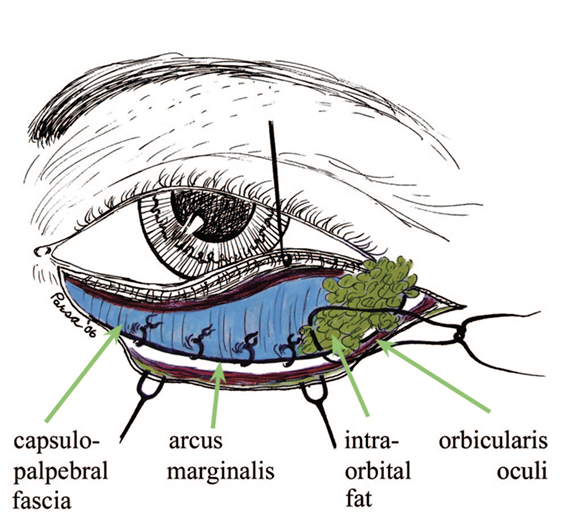
2) Fat Removal
This method is essential when there is an excessive amount of fat causing a severe ‘bulge.’
However, excessive fat removal can lead to
Sunken under-eyes
A more tired appearance
Therefore, ‘minimal removal’ is the guiding principle.
3) Orbital Septum Tightening
If the septum, which holds the fat, loosens, the fat protrudes forward.
Septal tightening is a method that firmly secures this structure,
Preventing fat from pushing forward again
Achieving long-lasting results
Maintaining natural under-eyes
This is the most crucial step.
Why Midface (Cheekbone) Correction is Important, Not Just the Under-Eyes
The lower eyelid and midface should always be considered together.
If the cheekbones (midface) are sunken,
Under-eye shadows become darker
Indian bands become more prominent
Lower blepharoplasty results may appear less satisfactory.
Therefore, if necessary,
Midface lifting
Cheekbone fat grafting
Volume augmentation around the nasolabial folds
If these are performed together, a much more youthful overall improvement can be achieved.
The Most Important Principle in Surgery: ‘Not Excessive, Not Obvious’
The difficulty of lower blepharoplasty depends on
‘How appropriately to excise, and how much to preserve.’
✔ Skin excision should be minimized
– Excessive excision risks ectropion (a complication where the eyelid turns outwards)
✔ Fat removal should be minimal
✔ Dissection only within the necessary range
✔ Preservation + Naturalness + Safety
These three are key.
Summary: Criteria for Natural and Long-Lasting Lower Blepharoplasty
Fat repositioning: Fills troughs for a natural curve
Fat removal: Minimal removal, not excessive
Septal tightening: Prevents recurrence
Skin excision: Minimized to reduce side effects
Midface consideration: Improves the entire line, including cheekbones and nasolabial folds
Goal: ‘Not obvious, but definite rejuvenation’
Overall, natural anti-aging based on tissue preservation yields the safest and most satisfying results.
Frequently Asked Questions
In what cases is lower blepharoplasty necessary?
Yes, it is needed when you want to improve a tired and aged appearance caused by a combination of under-eye skin sagging, fat protrusion, deepening tear troughs, worsening dark circles, and midface sagging as you age. It can resolve these issues to create bright and youthful under-eyes.
What are the core methods of lower blepharoplasty?
The core of lower blepharoplasty involves three methods for managing under-eye fat: fat repositioning, fat removal, and septal tightening. These three elements directly influence the naturalness and longevity of the surgical results and are crucial for balanced correction of the entire under-eye structure.
How long does the recovery period for lower blepharoplasty take?
Typically, recovery is such that there are almost no visible signs of surgery after 10 days to 2 weeks. Suture removal occurs after approximately 7 days, and since it does not create a crease line like double eyelid surgery, you can expect subtle and natural changes.
Should midface correction be performed together with lower blepharoplasty?
Yes, it is advisable to consider midface correction together if necessary. If the cheekbones are sunken, under-eye shadows may deepen and Indian bands may become more prominent, which can reduce satisfaction with lower blepharoplasty results. Combining midface lifting and cheekbone fat grafting can achieve a much more youthful overall improvement.
Is it better to remove a lot of fat during lower blepharoplasty?
No, excessive fat removal can actually lead to sunken under-eyes and a more tired appearance, so ‘minimal removal’ is the principle. It is important to remove only the necessary amount when there is an excessive amount of fat causing a severe bulge, to achieve natural results.