2026-07-09
Why You Shouldn't Use the Same Method for Eyelid Revision Surgery After a Droopy Eyelid
If your double eyelid line has loosened, simply repeating the same surgical method might not be the best approach. Understanding the cause of the loosening and considering factors like eyelid thickness, previous surgical methods, and recovery time are crucial for a successful revision surgery.

Why You Shouldn't Use the Same Method for Eyelid Revision Surgery After a Droopy Eyelid
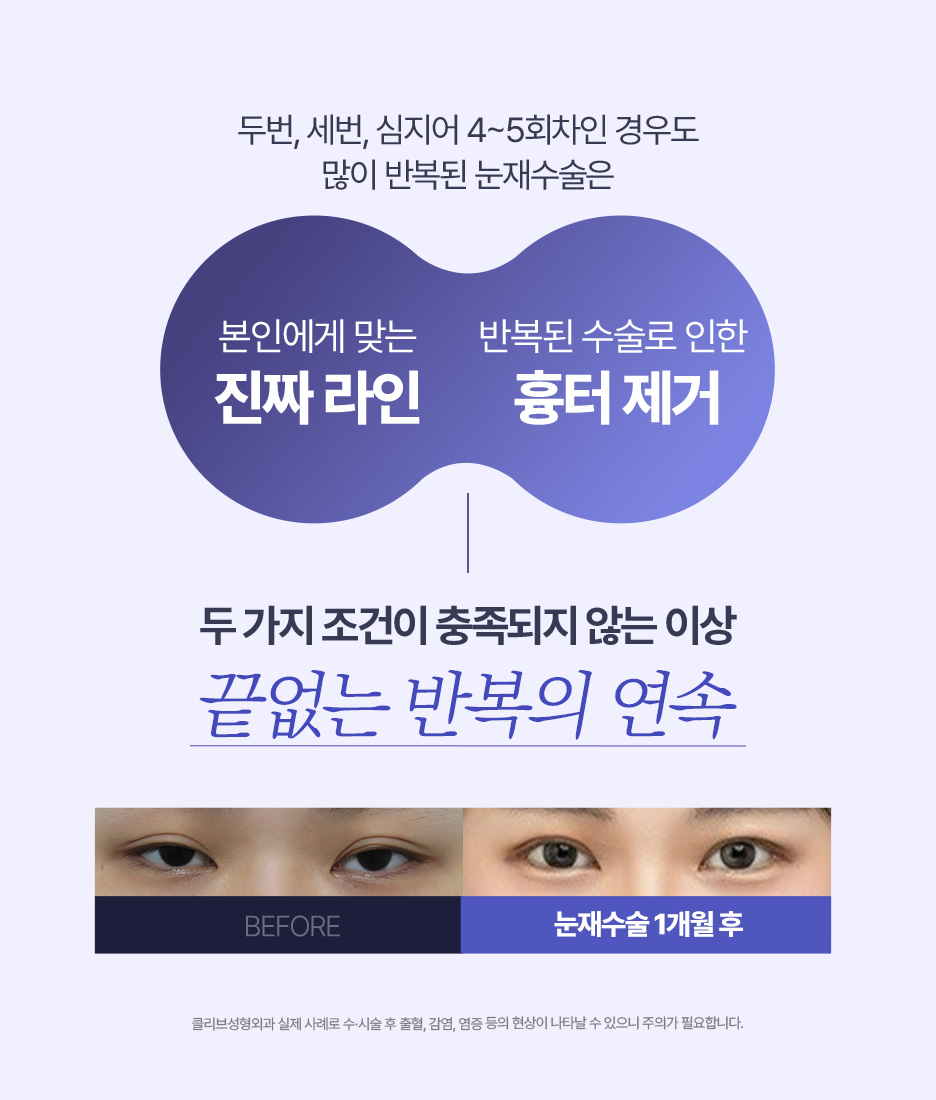






Why you shouldn't use the same method again when your double eyelid line has loosened

One of the double eyelids has loosened.
It hasn't even been a year since the surgery, but one side has faded or completely disappeared. While the other side remains intact, a loosened line on one side creates a noticeable asymmetry, which becomes a constant concern every time you look in the mirror. It might seem like a simple fix to just re-secure it, but once you start looking into revision surgery, you'll encounter surprisingly complex information. You'll hear that repeating the same method might lead to it loosening again, that you might need to switch to an incisional method, or that you'll have to wait at least several months. Understanding why these points are raised will clarify what's important in revision surgery for a loosened eyelid.
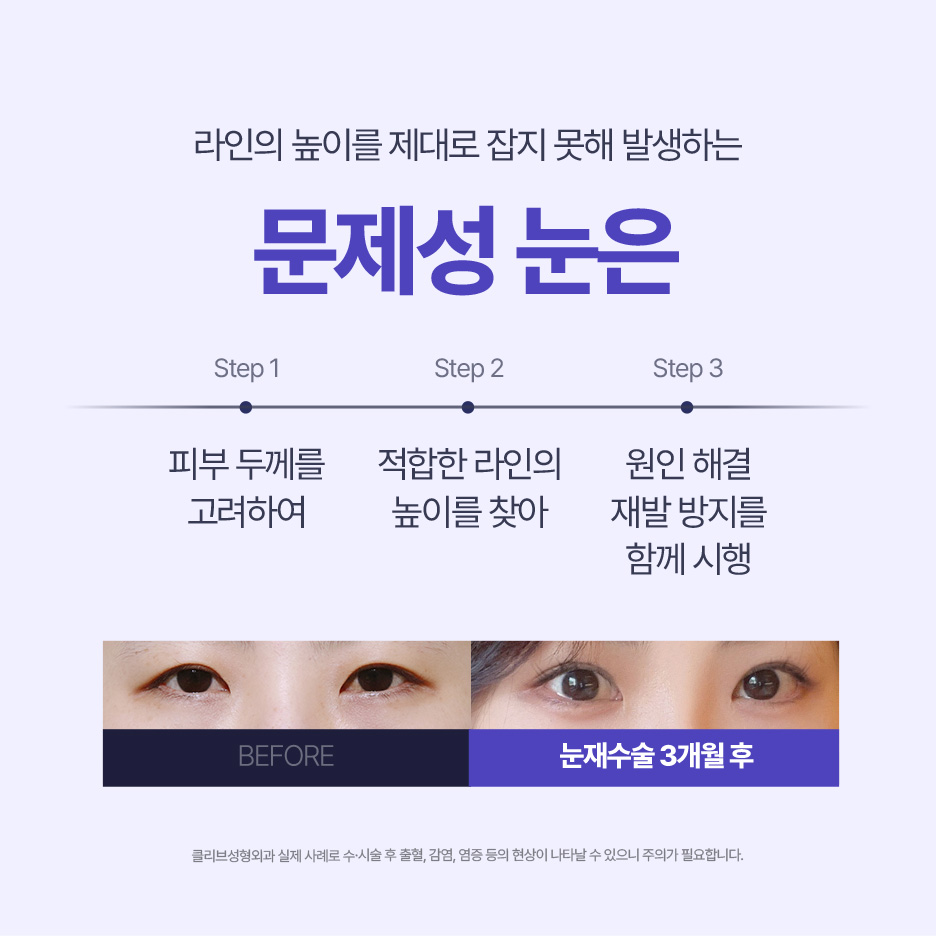
The direction of revision surgery is determined by understanding the cause of the loosening. There isn't just one reason why a double eyelid line might loosen.
Reasons include: the eyelid skin is thick or has a lot of fat, causing the suture's tension to be insufficient to hold the tissue; the suture was not fixed at the appropriate depth during the surgery; severe rubbing of the eyes or external impact; or a strong tissue reaction due to individual constitution that prevented the suture from holding. If the cause differs, the approach to revision surgery will also differ.
If the cause is thick eyelids or a large amount of fat, repeating the same non-incisional (suture) method is likely to lead to the same situation. In such cases, switching to an incisional method to remove unnecessary fat and tissue and firmly fix the line provides a more stable result. Conversely, if the problem was the suture's position or external impact, it might be possible to approach it again with the same non-incisional method. Although re-fixing a loosened line may seem like a simple process, correcting it in a state where damage and adhesion have occurred requires more delicate surgical skill than the initial surgery. Deciding on revision surgery without first identifying the cause can lead to the same problem recurring.
It's natural to want to fix a loosened eyelid quickly.
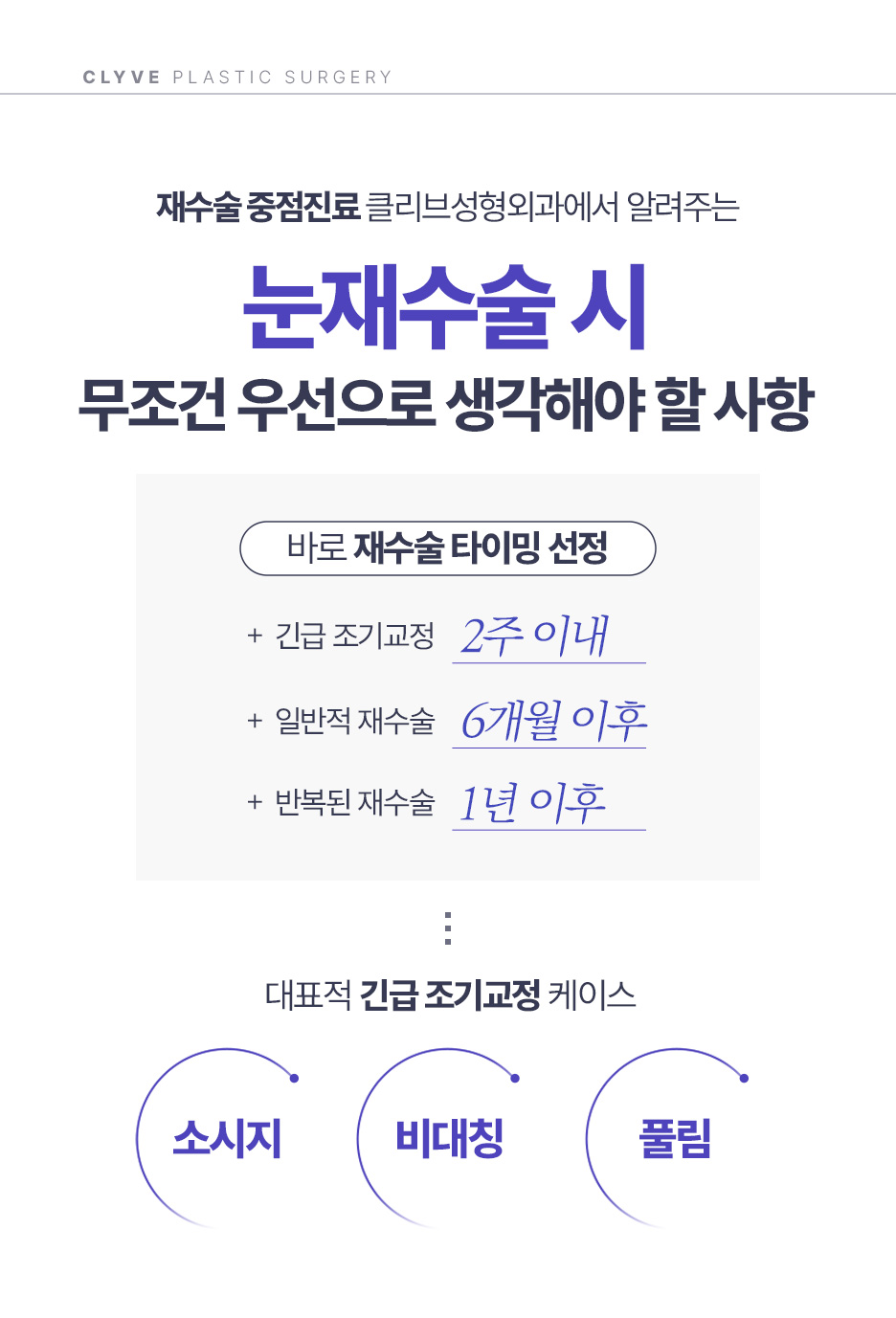
However, when you schedule the revision surgery affects the outcome. It takes at least 3 months for the tissue to fully stabilize after surgery. During this period, the tissue is still changing, so the current appearance may not be the final result. Even if it appears to have loosened within 2 months immediately after surgery, the line may settle back into place as swelling subsides. Deciding on revision surgery too early can lead to unnecessary surgery.
In cases where the line loosens after a non-incisional method, it may be possible to approach it relatively sooner than incisional revision surgery. Unlike incisional methods, non-incisional methods involve relatively shallow tissue adhesion, so some cases can be approached at 3 to 4 months. On the other hand, if you've previously had an incisional method, waiting at least 6 months is generally the rule. It's important to confirm during consultation whether the clinic first assesses if the current timing is appropriate for revision surgery.
Criteria for deciding between repeating the non-incisional method and switching to the incisional method
The most important decision in revision surgery for a loosened eyelid is whether to repeat the non-incisional method or switch to the incisional method.
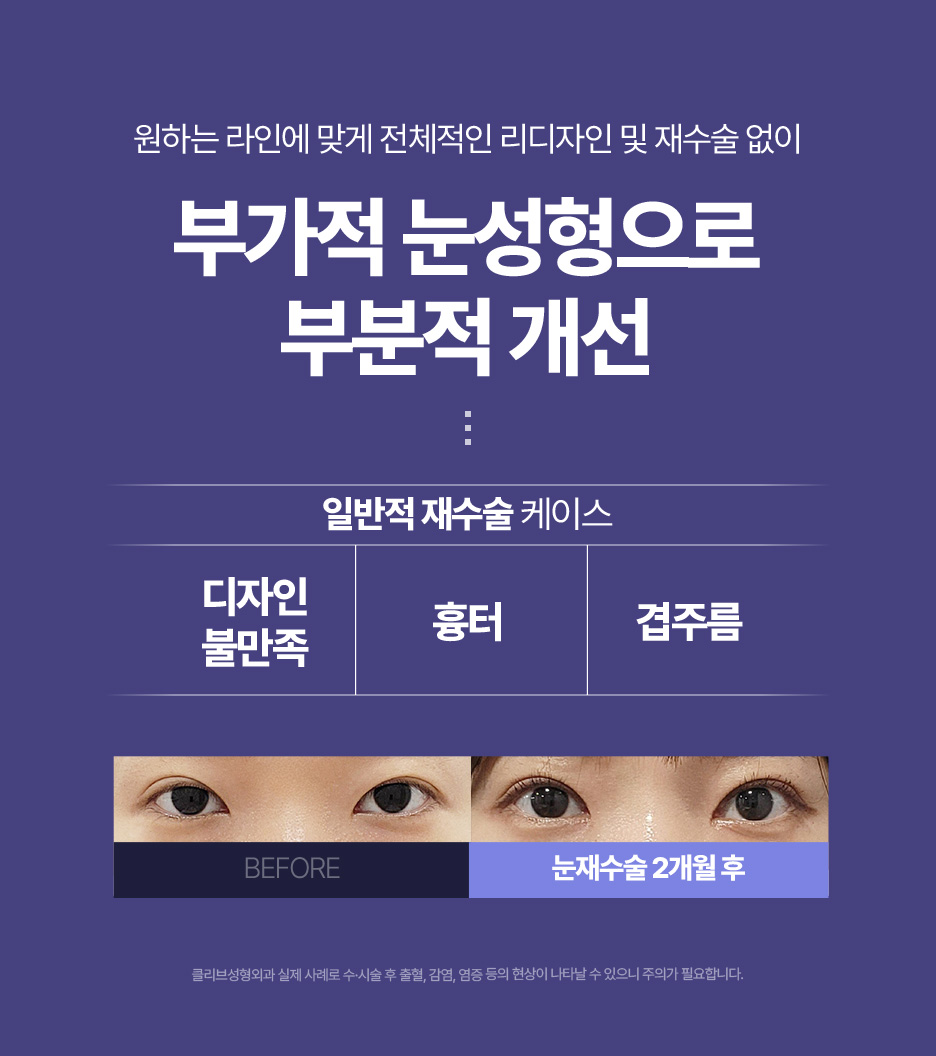
There are cases where repeating the non-incisional method is appropriate. These include when the eyelid skin is thin and has little fat, when the cause of loosening was an external factor rather than tissue characteristics, or when the line has not completely disappeared but has only faded. In these cases, it's possible to re-fix it with the same non-incisional method, but it must be done after first addressing the cause of why it loosened.
There are cases where switching to the incisional method is necessary. These include when the eyelid skin is thick or has a lot of fat, limiting the holding power of the non-incisional method; when the non-incisional method has been performed two or more times and repeatedly loosens; or when asymmetry is severe and both sides need to be corrected together. The incisional method offers higher retention than the non-incisional method because it directly organizes the tissue and firmly fixes the line. However, you should be aware in advance that the surgical scope is wider and the recovery period is longer.
Approach to asymmetrical cases where only one side has loosened
When only one side has loosened, deciding which side to correct is also important.
If only the loosened side is re-operated on, the surgical scope is smaller and recovery is faster. However, if the tissue condition of the two eyelids differs, it can be difficult to achieve perfect symmetry by correcting only one side. If the tissue condition of the loosened side is different from the normal side, even if the revision surgery is performed in the same way, the height or shape of the line may turn out subtly different.
Correcting both sides together is advantageous for improving symmetry, but it widens the surgical scope. Many people feel burdened by touching the normal side, which has no problems, for correction. It's appropriate to decide whether to do only one side or both sides together based on the current degree of asymmetry, the tissue condition of both eyelids, and the criteria for the desired outcome. Confirming that this assessment is thoroughly made during the consultation is a criterion for choosing a clinic for revision surgery for a loosened eyelid.
How to reduce recurrence after surgery
To prevent the same situation from recurring after revision surgery for a loosened eyelid, both addressing the cause and post-surgical care must be carried out.
Habits like frequently rubbing your eyes or applying excessive force to your eyes often cause recurrence. For at least 3 to 4 months after surgery, you should avoid pressing or rubbing around your eyes vigorously. Wearing contact lenses before the surgical site stabilizes can also affect the line due to the pulling force on the eyes, so it's best to wear them after the time advised by your doctor.
If you've experienced a loosened line before, reviewing both the surgical method and the cause before deciding on revision surgery is the most reliable way to prevent the same problem from recurring.