2026-09-03
Nasolabial Fold Filler vs. Thread Lift: Why the Approach Differs for the Same Concern
Learn why treating nasolabial folds requires different methods like fillers or thread lifts, depending on whether the cause is volume loss or sagging.
※ This article is intended to provide medical information.
It is not subject to review under Article 56, Paragraph 2 and Article 57 of the Medical Act,
and is not an advertising post unrelated to the content of the review.
Hello,
I am Park Jeong-geun,
Director of Faceplus Plastic Surgery Clinic.

One of the first changes that becomes noticeable with age is nasolabial folds.
Many people worry about improving them
as they see their mouth area looking deeper in the mirror
or hear comments about looking tired.
However, even for the same nasolabial folds,
the same procedure does not apply to everyone.

For some, nasolabial fold filler may be suitable,
while for others, a thread lift might be more appropriate.
This is because the underlying cause of nasolabial folds
can differ from person to person.
Today, we will explore the differences between nasolabial fold fillers and thread lifts,
and in which cases each method might be considered.
Table of Contents | ||
1. Why do nasolabial folds appear? 2. When is nasolabial fold filler considered? 3. When is a thread lift considered? 4. Which method is better? |
1. Why do nasolabial folds appear?

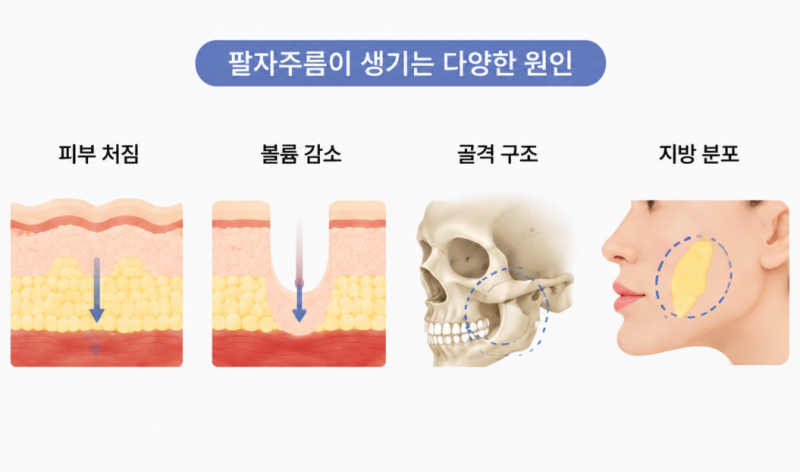
Many people simply think of nasolabial folds as wrinkles,
but in reality, they often result from a combination of factors.
As aging progresses, skin elasticity decreases,
and the tissues that support the face shift downwards.
Additionally, volume loss can occur,
causing the skin to appear sunken or folded.
Conversely, even without significant skin sagging,
nasolabial folds can appear prominent at a young age
due to congenital skeletal structure or fat distribution.

Therefore, it's crucial not just to look at the depth of the wrinkles,
but also to determine whether volume deficiency is the primary cause,
or if tissue sagging is the main culprit.
2. When is nasolabial fold filler considered?

Nasolabial fold filler is a method used to fill in sunken areas
and alleviate wrinkles.
It is particularly considered when volume loss,
rather than skin sagging, is the primary cause.
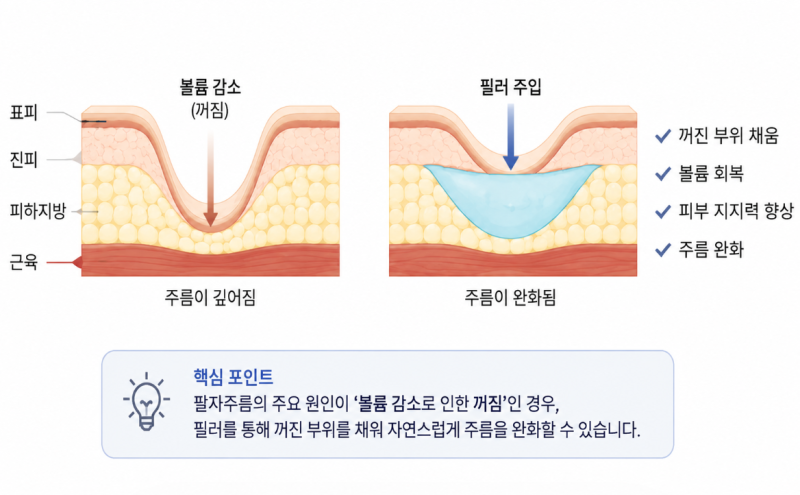
For example,
if the area around the nasolabial folds is deeply sunken,
or if mid-face volume loss is present,
or if nasolabial folds are congenitally prominent in relatively younger individuals,
improvement can be expected through fillers.
The relatively short procedure time
and quick return to daily life are also
among its characteristics.
However, it's not always important to inject a large amount of filler
just because the nasolabial folds are deep.
Excessive volume can create an unnatural
appearance, and in some cases,
it may be necessary to consider surrounding structures
such as the anterior cheekbones, cheeks, or in front of the ears,
rather than just the nasolabial folds.
Therefore, it's important to consider the overall facial balance
rather than just filling the wrinkle line.
3. When is a thread lift considered?
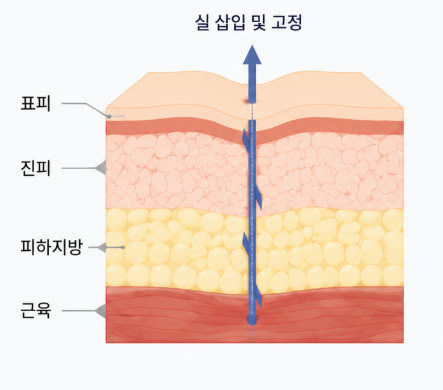
A thread lift is a procedure that uses medical threads
to pull up sagging tissues.
Its purpose is to improve the cause of sagging
rather than directly filling the wrinkles themselves.
A thread lift may be considered particularly when mid-face sagging is present,
causing the cheek fat to descend,
and consequently making the nasolabial folds appear deeper.
In some cases, by using threads to move sagging tissues upwards,
both nasolabial fold improvement and facial contouring effects
can be expected.

Furthermore, if there is also sagging in the jawline or deep buccal fat,
a thread lift may be deemed more suitable than fillers.
However, not all nasolabial folds can be resolved with a thread lift alone.
If there is significant volume deficiency,
hollowness may still be visible after a thread lift,
and conversely, if sagging is severe
and only fillers are repeatedly injected,
it may be difficult to achieve the desired results.
4. Which method is better?
One of the most common questions patients ask during consultations is,
‘Is filler better, or is a thread lift better?’
However, in reality, it's difficult to say that one method
is absolutely superior.
The important thing is to identify the current cause
of the nasolabial folds.
If volume deficiency is the main issue,
filler may be appropriate,
and if sagging is the main issue,
a thread lift may be considered.
Additionally, in some cases,
both methods may be planned together.
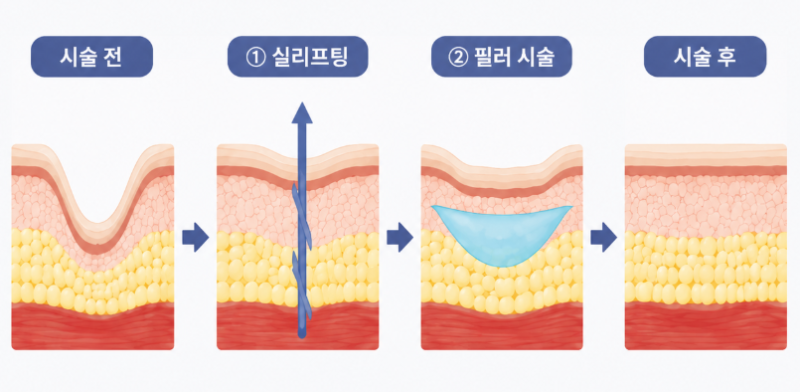
There are also cases where a thread lift is used to lift sagging tissues,
followed by fillers to supplement any remaining volume deficiency.
Therefore, if you are considering improving your nasolabial folds,
rather than simply deciding based on which procedure is popular
or which is cheaper,
it is important to thoroughly analyze your current facial structure and aging patterns
and choose the method that is suitable for you.
Please remember that even for the same nasolabial folds,
the approach can differ if the cause is different.
-Operating Hours-
Weekdays 9:00 ~ 18:00 Saturdays 9:00 ~ 16:00 Public Holidays / Sundays Regular closure |
-Contact Us-
Faceplus Plastic Surgery Clinic | ||
Consultation Phone: 02-541-8500 Inquiries: KakaoTalk Inquiry |
-Directions-
Frequently Asked Questions
Why do nasolabial folds appear?
Nasolabial folds are not just wrinkles but result from a combination of factors. Reduced skin elasticity and tissue sagging due to aging, as well as volume loss, are primary causes. They can also appear due to congenital skeletal structure or fat distribution.
In what cases are nasolabial fold fillers suitable?
Nasolabial fold fillers are primarily suitable when volume loss, rather than skin sagging, is the main cause. They can be considered if the area around the nasolabial folds is deeply sunken, if mid-face volume loss is present, or if nasolabial folds are congenitally prominent in younger individuals.
In what cases is a nasolabial fold thread lift effective?
A nasolabial fold thread lift is effective when mid-face sagging causes the cheek fat to descend, making the nasolabial folds appear deeper. By lifting the sagging tissues, it can improve nasolabial folds and refine the facial contour.
Which procedure is better: filler or thread lift?
It's difficult to say that one method is absolutely superior. The important thing is to identify whether the cause of the nasolabial folds is volume deficiency or tissue sagging. The appropriate procedure varies depending on the cause, and in some cases, both methods may be combined.
Can a thread lift alone completely resolve nasolabial folds?
No, not all nasolabial folds can be resolved with a thread lift alone. If there is significant volume deficiency, hollowness may still be visible after a thread lift, and in such cases, combining it with fillers can yield better results.