2026-09-03
Types of Nasolabial Fold Procedures: When to Choose Mint, Cavurn, or Aptos Threads?
Explore the differences between Mint, Cavurn, and Aptos threads for nasolabial fold treatment, and learn which is best for your specific needs.
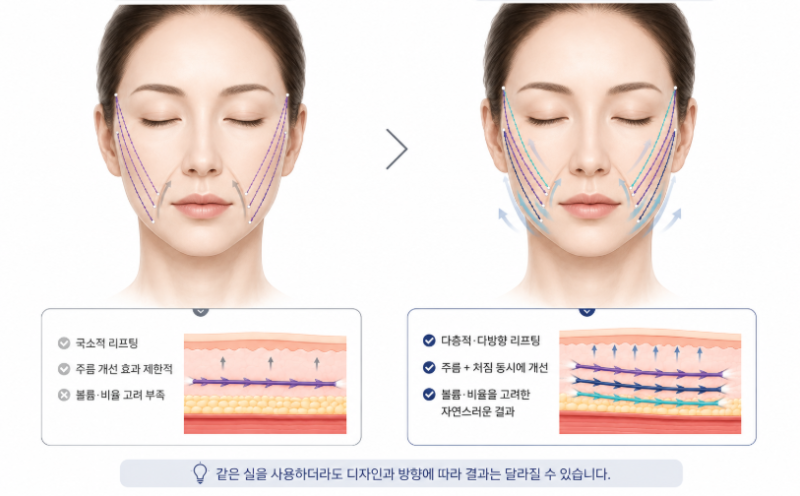
※ This article is for the purpose of providing medical information.
It is not subject to deliberation under Article 56, Paragraph 2 and Article 57 of the Medical Act,
and is not an advertisement unrelated to the content of deliberation.
Hello,
I am Dr. Junggeun Park,
Director of Faceplus Plastic Surgery Clinic.

One of the first changes we notice when looking in the mirror
is the deepening of nasolabial folds.
However, since the causes of nasolabial folds vary, it's difficult to address all cases with a single method.
Especially with the recent use of various thread lifting products, many people are curious about the different types of nasolabial fold procedures.
Mint, Cavurn, and Aptos threads, for example, each have different structures and characteristics,
so it's crucial to choose one that considers both your current facial condition and the characteristics of your skin tissue.
Today, we will objectively examine the differences between Mint, Cavurn, and Aptos, which are common types of nasolabial fold procedures, and determine which situations they are suitable for.

Table of Contents | ||
1. Why do nasolabial folds deepen? 2. What are the differences between types of nasolabial fold procedures? 3. When should Mint, Cavurn, or Aptos be chosen? 4. Design is more important than the thread itself |
1. Why do nasolabial folds deepen?
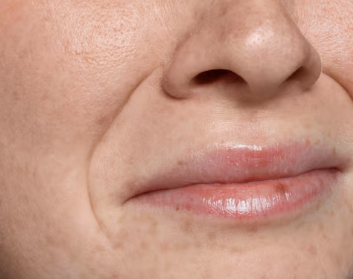
Nasolabial folds are not simply a matter of lines appearing on the skin.
As aging progresses, skin elasticity decreases,
and cheek fat shifts downwards,
causing the midface tissue to sag.
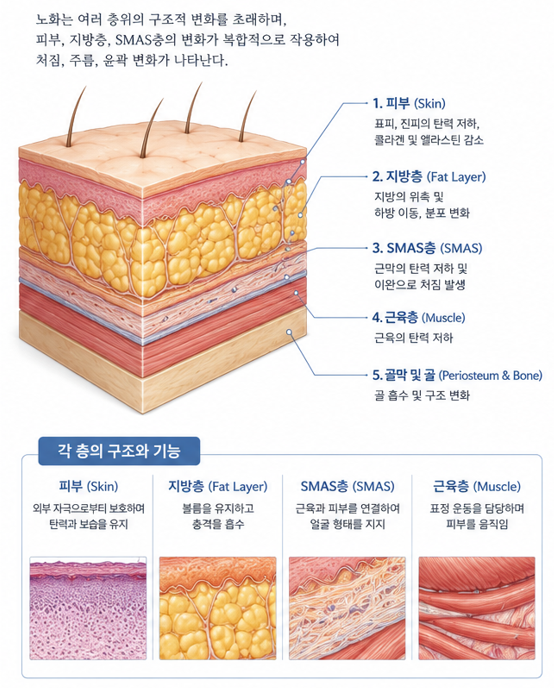
When the supporting strength of the retaining ligaments and SMAS layer weakens, nasolabial folds can appear even deeper.
Therefore, when choosing a type of nasolabial fold procedure,
it's important not just to look at the wrinkles,
but also to assess the degree of sagging and the presence of fat migration.
2. What are the differences between types of nasolabial fold procedures?
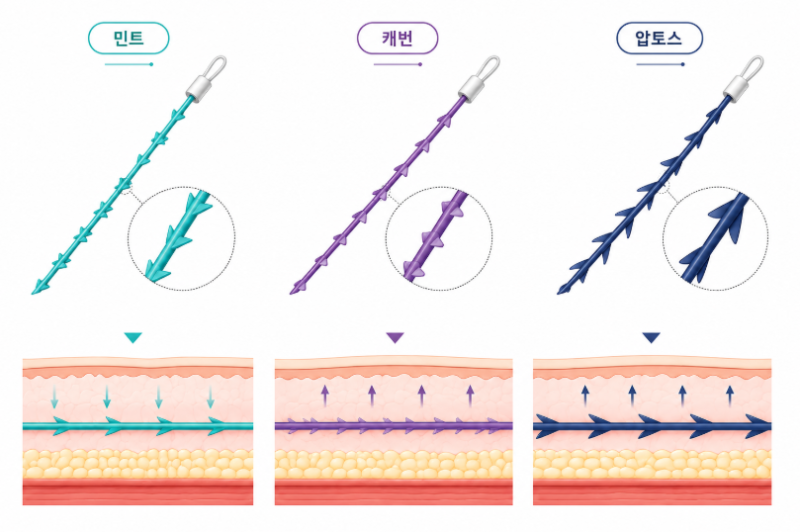
Common types of nasolabial fold procedures include
Mint threads, Cavurn threads, and Aptos threads.
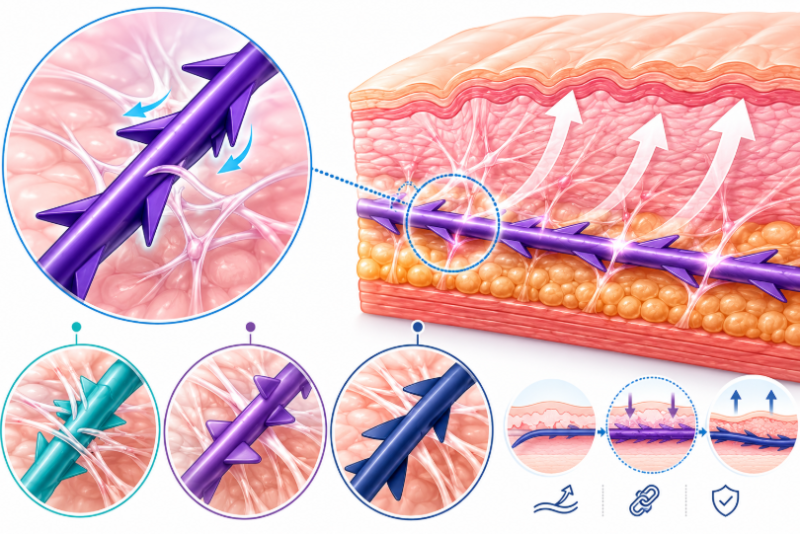
All three aim to support sagging tissue, but they differ in thread structure and fixation methods.
Mint threads have unidirectional barbs (cogs)
and are often used when strong fixation is desired.
Cavurn threads are designed to enhance adhesion with tissue,
and may be considered when gentle lifting is needed.
Aptos threads are characterized by various designs and lengths,
allowing them to be applied in multiple ways depending on the facial area and degree of sagging.
The important point is not to conclude which product is
the 'best',
but rather to choose the type of nasolabial fold procedure
that is most suitable for your current condition.
3. When should Mint, Cavurn, or Aptos be chosen?
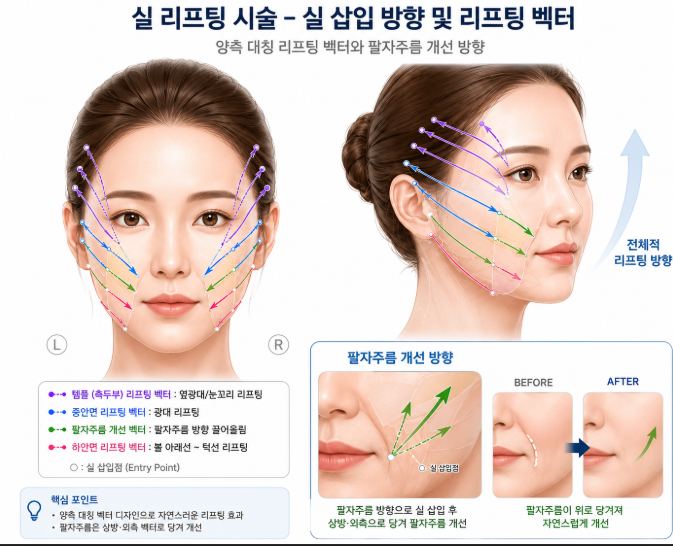
Mint threads are sometimes used for lifting the midface, which has relatively more sagging,
by pulling the tissue upwards.
Cavurn threads can be an option when the skin is thin
or when a more natural lift is desired.
Aptos threads come in various forms,
and are sometimes used when considering multiple areas, such as the jawline or cheek sagging,
in addition to nasolabial folds.
However, in actual procedures, it's not uncommon to use different threads together
as needed, rather than just one type.
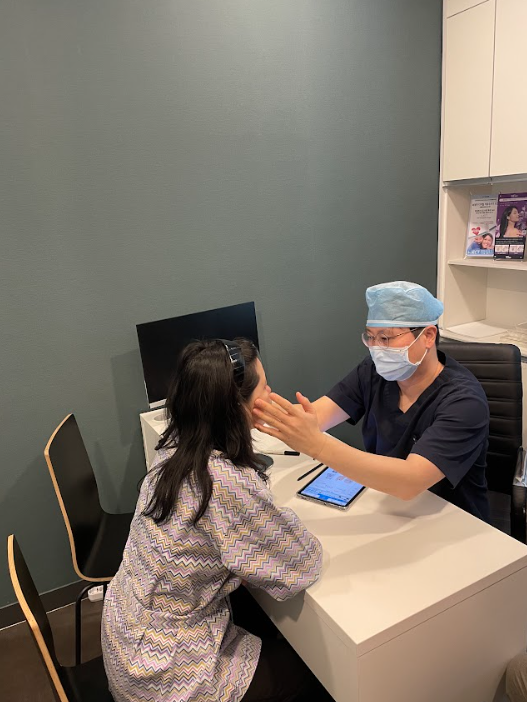
Therefore, when comparing types of nasolabial fold procedures,
it's more important to first analyze the facial structure and degree of sagging
than the product name.
4. Design is more important than the thread itself.
Even with the same thread,
results can vary depending on the design.
Considering the direction of sagging tissue, volume placement, skin elasticity,
and facial proportions is essential to achieve more natural results.
Conversely, choosing based solely on the type of thread
may lead to results different from what is desired.
Ultimately, for nasolabial fold procedures,
what matters more than whether it's Mint, Cavurn, or Aptos,
is the direction of the pull,
how much is needed,
and how to balance the entire face.
Nasolabial folds are not just simple wrinkles;
they are changes that occur during the overall aging process of the face.
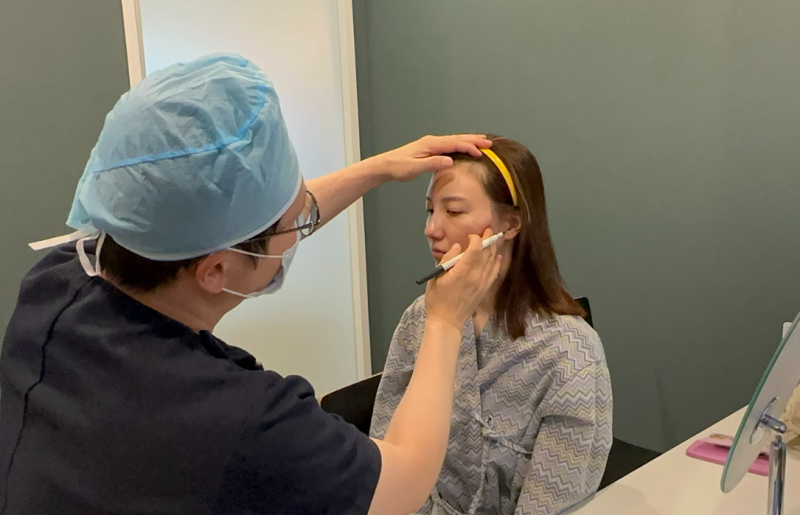
Therefore, when comparing types of nasolabial fold procedures,
it's advisable to understand the characteristics of each product
and also consider the process of planning a design suitable for your current facial condition.
-Operating Hours-
Weekdays 9:00 ~ 18:00 Saturdays 9:00 ~ 16:00 Holidays / Sundays Regular Closure |
-Contact Us-
Faceplus Plastic Surgery Clinic | ||
Consultation Phone: 02-541-8500 Inquiries: KakaoTalk Inquiry |
-Directions-
Frequently Asked Questions
Why do nasolabial folds deepen?
Nasolabial folds deepen as skin elasticity decreases with aging, and cheek fat shifts downwards, causing the midface tissue to sag. Weakening of the retaining ligaments and the SMAS layer can also be a cause.
What are the differences between Mint, Cavurn, and Aptos threads?
All three threads aim to support sagging tissue, but they differ in thread structure and fixation methods. Mint threads have barbs for strong fixation, Cavurn threads enhance tissue adhesion for a gentle lift, and Aptos threads come in various designs for application to multiple areas.
When are Mint threads suitable?
Mint threads are sometimes used for lifting the midface, which has relatively more sagging, by pulling the tissue upwards. They are often used when strong fixation is desired.
When can Cavurn threads be chosen?
Cavurn threads can be an option when the skin is thin or when a more natural lift is desired. They are designed to enhance adhesion with tissue, making them suitable for gentle lifting.
What are the characteristics of Aptos threads and when are they used?
Aptos threads are characterized by various designs and lengths, allowing them to be applied in multiple ways depending on the facial area and degree of sagging. They are sometimes used when considering multiple areas, such as the jawline or cheek sagging, in addition to nasolabial folds.
What is more important than the type of thread in a nasolabial fold procedure?
Yes, the design is more important than the type of thread. A customized design that sufficiently considers the direction of sagging tissue, volume placement, skin elasticity, and facial proportions is a key factor in achieving natural results.