2026-09-03
Nasolabial Fold Lifting: Why Thread Lifts Are Necessary If Fillers Alone Weren't Enough
If you're considering nasolabial fold lifting and fillers haven't met your expectations, a thread lift might be the solution. This article explains why thread lifts are effective for addressing sagging that contributes to deep nasolabial folds, offering a more comprehensive approach than fillers alone.

※ This article is intended to provide medical information.
It is not subject to review under Article 56, Paragraph 2 and Article 57 of the Medical Act,
and is not an advertisement unrelated to the content of the review.
Hello,
I am Dr. Jung-Geun Park,
Director of Faceplus Plastic Surgery Clinic.

Nasolabial folds are one of the first noticeable changes as we age.
When these wrinkles start to appear deeper, many people
first think of filler procedures.
While fillers are indeed effective for filling in sunken areas, there are cases where the improvement isn't as much as expected, or dissatisfaction arises over time.
This is because nasolabial folds are not simply caused by a lack of volume.
Today, we will explore the causes of nasolabial folds, the limitations of fillers, and why thread lifts are necessary.

Table of Contents | ||
1. Why nasolabial folds deepen 2. Why fillers alone might be insufficient 3. When a thread lift is needed 4. Expected changes with a thread lift |
1. Why nasolabial folds deepen
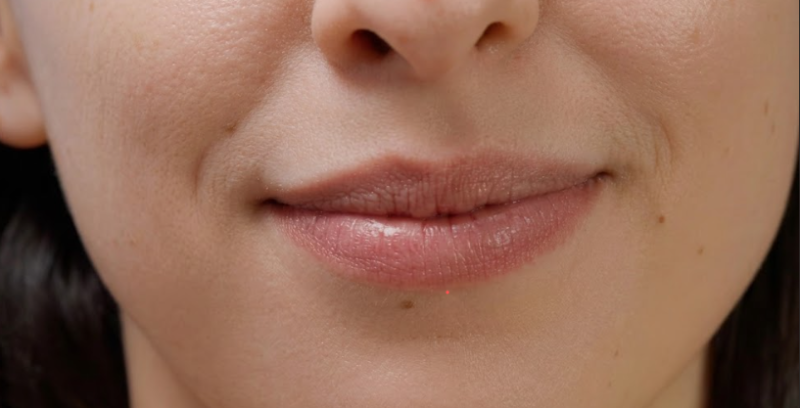
Many people believe that nasolabial folds are wrinkles caused by sunken skin.
While volume loss is certainly one cause, in reality, sagging of the skin and fat layers often plays a significant role.
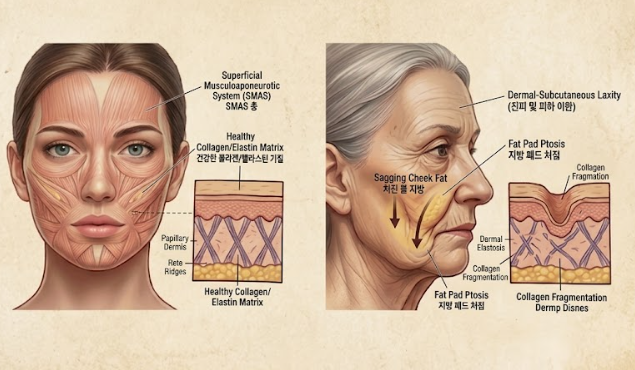
As we age, skin elasticity decreases, and the tissues supporting the face weaken, causing the cheek fat to descend.
This process makes the nasolabial fold area appear deeper.
Therefore, nasolabial folds are often not just simple wrinkles but are related to overall facial sagging.
2. Why fillers alone might be insufficient
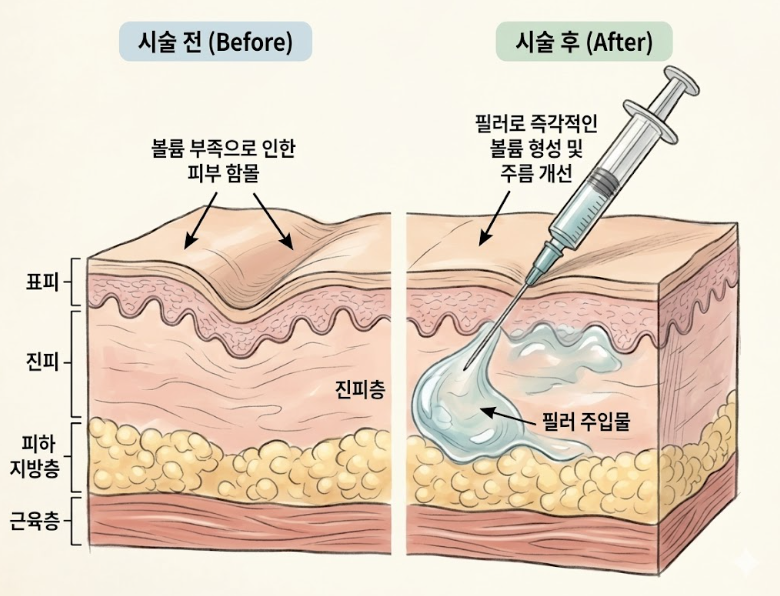
Fillers are a procedure that fills in sunken areas.
Thus, if volume deficiency is the primary cause, good improvement can be expected.
However, if sagging is the cause, simply injecting fillers may not be enough.
This is because if the already descended tissue remains as is and only the wrinkle area is filled, the desired natural improvement may not be achieved.
Furthermore, using a large amount of filler can make the face appear heavy or create an unnatural impression.
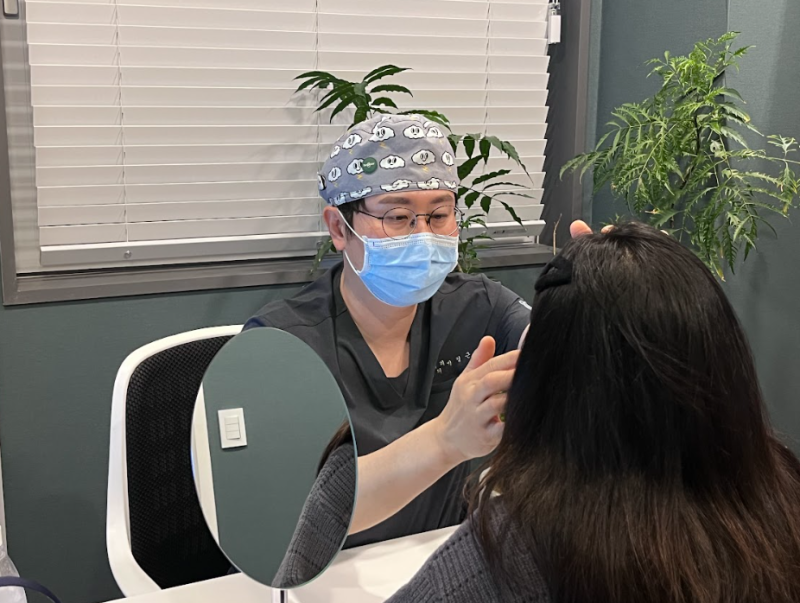
Therefore, accurately identifying the cause of nasolabial folds is crucial.
3. When a thread lift is needed
If nasolabial folds are accompanied by sagging cheeks, a thread lift can be considered.
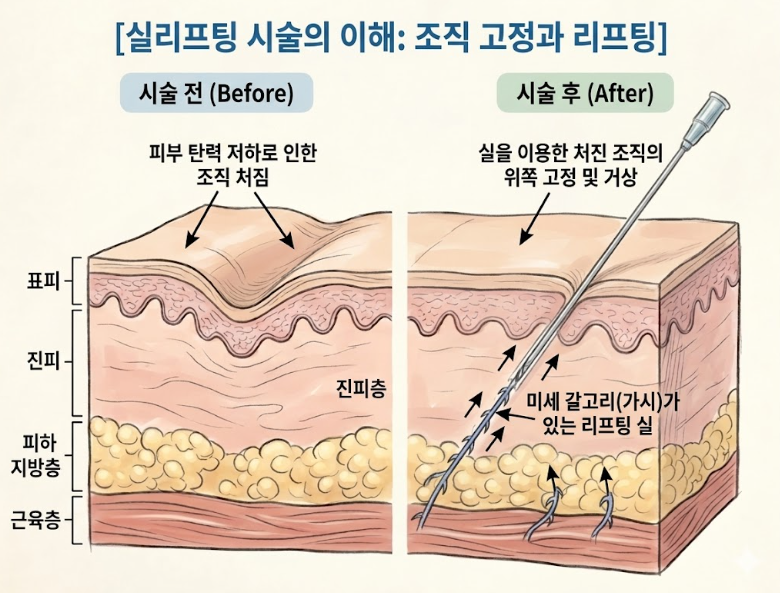
A thread lift is performed by pulling up and fixing sagging tissue.
In other words, it's an approach that improves the underlying cause of nasolabial folds, rather than just filling the folds themselves.
Especially if the cheek fat below the cheekbones appears saggy or the jawline has become less defined than before, it is likely influenced by sagging.
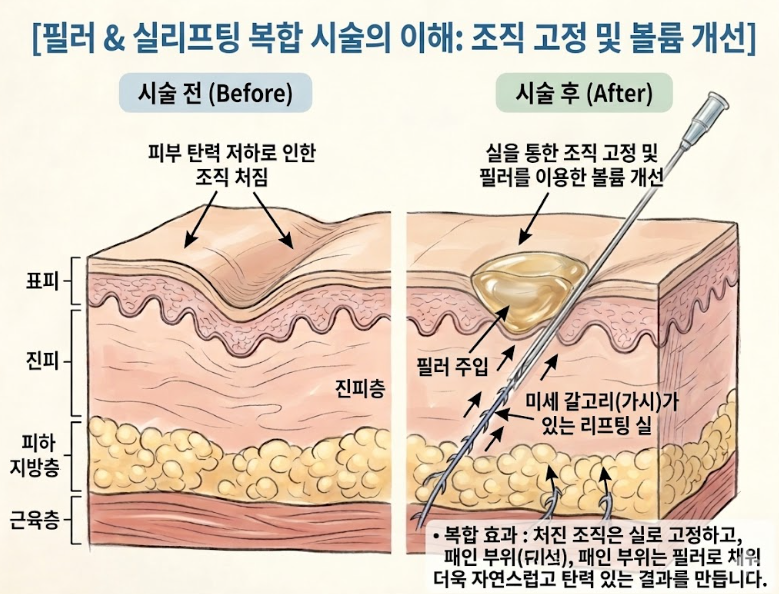
In such cases, a thread lift may be more suitable than fillers, and sometimes both procedures are performed in combination.
4. Expected changes with a thread lift
A thread lift can help alleviate nasolabial folds by improving sagging cheeks.
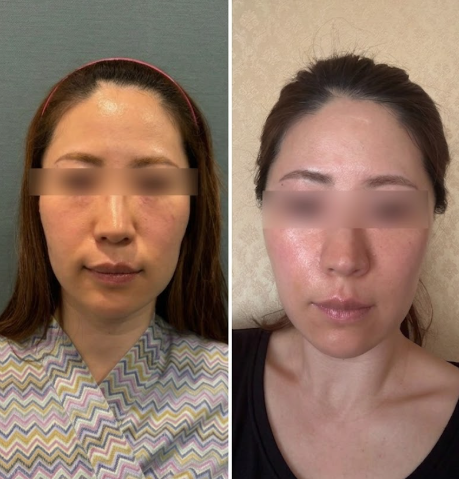
Additionally, the facial contour may appear more refined, and the overall impression can be clearer.
A distinctive feature is that, in addition to the immediate physical lifting effect, it can also help improve elasticity by inducing collagen formation within the skin.
However, not all nasolabial folds require a thread lift.
The appropriate procedure may vary depending on the individual's skin condition, degree of sagging, and fat distribution.
Therefore, it is most important to accurately diagnose the cause through a thorough examination and establish a suitable treatment plan.
-Operating Hours-
Weekdays 9:00 ~ 18:00 Saturdays 9:00 ~ 16:00 Public Holidays / Sundays Regular closure |
-Contact Us-
Faceplus Plastic Surgery Clinic | ||
Consultation Phone: 02-541-8500 Inquiries: KakaoTalk Inquiry |
-Directions-
Frequently Asked Questions
What are the main causes of deep nasolabial folds?
Yes, deep nasolabial folds are not only caused by volume loss but also significantly by sagging of the skin and fat layers due to decreased skin elasticity and weakening of the supporting facial tissues. As we age, the cheek fat descends, which can make the nasolabial fold area appear deeper.
Can filler treatments alone be insufficient for nasolabial folds?
Yes, they can be insufficient. While fillers are effective for filling sunken areas, if the primary cause of nasolabial folds is sagging, natural improvement may be difficult with fillers alone. A large amount of filler can even create an unnatural impression.
In what cases can a thread lift help improve nasolabial folds?
A thread lift can help when nasolabial folds are accompanied by sagging cheeks. It works by pulling up and fixing the sagging tissue, thereby improving the underlying cause of the nasolabial folds. It can be considered if the cheek fat below the cheekbones is sagging or if the jawline has become less defined.
What changes can be expected with a thread lift?
A thread lift can help alleviate nasolabial folds by improving sagging cheeks. Additionally, the facial contour may appear more refined, and the overall impression can be clearer. After the procedure, in addition to the immediate physical lifting effect, it can also contribute to improved elasticity by inducing collagen formation within the skin.
Can fillers and thread lifts be performed together?
Yes, in some cases, fillers and thread lifts can be performed in combination. If the cause of nasolabial folds is a combination of volume deficiency and sagging, using both procedures together can lead to more effective improvement.
Is a thread lift necessary for all nasolabial folds?
No, a thread lift is not necessary for all nasolabial folds. The appropriate procedure may vary depending on the individual's skin condition, degree of sagging, and fat distribution. Therefore, it is important to accurately diagnose the cause through a thorough examination and establish a customized treatment plan.