2026-07-14
Causes of Nose Revision Surgery: Is a Drooping Tip the Only Problem? We'll Show You the Most Ideal Line
Many people consider revision rhinoplasty due to dissatisfaction with their nose shape, often citing a drooping tip. However, a comprehensive evaluation often reveals that the issue is not just the tip, but rather an imbalance in the overall nasal line. This article explains the ideal nasal line and the criteria for designing revision surgery.
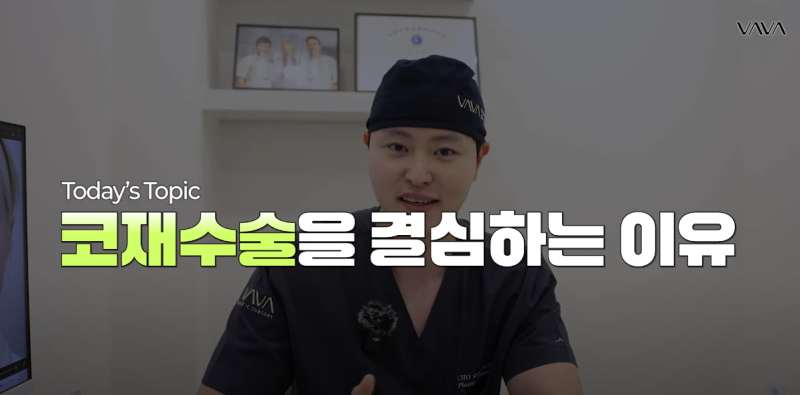
When we look at the cases of revision surgery consultations at our hospital, dissatisfaction with the shape of the nose, rather than functional problems like nasal obstruction or a deviated nose, is overwhelmingly the primary reason for considering revision surgery. This accounts for over 90% of all cases.
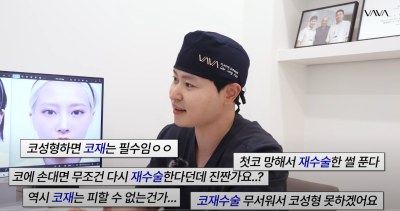
Specifically, many people commonly complain about a drooping nasal tip, leading them to consider revision surgery. They describe a feeling that the tip has collapsed over time, a lower and wider appearance than after the first surgery, and results that differ from their expected image. For these reasons, there are many requests to ‘just raise the nasal tip again.’
However, a detailed CT scan and examination often reveal that it is not simply a problem with the nasal tip alone.
To achieve truly satisfactory results, the overall balance and harmony of the nasal line must be considered together.
Therefore, today I will explain in detail what an ideal nose line looks like and what criteria we use for judgment and design during revision surgery.

Nasal Tip Maintenance POINT 1: Side Profile Line
Typically, in the early stages after rhinoplasty, especially within one month of surgery, the shape of the nasal tip is relatively well-maintained,
and patients often feel satisfied with it.
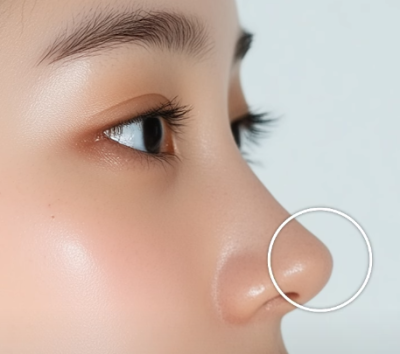
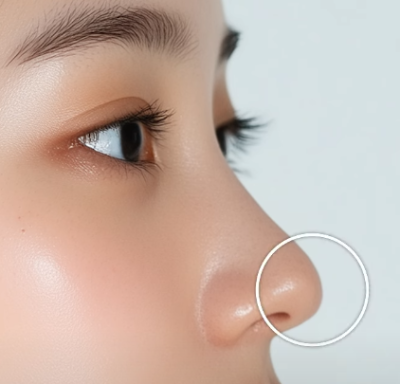
However, after about 6 months to a year,
a significant number of people feel as if their nasal tip is gradually sinking.
This phenomenon mostly occurs when the supporting structure for the nasal tip is weakly formed.

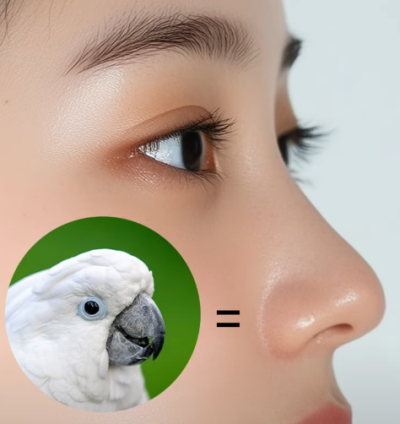
When the nasal tip droops, the entire nose does not necessarily become lower;
instead, only the tip drops, making the upper nasal bridge appear more prominent.
The shape that appears at this time is medically referred to as ‘pollybeak deformity.’
Literally, it becomes a bulging shape like a parrot's beak.
To prevent such a deformity,
it is crucial during the first surgery not only to focus on the nasal bridge implant but also to sufficiently form a stable cartilage structure that supports the nasal tip.

Nasal Tip Maintenance POINT 2: Frontal View
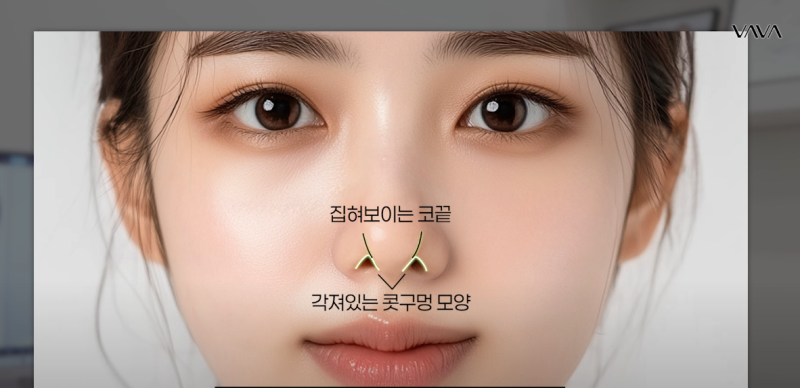
Many people tend to focus only on the side profile when considering rhinoplasty,
but the frontal view is also very important for successful surgery and preventing revision.
Two particularly important points to observe from the front are:
1. Angled nostril shape
2. Pinched (depressed) nasal tip
For example, when correcting a bulbous nose, simply gathering and narrowing the cartilage is not enough.
A structurally designed surgery is needed to allow it to spread naturally while also narrowing.
Nasal Tip Maintenance POINT 3: Columella Shape
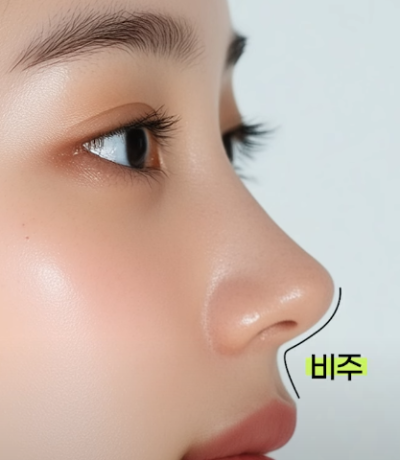
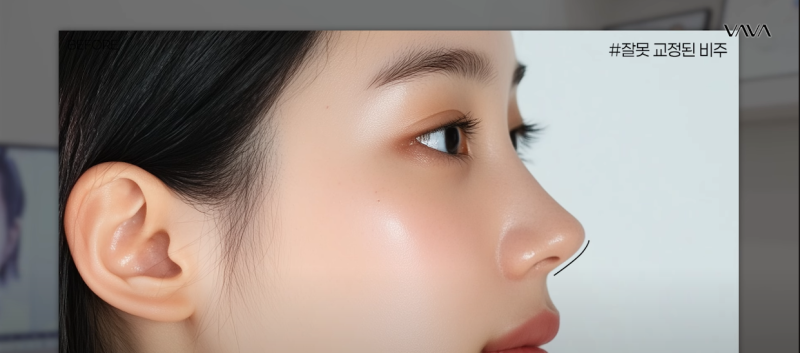
The ‘columella’ is the area extending from the nasal tip to the upper lip. An appropriate curve in this area is necessary
to achieve a natural and soft impression.
Even if the nose is high, if it gives a strong impression of having been surgically altered,
it is highly likely that the columella line is formed almost straight.

Nose Revision Surgery Case Analysis <Pinched Nose + Deviated Nose + Columella Lift + Nostril Lowering>

※ Post-surgery photos are taken with makeup on,
so there may be differences depending on the presence or absence of makeup before and after the procedure.
Makeup is not restricted when visiting for purposes other than treatment, such as procedures or suture removal.
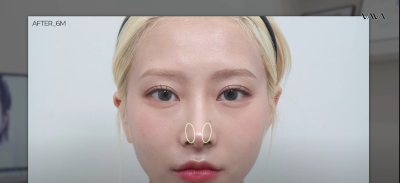
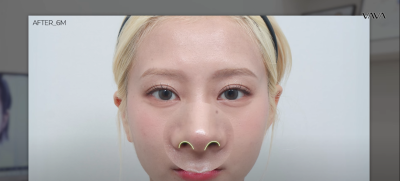
<Frontal Analysis>
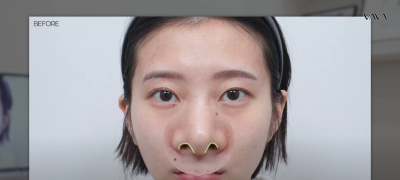
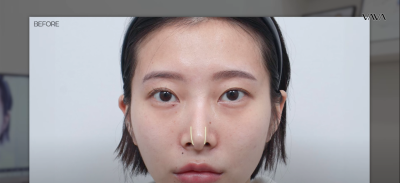
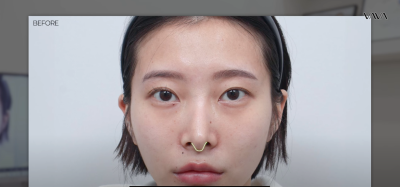
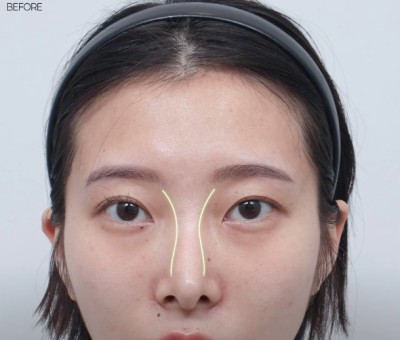
Before surgery:
The nasal tip was slender but gave a strong pinched impression,
and the nostrils were angled and asymmetrical.
Additionally, the columella was excessively developed and drooping downwards.
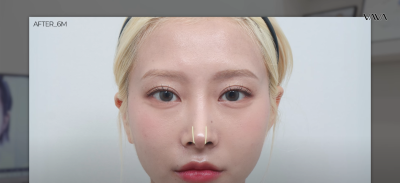
After surgery:
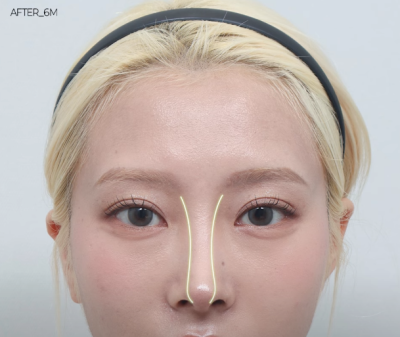
While maintaining the original slender feel of the nasal tip,
the boundary line between the nasal tip and alar was softened to improve the pinched impression.
The nostrils were corrected to a gently curved shape, achieving natural proportions.
Additionally, at Baba Plastic Surgery, we also improve the thick feeling of the middle part of the nasal bridge when correcting a bulbous nose,
to complete an overall slender and sophisticated line.
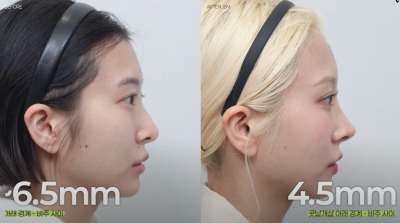
<Side Profile Analysis>
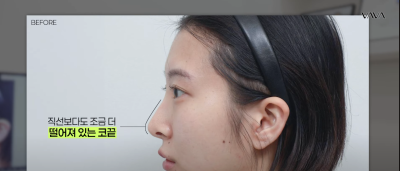
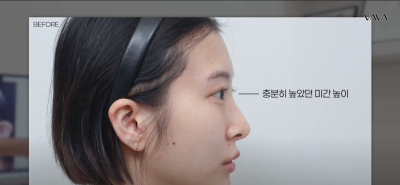
Before surgery:
The glabella area was somewhat high, and the nasal bridge continued blandly,
giving the overall nose a long and straight impression.
Additionally, the nasal tip drooped slightly below a straight line, and the columella was excessively lowered.
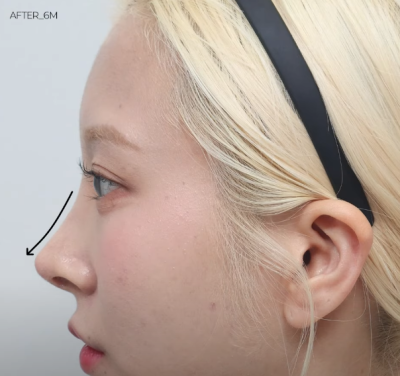
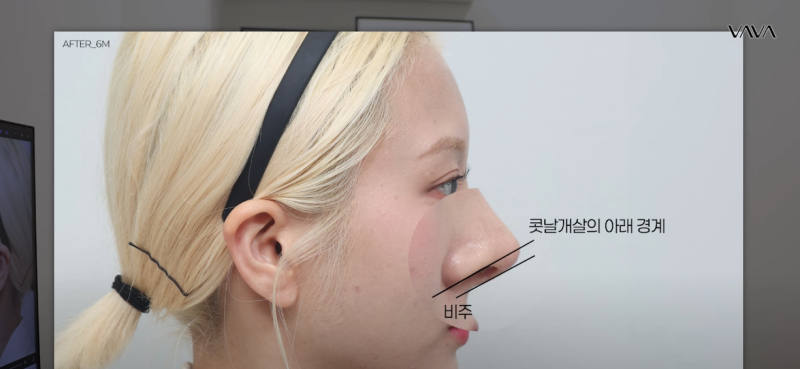
After surgery:
The glabella height was lowered by 0.5mm, creating a natural curve connecting the forehead and nasal bridge.
A curve was added to the nasal tip, adjusting it to a semi-straight line to achieve a soft side profile.
The excessively lowered columella was pulled up and fixed,
and the gap between the lower boundary of the alar and the columella was adjusted to 4mm,
thereby achieving an overall ideal columella ratio.
In this post, we discussed the main reasons why many people consider revision surgery,
and the key conditions for rhinoplasty that must be considered to avoid revision surgery.
Rather than simply aiming for a ‘high and beautiful nose,’
achieving overall balance, including harmony from the front and side, structural stability, and a natural impression,
is the key to successful rhinoplasty.
If you are considering surgery, we recommend thinking about the ideal nose line within the overall flow of your face,
rather than just a fragmented shape.
If you desire results that you can be satisfied with for a long time, not just after one surgery,
we recommend consulting sufficiently with experienced medical professionals to determine the right direction.