2026-07-14
First Rhinoplasty: When and How to Get It Done – A Guide
Considering your first rhinoplasty? This guide covers crucial factors like timing based on growth plates, choosing the right bridge line, comprehensive nose design, and material selection for a natural, satisfying outcome.

Many people considering their first rhinoplasty
vaguely think, ‘Isn’t it possible once I become an adult?’
However, rhinoplasty is
✔️ not a surgery that can be done at any time, and
✔️ not a surgery that can be done in the same way for everyone.
Especially for a first rhinoplasty,
from timing and nose structure to line selection,
it is important to start with a clear understanding of the basic criteria.
First Rhinoplasty: You Must First Check the Growth Plate Criteria

Since rhinoplasty is a surgery that affects bones and cartilage,
the timing of growth plate closure must be considered first.
Generally,
For females: around 16 years old
For males: around 17 years old
is considered the period when bone growth ends.

It's not just about age;
✔️ whether height growth has stopped,
✔️ whether facial skeletal changes have stabilized, and
✔️ whether nasal cartilage has sufficiently matured
are important factors to check together.
If surgery is performed prematurely before the growth plates are fully closed,
the shape of the nose may change over time,
or it could lead to unstable results.
First Rhinoplasty: How to Choose the Nose Bridge Line?

The most common concern for a first rhinoplasty
is the nose bridge line.
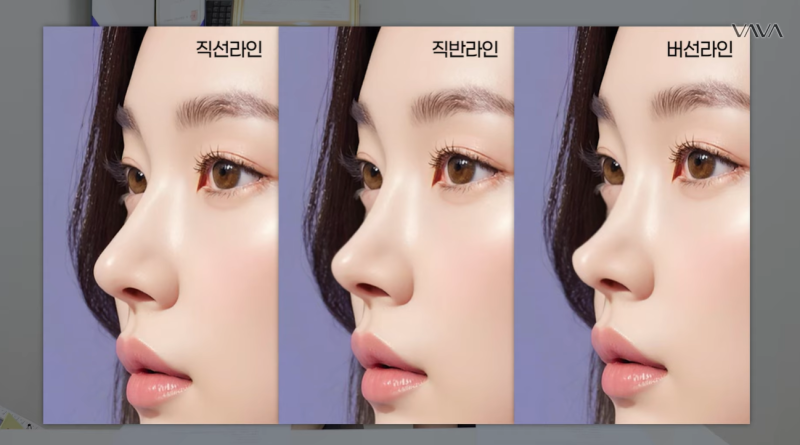
Nose bridge lines can be broadly categorized into
straight, upturned, and semi-upturned lines.
A straight line
falls straight from the bridge to the tip,
often giving a sharp and masculine image.

An upturned line
forms a curve towards the nasal tip,
creating a soft and feminine impression.

A semi-upturned line
is a hybrid of straight and curved forms,
and is currently the most preferred trendy line.

For a first surgery,
a line that naturally blends with the face
tends to yield higher satisfaction.
Beyond the Bridge: Important Nose Design Criteria?

In the past, rhinoplasty often focused
primarily on the nose bridge.
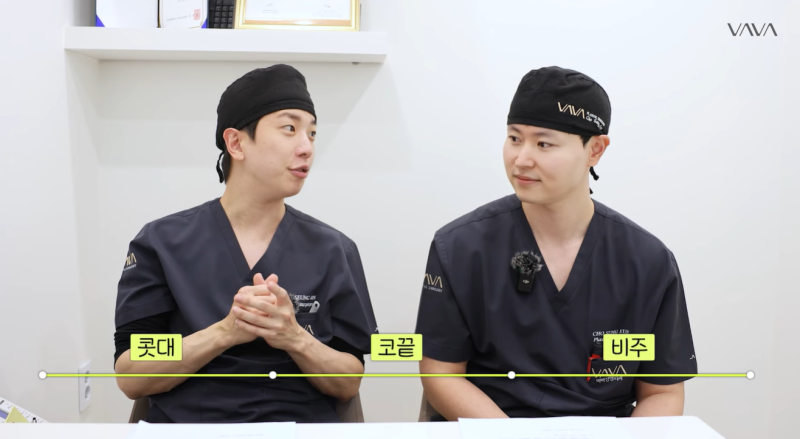
However, now
not only the bridge but also the nasal tip,
and in the last 2-3 years, the columellar angle and exposure,
and even the shape of the nostrils
are often considered together.

Therefore, especially for a first rhinoplasty,
a design that comprehensively considers the bridge, tip, and columella
to achieve overall harmony is crucial.
Implant-Free Rhinoplasty: Not for Everyone

‘Is rhinoplasty possible without implants?’
This is a common question during first rhinoplasty consultations.

Implant-free rhinoplasty is considered
only if the existing nose bridge already has some height.
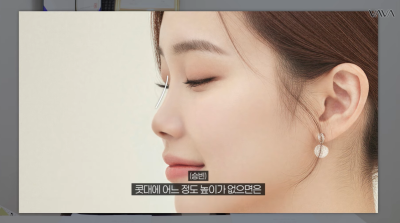

If the nose bridge height is insufficient,
using an implant rather than forcing an implant-free option
can lead to more stable results.
Nasal Tip Support: Criteria for Material Selection

For nasal tip support,
how firmly the tip can be supported is more important
than which material is used.
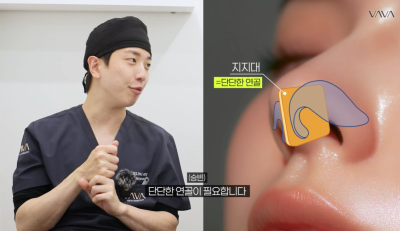
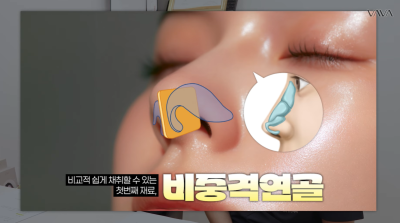
Before surgery, a CT scan is used to
first check the size of the septal cartilage,
and if the size is sufficient,
surgery may be possible with septal cartilage alone.


However, nose surgery is similar to architecture;
if the support is not strong enough,
the nasal tip may deviate over time
or its shape may change.
Therefore, rather than using septal cartilage alone,
a method of mixing and using other cartilages together
is preferred.
Rhinoplasty Materials: More Can Be Better in Some Cases

While using a lot of rhinoplasty materials
is not always good,
from the surgeon's perspective,
having sufficient material
is often advantageous in terms of design and durability.
Especially when creating the columellar line or
details of the nasal tip,
having ample material helps
maintain a stable shape.
The Difference Between Donated Rib Cartilage and Autologous Rib Cartilage

Many people are curious about
the difference between donated rib cartilage and autologous rib cartilage
among rhinoplasty materials.

The biggest difference between the two materials
is the degree of reabsorption.

Autologous rib cartilage, being one's own tissue,
has a relatively low absorption rate,
whereas donated rib cartilage has a higher chance of reabsorption
and may show translucency at the nasal tip.
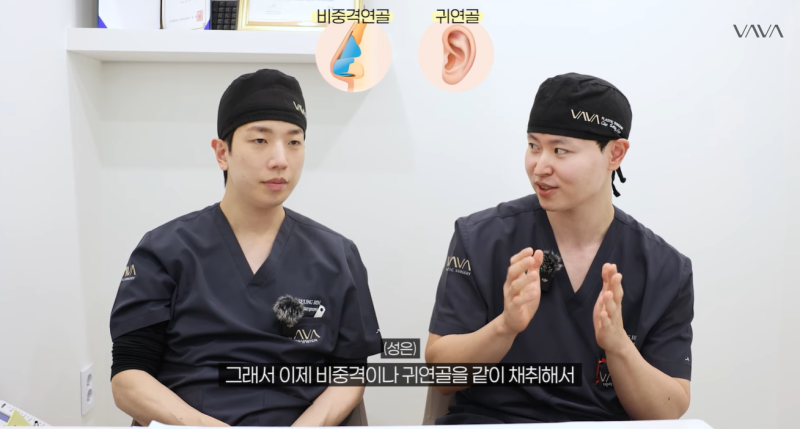
Therefore, when using donated rib cartilage,
septal cartilage or ear cartilage is often used together
to compensate for nasal tip translucency
and enhance structural stability.
Desired Nose Height: How It's Determined

When determining the desired nose height,
the first criterion to consider
is how much the skin can stretch.

Nose height is difficult to predict accurately
before surgery,
so rather than simply aiming for higher,
harmony with the overall face is prioritized.


If the forehead is significantly recessed
or there is a receding chin,
a less elevated nose may actually
look more natural.
Additionally, for those with a long midface,
a design that moderately lowers the bridge
and emphasizes the nasal tip
helps to complement facial proportions.
The Core of Natural-Looking Rhinoplasty

I believe the most important points for a rhinoplasty
that doesn't look 'done'
are the columella and the nasolabial angle.
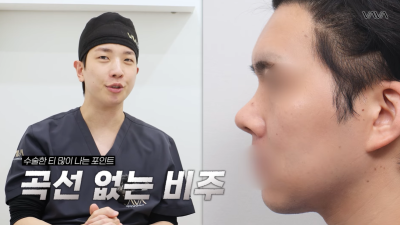
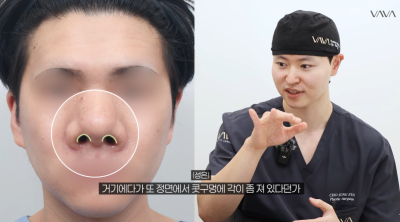
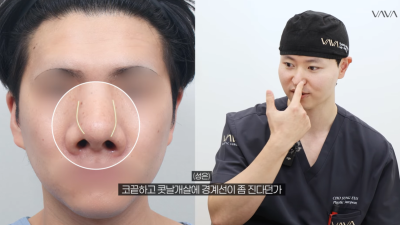
If the columellar angle is excessively sharp
or the angles of the nostrils and alar are overly emphasized,
it can easily look like surgery has been performed from the front.
Therefore, it's important to consider not only the nose height and line
but also the balance of the columella and nasolabial angle
to maintain a natural impression
when designing the nose.
First Rhinoplasty: Ultimately, 'Who Performs the Surgery' Matters Most
Nose surgery is
more structurally complex than eye surgery
and relies more heavily on the surgeon's skill.
Even with the same materials and conditions,
the results can vary significantly
depending on how it's designed and handled.
Therefore, especially for a first rhinoplasty,
more than the surgical method,
meeting a trustworthy medical team
is paramount.
Careful consultation and thorough explanation,
that process becomes the most crucial choice
in determining the outcome of your first rhinoplasty.


