2026-07-14
Regaining Your Lost Nose Line After a Failed First Revision Surgery
Many people consider revision rhinoplasty due to unsatisfactory results from their initial surgery. This article highlights the importance of thorough consultation and precise surgical planning to address common issues like asymmetry, dorsal hump, and bulbous nose, showcasing successful revision cases.

Despite having undergone their first rhinoplasty or revision surgery recently, a significant number of individuals are considering further revision surgery because the nose line they desired was not perfectly achieved.
When we deduce the common problems among those considering revision or re-revision surgery, it often stems from one particular issue:
The majority of cases involve errors in ‘consultation’.
To accurately determine the most suitable surgical method for an individual, a detailed consultation based on examinations is crucial. This involves considering many factors, such as designing the nose line based on facial proportions, identifying precise problems, outlining the surgical plan, and selecting appropriate materials.
Therefore, today we will explore types of improved revision rhinoplasty cases that resulted from accurately identifying problems and implementing meticulously planned strategies.
1. Asymmetric Nostrils and an Incompletely Removed Dorsal Hump
This patient had undergone their first rhinoplasty and a revision surgery at another hospital due to a dorsal hump and asymmetry in one nostril, but the issues were not resolved, leading them to visit our clinic.
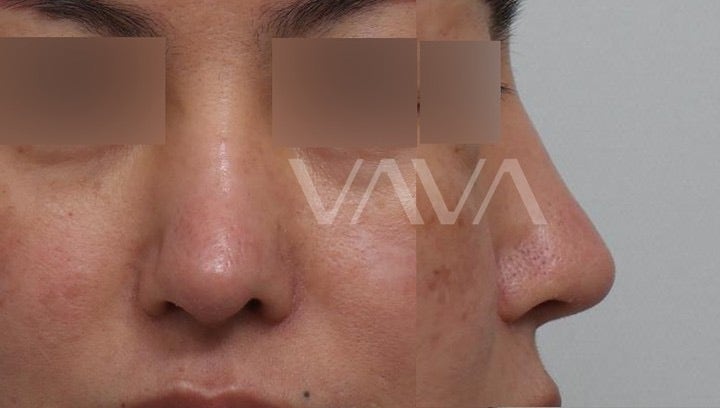
From the front, the patient had a blunt nasal bridge and tip, with one nostril appearing lifted. From the side, the dorsal hump correction was incomplete, resulting in a less curved nasal bridge line, which made the nose appear masculine.
In cases of a dorsal hump, it frequently regrows if not properly shaved down initially, often necessitating revision surgery. Therefore, ensuring a complete removal is important. Asymmetry of the nostrils can occur due to overcorrection when tying the cartilage together.
Through a thorough consultation, it was decided to correct the remaining dorsal hump with additional lateral osteotomy. The lifted nostril was identified as being caused by curled internal nasal cartilage, and it was decided to improve this by straightening the cartilage.
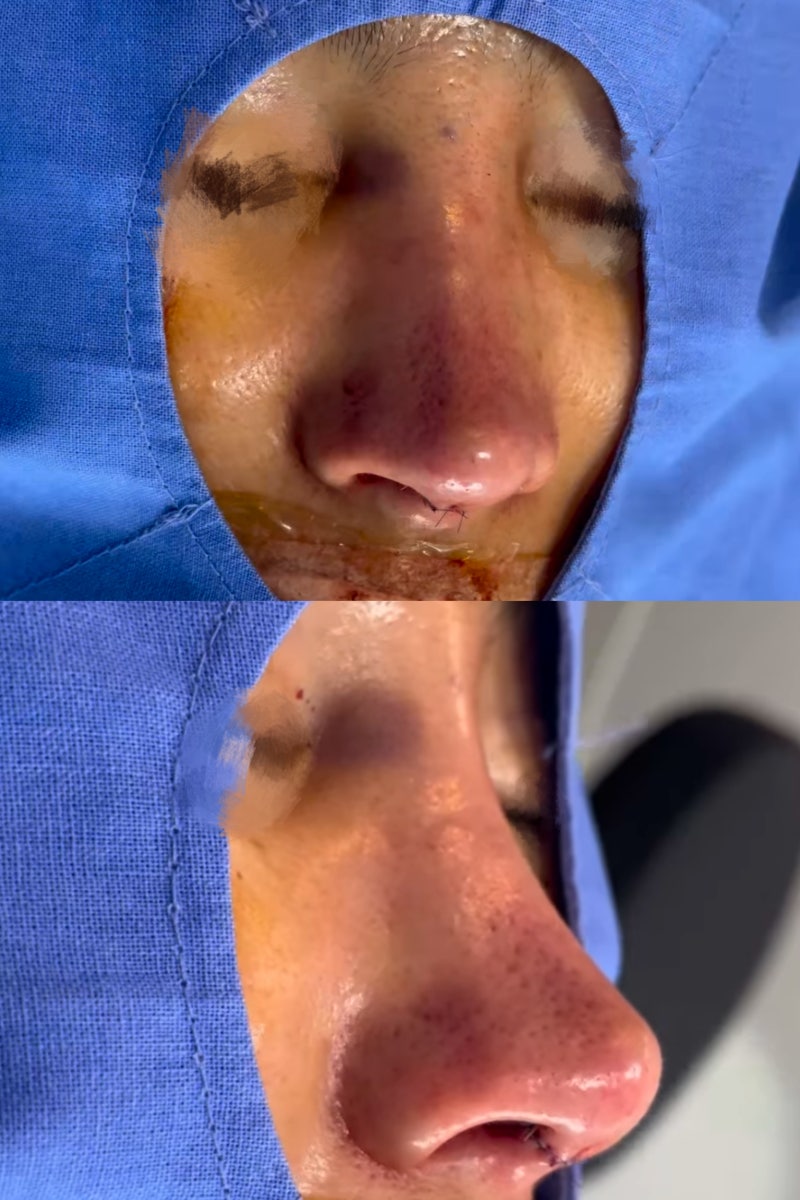
Thanks to the precise surgical plan, the patient's concerns regarding the lifted nostril and the uncorrected dorsal hump were resolved, resulting in a symmetrical, smooth, and improved nasal profile.
2. Unimproved Blunt Bulbous Nose
This patient underwent their first bulbous nose surgery at another hospital, but the blunt appearance of the bulbous nose from the front was not improved, leading them to visit our clinic.
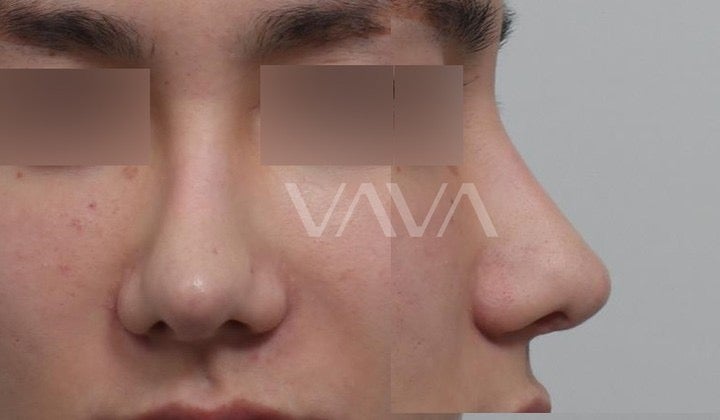
The blunt appearance of the nasal ala and tip from the front had not disappeared at all, making the overall face appear wider.
In cases of a bulbous nose, if the skin is thick and the material used for the nasal tip is not firm enough to achieve sufficient height, the blunt appearance may not improve. Alternatively, if the alar cartilages are spread apart and not tied together with the correct proportions, improvement is often not achieved.
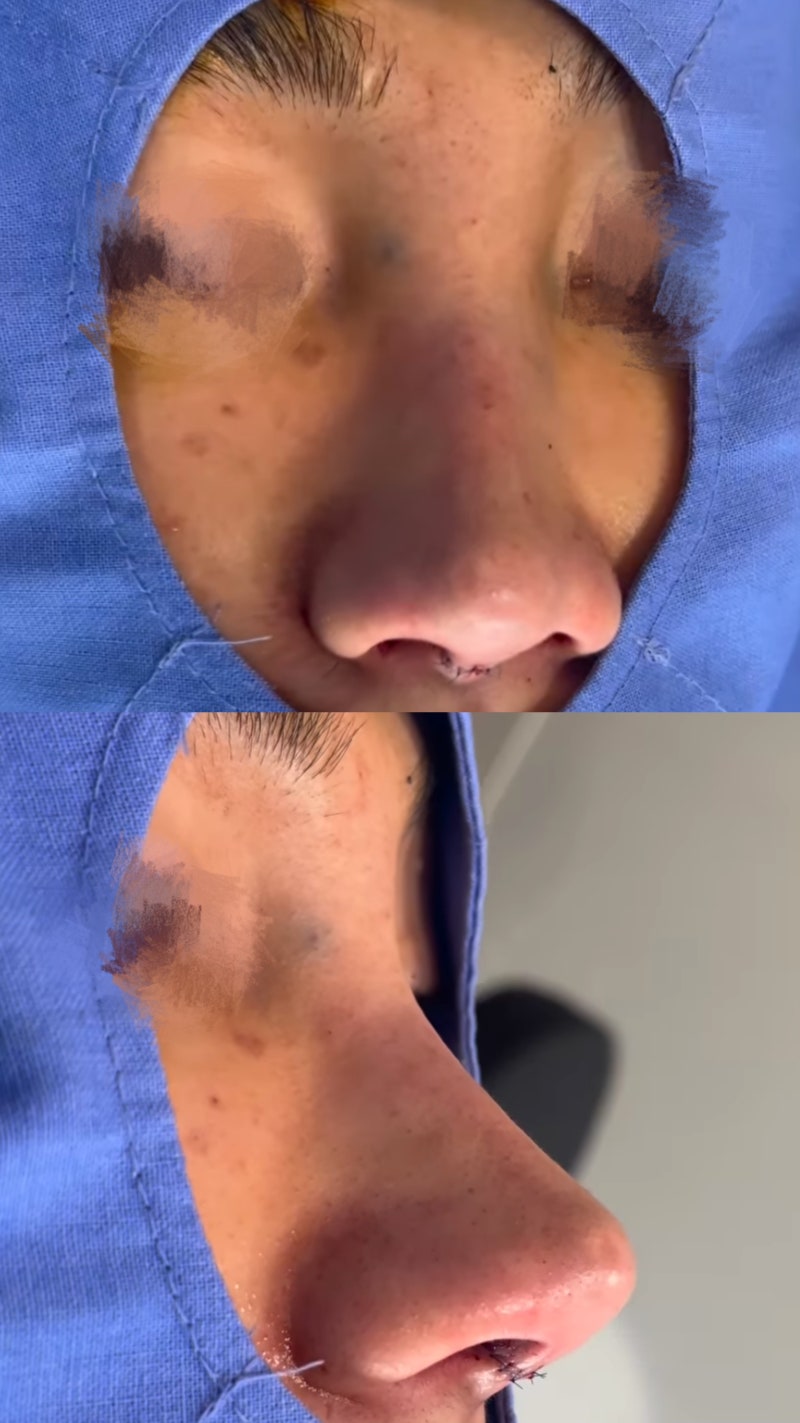
Through a detailed consultation, it was decided to improve the overall blunt appearance of the bulbous nose from the front by simultaneously performing bulbous nose correction, nostril lowering, nasal bridge line refinement, and columellar scar improvement. For the nasal tip, it was decided to replace the silicone implant and use both donated rib cartilage and ear cartilage to firmly increase the height, aiming for a slender appearance from both frontal and lateral views.
Thanks to the accurate problem identification and surgical plan, the patient's concern about the blunt bulbous nose from the front has shown significant improvement.
3. Crooked Nose with Pinched Tip
This patient had undergone their first surgery and a revision surgery at another hospital, but the crooked appearance from the front was not improved, and the nasal tip also looked pinched, resulting in an aesthetically unpleasing nose, which led them to visit our clinic.
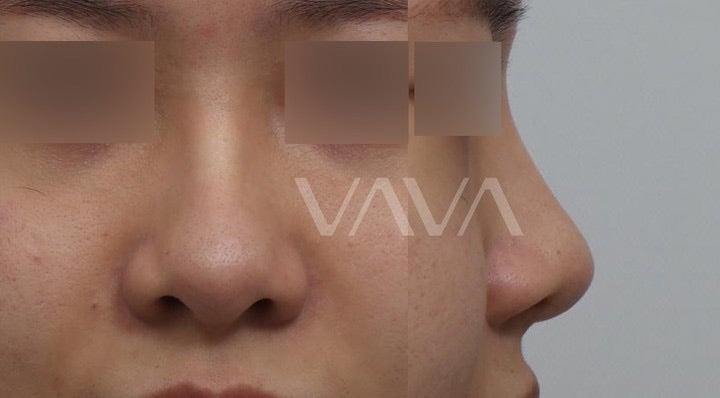
When viewed from the front, a crooked nose makes the overall facial symmetry appear distorted. A pinched nose may not be easily noticeable from the side, but it becomes prominent when viewed from the front or below.
A crooked nose frequently occurs when the internal cartilage fixation is insufficient, causing it to deviate over time. A pinched nose most often results from overly tight suturing of the nasal tip cartilage or excessive augmentation of the nose.
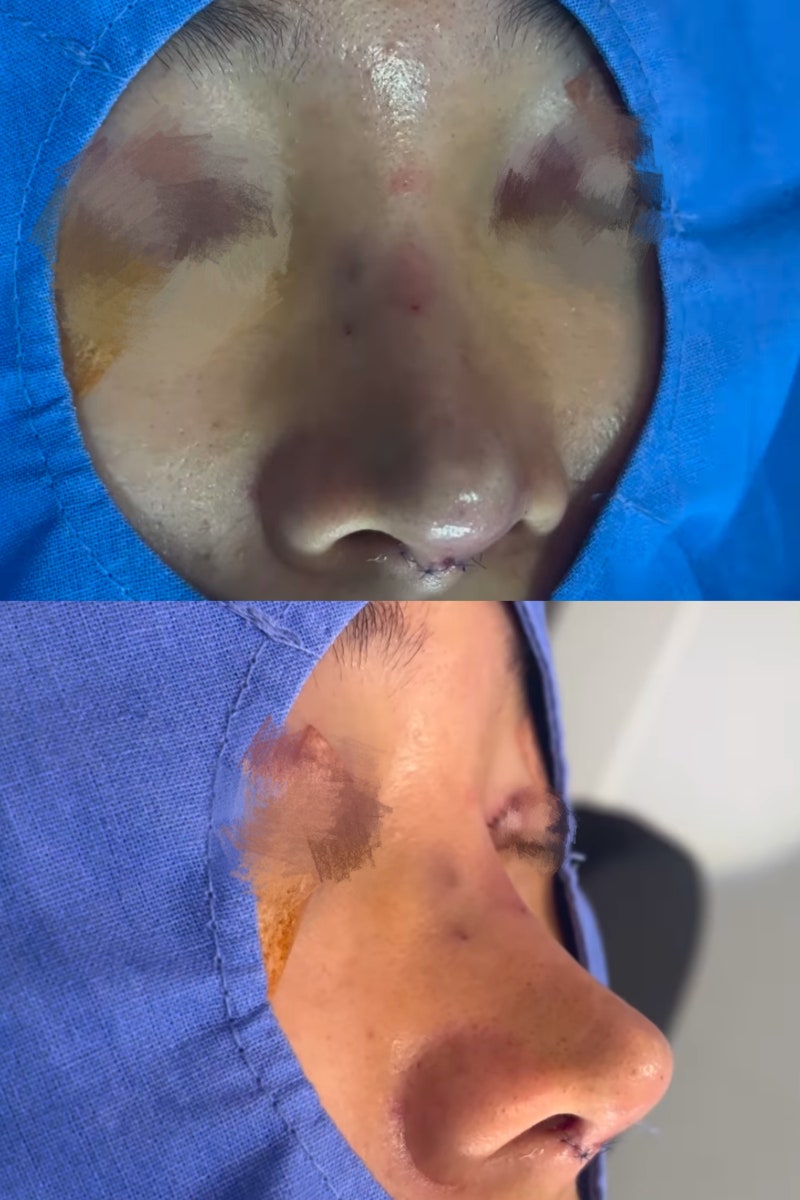
Through a detailed consultation, it was decided to improve the crooked nose by precisely examining the internal nasal structure, identifying the condition of the nasal bones and cartilage, and the position of the implant, then repositioning it to an optimal location. For the pinched nasal tip visible from the front, the surgical plan involved assessing the internal condition and releasing the overly tightened cartilage to alleviate the pinched appearance.
Thanks to the accurate problem identification and surgical plan, the crooked and pinched nose from the front has been improved, achieving perfect symmetry and eliminating the pinched appearance.
※ Please note that personal consent for portrait rights was obtained for this medical column.

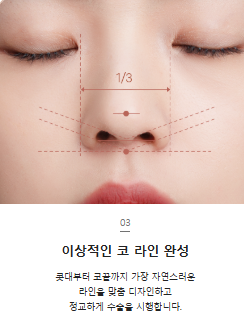
Re-revision rhinoplasty, which requires even more meticulous and detailed work than the first surgery or first revision, is a challenging procedure. Therefore, it is crucial to receive treatment from a medical team with extensive surgical expertise and skill. Furthermore, since each person's skin condition and internal nasal structure differ, if the procedure is not carried out with a precise plan, another revision surgery may be necessary. Thus, the most important aspects are accurate problem identification and finding effective solutions.
At VAVA Plastic Surgery, we provide optimal plans through meticulous consultation and customized surgical plans from start to finish, delivering the best possible results.



Frequently Asked Questions
What is the most important consideration when contemplating revision rhinoplasty?
Yes, the most crucial aspect is to identify the surgical method best suited for you through accurate consultation. Based on examinations, factors such as nose line design tailored to facial proportions, problem identification, surgical plan, and material selection must be carefully considered.
How can nostril asymmetry and a dorsal hump remaining after the first surgery be improved?
Yes, nostril asymmetry can be improved by straightening overcorrected cartilage. Any remaining dorsal hump can be corrected through additional lateral osteotomy to create a smooth line.
Why might a bulbous nose not improve after surgery?
Yes, the primary reasons a bulbous nose might not improve are often due to thick skin combined with a nasal tip material that isn't firm enough, or if the alar cartilages were not tied together with the correct proportions. Using firm materials and proper cartilage correction are essential.
How are a crooked nose or a pinched nasal tip corrected?
Yes, a crooked nose often results from insufficient internal cartilage fixation, and it is improved by repositioning the nasal bone, cartilage, and implant to an optimal location. A pinched nose can be corrected by releasing overly tightened nasal tip cartilage to restore a natural shape.
Is revision rhinoplasty more difficult than the first surgery?
Yes, revision rhinoplasty requires much more meticulous and detailed work than the first surgery. Since each person's skin condition and internal nasal structure are unique, accurately identifying the problem and finding the right solution are extremely important.