2026-09-03
Droopy Eyebrow Thread Lift vs. Eyebrow Lift: Differences, Effects, and Recovery Period Explained
Compare droopy eyebrow thread lifts and eyebrow lifts, examining their differences, effects, and recovery times to help you choose the right procedure for your needs.
※ This article is for the purpose of providing medical information.
It is not subject to deliberation under Article 56, Paragraph 2 and Article 57 of the Medical Act,
and is not an advertisement unrelated to the deliberation content.
Hello,
I am Dr. Jung-geun Park,
Director of Faceplus Plastic Surgery Clinic.

When eyebrows start to droop,
many people feel that their eyelids look heavy
or their impression appears tired.
Especially after middle age,
it is common to see changes in eyebrow position
accompanied by upper eyelid ptosis.
During the consultation process,
some individuals may wonder whether an eyebrow thread lift
or an eyebrow lift is more suitable for them.
Today, I will explain the differences between these two methods,
including their effects and recovery periods.
Table of Contents | ||
1. What causes droopy eyebrows? 2. Characteristics and effects of eyebrow thread lift 3. Characteristics and effects of eyebrow lift surgery 4. Recovery period and considerations for selection |
1. What causes droopy eyebrows?
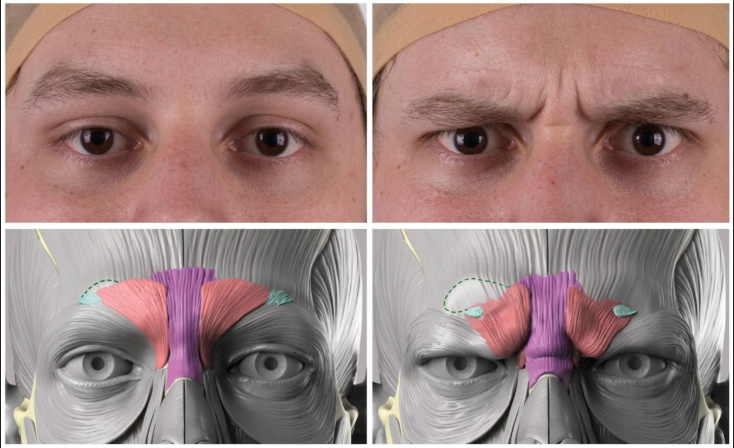
Eyebrow ptosis
is often not just a skin problem,
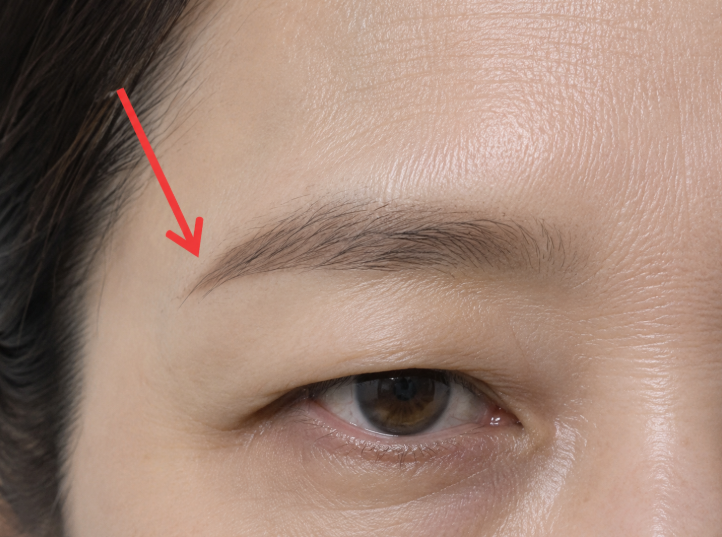
but is frequently influenced by changes
in the forehead and periorbital tissues.
Especially after middle age, with reduced skin elasticity,
the eyebrows may descend,
pressing down on the eyelids.
In such cases, individuals may use their forehead muscles excessively to open their eyes,
leading to forehead wrinkles or fatigue.
Furthermore, even with the same droopy eyebrows,
the approach may differ depending on whether the primary issue is skin sagging
or a significant change in the eyebrow position itself.
2. Characteristics and effects of eyebrow thread lift
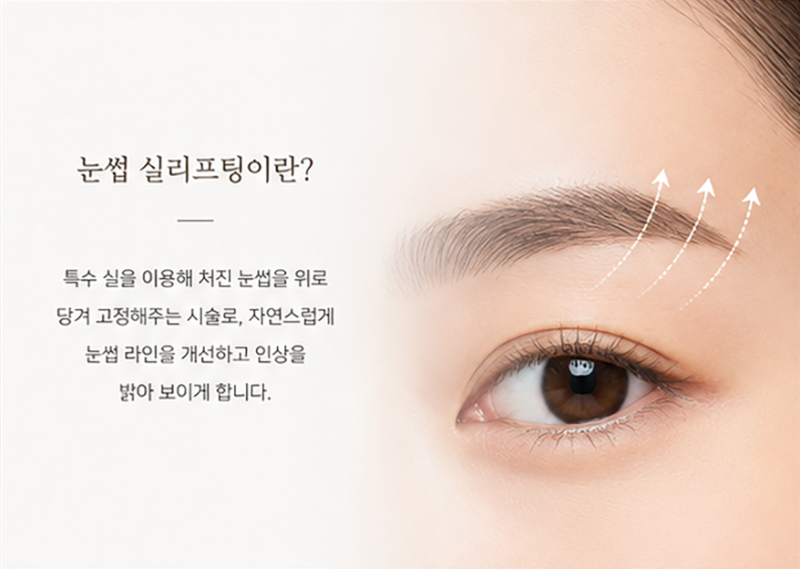
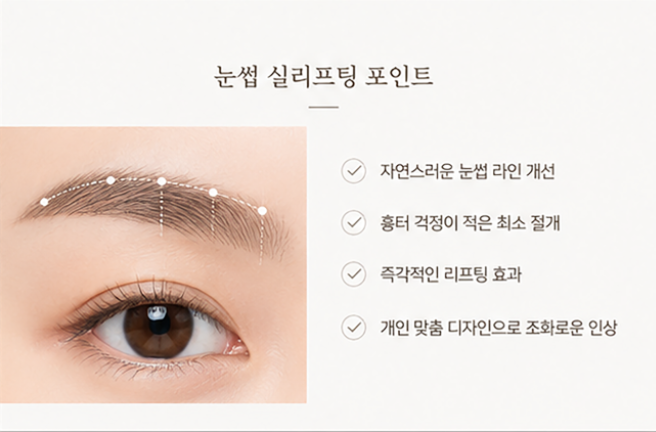
An eyebrow thread lift
involves using threads to pull up the tissues around the eyebrows.

Some people are interested in this method because it involves relatively less incision.
Consultations are often conducted for those who wish to improve
drooping eyebrow tails or mild sagging around the eyes.
However, if there is significant skin sagging,
the lifting effect may have limitations in its maintenance,
and the perceived change may vary depending on tissue characteristics.
Additionally, in the initial stages, a pulling sensation, swelling,
or an uneven feeling may temporarily appear.
Recovery is often described as relatively fast,
but a slight foreign body sensation or pulling may persist
as the threads settle.
3. Characteristics and effects of eyebrow lift surgery
Eyebrow lift surgery
involves directly removing sagging tissue through an incision above or below the eyebrow.

This lift approach is often considered particularly when there is significant skin sagging
or severe upper eyelid pressure.
Rather than simply pulling the skin,
it often involves addressing both the sagging tissue and skin,
while considering the eyebrow position and overall eye impression.

Furthermore, in cases with a large amount of sagging skin,
the change in the line can be quite noticeable.

However, as it involves an incision,
the recovery period for swelling and bruising
may feel longer than with a thread lift.
Initially, redness at the incision site or a pulling sensation may occur,
and it is expected to gradually stabilize over time.
4. Recovery period and considerations for selection
Eyebrow thread lifts are often perceived as having a relatively low recovery burden,
and a quick return to daily life is often described.
On the other hand, for eyebrow lift surgery,
the recovery period for swelling can vary
depending on the incision area and the degree of skin sagging.
Especially when there is significant skin sagging
or thick eyelids,
residual swelling may persist for a longer time.
However, for both methods,
rather than simply saying ‘one procedure is better than the other’,
the approach may differ depending on the current eyebrow position, degree of skin sagging,
and the desired direction of change.
-Operating Hours-
Weekdays 9:00 ~ 18:00 Saturdays 9:00 ~ 16:00 Holidays / Sundays Regular closure |
-Contact Us-
Faceplus Plastic Surgery Clinic | ||
Consultation Phone: 02-541-8500 Inquiries: KakaoTalk Inquiry |
-Directions-
Droopy Eyebrow Thread Lift
Frequently Asked Questions
Why do eyebrows droop?
Drooping eyebrows are not merely a skin issue but are also influenced by changes in the forehead and periorbital tissues. Especially after middle age, reduced skin elasticity can cause eyebrows to descend, pressing on the eyelids and leading to forehead wrinkles or fatigue.
When is an eyebrow thread lift suitable?
An eyebrow thread lift is suitable for those seeking to improve drooping eyebrow tails or mild sagging around the eyes, as it involves relatively less incision. It uses threads to lift the surrounding eyebrow tissue, and recovery is generally quick.
What are the characteristics and effects of eyebrow lift surgery?
Eyebrow lift surgery involves directly removing sagging tissue through an incision above or below the eyebrow. It is considered for significant skin sagging or severe upper eyelid pressure. It addresses both sagging tissue and skin, aiming to change the eyebrow position and overall eye impression.
Which has a faster recovery period: an eyebrow thread lift or eyebrow lift surgery?
An eyebrow thread lift generally has a lower recovery burden and allows for a quicker return to daily life. In contrast, eyebrow lift surgery, which involves an incision, may have a longer recovery period for swelling and bruising, varying with the degree of skin sagging.
Which method is better?
It is difficult to simply state that ‘one procedure is better than the other’. The appropriate approach for both methods depends on the current eyebrow position, the extent of skin sagging, and the individual's desired outcome. Therefore, it is crucial to have a thorough consultation with a medical professional before making a decision.