2026-07-14
Natural Adhesion vs. Buried Suture Double Eyelid Surgery: Both Non-Incisional, So Why the Difference?
Explore the differences between natural adhesion and buried suture double eyelid surgery, both non-incisional methods, focusing on their fixation techniques and suitability for various eye conditions.
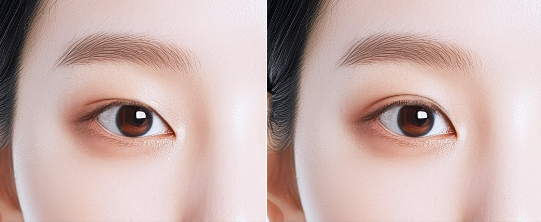
When researching double eyelid surgery,
you frequently encounter the terms ‘natural adhesion’ and ‘buried suture’.
Both are known as non-incisional double eyelid surgeries performed without incisions,
but they actually differ in their fixation and line creation methods.
In this article,
we will clarify the differences between natural adhesion double eyelid surgery and buried suture double eyelid surgery
based on their fixation methods (single-knot and multi-knot) and actual eye structure.
What is Buried Suture Double Eyelid Surgery?
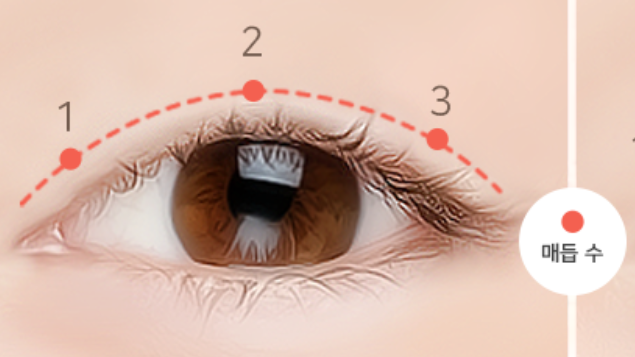
Buried suture double eyelid surgery is known for
creating a few fixation points (usually 2-3 points) on the eyelid
to form the line.
Characteristics of Buried Suture Double Eyelid Surgery
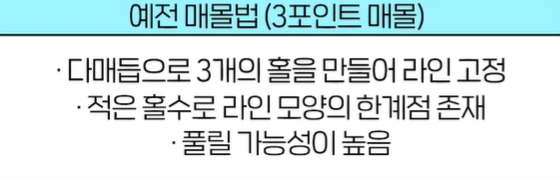
Relatively fewer holes for line fixation
Shorter surgery time and faster initial recovery
Limited choice in line shape due to restricted fixation points
Possibility of partial loosening depending on eye conditions
Therefore, in the past,
the expression ‘pinching the double eyelid’ sometimes referred to buried suture double eyelid surgery.
What is Natural Adhesion Double Eyelid Surgery?
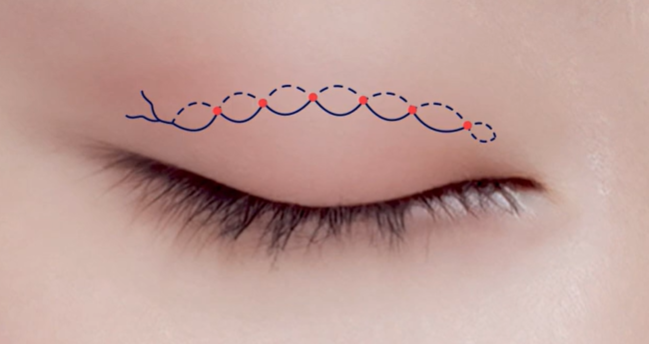
Natural adhesion double eyelid surgery evolved from the traditional buried suture method,
creating holes at multiple points to fix the line more delicately.
Characteristics of Natural Adhesion Double Eyelid Surgery
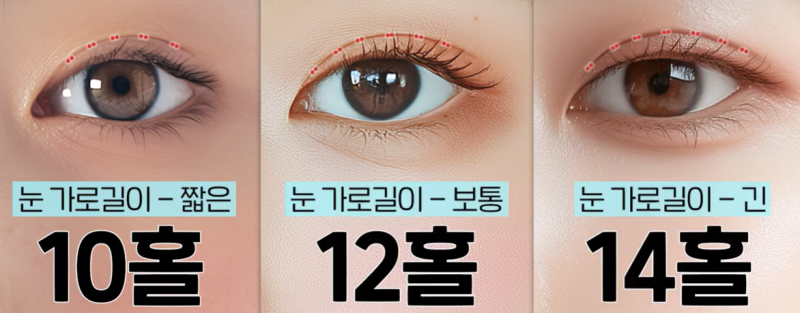
Line fixation using 10 or more holes
More fixation points allow for relatively free adjustment of line curvature and smoothness
Induces natural adhesion when opening the eyes
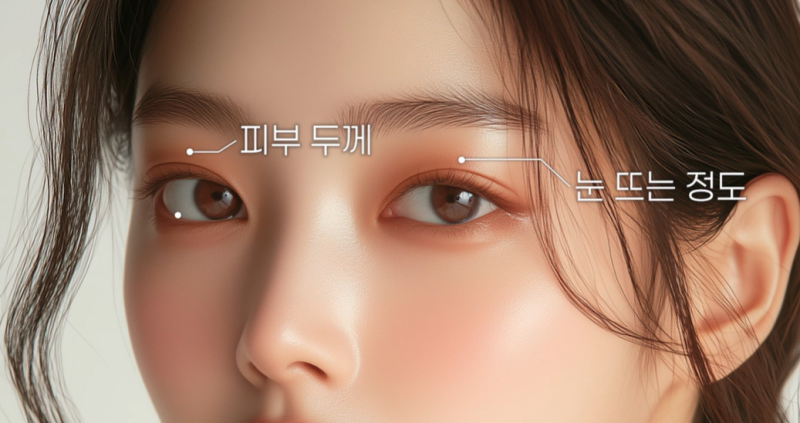
Differences in characteristics depending on fixation method (single-knot / multi-knot)
This is also why
the term ‘natural adhesion’ is used more frequently
than ‘buried suture’ nowadays.
Differences Between Natural Adhesion Multi-Knot and Single-Knot
Natural Adhesion (Single-Knot) Fixation Method
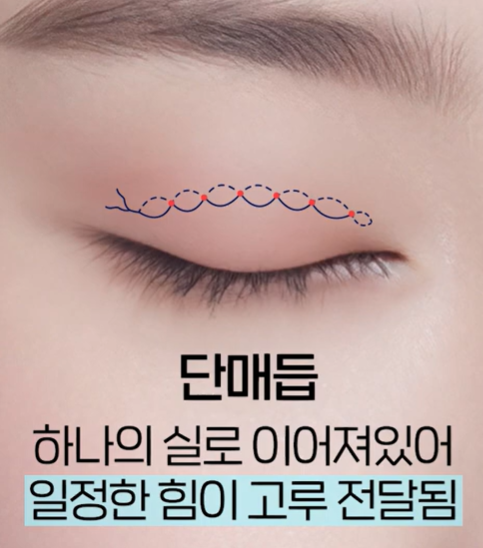
A single thread continuously connects multiple holes
Structure where force is evenly distributed
Can be advantageous for line maintenance, but may increase tissue burden depending on eye conditions
Natural Adhesion (Multi-Knot) Fixation Method
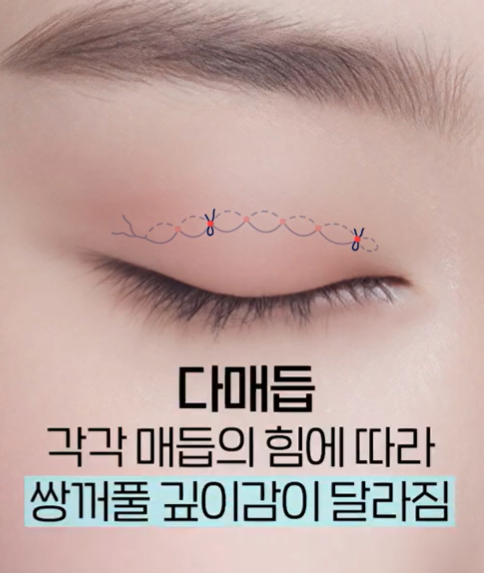
Each fixation point is tied independently
Aims to reduce unnecessary pulling and minimize tissue damage
Swelling tends to subside relatively quickly
Can create a natural and stable line if suitable for eye conditions
The important point is not
the superiority of single-knot or multi-knot itself,
but which method is more suitable for the eye condition.
In Which Cases is Natural Adhesion More Suitable?

If you want to create a natural double eyelid line
If you prefer a line that suits your eye shape rather than an artificially thick line
If delicate line adjustment is needed to match your eye condition
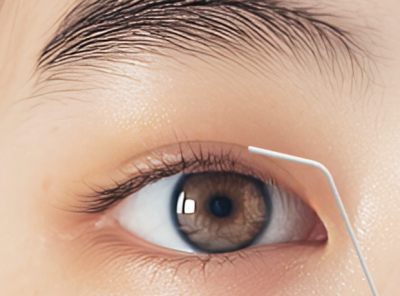
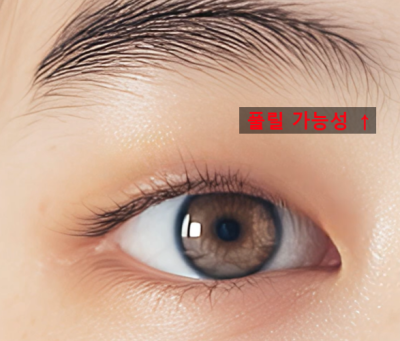
However, if the eyelid is very thick,
or if there is severe fat or sagging,
or if there are accompanying issues with the strength of eye opening,
non-incisional methods alone may have limitations,
making a prior diagnosis crucial.
Apgujeong Baba Plastic Surgery's Natural Adhesion Method



At Apgujeong Baba Plastic Surgery,
natural adhesion double eyelid surgery
is performed using the single-knot fixation method as a standard.
This choice aims to reduce unnecessary tissue damage and minimize swelling,
while creating a natural line that suits the eye condition.
In Conclusion
The difference between natural adhesion and buried suture double eyelid surgery
is not simply in their ‘names’
but in their fixation methods, line design, and approach to eye conditions.
Rather than concluding which method is better,
it is most important to choose based on which method
is a better fit for your eyes.
Thank you.