2026-07-14
Natural Adhesion VS Incisional Double Eyelid Surgery: How to Choose?
Choosing the right double eyelid surgery method (natural adhesion or incisional) depends on individual eye structure, skin thickness, fat, and eyelid muscle strength. This article details criteria for each method, including when incisional surgery is necessary, addressing common misconceptions about durability, and explaining different types of blepharoptosis correction and eyelid lines.

Double eyelid surgery is not merely about creating a line;
it is crucial to comprehensively evaluate an individual's eyelid structure, skin thickness, fat volume, and eye-opening strength,
and then select the appropriate surgical method.
Below are the criteria used by VAVA Plastic Surgery for choosing between natural adhesion (non-incisional) and incisional methods.
① Natural Adhesion (Non-Incisional) Criteria
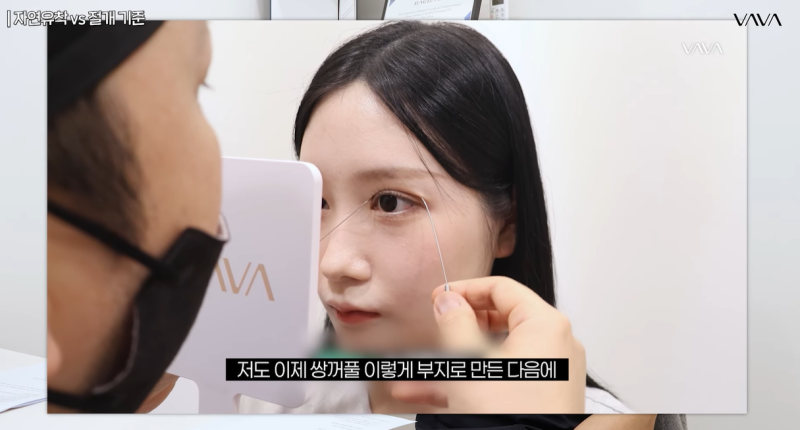
✔ Basic conditions for eyes suitable for natural adhesion
If you 'simulate' a double eyelid line with your fingers
and the line holds for 5 seconds without loosening,
a stable line can be formed using the natural adhesion method.
Conversely, if it loosens immediately within 5 seconds,
the structure lacks sufficient retention, and incisional surgery is recommended.
✔ Natural Adhesion Surgical Method
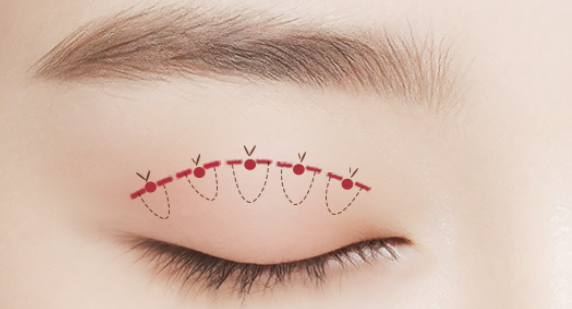
Approximately 10-14 micro-holes are made according to the individual's eye structure,
a thread is passed through them to create adhesion, and the double eyelid is formed with a single knot fixation.
✔ Differences in Surgical Techniques
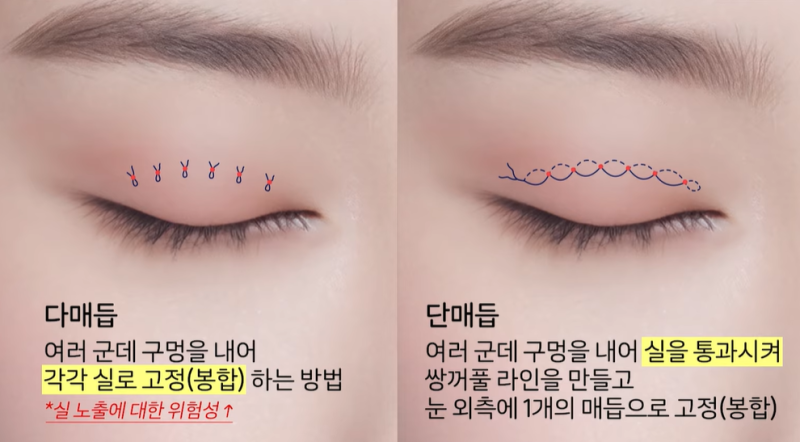
Multi-knot method
Each hole is individually fixed with a thread.
Disadvantage: Increased risk of thread exposure.
Single-knot method (applied at VAVA Plastic Surgery)
Thread is passed through multiple holes but fixed with one knot on the outer side of the eye.
Minimizes risk of thread exposure.
Increased line retention and stability.
② Cases where 'Incisional' surgery is absolutely necessary even for first-time eye surgery
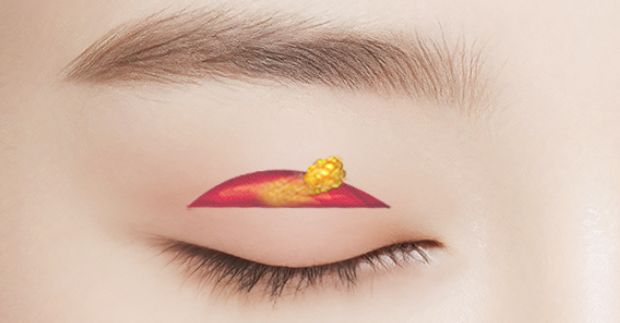
These are structural characteristics that require incisional surgery to be considered over natural adhesion.
When the skin is very thick.
When there is excessive fat above the eye.
→ Includes cases where the double eyelid does not fold properly when simulating the line during consultation.
When eye-opening strength is weak due to severe ptosis.
When there is severe asymmetry between the left and right eyes.
When the skin has sagged due to the use of double eyelid tape or glue.
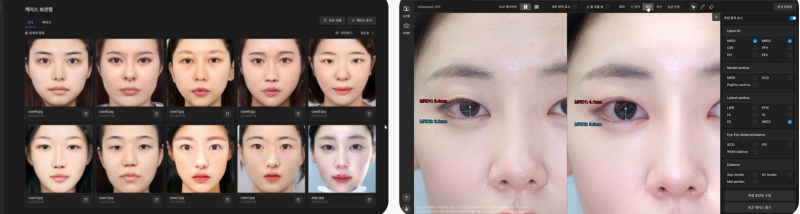
→ In such cases, VAVA Plastic Surgery
utilizes the ‘Agnima Program’ (a precise video analysis system) for accurate structural analysis.
③ Does natural adhesion loosen more easily?
✔ Dr. Jang Seung-bin's opinion

“There is a hypothesis that incisional surgery doesn't loosen easily, while natural adhesion does,
but based on actual surgical experience, I have never felt that natural adhesion has weak fixation.
However, if natural adhesion is forcibly applied to a case that requires incisional surgery,
the thread may loosen due to structural limitations.”
✔ Dr. Kim Sang-il's opinion

“For incisional surgery, if the line is maintained for the initial 6 months to 1 year, the possibility of it loosening afterward is low.
Natural adhesion has a lower initial loosening rate than incisional surgery,
and if it does loosen, it mostly happens gradually after 4-5 years.”
In other words, it is more a matter of ‘suitability’ than a problem with the surgical method itself.
④ Ptosis Correction (Blepharoptosis Correction) — Incisional vs. Non-incisional
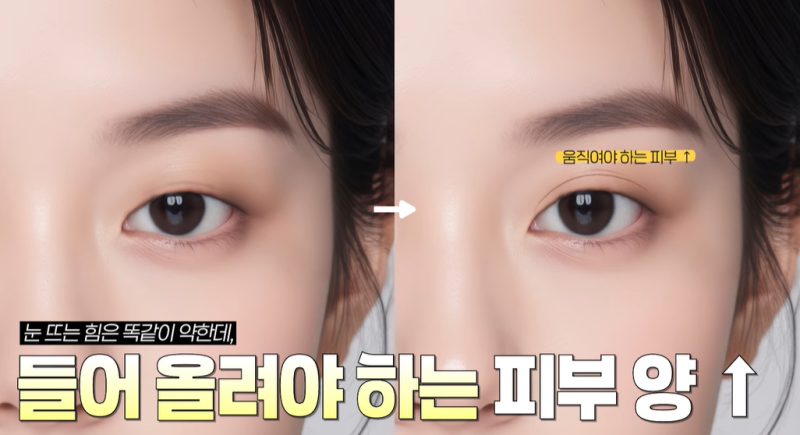
Ptosis correction is a surgery that strengthens the eye-opening muscle (levator palpebrae superioris function).
✔ Non-incisional Ptosis Correction (Mild Ptosis)
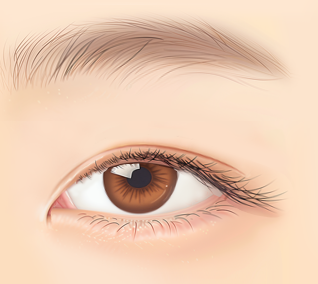
Primarily for cases where the eyes can open close to normal.
Aims to make the black pupil appear larger and clearer.
✔ Incisional Ptosis Correction (Moderate to Severe Ptosis)
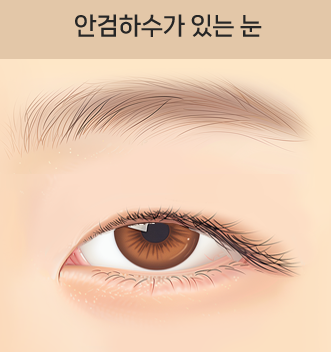
When eye-opening strength is weak and eyes cannot open normally.
Stable correction requires direct visualization and precise adjustment of the muscle through incision.
✔ Representative symptoms requiring ptosis correction
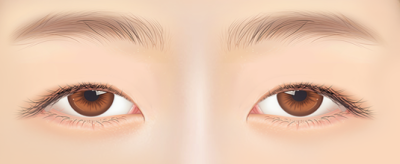
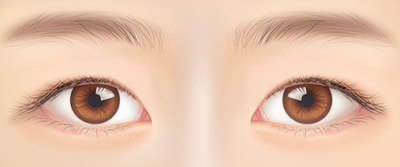
Habit of opening eyes with the forehead.
Fatigue or heaviness when opening eyes.
Drowsy-looking impression.
Difficulty opening eyes wide.
⑤ Double Eyelid Line and Eye Characteristics — In-out vs. Semi-out
The line that suits best is clearly divided by the anatomical structure of the eye.
✔ Eyes that suit an in-out line well
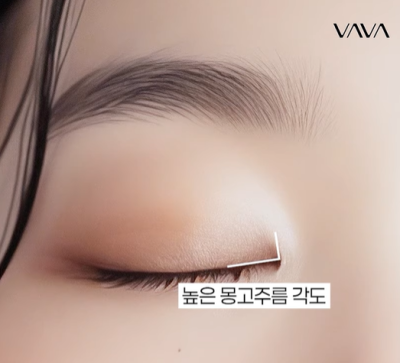
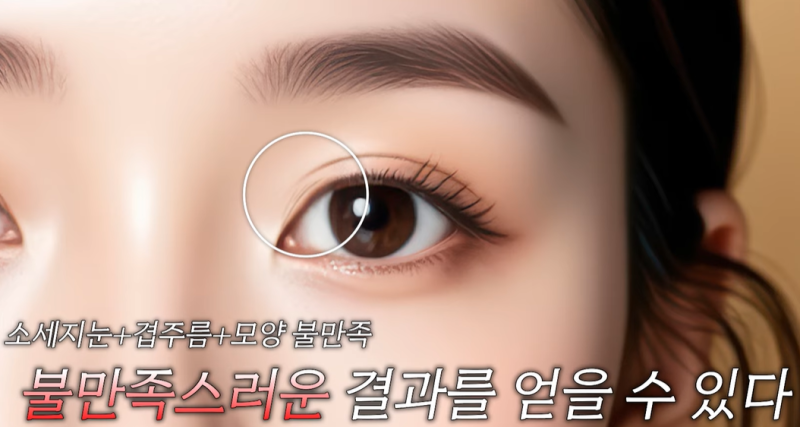
→ When the epicanthal fold angle is high.
If a semi-out line is created for such eyes,
there is a high possibility of 'sausage eyes', multiple folds, or dissatisfaction with the line.
✔ Eyes that suit a semi-out line well
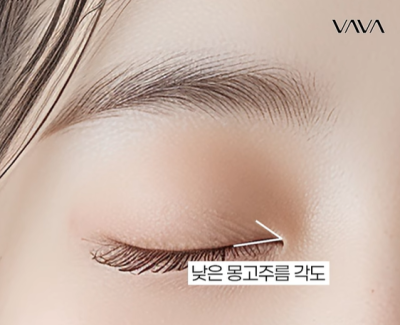

→ When the epicanthal fold angle is low.
For this type, an in-out line design is structurally difficult.
⑥ Sunken Eye Double Eyelid — Success Tips
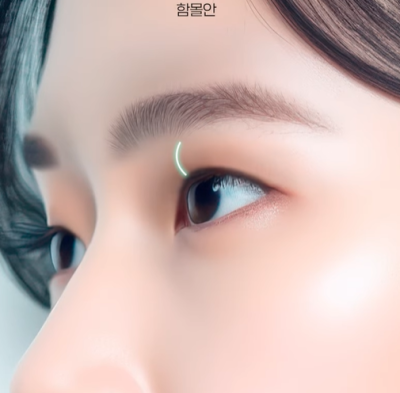
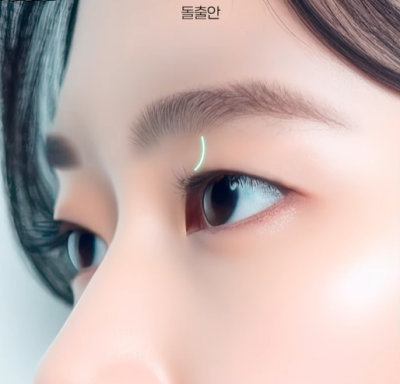
Sunken eyes have the following characteristics compared to protruding eyes:
Narrow distance between eyebrow and eye.
Thick skin.
If the line is set too high in this case,
'sausage eyes' or an unnatural look may result.
→ If necessary, combining with a forehead lift to secure space before setting the line
can yield very satisfactory results.
※ Note: Protruding eyes generally have higher satisfaction with double eyelid surgery than sunken eyes.
⑦ Canthoplasty (Epicanthoplasty/Lateral Canthoplasty) with Double Eyelid Surgery
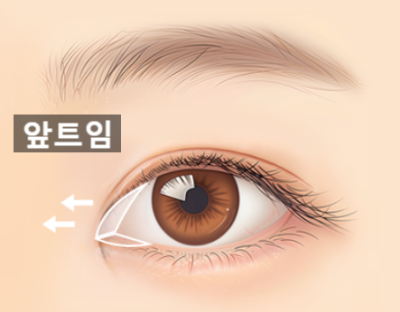
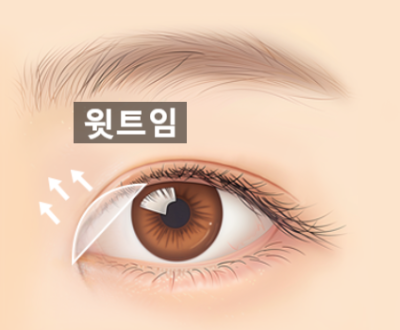
Due to the characteristics of the epicanthal fold in Asians,
combining double eyelid surgery with epicanthoplasty (front canthoplasty) and upper canthoplasty
has a significant effect in making the eyes appear much clearer and more three-dimensional.
Especially when the inner corner (medial canthus) is strongly covered,
performing canthoplasty together improves harmony with the line.
⑧ Design method for a clear, extended double eyelid back line

Many people feel their back line looks short or stuffy.
To improve this:
Precisely set the fixation strength of the back line.
Design the line to extend naturally in a straight rather than rounded shape.
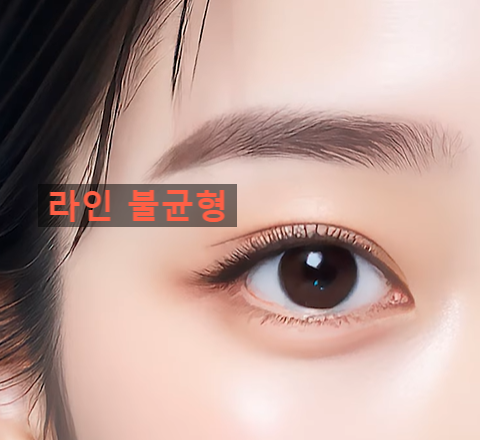
However, if it extends excessively outwards,
an imbalance where the line appears to go up may occur,
thus, the precise design ability of the medical staff is essential.
Conclusion

The most important thing in double eyelid surgery is not
“Which method is better?” but
“Which method is most suitable for my eye structure?”
VAVA Plastic Surgery precisely analyzes all factors, including eye skin, fat, muscles, epicanthal folds, and levator palpebrae superioris function,
to maximize the advantages and minimize the disadvantages of each surgical method,
aiming for customized eye surgery.
If you are wondering which line will be most natural and long-lasting,
or which surgical method is safest,
consulting with a specialized medical professional who can perform accurate analysis is the safest approach.
Everyone's eye structure is different.
Finding your most ideal line,
that is the role of VAVA Plastic Surgery.


