2026-07-14
The Proven Excellence of Autologous Costal Cartilage Rhinoplasty
Autologous costal cartilage rhinoplasty is gaining popularity for its minimal side effects and strong support, making it ideal for complex nose surgeries.


The Proven Excellence of Autologous Costal Cartilage Rhinoplasty
When undergoing a primary or revision rhinoplasty, materials such as septal cartilage, ear cartilage, costal cartilage, or artificial implants are typically used. However, with recent concerns about the side effects of artificial implants, more people are opting for surgeries using autologous (self-donated) tissues.
Among autologous tissues, the use of autologous costal cartilage is particularly favored for its ability to minimize side effects, making it widely used in complex surgeries like revision rhinoplasty. This is because autologous costal cartilage possesses strong supportive properties, and since it is harvested from the patient's own body, it minimizes rejection reactions within the body.
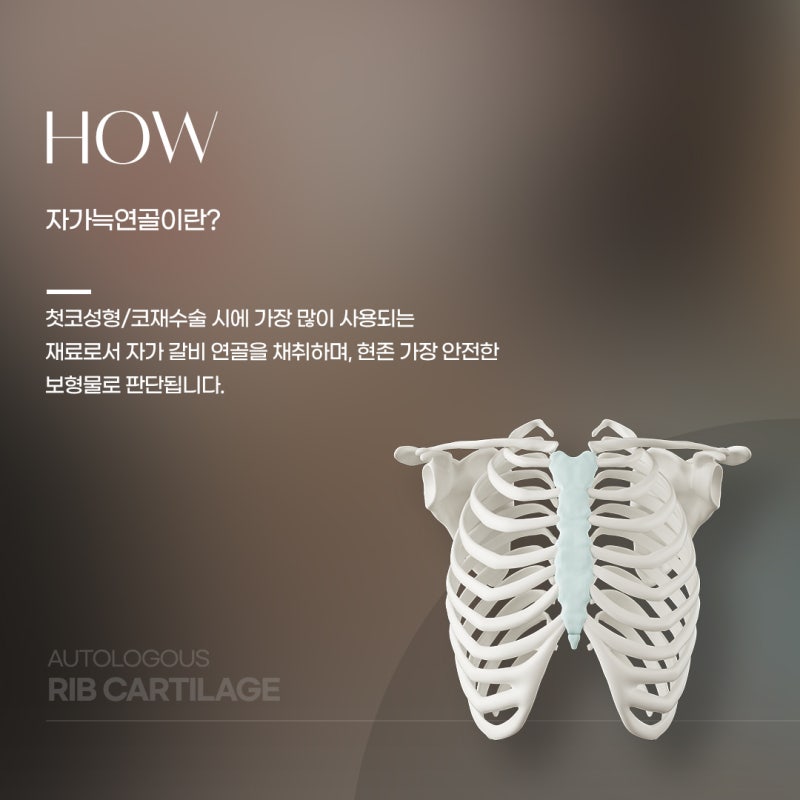
So, from which part of the body is autologous cartilage harvested?
It is the cartilage located in the ribs.
Most autologous costal cartilage is harvested from the rib area through a minimal incision, taking only the necessary amount. It is then shaped according to the desired nose design by a plastic surgeon. The usual harvest site for autologous costal cartilage is between the 7th and 9th ribs, specifically the cartilage between the ribs, to minimize the risk of pneumothorax.
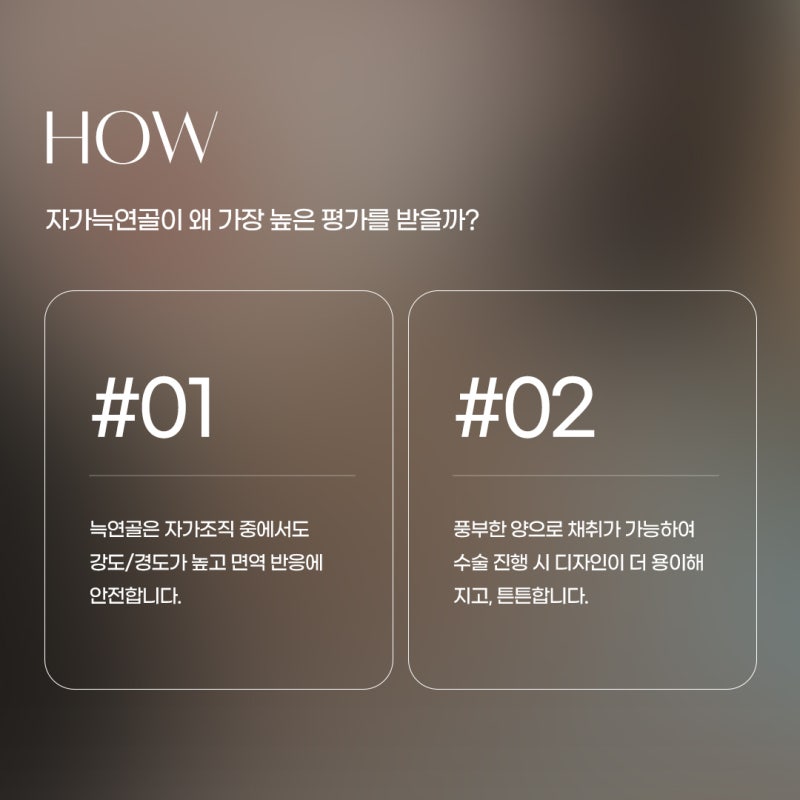
Plastic surgeons recommend autologous costal cartilage because, as mentioned earlier, it uses a part of the patient's own body, thereby minimizing rejection reactions when the costal cartilage is inserted into the nose. This also optimally aids in immune stabilization.
In the past, rhinoplasty techniques favored the use of septal cartilage. However, this method had drawbacks: it was difficult to harvest enough material to support the nose, and its durability was significantly lower than costal cartilage. Consequently, even minor changes could strain the nose or increase the incidence of side effects. Recently, techniques using costal cartilage have been adopted, leading to many excellent cases where patients are highly satisfied, thus proving the unique advantages of costal cartilage. While there are cases where donated costal cartilage is used for patients who are hesitant about autologous tissue harvesting, the overall medical reliability of autologous costal cartilage is higher, leading to an increasing number of people choosing it.
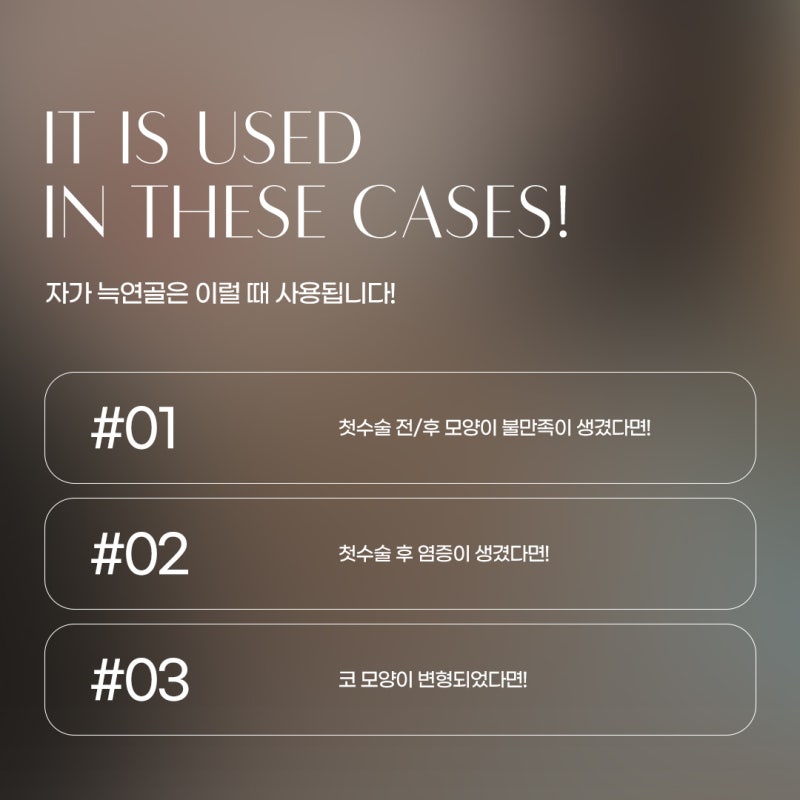
Autologous costal cartilage offers superior immune response and stability compared to other implants, with significantly lower rejection rates for foreign substances in the body. Therefore, it provides excellent safety against potential side effects during rhinoplasty.
Furthermore, while the functional aspect is important in rhinoplasty, improving the overall image is often the most crucial factor. When aiming for a desired design, a surprisingly large amount of implant material may be needed. For this reason, autologous costal cartilage has the significant advantage of being harvestable in desired quantities, allowing for more diverse design possibilities compared to using septal or ear cartilage. This makes it an implant that satisfies both patients and medical staff.

However, due to its higher cost compared to other implants, many people prefer to use it for revision surgeries. Nevertheless, autologous costal cartilage is suitable for both primary and revision surgeries. Its high durability, superior to other implants, and the ample amount of costal cartilage that can be harvested, as mentioned earlier, allow for various designs. Thus, it is also suitable for those desiring a dramatic nose height and length from their very first surgery.

What makes VAVA Autologous Costal Cartilage Rhinoplasty different?
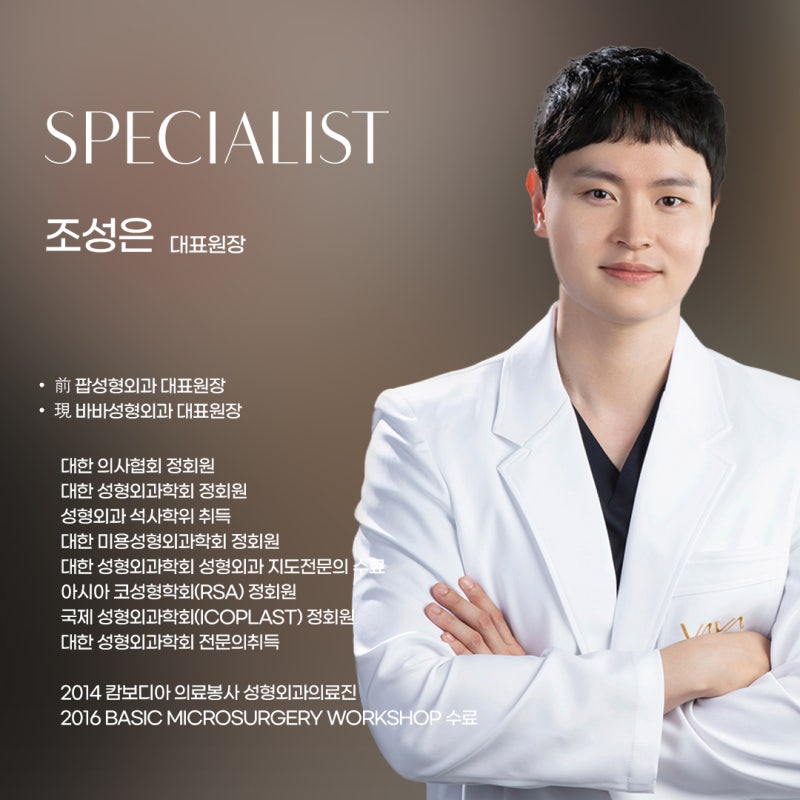
While many specialized plastic surgery clinics recommend using costal cartilage, the process of harvesting costal cartilage itself is highly complex. Therefore, it is crucial to choose a specialist with extensive clinical experience, from the harvesting process to designing the costal cartilage and inserting it into the nose. VAVA Plastic Surgery has resident specialists with numerous cases related to rhinoplasty. They provide precise guidance from consultation to professional assessment of the patient's nose condition using 3D-CT, and even possible designs, offering optimized aesthetic medical solutions for patients, both medically and aesthetically.
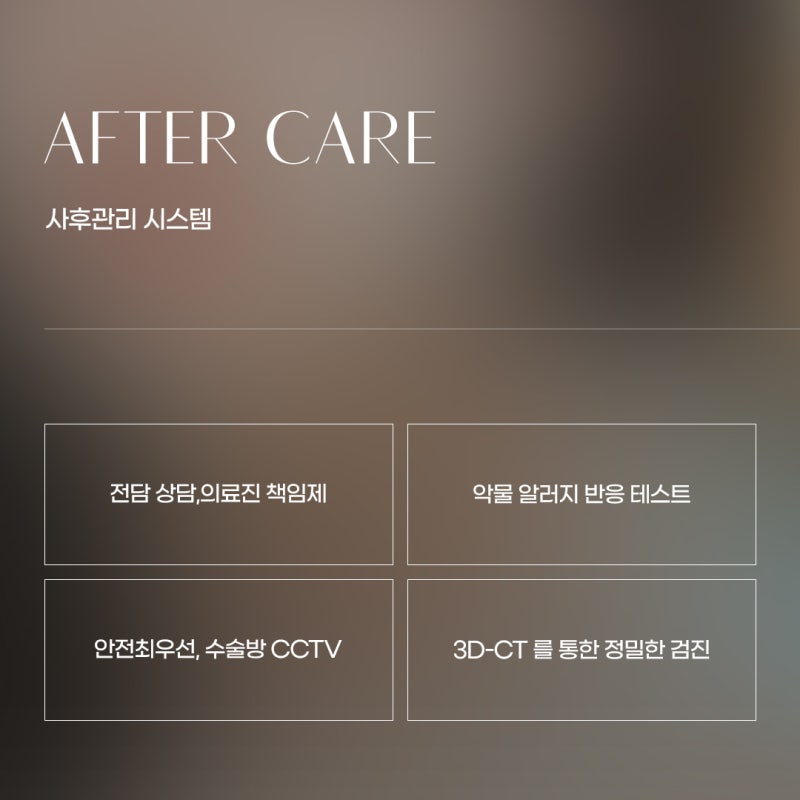
VAVA Autologous Costal Cartilage Rhinoplasty Process
ⓐ Patient condition ANALYSIS using advanced equipment for nose examination
ⓑ Autologous costal cartilage harvesting and surgical process performed with minimal incision
ⓒ Costal cartilage design optimized for the patient's ideal nose shape
ⓓ Costal cartilage insertion and overall rhinoplasty performed in a sterile environment
ⓔ Thorough post-operative care for safety and peace of mind after surgery
At VAVA Plastic Surgery Clinic, all autologous costal cartilage surgeries and rhinoplasties are performed with minimal incisions. This is based on the medical motto of ideally minimizing scars that may secondarily occur after rhinoplasty, and putting it into practice.
All rhinoplasties are surgical procedures that should not be rushed in terms of surgery or management. Therefore, from the very beginning of the patient's journey until the final moment when the surgery is complete and they can return to daily life, we strive to ensure that all medical actions are not merely performed, but result in the best possible outcome for each individual.



#VAVAPlasticSurgery #DirectorJoSeongEun #AutologousCostalRhinoplasty #AutologousCostalNoseSurgery #FirstNoseSurgery #RevisionNoseSurgery #NoseSurgery
Frequently Asked Questions
What is autologous costal cartilage rhinoplasty?
Autologous costal cartilage rhinoplasty is a method that uses cartilage harvested from the patient's own ribs for nose reshaping. This minimizes side effects associated with artificial implants and provides strong support to maintain a stable nose shape.
Where is autologous costal cartilage harvested from?
Autologous costal cartilage is harvested from the cartilage located in the patient's own ribs. Typically, the cartilage between the 7th and 9th ribs is harvested through a minimal incision, taking only the necessary amount. Only the cartilage between the ribs is harvested to minimize the risk of pneumothorax.
What are the advantages of autologous costal cartilage rhinoplasty?
Autologous costal cartilage rhinoplasty uses the patient's own tissue, resulting in fewer rejection reactions within the body and excellent immune stability. Additionally, a sufficient amount can be harvested, allowing for diverse nose designs and providing strong durability for stable results.
Is autologous costal cartilage suitable for primary surgery?
Yes, autologous costal cartilage is suitable for primary surgery. Thanks to its high durability, superior to other implants, and the sufficient amount that can be harvested, it allows for various designs, making it suitable even when desiring a dramatic nose height or length from the first surgery, leading to satisfactory results.
What should be considered during autologous costal cartilage surgery?
The process of harvesting and inserting autologous costal cartilage is highly complex, so it is crucial to choose a plastic surgeon with extensive clinical experience. The surgeon's skill level can significantly affect the surgical outcome and safety.
What makes autologous costal cartilage better than septal cartilage?
Autologous costal cartilage offers stronger support and higher durability than septal cartilage. Furthermore, unlike septal cartilage, which was often difficult to harvest in sufficient quantities, autologous costal cartilage can be harvested as needed, allowing for more diverse design possibilities.