2026-07-14
Autologous Cartilage Rhinoplasty (Septal, Ear, Rib Cartilage) for a Three-Dimensional and Balanced Nose Line
Autologous cartilage rhinoplasty uses your own cartilage (septal, ear, rib) to create a natural, safe, and aesthetically pleasing nose, minimizing rejection and ensuring long-term stability.


Rhinoplasty is a surgical procedure that improves the nose, which is centrally located on the face, playing a crucial role not only in aesthetic beauty but also in functional aspects. Among the materials used in rhinoplasty, autologous cartilage is the most useful and frequently employed, as it can yield more natural and safer results. Therefore, today we will discuss rhinoplasty using autologous cartilage.
What is Autologous Cartilage Rhinoplasty?
Autologous cartilage rhinoplasty is a surgical method that improves the shape of the nose using cartilage harvested from the patient's own ear, nasal septum, or ribs. Depending on the nose shape, various autologous tissues such as ear cartilage, septal cartilage, rib cartilage, or autologous dermis can be chosen.
Advantages of Autologous Cartilage Rhinoplasty

1. Natural Results
By using only autologous tissue without artificial implants, the nose shape becomes more natural and soft. It minimizes an artificial feel and can be designed to harmonize best with the patient's own face.

2. Minimized Rejection
Since no artificial implants are used, there is less foreign body sensation, fewer side effects, and a reduced risk of inflammation. This is an important factor that enhances stability during the post-operative recovery process.

3. Long-term Stability
Autologous cartilage undergoes less deformation over time and has excellent fixation, allowing for long-lasting maintenance. It can prevent deformation issues that may occur when using silicone or donor cartilage.
'Autologous Tissue Implants' Each autologous tissue has different characteristics, advantages, and disadvantages, so it is most important to select the optimal autologous tissue for surgery based on the patient's symptoms and condition.
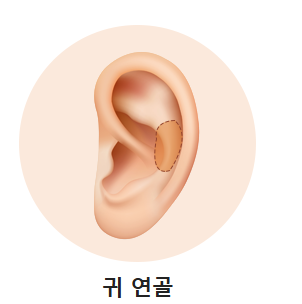
This cartilage is suitable for creating a natural nasal tip due to its similar shape and elasticity to the nose.

This is the inner nasal cartilage used to support the columella and adjust the angle of the nasal tip.
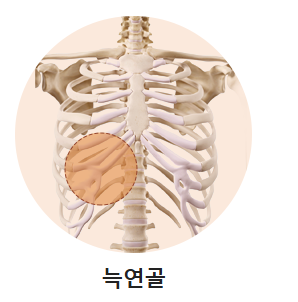
With strong support and durability, this is a stable implant used in various rhinoplasty procedures.
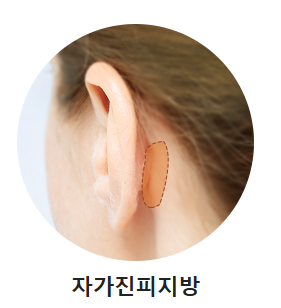
Dermis from the buttocks, ear, or back is a safe material for the nasal bridge, even for thin skin.
When Autologous Cartilage Rhinoplasty is Needed
◆ If you have significant concerns about rhinoplasty side effects
◆ If you have a silicone allergic reaction
◆ If you desire an extremely natural look
◆ If it's not your first surgery and revision surgery is needed
◆ If you only want a slight correction to your nose

Autologous Cartilage Rhinoplasty Surgical Method
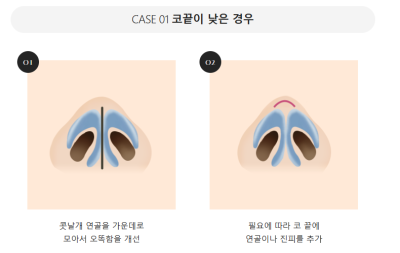
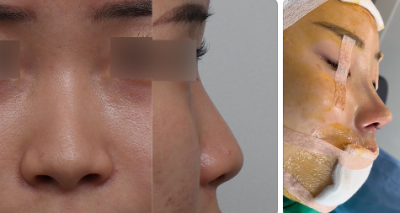
The alar cartilages are brought together to improve the height, and cartilage or dermis is added to the nasal tip as needed.
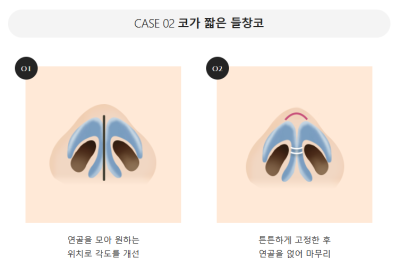
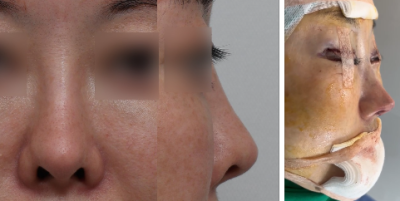
Cartilage is gathered, its angle is adjusted to the desired position, firmly fixed, and then additional cartilage is placed to finish.
Pros and Cons of Artificial Implants and Autologous Tissue
Artificial implants can be broadly divided into silicone, Gore-Tex, etc. Silicone is mostly used to increase the height of the nasal bridge and is recommended for those who desire a safe and natural nasal bridge; it can also be used for nasal tip augmentation as needed. Autologous tissue is most commonly used for the nasal tip and can also be used for nasal bridge augmentation if necessary. It offers the highest stability, with almost no rejection reactions and long-term maintenance without concerns about inflammation.

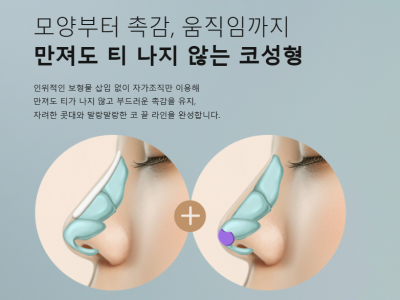

Autologous cartilage rhinoplasty is an excellent method that pursues natural beauty and stability simultaneously. If you wish to improve your external appearance using your own cartilage without worrying about inflammatory side effects, autologous cartilage can be the optimal choice. If you are considering autologous cartilage rhinoplasty, we hope you can achieve an improved nose line by consulting thoroughly with an expert and creating a surgical plan tailored to you.


