2026-07-14
What do beautiful noses have in common? A plastic surgeon shares tips for successful nose surgery (real case reviews)
Discover the secrets to a beautiful nose, focusing on frontal and profile aesthetics, and long-term results. Learn from real case studies and expert advice from a plastic surgeon.


Hello, this is VAVA Plastic Surgery.
When people consider nose surgery and come for a consultation, they often focus primarily on the bridge line. However, the nose is not a 2D structure but a 3D立体 structure. In daily life, people tend to see the front or 45-degree angle more often than the side profile. Therefore, when undergoing nose surgery, the frontal nose line is more important than the side profile.
Today, I will share the secrets to successful nose surgery for achieving a beautiful nose.

Characteristics of an Ideal Frontal Nose
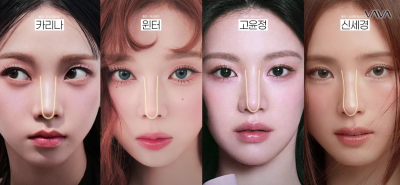

Let's take Karina, Winter, Go Yoon-jung, and Shin Se-kyung, who are representative beauties these days, as examples of nose shapes.
The commonality among these four individuals' noses is that they appear slender and prominent even from the front, with absolutely no unnatural aspects from the side. Furthermore, the columella, which extends down from the nasal tip, is also ideally well-defined.
In conclusion, a slender and prominent appearance from the front, combined with an ideal shape of the columella, can be considered the most ideal frontal line for a nose.
3 Conditions for Successful Nose Surgery
1. Frontal Appearance
<Examples of Unnatural Frontal Views>


In cases of a bulbous nose, a distinct boundary between the nasal tip and the alar cartilage.
When the nostrils appear angular rather than smooth from the front.
When only the nasal tip appears unnaturally pointed.
Example of a bulbous nose from the front
<Examples of Well-Corrected Bulbous Nose Surgery>

When the nasal ridge and tip descend in a straight line, becoming slender closer to the nostrils.
<Examples of Incorrectly Corrected Bulbous Nose Surgery>
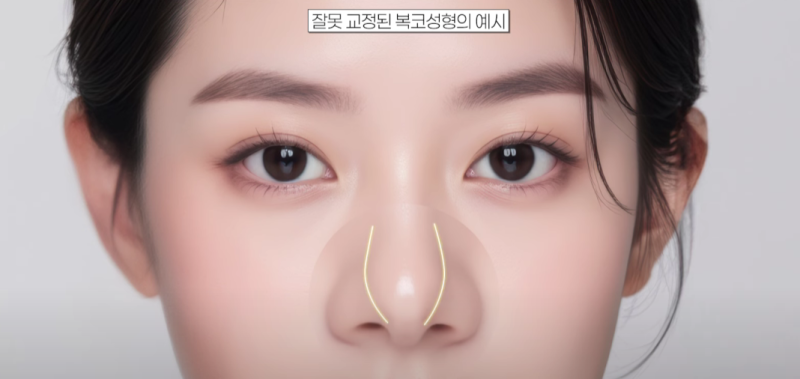
When the bridge descends, becomes slightly convex just above the nasal tip, and then unnaturally slender at the tip.

2. Columella Shape in Profile


<Example of Incorrectly Corrected Columella> <Example of Well-Corrected Columella>
If the point where the nasal tip and lips meet falls in a straight line, it will look very obviously surgically altered.
Therefore, a slight curve at the nasal tip, the nasolabial angle, and the point where the nasal tip and lips meet (columella) is necessary to achieve natural and beautiful results.
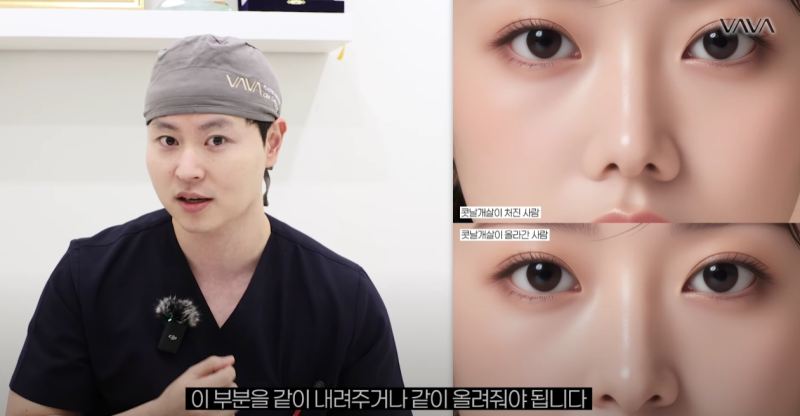
Angle of the Alar Cartilage
People are divided into those with drooping alar cartilage and those with upturned alar cartilage. In such cases, the groove between the nasal tip and lips, called the nasolabial angle, should be lowered or raised accordingly.
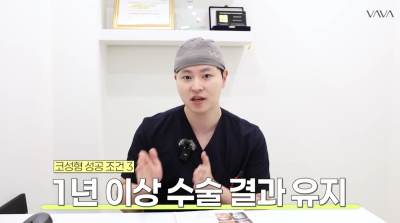

3. Maintaining Surgical Results for Over 1 Year
A nose that looks good at 2 weeks or one month post-surgery is meaningless if the results don't last. Therefore, it's crucial to consider the long-term maintenance period, typically up to one year.

CASE 01. Frontal Bulbous Nose (Piggy Nose)
Columella Lowering + Bulbous Nose Correction
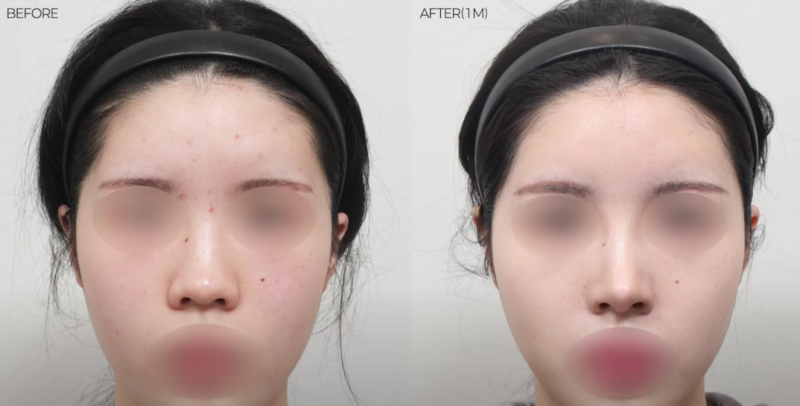
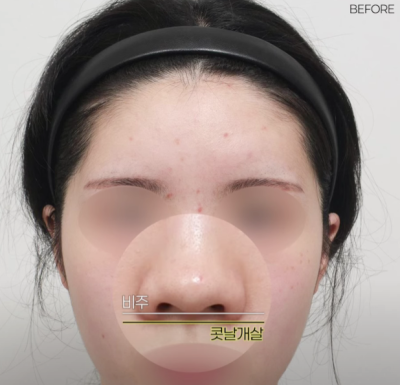
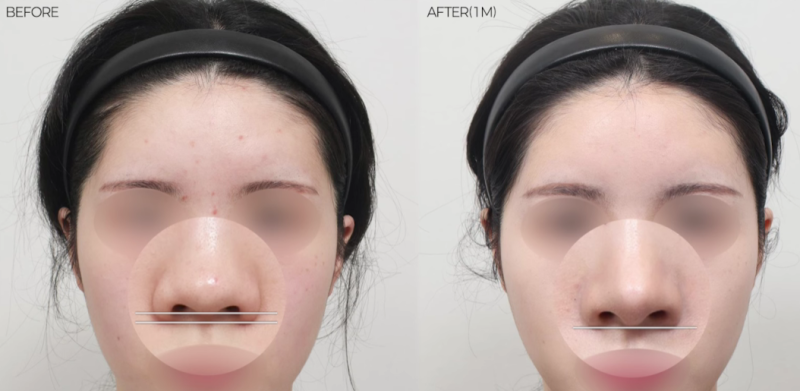
In a case where the nasal tip was round and the columella short when viewed from the front, we improved the frontal line through columella lowering and bulbous nose correction. This resulted in no distinct boundary between the nasal tip and alar cartilage, nostrils that are not angular, and an ideal frontal nose line where the columella is parallel to the alar cartilage.
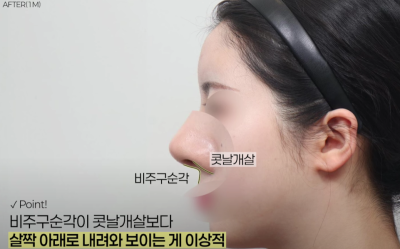
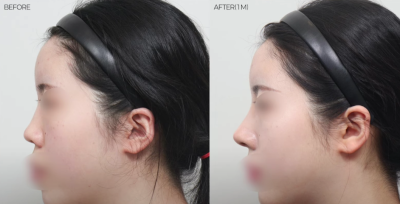
Additionally, for the side profile, we created a curve in the line where the nasal tip and columella descend.
We corrected the nasolabial angle to an ideal line where it appears slightly below the alar cartilage.
CASE 02. Revision Rhinoplasty for a 'Dragon Nose'
Bulbous Nose Correction + Nostril Lowering + Columella Lowering + Contracted Nose Correction
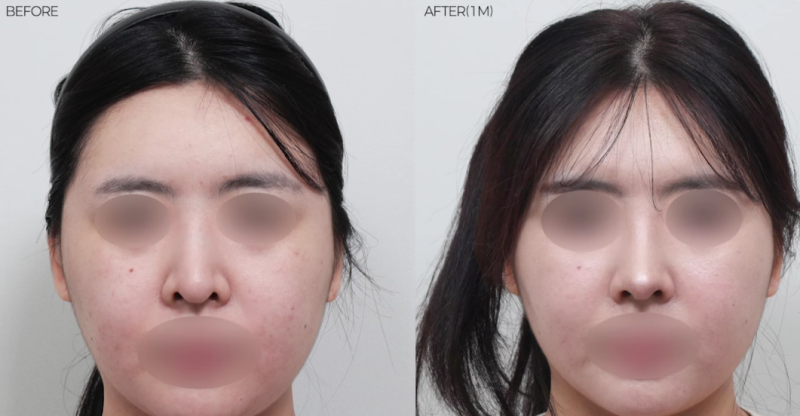
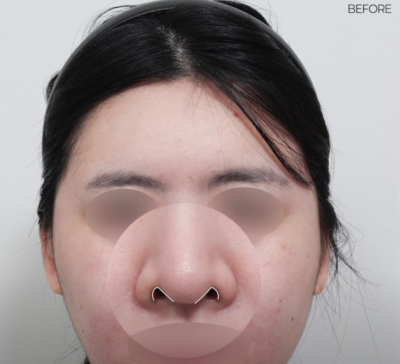
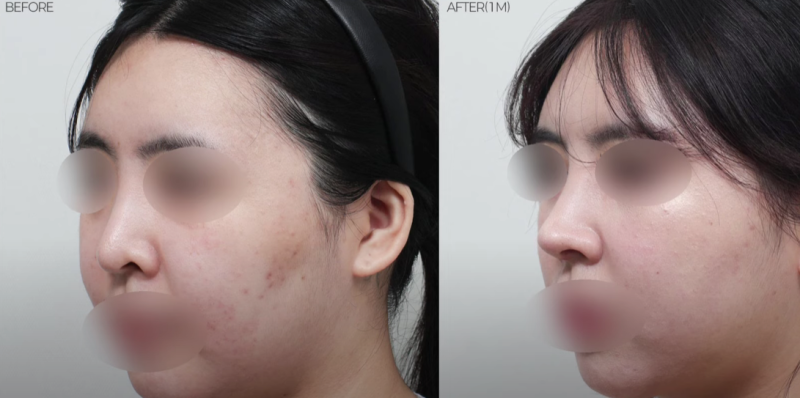
This was a case where, when viewed from the front, there was a boundary between the nasal tip and alar cartilage, and the nostrils appeared upturned and pinched. The patient had previously undergone surgery using autologous costal cartilage. We used donated costal cartilage to make the nasal tip more slender, eliminated the boundary between the nasal tip and alar cartilage, and designed the nostril shape to be smoother, improving it to an ideal line.
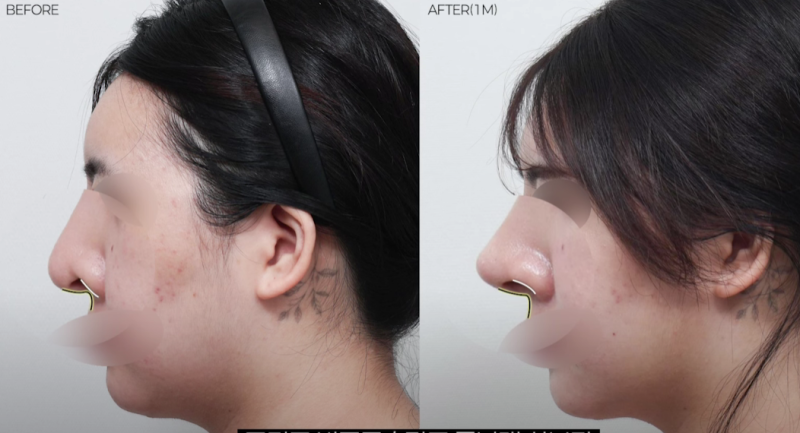
Additionally, for the side profile, we also used autologous costal cartilage. In cases where it was drooping, the support direction was not receiving enough force.
We used donated costal cartilage to prevent the nasal tip from drooping and improved the nasolabial angle to a straight-curved line, allowing it to be positioned slightly below the alar cartilage.
So far, we have discussed the commonalities of beautiful noses, why the frontal line is important in nose surgery, and the conditions for achieving successful results through actual cases.
Nose surgery is not simply about increasing height and changing shape;
it is a surgery where detail and experience are crucial for harmoniously completing the three-dimensional appearance of the entire face.
At VAVA Plastic Surgery, we go beyond simple shape correction
and perform customized nose surgery that considers the balance of the front and side, naturalness, and long-term durability.
If you have any questions or would like to consult about a design suitable for you,
please feel free to contact us anytime.
Thank you.


