2026-09-03
Where to Get Facial Fat Grafting: Understanding the Difference in Engraftment Rate and Design
Learn why engraftment rate and personalized design are crucial when choosing a clinic for facial fat grafting. This article explains how these factors influence the outcome and overall facial impression.
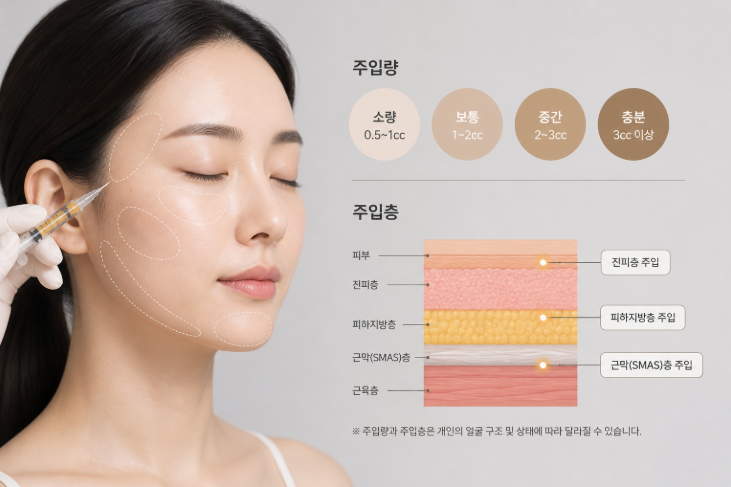
※ This article is intended to provide medical information.
It is not subject to deliberation under Article 56, Paragraph 2 and Article 57 of the Medical Service Act, and is not an advertising post unrelated to the content of deliberation.
Hello,
I am Dr. Park Jung-geun,
Director of Faceplus Plastic Surgery Clinic.

Facial fat grafting is a surgery that replenishes insufficient volume to enhance the three-dimensional appearance of the face.
Consultations are often conducted for areas where hollowness is prominent, such as the forehead, anterior cheekbones, cheeks, and around the nasolabial folds.

However, even with the same fat grafting procedure, the results are not always identical.
This is because the overall impression can change depending on how much fat is engrafted and whether it is designed to suit the face.
Today, I will explain why you should consider both the engraftment rate and individual design when looking for a good facial fat grafting clinic.
Table of Contents | ||
1. When is facial fat grafting considered? 2. Reasons for differences in engraftment rate 3. Why individual design is important 4. Why you should check for a single-surgeon practice |
1. When is facial fat grafting considered?
Facial fat grafting is a method that uses autologous fat to supplement areas with insufficient volume.
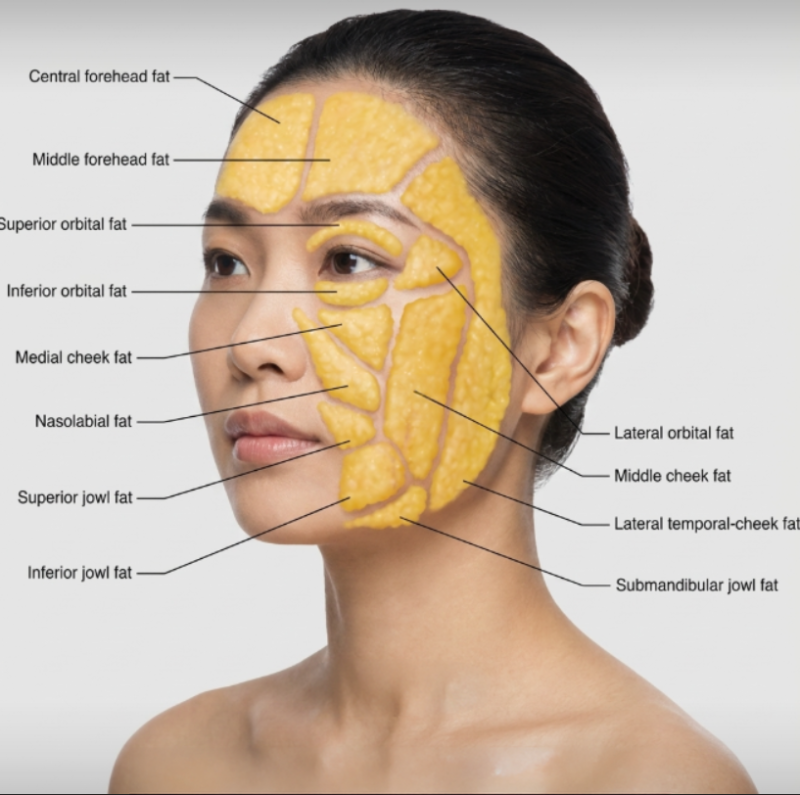
Consultations are often conducted when the forehead appears sunken, there is insufficient volume in the anterior cheekbones, or when concerns exist about sunken cheeks or hollowness around the nasolabial folds.
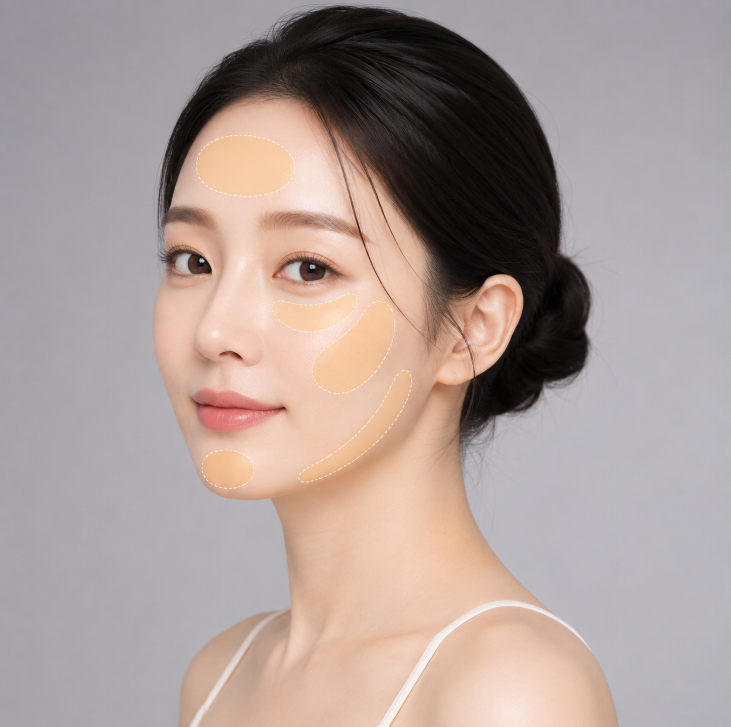
Rather than just filling a specific area like with fillers, plans are often made by considering the overall facial proportions and three-dimensionality.
However, simply injecting a large amount does not necessarily lead to natural results.
If the face shape, skin thickness, and existing fat distribution are not considered, the face may appear puffy or unnatural.
2. Reasons for differences in engraftment rate
In facial fat grafting, the engraftment rate refers to how stably the transplanted fat remains over time.
While autologous fat grafting is widely used clinically, several literatures mention that the long-term survival rate of transplanted fat is difficult to predict.
Furthermore, research related to facial fat grafting explains that results can vary depending on the patient's condition, injection site, and surgical method.
The engraftment rate can vary depending on the method of fat harvesting, purification process, injection volume and layer,
individual constitution, and recovery status.
If an excessive amount is injected at once, some fat may have difficulty settling stably, so it is important to design the procedure by dividing it into appropriate amounts.
3. Why individual design is important
Facial fat grafting is not simply a surgery to fill sunken areas.
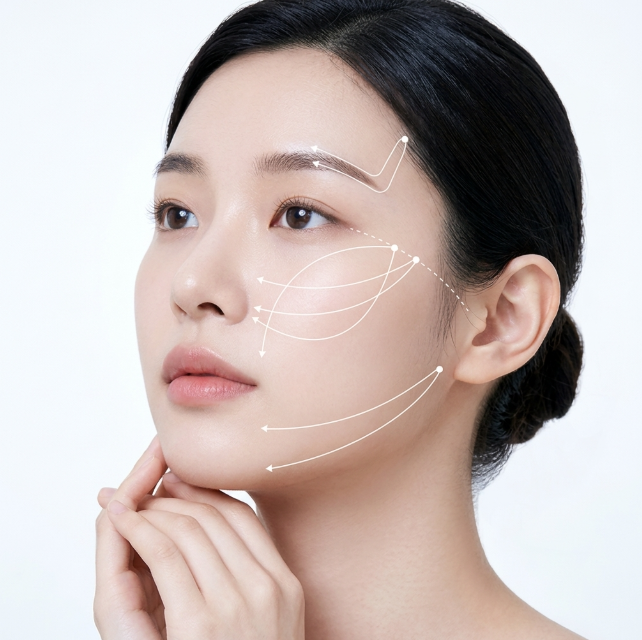
The overall facial impression can change depending on how the forehead, temples, anterior cheekbones, cheeks, and jawline connect to each other.
For example, individuals with insufficient anterior cheekbone volume and those with severe cheek hollowing require different designs, even if the same amount is injected.
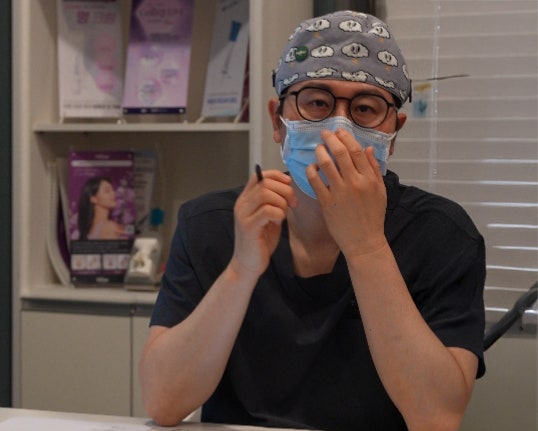
Therefore, when looking for a good facial fat grafting clinic, it is important to check whether they explain designs tailored to each individual's face shape, rather than just emphasizing the engraftment rate.
4. Why you should check for a single-surgeon practice
In facial fat grafting, it is crucial that the design established during the consultation is carried through to the actual surgical process.
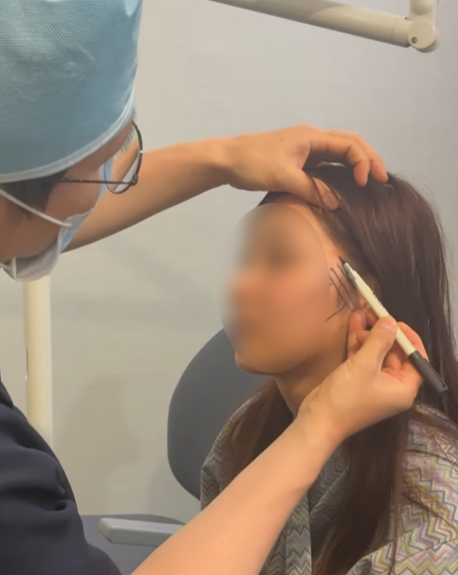
Especially for facial volume, even small differences can alter the impression, so it is necessary to confirm that the consultation, design, and surgical plan are consistently executed.
The reason for checking for a single-surgeon practice is directly related to this point.
It is important to see if the medical staff who conducted the initial consultation directly understands each individual's face shape and areas of concern, and then establishes the surgical plan based on that.
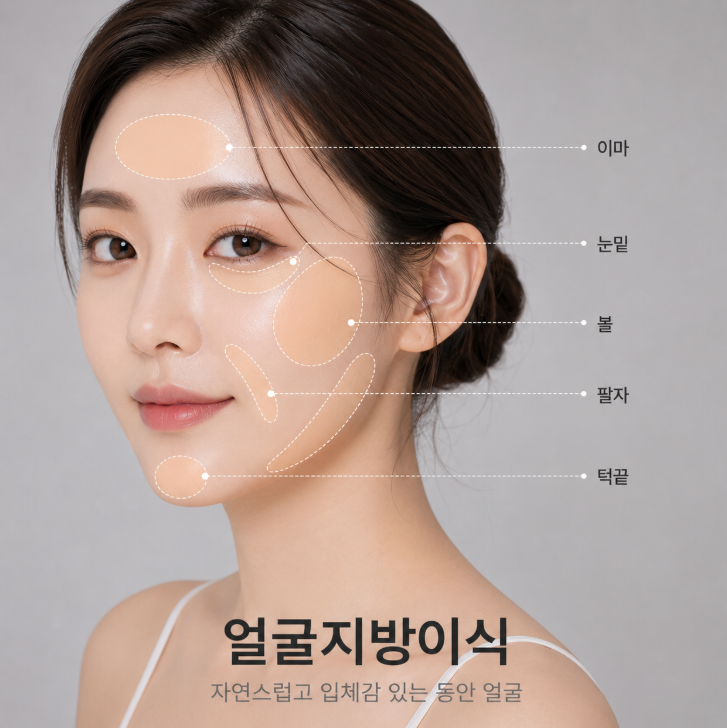
If you are looking for a good facial fat grafting clinic, rather than just looking at reviews or costs, we recommend checking the injection plan considering the engraftment rate, the design tailored to your face shape, and the consistency of care.
-Operating Hours-
Weekdays 9:00 ~ 18:00 Saturdays 9:00 ~ 16:00 Public Holidays / Sundays Regular Holiday |
-Contact Us-
Faceplus Plastic Surgery Clinic | ||
Consultation Phone: 02-541-8500 Inquiries: KakaoTalk Inquiry |
-Directions-
Where to get good facial fat grafting
Frequently Asked Questions
When is facial fat grafting considered?
Facial fat grafting is considered when the forehead appears sunken, there is insufficient volume in the anterior cheekbones, or when concerns exist about sunken cheeks or hollowness around the nasolabial folds. Rather than just filling a specific area like with fillers, plans are made by considering the overall facial proportions and three-dimensionality.
Why is the engraftment rate important for facial fat grafting?
The engraftment rate refers to how stably the transplanted fat remains over time, and it is important because it directly affects the longevity of the surgical results. A high engraftment rate ensures that satisfactory volume can be maintained for a long time.
Why is individual design important for fat grafting?
Yes, individual design is important because it determines the overall impression of the face. To achieve natural and harmonious results, the design must be tailored to the individual's face shape, considering the connectivity of each area such as the forehead, temples, anterior cheekbones, cheeks, and jawline.
What factors affect the engraftment rate of facial fat grafting?
The engraftment rate can vary depending on the method of fat harvesting, purification process, injection volume and layer, and individual constitution and recovery status. It is important to design the procedure by dividing it into appropriate amounts rather than injecting an excessive amount at once.
How does a single-surgeon practice help with facial fat grafting?
A single-surgeon practice has the advantage of ensuring consistency from consultation to design and surgical planning, allowing the surgeon to accurately understand the patient's face shape and areas of concern and reflect them in the surgery. This is particularly important in facial volume surgery, where even small differences can alter the impression.
Is it always better to inject a large amount during facial fat grafting?
No, simply injecting a large amount does not necessarily lead to natural results. If the face shape, skin thickness, and existing fat distribution are not considered, the face may appear puffy or unnatural, and some fat may even have difficulty settling stably.