2026-09-07
Yaksu Station Dental Clinic: Laminate vs. All-Ceramic, Which Treatment is Better?
Comparing laminate and all-ceramic treatments for aesthetic dental improvements, focusing on differences in tooth reduction, indications, and aesthetic outcomes to help patients choose the best option.
Hello.
This is Dr. Kim Tae-young, chief director of Barunyoung Dental Clinic at Yaksu Station.^^
When your front teeth are chipped, you're unhappy with their color, or you want to beautifully change the shape of your teeth, many patients consider two main treatments:
laminates and all-ceramic crowns.
During consultations, patients often ask the same questions:
‘Are laminates better?’ ‘Do all-ceramics last longer?’ ‘Which treatment is right for me?’
While both treatments aim to improve aesthetics, their indications and objectives are clearly different.
Today, I will easily explain the differences between the two treatments and when each is appropriate.
The biggest difference between laminates and all-ceramics
The biggest difference between the two treatments is the extent of tooth reduction.
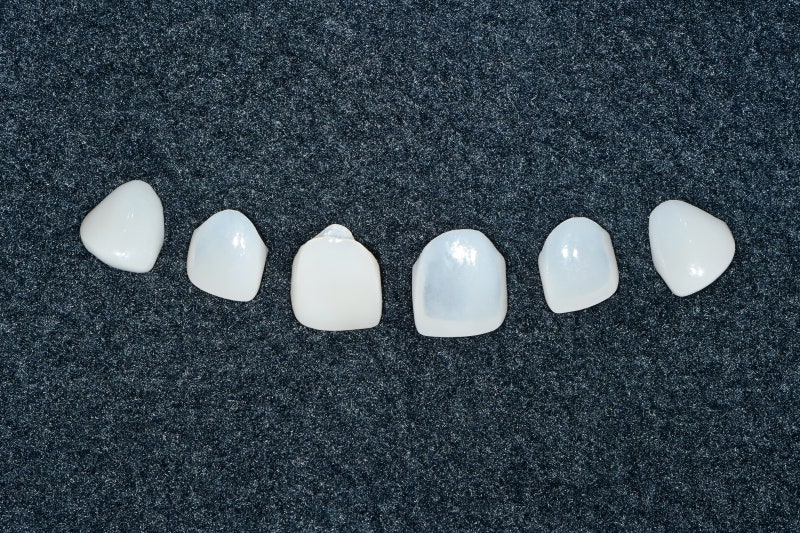
Laminates involve thinly reducing the front surface of the tooth, and sometimes the side surfaces, then bonding a thin ceramic veneer.
All-ceramics, on the other hand, involve reducing the entire tooth and then fabricating a crown that completely covers it.
In short,
Laminates are treatments that preserve the tooth as much as possible.
All-ceramics are treatments that completely cover and protect the tooth.
This is an easy way to understand the difference.
Laminate vs. All-Ceramic Comparison
Category | Laminate | All-Ceramic Crown |
Reduction Scope | Minimal reduction, mainly front surface | Entire tooth reduction |
Indications | Color/shape improvement, minor fractures, anterior alignment correction | Large cavities, root canal treated teeth, major fractures, severe discoloration |
Prosthesis Thickness | Approx. 0.1mm ~ (Optimal 0.5~0.7mm) | Approx. 1.0~1.5mm |
Strength | Favorable for natural tooth preservation, but caution with excessive force | High strength and excellent protective effect |
Aesthetics | Very excellent | Very excellent |
Tooth Preservation | ★★★★★ | ★★★☆☆ |
When laminates are suitable
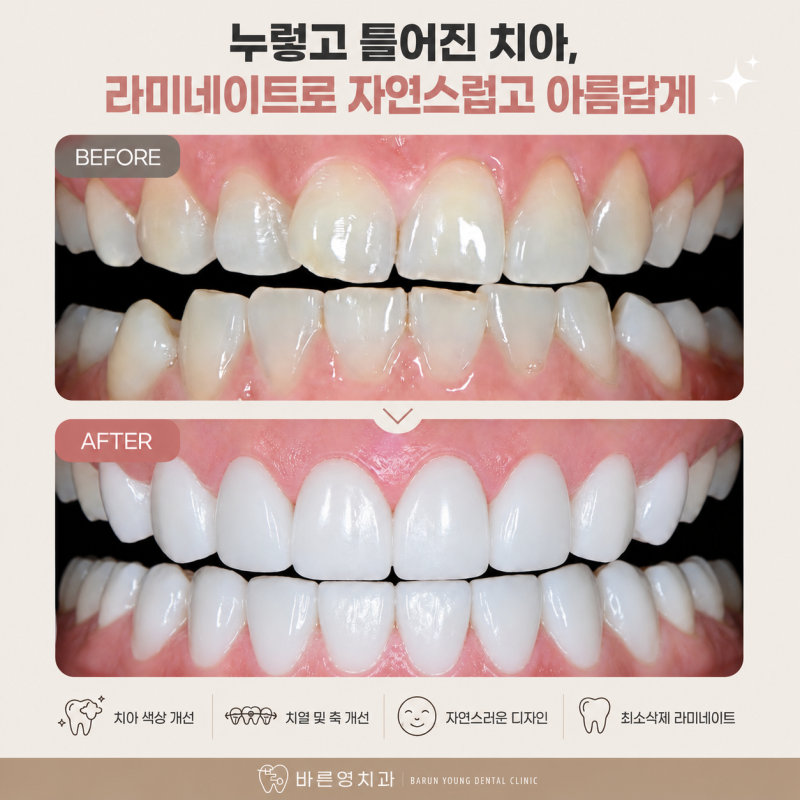
Laminates can be primarily considered in the following cases:
When there are gaps between the front teeth
When you want to slightly change the shape of your teeth
When a front tooth is slightly chipped
When you have relatively bright natural tooth color
When you want to minimize tooth reduction
The biggest advantage is that it can improve aesthetics while preserving healthy teeth as much as possible.
When all-ceramics are needed
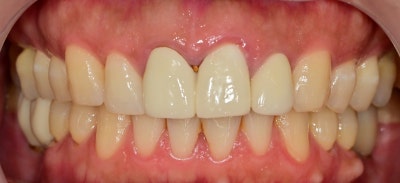
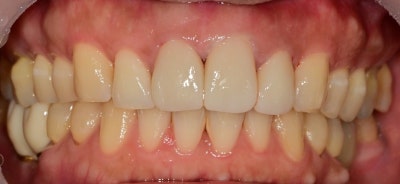
Conversely, all-ceramics are often more suitable in the following cases:
When there is a large cavity
Teeth that have undergone root canal treatment
When the existing restorative material covers a large area
When there is an existing prosthesis
When a tooth is severely chipped
When discoloration is very severe
When the strength of the tooth also needs to be restored
In such cases, a crown that completely covers the tooth can provide more stable long-term results.
What is the difference in aesthetics?
Many people ask,
‘Are laminates more natural?’
To answer directly,
Both treatments can achieve very natural aesthetics.
However, the aesthetic outcome is often more influenced by the original tooth color and condition than by the treatment method itself.
What if the teeth are very yellow?
This is the most important point we explain during consultations.
Laminates are treatments where a very thin ceramic is bonded.
Therefore, if the original tooth color is very yellow or discolored to gray, the existing tooth color may show through the thin laminate.
There is no thin, light-colored prosthesis.
If only laminates are considered without a crown, it may be necessary to secure a slightly greater laminate thickness to achieve the desired color.
Alternatively, depending on the situation, a light-colored adhesive can be used to cover dark tooth shades.
One of the main reasons most patients want laminates is to preserve the tooth as much as possible and minimize tooth reduction.
However, if the tooth discoloration is too severe, an all-ceramic crown that covers the entire tooth may be more advantageous in blocking the color.
That is,
The more severe the tooth discoloration, the more suitable all-ceramics may be compared to laminates.
Therefore, it is important to consider the current color and condition of the tooth together, rather than deciding on treatment solely because ‘laminates are pretty.’
What is the thickness of the prosthesis?
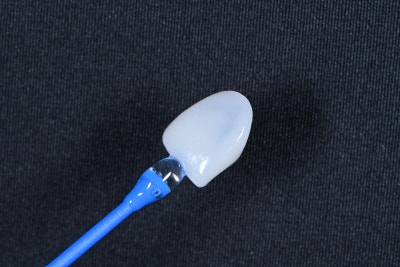
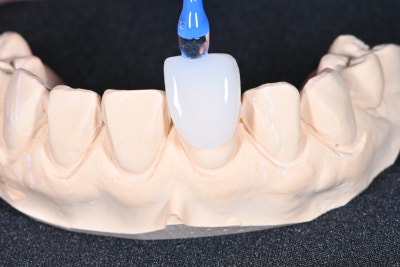
Laminates are generally
A minimum of approximately 0.1mm (for limited areas) ~
Commonly used thickness is 0.5~0.7mm
approximately.
On the other hand, all-ceramics require
Approximately 1.0~1.5mm
of space.
Therefore, all-ceramics require slightly more reduction, but they are advantageous for blocking color and ensuring strength.
What are the differences in materials?
Both treatments use ceramic, but for different purposes.
Laminates use ceramic that focuses on expressing a thin yet natural translucency.
All-ceramics use ceramic that can secure not only aesthetics but also strength, serving to protect the entire tooth.
Recently, various materials such as IPS e.max and zirconia are used, and the appropriate material is selected considering the tooth condition and occlusion.
Laminates are not all the same thickness; they can be formed in various thicknesses depending on the position of the tooth.
Which treatment lasts longer?
Both treatments can last a long time with proper care.
Lifespan is more influenced by factors beyond the type of treatment, such as:
Precise diagnosis
Accurate bonding and fabrication process
Occlusal adjustment
Patient's oral hygiene habits
Regular check-ups
Especially for those with teeth grinding or clenching habits, using a night guard can be helpful.
Which treatment is better?
This is actually the most frequently asked question.
However,
There is no ‘better’ treatment; there is only a treatment that is more suitable for the current condition of your teeth.
If your teeth are healthy, laminates, which minimize reduction, can be a good choice.
Conversely, if there is significant tooth damage or severe discoloration, all-ceramics can provide more stable results.
In conclusion
When providing aesthetic prosthetic consultations at Yaksu Station Dental Clinic, there is one thing I consider most important:
A good treatment is not a trendy one, but one that allows the patient to use their teeth healthily for the longest time.
Both laminates and all-ceramics are excellent treatments, but their indications are clearly different.
Confirming the current tooth condition through a precise diagnosis and then choosing the most appropriate method can lead to satisfactory results.
This has been Barunyoung Dental Clinic at Yaksu Station.^^
We believe that proper treatment leads to proper results.
Key takeaways from today's article
✔ Laminates are aesthetic treatments that minimize tooth reduction.
✔ All-ceramics completely cover the tooth, offering excellent strength and protection.
✔ If teeth are very yellow, a slightly greater laminate thickness may be required.
✔ In cases of very severe discoloration, all-ceramics may be more suitable.
✔ Both treatments offer excellent aesthetics, and the choice of treatment depends on the tooth condition.
✔ Accurate diagnosis and regular maintenance have a greater impact on long-term results than the treatment method itself.
Frequently Asked Questions
What is the biggest difference between laminates and all-ceramics?
The biggest difference is the extent of tooth reduction. Laminates involve minimal reduction, mainly on the front surface, followed by bonding a thin ceramic, whereas all-ceramics involve reducing the entire tooth and fabricating a crown that completely covers it.
In which cases is laminate treatment more suitable?
Laminates are suitable when there are gaps between the front teeth, when you want to slightly change the shape of your teeth, for minor fractures, or when you have relatively bright natural tooth color. They are advantageous for preserving healthy teeth by minimizing tooth reduction.
Is laminate treatment possible for severely discolored teeth?
For very severely discolored teeth, all-ceramics may be more suitable. Since laminates are thin, the original tooth color may show through, so all-ceramics, which cover the entire tooth, are more advantageous for blocking severe discoloration.
Which treatment, laminates or all-ceramics, lasts longer?
Both treatments can last a long time with proper care. The lifespan of the treatment is more influenced by various factors such as precise diagnosis, accurate bonding and fabrication, occlusal adjustment, patient's oral hygiene habits, and regular check-ups.
Is there a difference in aesthetics between laminates and all-ceramics?
No, both treatments can achieve very natural aesthetics. It is explained that the aesthetic outcome is often more influenced by the original tooth color and condition than by the treatment method itself.