2026-09-07
Yaksu Station Dental Clinic: Prepare for Cavity and Root Canal Treatment Even Without Symptoms
Yaksu Station Dental Clinic advises proactive cavity and root canal treatment, even without symptoms, to prevent severe pain and tooth loss. Regular check-ups are crucial for early detection and simpler, less costly interventions.
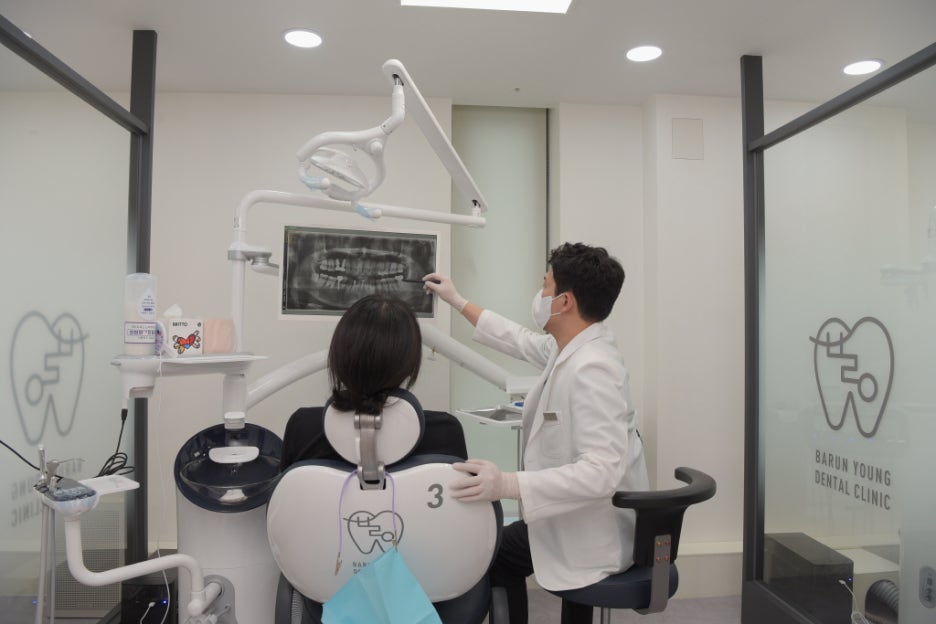


Yaksu Station Dental Clinic: Prepare for Cavity and Root Canal Treatment Even Without Symptoms
Among the most common ailments modern people face, colds and cavities are undoubtedly at the top of the list. While the recent COVID-19 pandemic has raised awareness about colds, cavities often don't cause immediate pain. Many people are unaware they have cavities, or even if they know, they often delay treatment until the pain becomes severe enough to disrupt daily life.
However, even if you don't feel pain right now, cavities can progress over time and eventually lead to tooth loss. Therefore, it's essential to prepare for cavity treatment or root canal treatment at Yaksu Station Dental Clinic, even without specific symptoms, to prevent further deterioration.
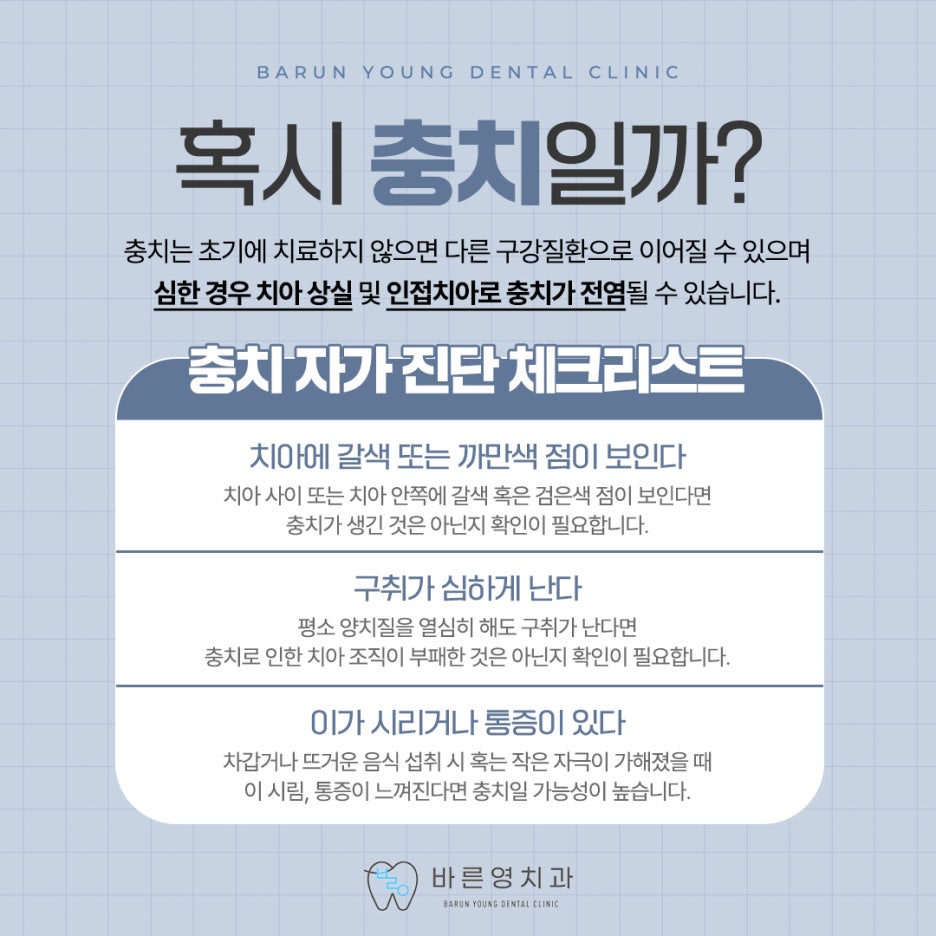
Early-stage cavities are characterized by a lack of specific symptoms. Since pain and other symptoms are rarely present, if a cavity occurs in a hard-to-see area rather than a visible black or brown spot, people often remain unaware until pain develops.
However, by the time pain is felt, the cavity has likely already progressed to the tooth's nerve. Therefore, it's wise to make a habit of regular oral check-ups at Yaksu Station Dental Clinic to ensure no cavities have formed.
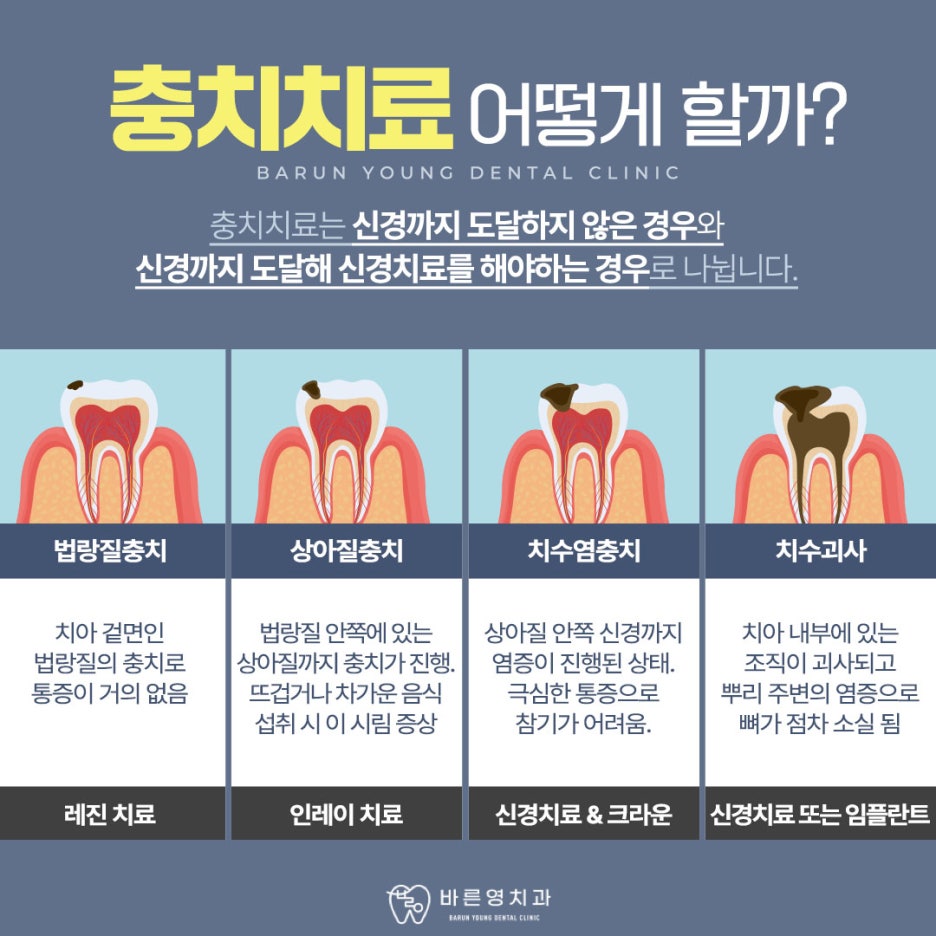
Cavities progress through four stages. As mentioned earlier, stage 1 cavities typically have few symptoms, and are often discovered during a routine oral examination or when visiting Yaksu Station Dental Clinic for another oral condition.
In stage 2, pain may be felt when chewing food or consuming foods with temperature differences, but usually not when food is not being consumed. If you experience even slight sensitivity or a tingling sensation when eating, it's important to visit Yaksu Station Dental Clinic at this stage for cavity treatment to prevent further progression.
Fortunately, stage 1-2 cavities can be prevented from worsening with relatively simple same-day treatments like resin fillings, inlays, or onlays. However, once a cavity progresses to stage 3, the treatment methods become more complex.
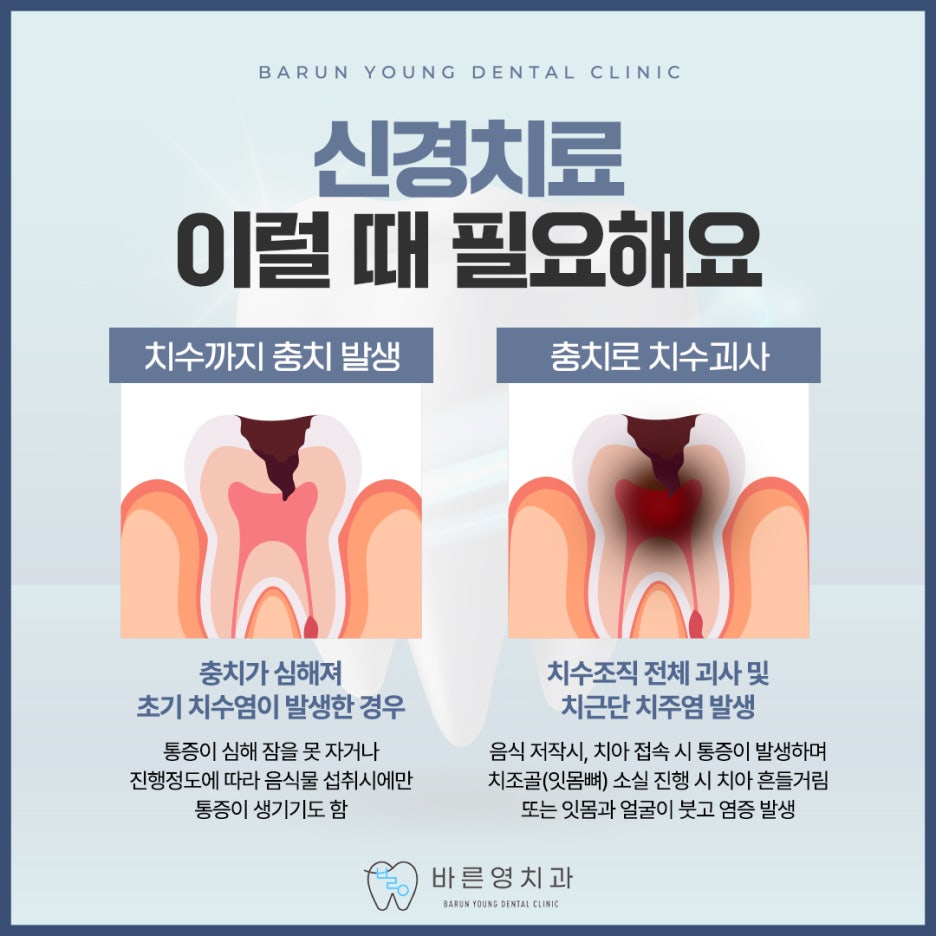
In stage 3 or beyond, the cavity has already spread to and contaminated the tooth's nerve, causing severe, unbearable pain, such as constant sensitivity or tingling, even without eating. At this point, more than 50% of the natural tooth is already damaged. Root canal treatment is performed to treat the contaminated nerve, followed by crown treatment to protect the remaining natural tooth. Unlike stages 1-2, this treatment typically requires 2-3 visits, making it longer and more expensive.
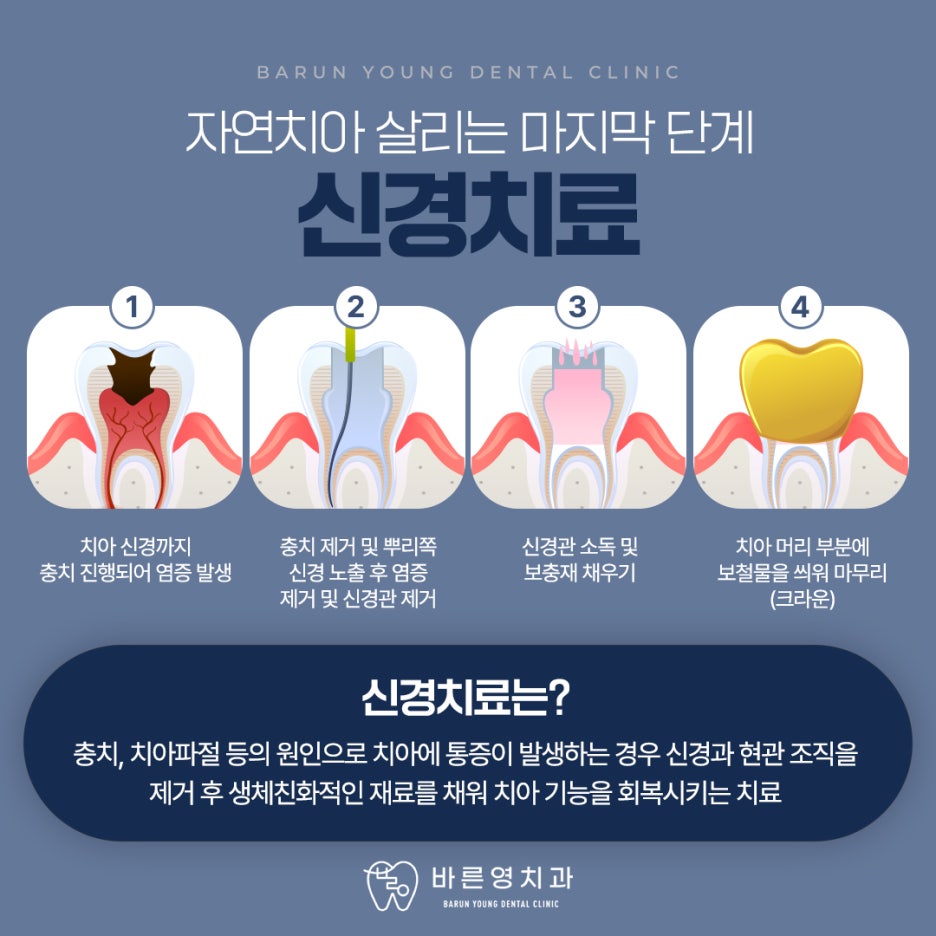
In summary, it's best to receive cavity treatment at Yaksu Station Dental Clinic during stages 1-2, before root canal treatment becomes necessary. Even if you were unaware of a cavity and it has reached stage 3, it's crucial to preserve the remaining natural tooth through root canal and crown treatment at Yaksu Station Dental Clinic.
This is because if it progresses beyond stage 3 to stage 4, not only is the tooth nerve contaminated, but the alveolar bone (jawbone) is also affected. At this point, there is often little natural tooth remaining, and it becomes difficult to save or preserve, necessitating extraction and implant treatment.
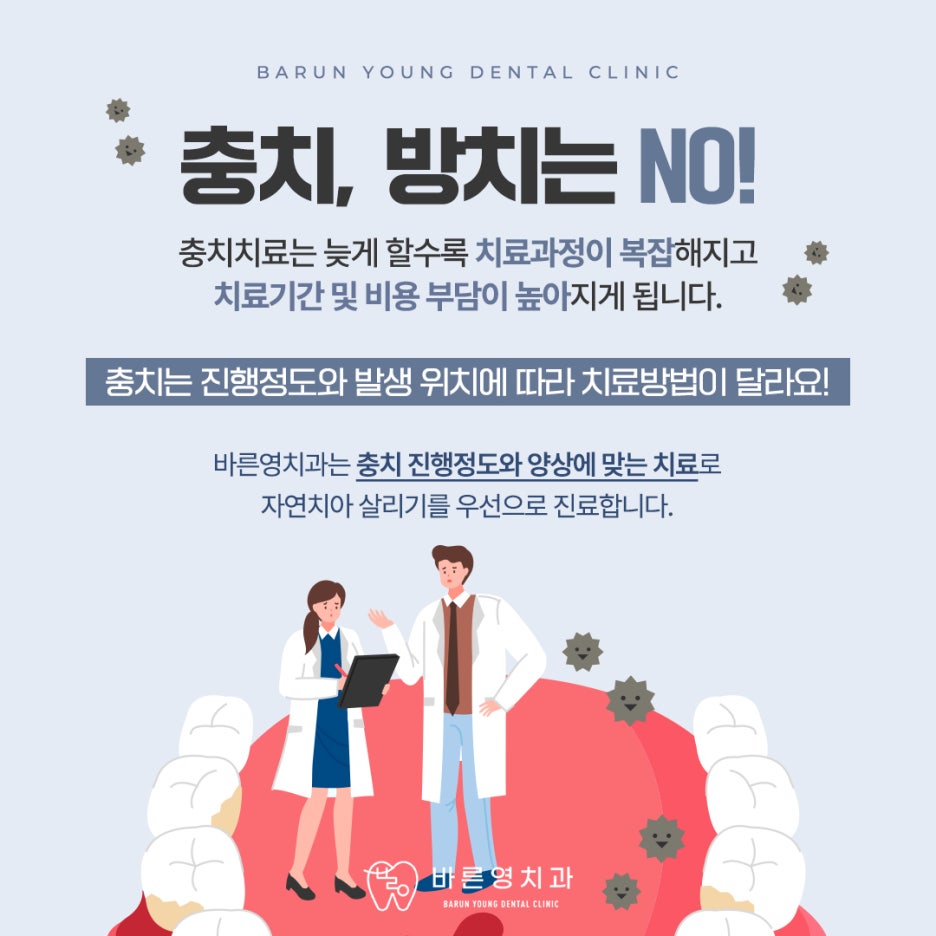
For these reasons, it's advisable to have regular oral check-ups at Yaksu Station Dental Clinic to check for cavities and any oral diseases or habits that might cause them. Additionally, maintaining good habits like thorough brushing, using dental floss and interdental brushes to remove plaque, and regular scaling to remove any plaque missed in daily cleaning are excellent ways to prevent cavities.
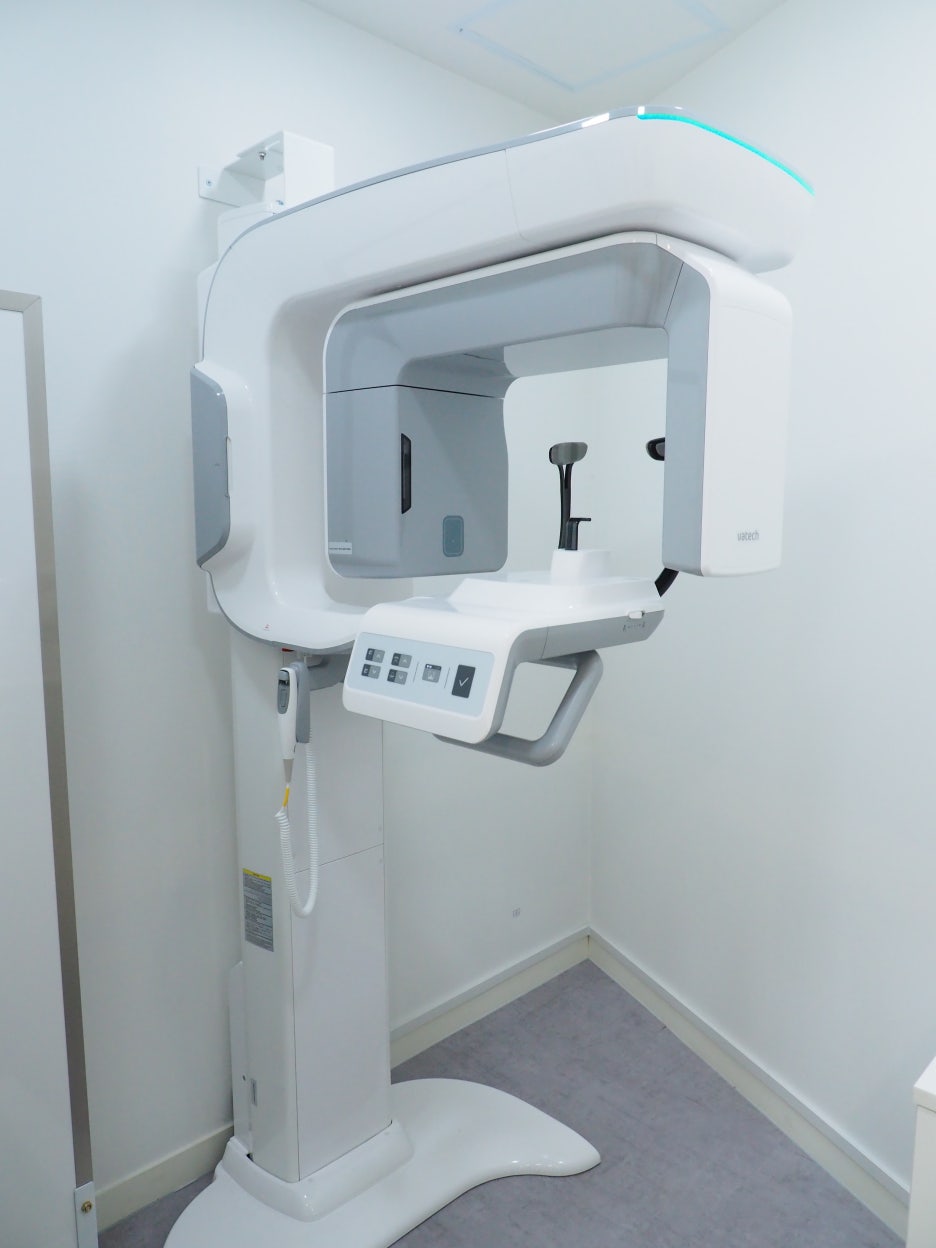
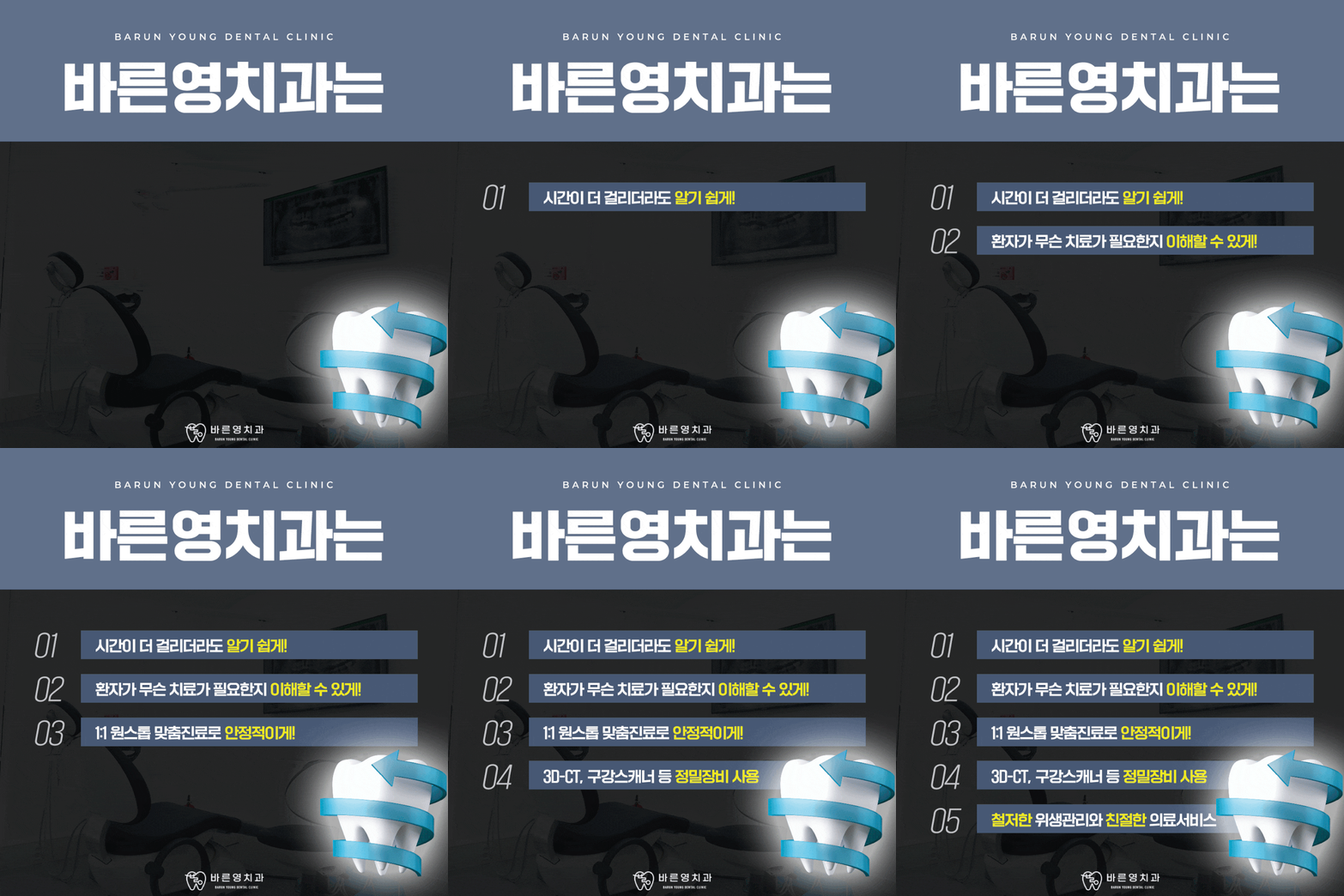
At Yaksu Station Dental Clinic, before any dental treatment, we meticulously examine the oral cavity, including areas difficult to see with the naked eye, using university hospital-grade low-dose 3D-CT equipment. We then provide cavity treatment and root canal treatment tailored to the patient's cavity progression stage, aiming to save and preserve natural teeth.
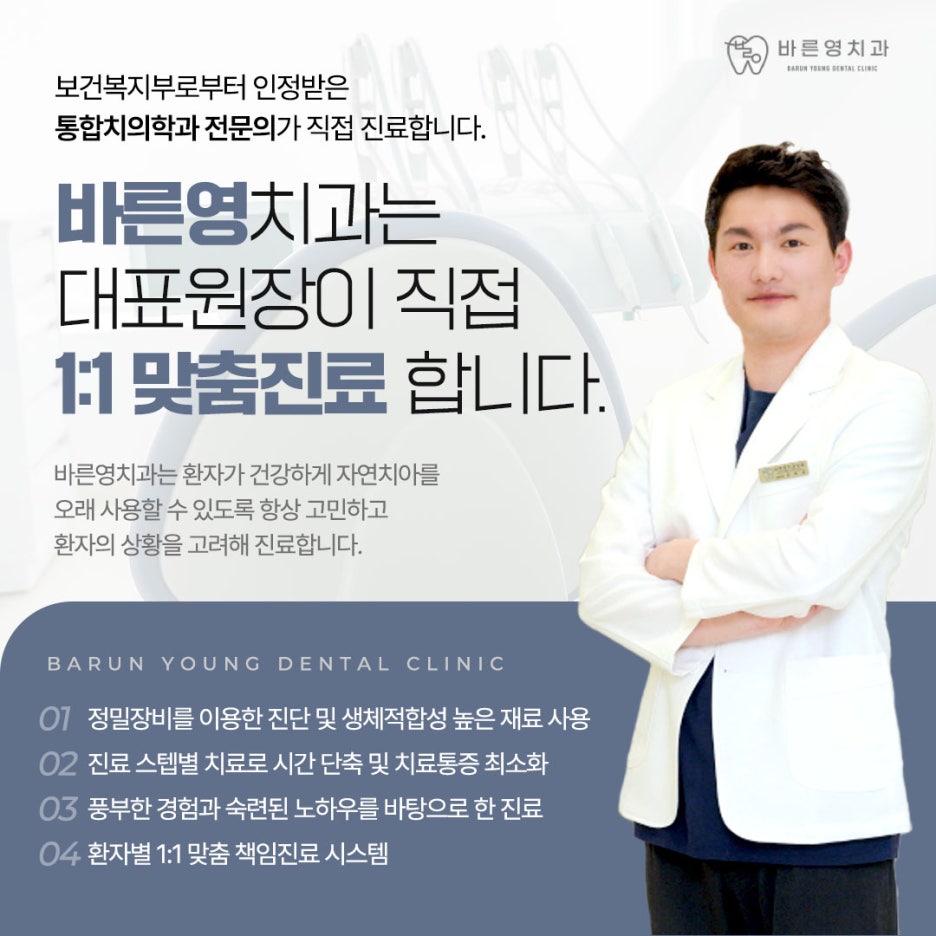
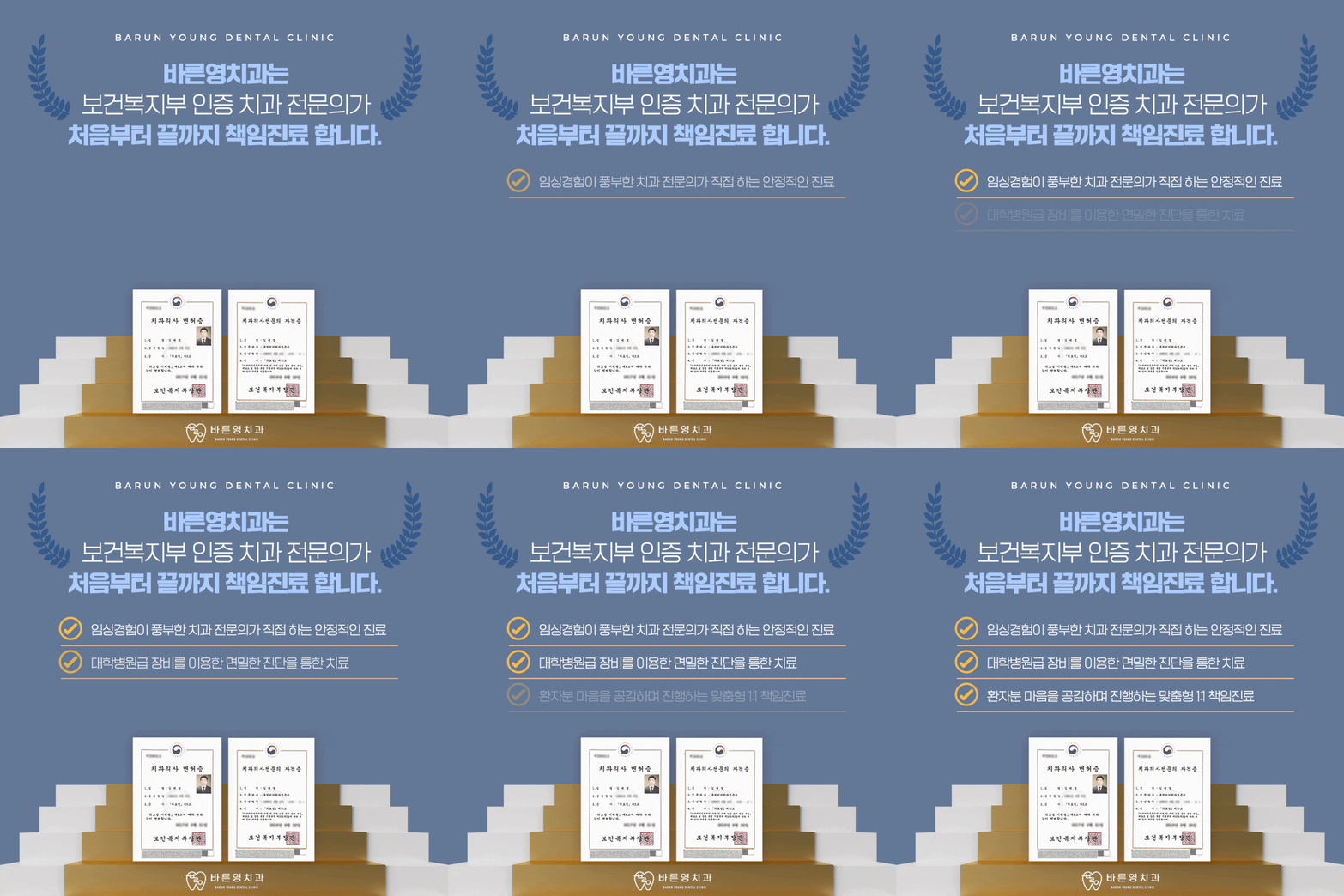
All treatment procedures are personally performed by a director who is a specialist in integrated dentistry. Even if a cavity is severe or if another dental clinic has already recommended extraction and implant treatment, our principle is to carefully consider and diagnose whether there is still a way to save the natural tooth.

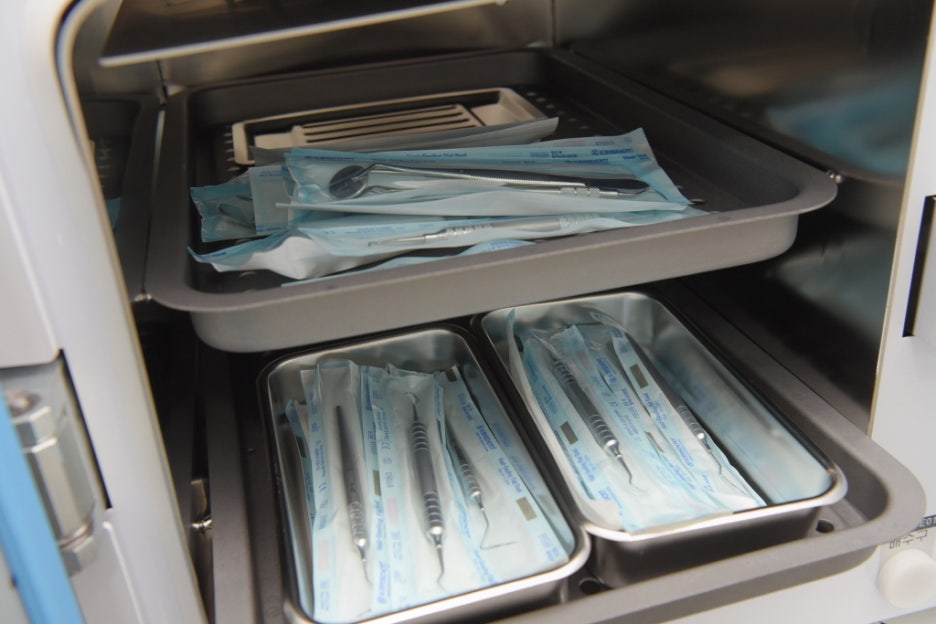
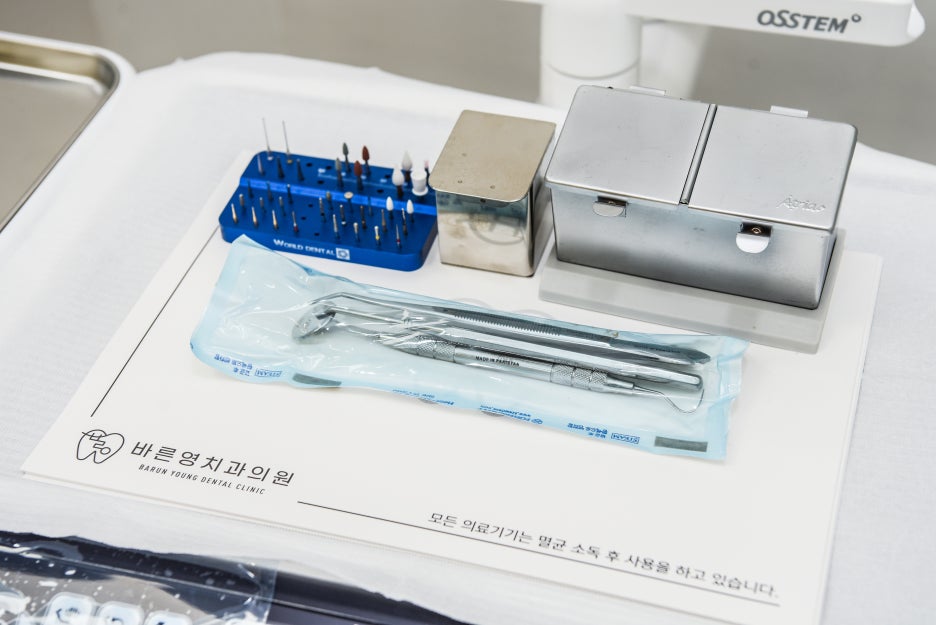
All medical instruments used at Yaksu Station Dental Clinic are meticulously managed through a 9-step sterilization system, adhering to the principle of one instrument per patient. Furthermore, in all treatment processes, saving natural teeth is our top priority.
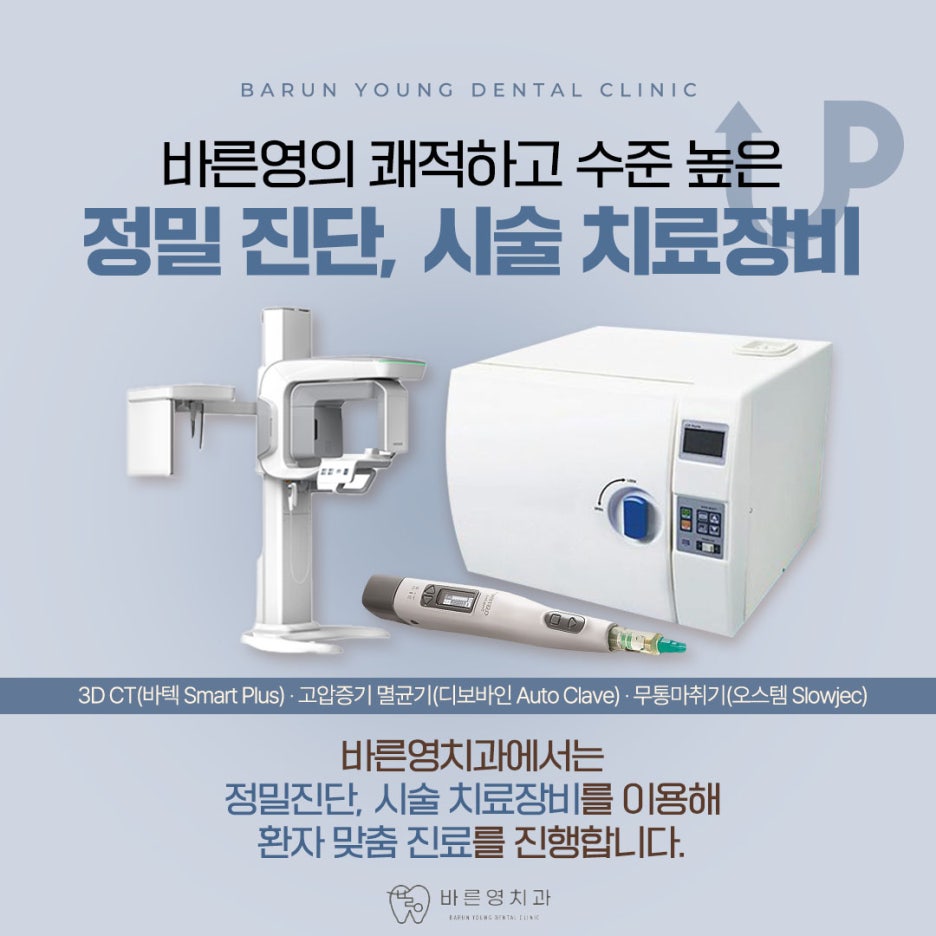
We understand that some individuals may be delaying cavity or root canal treatment at Yaksu Station Dental Clinic due to concerns about pain during the procedure. To alleviate patient discomfort, Yaksu Station Dental Clinic uses digital pain-free anesthesia machines and offers various pain management systems, including gargle anesthesia and topical anesthesia.
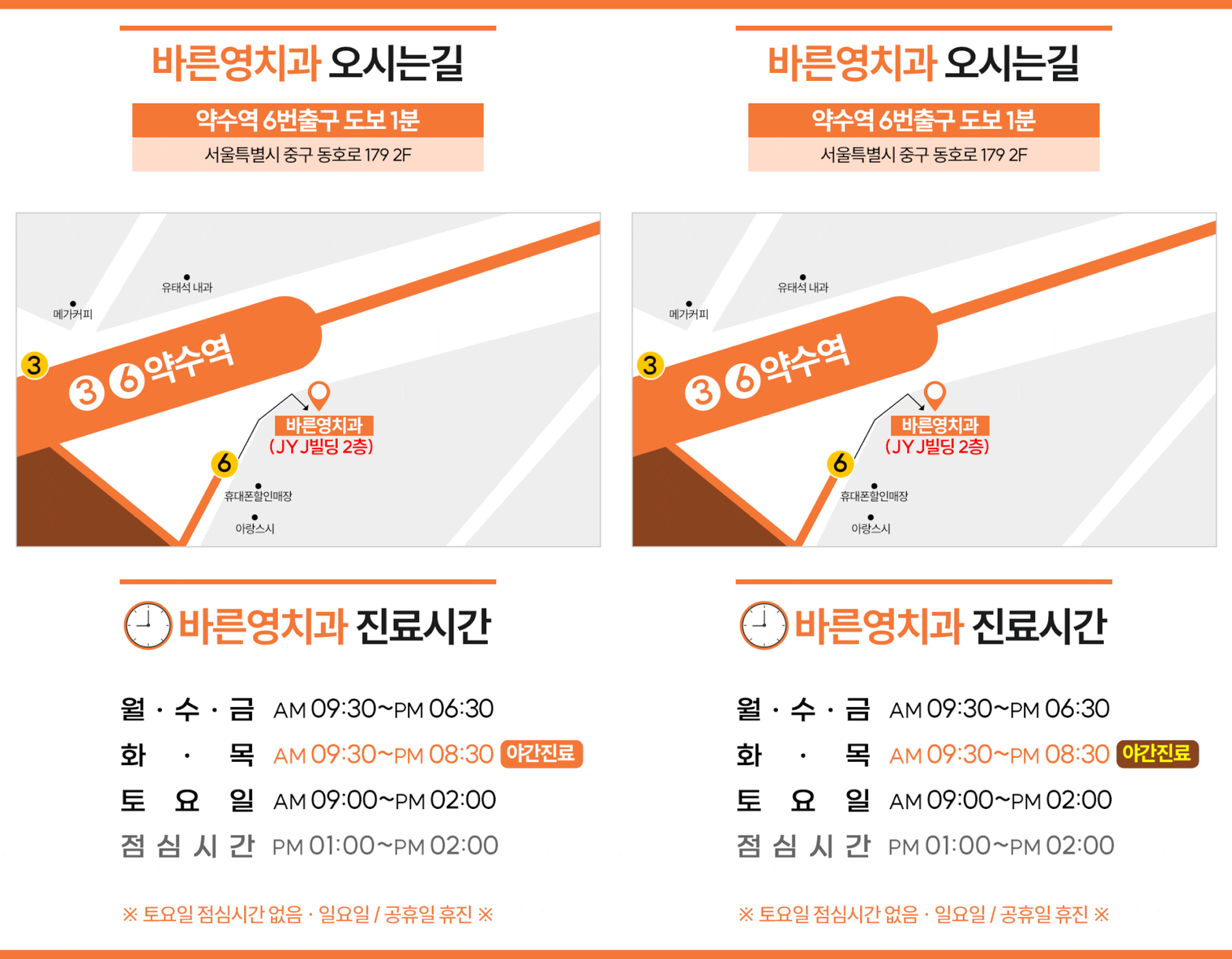
Yaksu Station Dental Clinic, located a 1-minute walk from Yaksu Station Exit 6, offers evening appointments until 8:30 PM on Tuesdays and Thursdays. To reduce waiting times, we recommend making a reservation in advance via Naver Reservation, phone inquiry, or KakaoTalk inquiry.




Frequently Asked Questions
Are there symptoms in the early stages of a cavity?
No, in the early stages (stage 1) of a cavity, there are usually no specific symptoms like pain. If a cavity occurs in an area that is difficult to see with the naked eye, people often don't know they have a cavity until pain is felt.
I'm curious about the treatment methods for each stage of cavity progression.
Cavities progress through four stages. Stage 1-2 cavities can be prevented from worsening with relatively simple treatments such as resin, inlays, or onlays. From stage 3, the tooth nerve is contaminated, requiring root canal and crown treatment. In stage 4, extraction and implant treatment should be considered.
When is root canal treatment necessary?
Root canal treatment is necessary when a cavity has progressed to stage 3 or beyond, contaminating the tooth nerve. At this point, you will experience severe, unbearable pain, such as constant sensitivity or tingling, even without eating.
What are good habits for preventing cavities?
Regular oral check-ups are important for cavity prevention. Additionally, thorough brushing, using dental floss and interdental brushes to remove plaque, and regular scaling to manage plaque that cannot be removed in daily cleaning are good habits for preventing cavities.
Can I receive cavity treatment without pain at Yaksu Station Dental Clinic?
Yes, Yaksu Station Dental Clinic uses digital pain-free anesthesia machines to reduce patient discomfort during treatment. We also apply various pain management systems, including gargle anesthesia and topical anesthesia, to provide comfortable care.
What are the evening clinic days and hours at Yaksu Station Dental Clinic?
Yaksu Station Dental Clinic offers evening appointments until 8:30 PM on Tuesdays and Thursdays. To reduce waiting times, we recommend making a reservation in advance via Naver Reservation, phone, or KakaoTalk inquiry.