2026-07-09
From Epicanthoplasty Revision Cost to Popular Eye Surgery Trends Nowadays
Explore current eye surgery trends focusing on natural, harmonious results, including epicanthoplasty revision, and the differences between various double eyelid lines and surgical methods.


From Epicanthoplasty Revision Cost to Popular Eye Surgery Trends Nowadays - Clyve Plastic Surgery Clinic
When considering eye surgery, the first questions that come to mind have changed significantly from before.
Rather than, ‘How big can I make my eyes?’
Often, the primary concern now is, ‘What kind of eyes look natural these days?’
In fact, during consultations, we frequently hear people say they want to refine their eyes because the eye surgery designs popular in the past no longer suit their current facial aesthetic. Especially elements that greatly influence the impression of the eyes, such as double eyelid lines or epicanthoplasty, are bound to have varying satisfaction levels as trends change. Consequently, there's a growing trend where people are not simply opting for new surgeries, but rather reviewing existing ones and considering revision or adjustment, naturally leading to an increase in inquiries about epicanthoplasty revision costs.
What's different about the popular double eyelid lines nowadays?

Looking at recent eye surgery trends, the common keywords that emerged were ‘not excessive’ and ‘harmony’. While in the past it was important to make the eyes as defined as possible, now the key criterion is whether they blend well with the overall facial impression.
Within this trend, double eyelid lines can largely be categorized into in-line, in-out line, semi-out line, and out-line. Each line clearly has its pros and cons, and following a trend didn't guarantee the same results for everyone. So, nowadays, the question ‘Which line is trending?’ has been largely replaced by ‘Which line suits my face?’
To be more specific, the differences between double eyelid lines
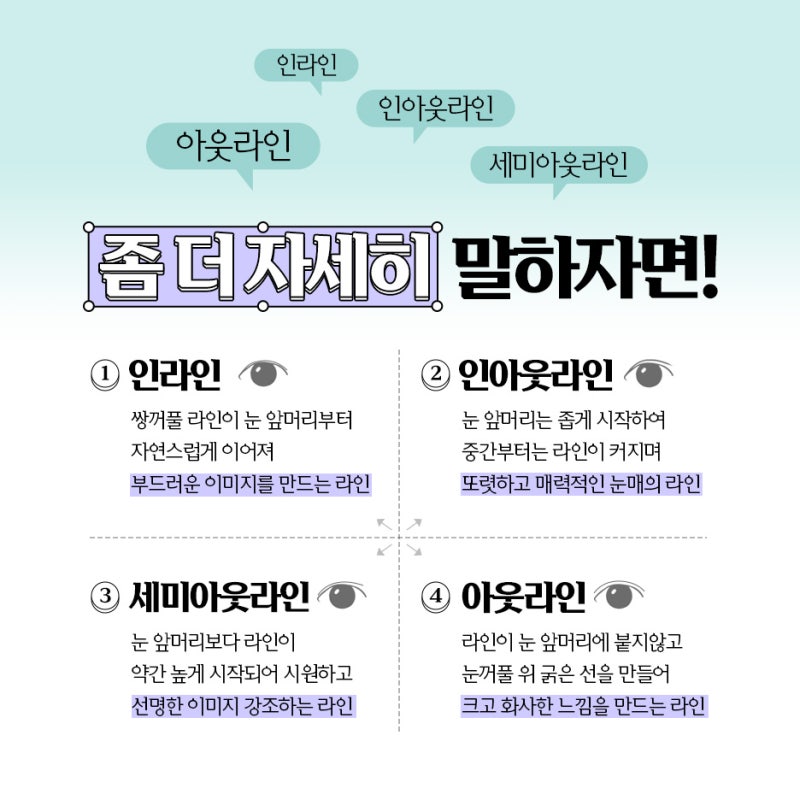
The in-line is a form where the double eyelid line naturally extends from the inner corner of the eye, helping to create a soft and gentle image. It's consistently preferred among those considering eye surgery for the first time because it maintains a relatively natural look even without makeup.
The in-out line starts low at the inner corner of the eye but the line becomes more prominent from the middle, creating a defined yet not overwhelming impression. It's one of the most frequently chosen lines nowadays, suitable for those who value a balance between naturalness and clarity.
The semi-out line is a form where the line is slightly more visible than the in-out line, characterized by making the eyes look refreshing while reducing an excessive feeling. The out-line, where the line doesn't attach to the inner corner of the eye and clearly forms above the eyelid, was advantageous for emphasizing a large and bright image.
As such, even with the same double eyelid surgery, the impression can vary greatly depending on the line. Therefore, the trend is now shifting towards considering the existing eye shape and face shape together, rather than blindly following trends. Amidst these changes, there's also an increasing number of cases where people review designs chosen in the past and consider epicanthoplasty revision costs.
So, what double eyelid lines do men prefer?

Male eye surgery trends had a clearer direction than female trends. In most cases, ‘a subtle change, as if nothing was done’ was considered most important, and many desired eyes that looked defined but without obvious signs of surgery.
Based on these criteria, the most chosen line for men is the in-line. An in-line, close to a hidden double eyelid, helps soften the impression by refining the eye shape rather than overly emphasizing the eyes. In cases where individuals feel their impression became too strong due to previous epicanthoplasty or out-line surgery, they are opting for revision to regain natural eye contours, and consultations regarding epicanthoplasty revision costs are often conducted simultaneously during this process.
The most frequently asked question: The difference between non-incisional and incisional methods
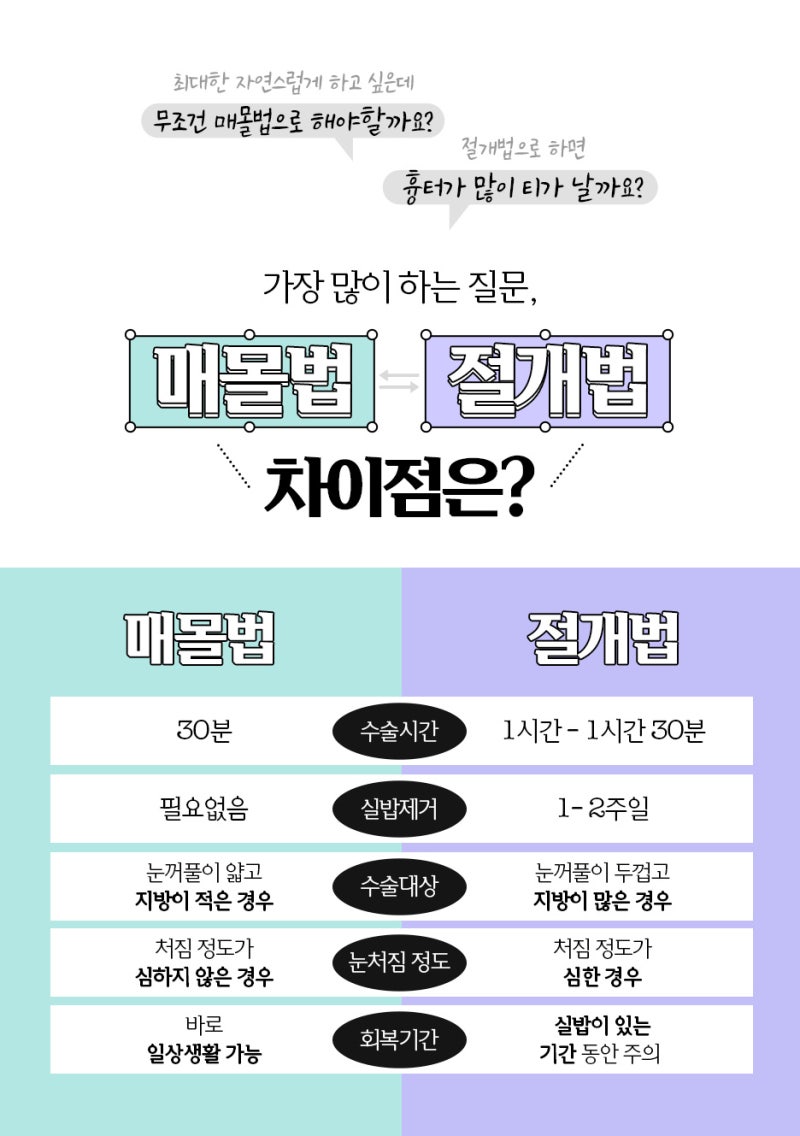
A question that's always present in eye surgery consultations is the difference between the non-incisional (suture) method and the incisional method. However, nowadays, these two are not simply judged by recovery time or the presence of scars.
The non-incisional method is suitable for cases where the eyelid skin is relatively thin and doesn't have much fat, offering the advantages of quick recovery and easy return to daily life. On the other hand, the incisional method can yield more stable results for those with thick eyelid skin, a lot of fat, or accompanying drooping.
The important point is that the surgical method itself should not follow trends, but rather be determined by the condition of the eyes. When this criterion is not met, problems like the line loosening or appearing excessive can occur over time, sometimes leading to considerations of revision or reoperation, and consequently, epicanthoplasty revision costs.
Each surgical method proceeds as follows

The non-incisional method involves forming a double eyelid line using some tissue without incising the skin, then connecting and fixing it to the muscle that opens the eye. In contrast, the incisional method involves making an incision along the line and, if necessary, performing fat removal or upper eyelid structural adjustment together to create a more stable line.
Since the processes themselves are different, choosing without accurately understanding one's eye condition could lead to low satisfaction. Therefore, it has become important to set the direction through professional consultation, whether it's at the initial stage of considering surgery or when wanting to reverse or refine existing surgery.
Why epicanthoplasty revision is gaining attention nowadays
Epicanthoplasty is a surgery that widens the horizontal length of the eye to create a refreshing impression, but if performed excessively, it can make the eyes appear too close together or create a sharp impression. For this reason, recently, rather than undergoing new epicanthoplasty, choosing to revise existing epicanthoplasty to achieve balance has become a trend.
Epicanthoplasty revision is not simply about covering; it's a process that must consider existing scars and tissue condition together. The difficulty varies depending on the individual's eye structure and the scope of previous surgery, so the epicanthoplasty revision cost cannot be uniform, and sufficient consultation is absolutely necessary.
One thing you must know before eye surgery

The current eye surgery trend was clearly moving towards a common direction of ‘naturalness’. However, trends are merely references, not standards to be followed exactly. The same design can produce completely different results depending on the face shape and eye contour.
Especially when revision or readjustment is needed, it was important to accurately identify the current eye condition and desired direction, rather than simply comparing costs. While epicanthoplasty revision cost can be one of the criteria for selection, it's good to remember that accurate diagnosis and planning are ultimately the factors that determine the satisfaction of the result.
Eye surgery is not a one-time decision; it's a process that should maintain a natural look over time. Finding the eye shape that suits you, rather than following trends, can be seen as the biggest change in current eye surgery trends.





Frequently Asked Questions
What are the current eye surgery trends?
Recent eye surgery trends emphasize ‘not being excessive’ and ‘harmony’. The focus is on creating natural-looking eyes that blend well with the overall facial impression, rather than simply making the eyes as defined as possible.
What are the types of double eyelid lines?
Double eyelid lines can largely be categorized into in-line, in-out line, semi-out line, and out-line. Each line creates a different impression depending on its starting point at the inner corner of the eye and its height, and it's important to choose one that matches the individual's eye shape and face shape.
Why is epicanthoplasty revision gaining attention?
Epicanthoplasty revision is gaining attention to improve cases where excessive epicanthoplasty has made the eyes appear too close together or created a sharp impression, aiming to restore balanced and natural-looking eyes. It requires a delicate approach that considers existing scars and tissue condition.
What is the difference between the non-incisional and incisional methods?
The non-incisional method forms a double eyelid line without skin incision, offering faster recovery. The incisional method, however, involves an incision to perform fat removal or structural adjustment, providing stable results for thick eyelids or drooping. The appropriate method varies depending on the eye condition.
What are the trends in male eye surgery?
Male eye surgery places the greatest importance on ‘a subtle change, as if nothing was done’. Men prefer naturalness where the eyes look defined but without obvious signs of surgery, and they primarily choose in-lines, which are close to hidden double eyelids.
Is the epicanthoplasty revision cost the most important factor?
No, the epicanthoplasty revision cost is only one of the criteria for selection. The most important factors are an accurate diagnosis of the current eye condition and professional planning that considers the desired direction. For satisfactory results, diagnosis and planning should take precedence over cost.