2026-09-03
Facelift: The ‘Direction of Pull’ is Crucial for Improving Nasolabial Folds
Understanding the importance of the 'direction of pull' in facelifts for natural and effective improvement of nasolabial folds, considering the underlying causes of sagging.
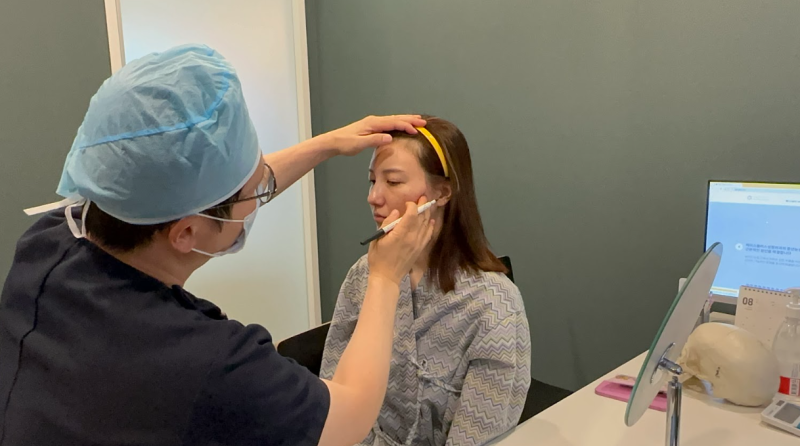
※ This article is for the purpose of providing medical information.
It is not subject to deliberation under Article 56, Paragraph 2 and Article 57 of the Medical Act,
and we inform you that it is not an advertisement unrelated to the content of deliberation.
Hello,
I am Dr. Jung-Keun Park,
Director of Face Plus Plastic Surgery Clinic.

Among the changes that become most noticeable with age,
nasolabial folds are one of the first.
Many people consider a facelift due to the deepening nasolabial folds
they see every time they look in the mirror.
However, a facelift is not simply
a surgery that pulls the skin upwards.
Especially, nasolabial folds are not just a skin issue;
they are also related to changes in the deep tissues of the face,
so the direction in which the tissues are moved
can significantly affect the results.
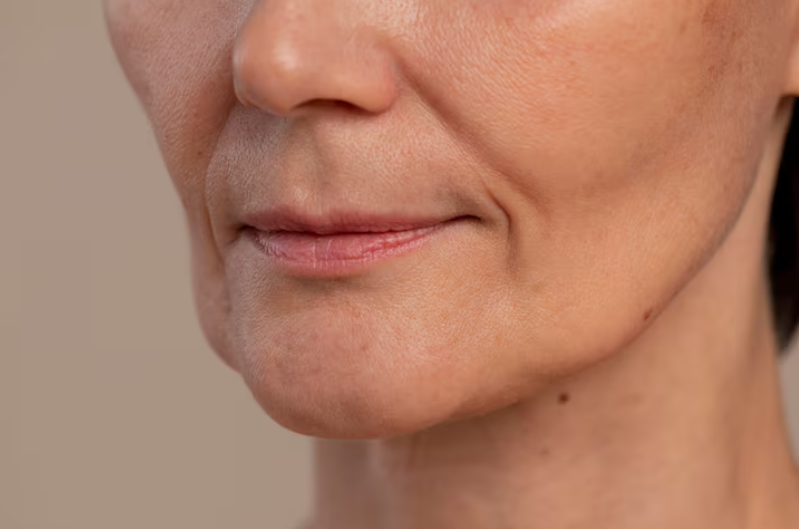
Today, we will delve into why the ‘direction of pull’ is crucial
when improving nasolabial folds with a facelift.
Table of Contents | ||
1. Why Nasolabial Folds Appear 2. The Importance of the Direction of Pull 3. Natural Facelift 4. What to Check Before Surgery |
1. Why Nasolabial Folds Appear
Many people believe that nasolabial folds appear
because the skin sags.
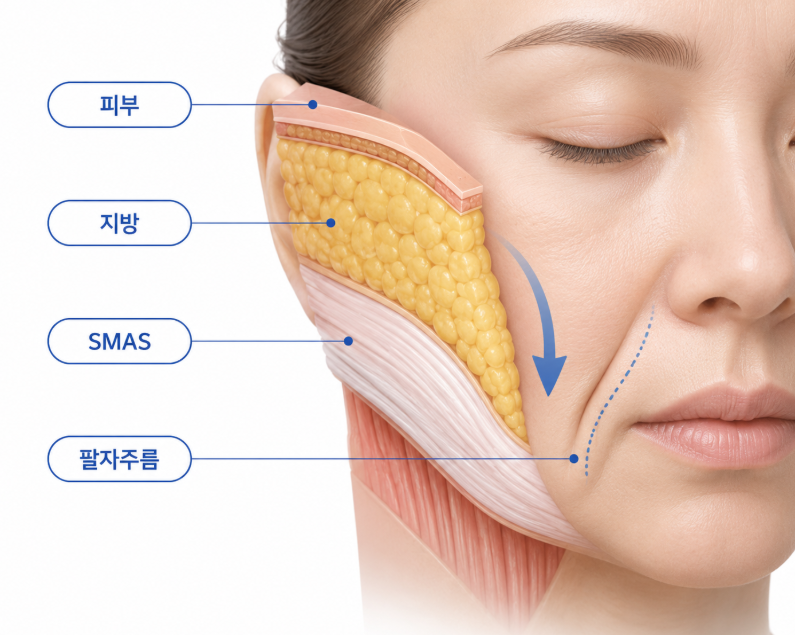
However, in reality, the wrinkles often deepen not only due to the skin but also as the supporting structures of the face, such as the fat layer, retaining ligaments, and SMAS layer, descend.
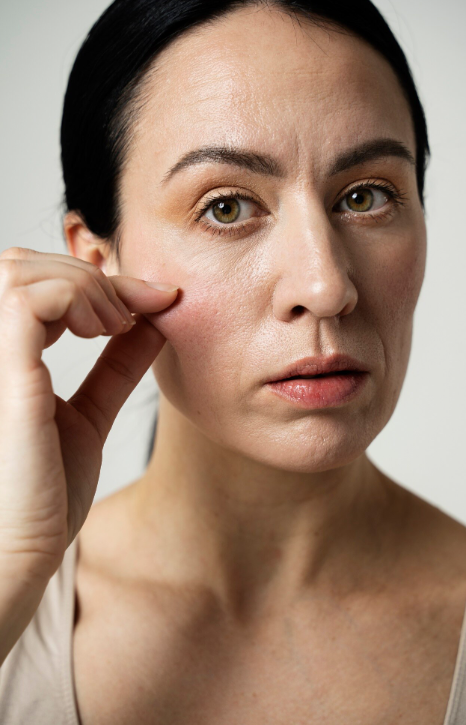
Therefore, simply tightening the skin alone does not sufficiently improve nasolabial folds.
On the contrary, if only the skin is pulled too tightly,
the area around the mouth may look unnatural or the smiling expression may become awkward.
For this reason, a comprehensive approach that considers the entire sagging tissue is important in a facelift, and nasolabial folds also need to be examined within the overall balance of the face.
2. The Importance of the Direction of Pull
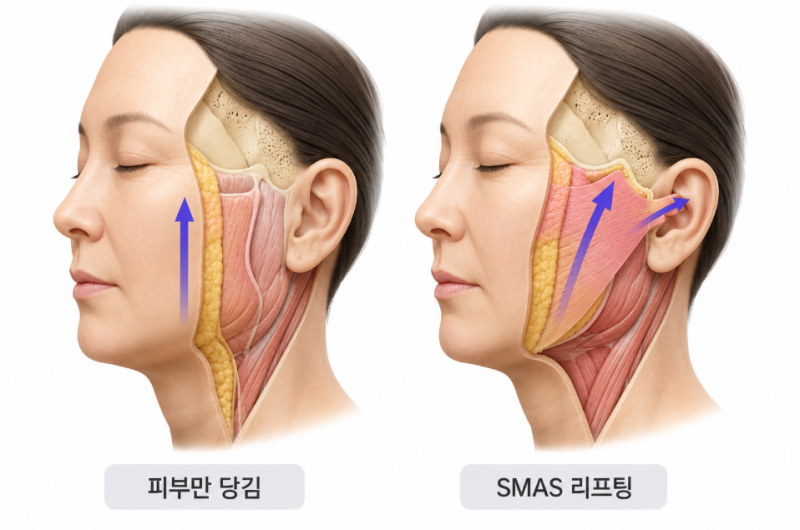
The core of a facelift lies not in how strongly you pull,
but in which direction you move the tissues.
The direction of sagging varies slightly from person to person.
In some cases, the cheeks may have descended significantly, in others, the jawline may have sagged first, and in some, severe mid-face sagging may deepen the nasolabial folds.
If these differences are not considered and tissues are pulled in the same direction, the improvement effect may be limited.
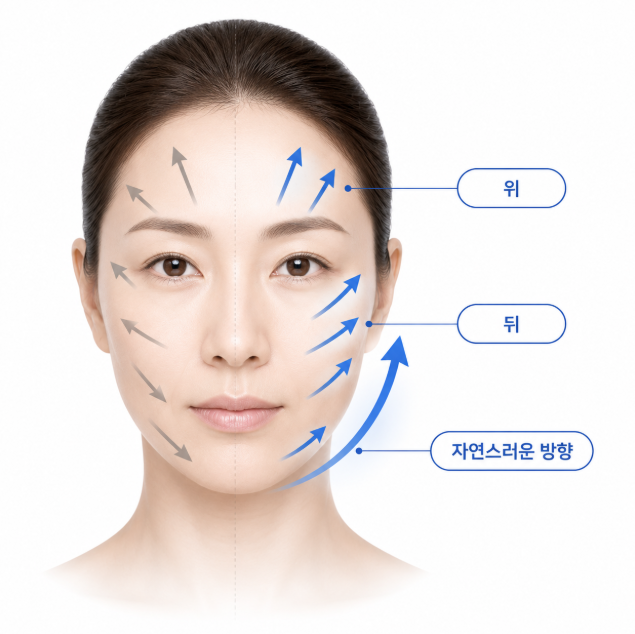
Conversely, after analyzing the direction of the sagging tissue and
naturally repositioning it closer to its original location,
the overall balance of the face is restored, and a more natural improvement in nasolabial folds can be expected along with the facelift.
In other words, it’s not just about pulling the skin upwards, but about setting the direction based on the cause of the sagging.
3. Natural Facelift
Recently, many people desire natural changes
that are not obvious.
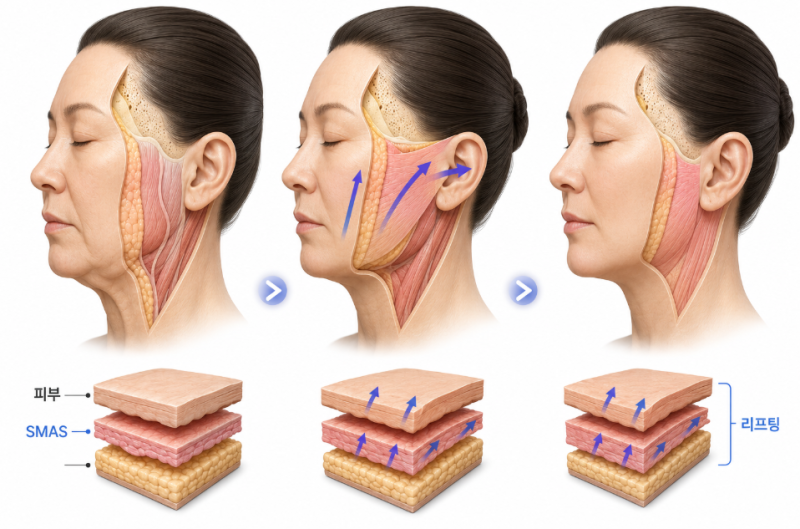
For this, facelifts that consider deep tissues along with the skin are often performed, rather than just pulling the skin.
By appropriately moving deep tissues, including the SMAS layer, excessive tension is not concentrated on the skin, allowing for a more natural appearance.
Furthermore, considering the overall harmony of the front and sides of the face, jawline, cheeks, and neck area together can lead to higher satisfaction.
Especially when aiming to improve nasolabial folds with a facelift,
rather than focusing solely on the nasolabial folds,
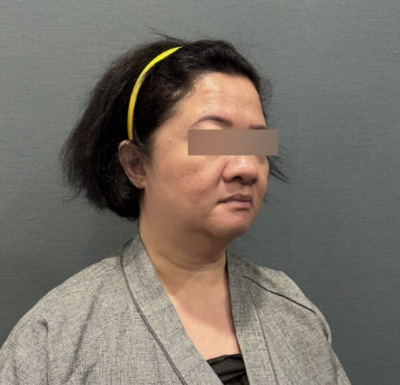

the process of analyzing the overall three-dimensionality, volume, and causes of sagging of the entire face is crucial.
Since each person has a different face shape and aging pattern,
the same method does not apply to everyone.
4. What to Check Before Surgery
If you are considering a facelift, it is advisable to not only look at before-and-after photos but also to check the criteria used for planning the surgery.
It can be helpful to examine how the cause of facial sagging is analyzed,
what criteria are used to determine the direction of pull,
and whether deep tissues are evaluated along with the skin.
Furthermore, the appropriate treatment method may vary depending on whether the cause of nasolabial folds is sagging, volume loss, or decreased skin elasticity.

Therefore, it is important to accurately assess the current facial condition through a thorough diagnosis
before establishing a treatment plan.
A facelift is not simply about tightening the face; it is a surgery that repositions sagging tissues to a more natural position, considering the overall balance of the face.
And for nasolabial folds, it is not just about eliminating the wrinkles;
an approach that also addresses the cause of the sagging is important.
Ultimately, for satisfactory results,
the direction in which tissues are moved, considering the facial structure, can be a more important criterion than how strongly they are pulled.
-Operating Hours-
Weekdays 9:00 ~ 18:00 Saturdays 9:00 ~ 16:00 Public Holidays / Sundays Regular closure |
-Contact Us-
Face Plus Plastic Surgery Clinic | ||
Consultation Phone: 02-541-8500 Inquiries: KakaoTalk Inquiry |
-Directions-
Frequently Asked Questions
Why do nasolabial folds appear?
Nasolabial folds do not simply appear because the skin sags. They often deepen as the deep tissues that support the face, including the fat layer, retaining ligaments, and SMAS layer, descend.
Why is the ‘direction of pull’ important during a facelift?
Yes, it is very important. Since the direction of sagging varies from person to person, accurately analyzing the direction of the sagging tissue and naturally repositioning it closer to its original location is essential for restoring the overall balance of the face and achieving a natural improvement in nasolabial folds. The direction of pull is key, more so than simply pulling strongly.
What is a natural facelift?
A natural facelift refers to a surgery that moves deep tissues, including the SMAS layer, rather than just pulling the skin. This prevents excessive tension from concentrating on the skin, allowing for a natural appearance, and considers the overall harmony of the face.
What should I check before a facelift?
Before surgery, it is advisable to not only look at before-and-after photos but also to check how the cause of facial sagging is analyzed, what criteria are used to determine the direction of pull, and whether deep tissues are evaluated along with the skin. A thorough diagnosis is necessary to accurately assess the current facial condition.
Can a facelift only improve nasolabial folds?
No, rather than improving nasolabial folds in isolation, it is important to analyze the overall three-dimensionality, volume, and causes of sagging of the entire face. A facelift is a surgery that repositions sagging tissues to a natural position, considering the overall balance of the face.
Is it important to consider the SMAS layer during a facelift?
Yes, it is important. Appropriately moving deep tissues, including the SMAS layer, prevents excessive tension from concentrating on the skin, allowing for a more natural appearance. This contributes to higher satisfaction than simply pulling the skin.