2026-07-14
Is Double Eyelid Surgery Alone Enough? When Upper Epicanthoplasty is Needed
Considering double eyelid surgery? This article explains when combining it with upper epicanthoplasty can achieve your desired eye shape, especially for a clearer, more open look.


Hello, this is Baba Plastic Surgery.
One of the most common questions people considering double eyelid surgery ask is, ‘Do I really need upper epicanthoplasty too?’
If your eyes look stuffy or you can't achieve your desired double eyelid crease, deciding whether to combine it with upper epicanthoplasty can be a crucial choice.
Today, we will provide detailed information on the relationship between double eyelid surgery and upper epicanthoplasty, and when combined surgery is necessary.
What is Upper Epicanthoplasty?
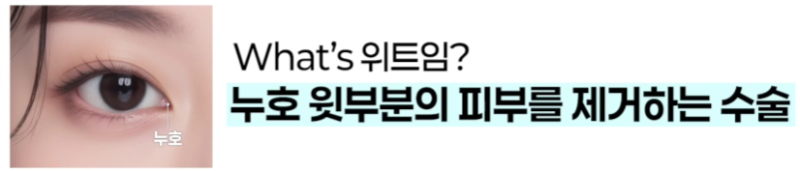
A procedure that removes skin from the upper part of the lacrimal caruncle.
Types of Canthoplasty
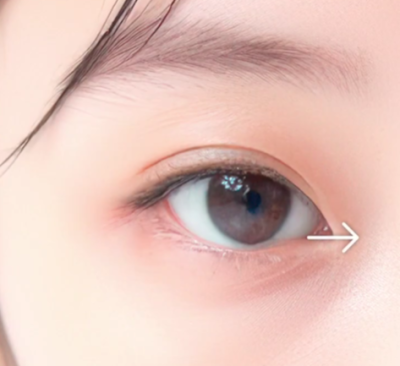
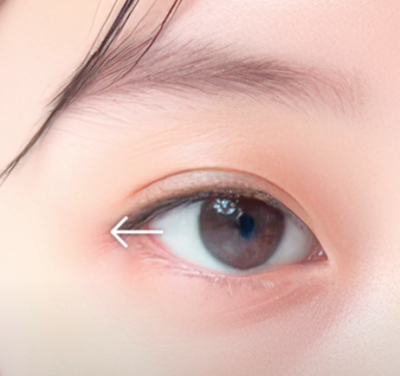
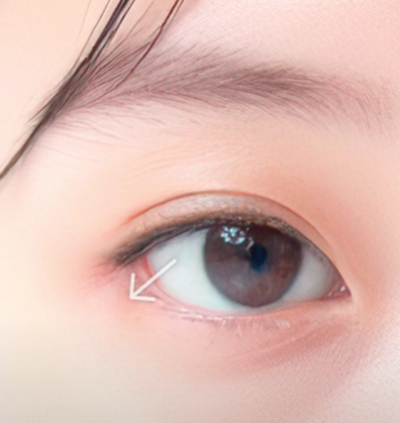
First, upper epicanthoplasty must be distinguished from medial canthoplasty (epicanthoplasty) and lateral/lower canthoplasty.
Medial canthoplasty opens the inner corner of the eye, and lateral canthoplasty opens the outer corner, directly lengthening the eyes horizontally.
Lower canthoplasty makes more of the white part of the eye visible in the lower outer corner, making the outer part of the eye appear slightly more open.
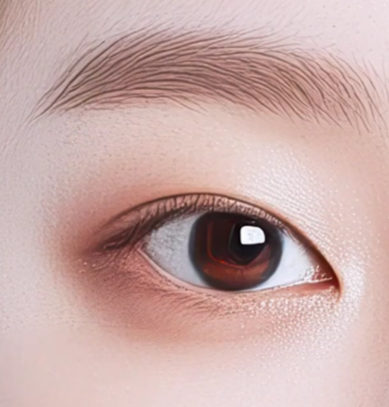
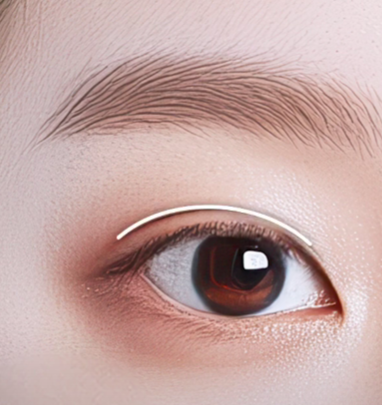
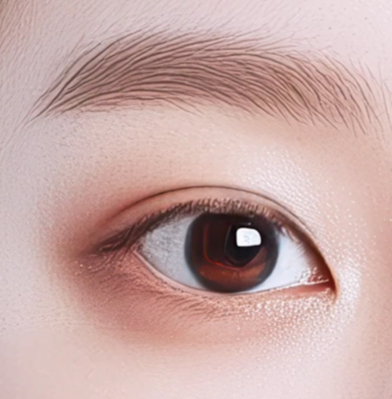
Finally, upper epicanthoplasty removes the skin covering the front of the double eyelid crease, allowing the crease to be visible further forward.
It is a canthoplasty that opens up the crease.
Effects of Upper Epicanthoplasty
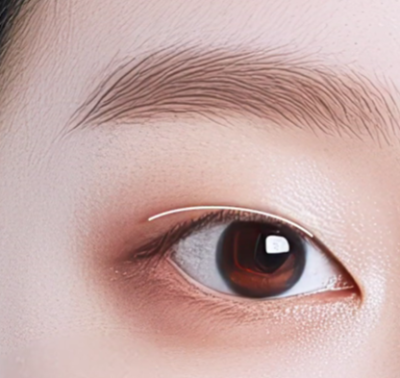
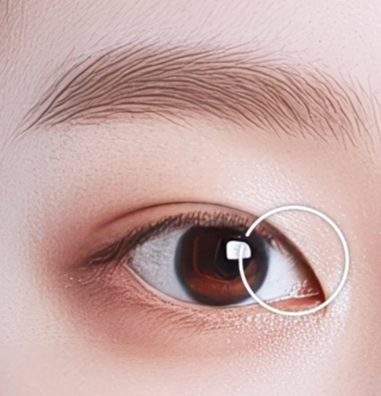
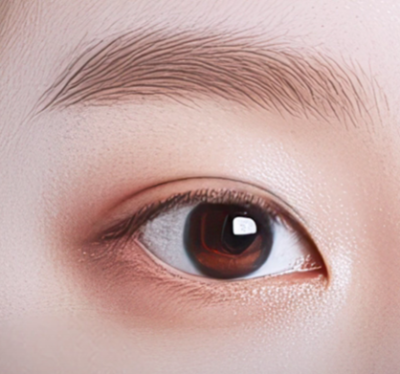
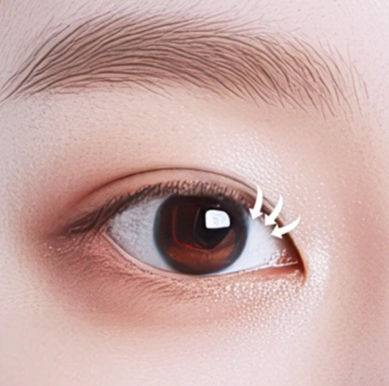
Nowadays, most clients prefer a double eyelid crease that extends clearly to the front.
Especially if you desire an in-out line, if upper epicanthoplasty is not performed simultaneously,
the inner corner of the eye may be covered, making the overall double eyelid crease appear shorter.
Therefore, more opening is usually performed than for a semi-out line.
In the case of a semi-out line, the crease naturally extends outwards well, so the length of the crease may be sufficient, but
the inner corner of the eye may appear to curl inwards, creating an optical illusion of an in-out line.
Therefore, performing it simultaneously to extend the crease outwards can result in a more open and refreshed eye shape.
When Upper Epicanthoplasty is Needed
When the Mongolian fold is thick and the inner corner of the eye appears stuffy.
When the eyes still look small or stuffy after creating a double eyelid.
When the inner corner crease is blocked or asymmetrical in shape.
When a clear, sophisticated impression is desired.
Especially when the inner corner of the eye is significantly covered, it may be difficult to achieve the desired eye shape with double eyelid surgery alone.
If performed in conjunction with upper epicanthoplasty, the horizontal length will be expanded, resulting in a much clearer and softer impression.
When Upper Epicanthoplasty is Performed Alone
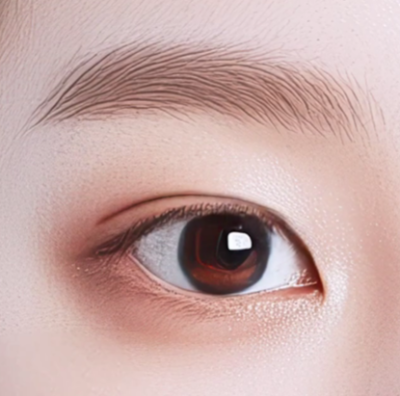
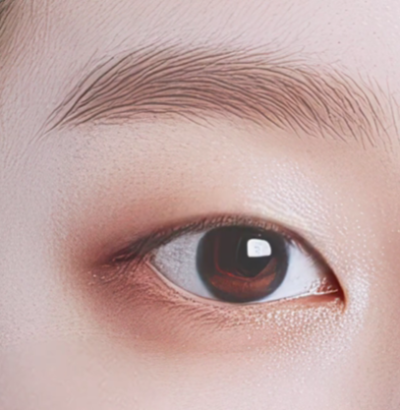
If performed alone without double eyelid surgery, the existing double eyelid crease may overlap with the epicanthoplasty crease,
creating a step or causing the existing crease to loosen. Therefore, it is recommended to perform upper epicanthoplasty in conjunction with double eyelid surgery.
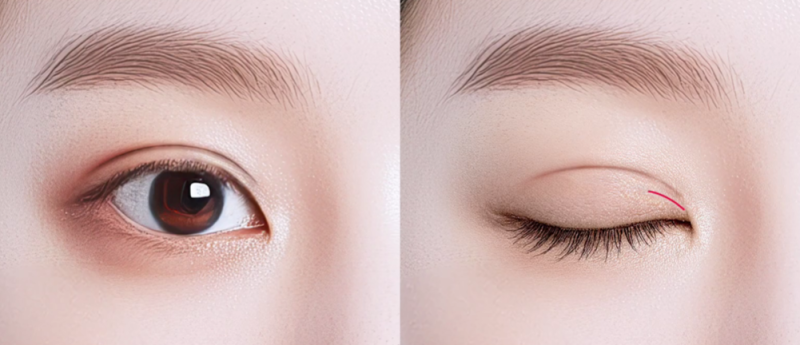
Conversely, if the front part of the double eyelid crease is convex like a sausage, there is also a method to improve the sausage-line double eyelid by reversing the direction of the upper epicanthoplasty,
that is, by opening it downwards.
How to Succeed with Upper Epicanthoplasty
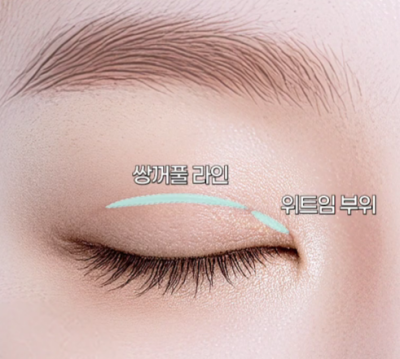
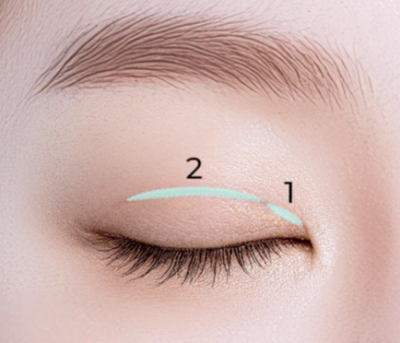
Since canthoplasty involves an incision, a subtle scar may remain.
The incision for upper epicanthoplasty should be designed to align with the double eyelid crease.
By carefully adjusting the position of the upper epicanthoplasty incision, the scar can be minimized and naturally appear as part of the double eyelid crease.
Average Incision Length for Upper Epicanthoplasty
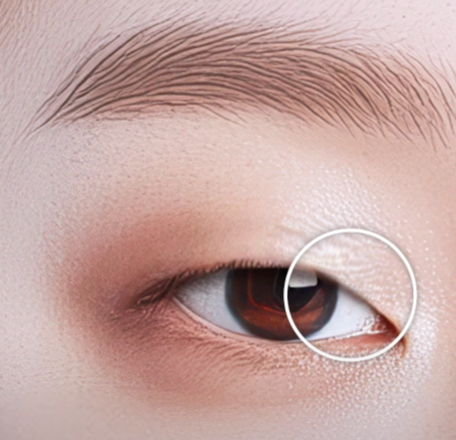
The average incision length for upper epicanthoplasty is 5mm~6mm.
However, in some cases where the Mongolian fold at the inner corner of the eye is excessively covered,
an incision of up to 1cm~1.5cm may be necessary.
Today, we discussed the relationship between double eyelid surgery and upper epicanthoplasty. It's not about unconditionally combining canthoplasty,
but rather receiving a diagnosis from a specialist based on your individual eye structure and skin condition, and proceeding with an accurate plan.
This is the most important aspect. While double eyelid surgery alone can create beautiful eyes, for certain eye structures, combining it with upper epicanthoplasty
can create a much more natural and distinct eye shape.
Finding the right surgical technique through accurate consultation and diagnosis is the first step towards achieving natural and satisfying results.