2026-07-14
Can Double Eyelid Revision Surgery Be Done Without Scars?
Considering double eyelid revision surgery? Learn three essential tips to achieve natural-looking results with minimal scarring.
Hello, this is VAVA Plastic Surgery.
If you've had double eyelid surgery before, you know the immense disappointment when the results don't meet your expectations.
Every year, more people consider revision surgery due to lines loosening, asymmetry, or an unnatural appearance.
So, is it truly possible to have double eyelid revision surgery without scars?
Based on our extensive experience performing numerous revision cases, we'd like to share three essential tips that anyone considering double eyelid revision surgery must know.

✅TIP 1
It's not about 'preventing' scars, but about making them 'invisible'.
For double eyelid revision surgery, we re-enter an area that has already been incised.
Therefore, rather than saying scars will be completely 'absent', the goal is to make them as inconspicuous as possible.
For natural scar coverage, two things are key:
1) How precisely the existing incision line can be utilized.
2) The ability to accurately assess the skin condition and the degree of scar hardening.
At VAVA Plastic Surgery, we design the procedure by applying each individual's facial balance and skin type,
meticulously dissecting adhered tissues to minimize tissue damage and scar formation.
As a result, many patients recover with more natural-looking eyes, even after revision surgery.
✅ TIP 2
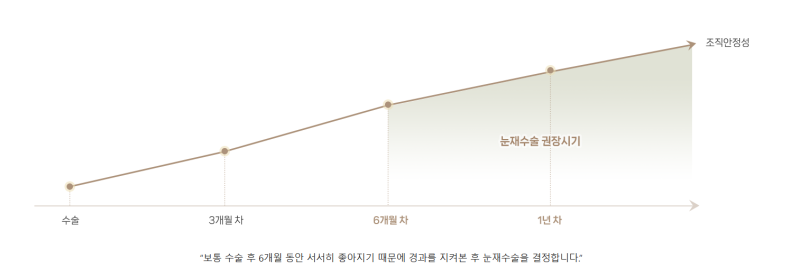
First, ensure a sufficient recovery period of at least 6 months.
Deciding on revision surgery less than 6 months after the initial surgery can be very risky.
Re-entering the area when swelling or tissues haven't fully settled can lead to larger scars and make predicting results difficult.
At VAVA Plastic Surgery, we don't just ask about the timing;
we thoroughly diagnose various factors such as fat absorption, line stability, and skin elasticity recovery before advising on the feasibility of surgery.

✅ TIP 3
Revision surgery's core is 'line design'.
An eye that has undergone surgery once experiences structural changes.
Therefore, revision surgery requires a completely new design perspective rather than simply recreating the existing line.
Most revision patients desire surgery because:
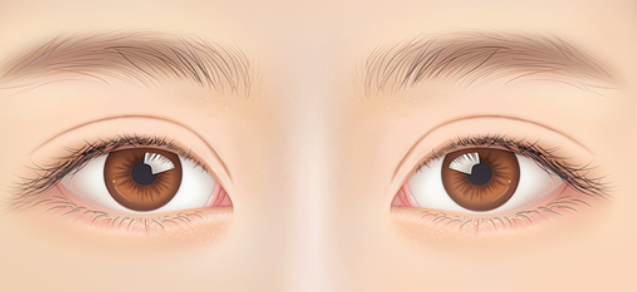
1) The line is too high, or
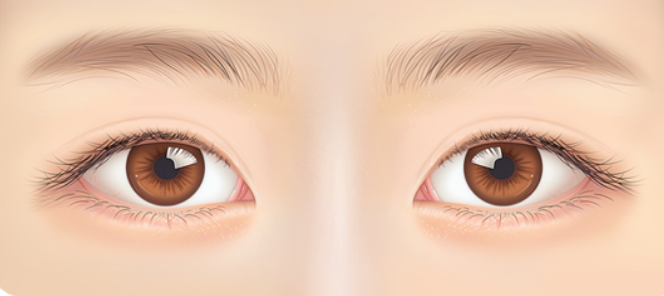
2) The double eyelid has loosened, making the eyes appear heavy, or
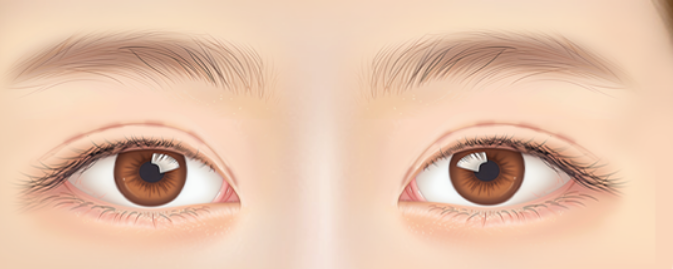
3) The eye shape has become unnatural.
What's crucial here is not just the double eyelid line, but a comprehensive redesign that considers the overall balance of the eye, muscle movement, and eyelid ptosis.
Actual Eye Revision Case: VAVA Plastic Surgery Consultation Manager
Our consultation manager, who works at our clinic,
underwent her third eye revision surgery at VAVA Plastic Surgery.
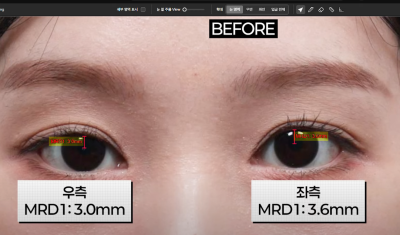
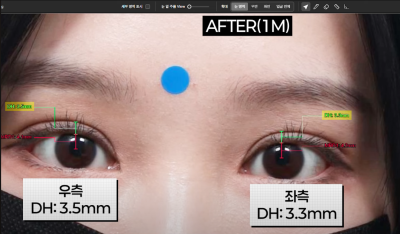
She had been troubled by constantly loosening double eyelids for a long time.
We performed incisional double eyelid revision + incisional ptosis correction + lateral canthoplasty simultaneously.
Specifically, the left double eyelid line was raised by about 2-2.5mm to match the right side,
correcting it to a clearer and more refined in-out line.
After the surgery, her ability to open her eyes significantly improved, lifting her drooping eyelids to appear sharper,
and the direction of her outer eye corners was also adjusted, transforming her into a brighter and more confident impression.

In fact, during consultations with patients after her surgery, the manager often receives requests like ‘Please make my eyes like the manager's’.
This directly demonstrates her satisfaction and trust in the surgical results.
The manager's case has become a representative indicator of trust,
showcasing VAVA Plastic Surgery's revision surgery expertise.

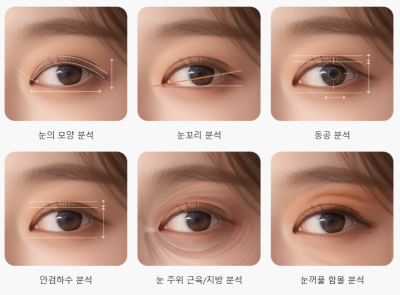
While eye revision surgery can be done anywhere, it carries a greater burden than the initial surgery. To ensure it's a 'successful final surgery' without failure,
it's crucial to seek out verified medical professionals with accurate understanding and extensive experience.
At VAVA Plastic Surgery, our eye revision surgery is based on skilled techniques. We meticulously analyze the causes of previous failures for each patient,
and prioritize patient safety and satisfaction to determine and perform the best surgical method.
If you're still hesitating, feel free to start with a light consultation.


